 Add to Chrome
 Add to Firefox
 Add to Edge
Integration of an Agent Model into an Open Simulation Architecture for Scenario-Based Testing of Automated Vehicles
May 13, 2026
Simulative and scenario-based testing are crucial methods in the safety assurance for automated driving systems. To ensure that simulation results are reliable, the real world must be modeled with sufficient fidelity, including not only the static environment but also the surrounding traffic of a vehicle under test. Thus, the availability of traffic agent models is of common interest to model naturalistic and parameterizable behavior, similar to human drivers. The interchangeability of agent models across different simulation environments represents a major challenge and necessitates harmonization and standardization. To address this challenge, we present a standardized and modular simulation integration architecture that enables the tool-independent integration of traffic agent models. The architecture builds upon the Open Simulation Interface (OSI) as a structured message format and the Functional Mock-up Interface (FMI) for dynamic model exchange. Rather than introducing yet another model or simulation tool, we provide a reusable reference implementation that translates these standards into a practical integration blueprint, including clear interfaces, data mappings, and execution semantics. The generic nature of the architecture is demonstrated by integrating an exemplary agent model into three widely used simulation environments: OpenPASS, CARLA, and CarMaker. As part of the evaluation, we show that the model yields consistent behavior in all simulation platforms, thereby validating the interoperability, modularity, and standard compliance of the proposed architecture. The reference implementation lowers integration barriers, serves as a foundation for future research, and is made publicly available at github.com/ika-rwth-aachen/agent-model-integration

Open-Source Tool Based Framework for Automated Performance Evaluation of an AD Function
Jun 24, 2024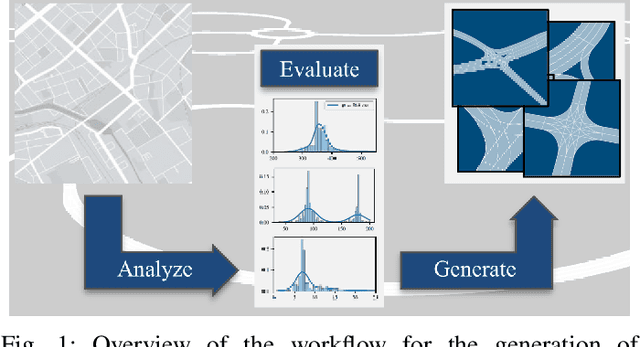
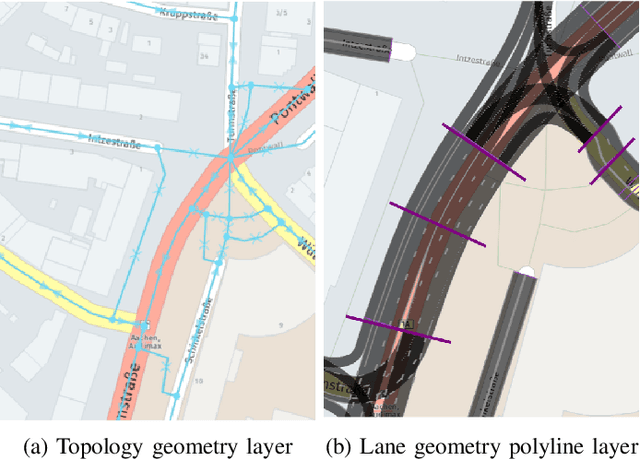
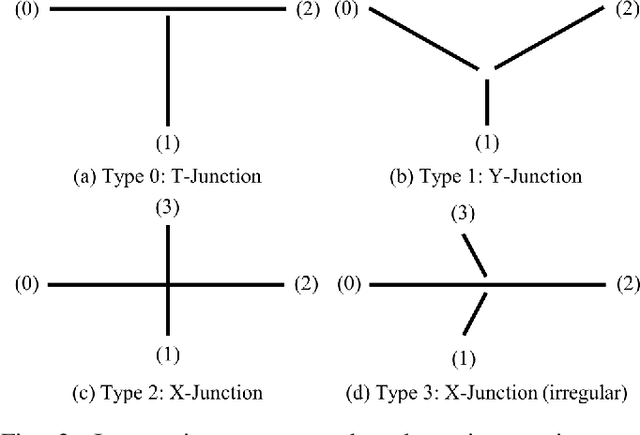
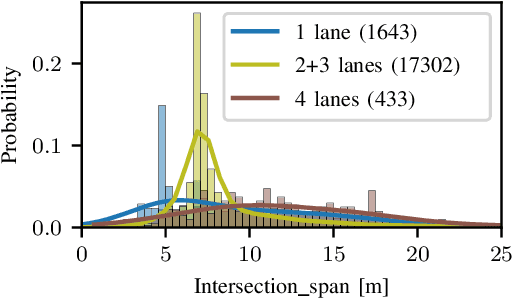
As automation in the field of automated driving (AD) progresses, ensuring the safety and functionality of AD functions (ADFs) becomes crucial. Virtual scenario-based testing has emerged as a prevalent method for evaluating these systems, allowing for a wider range of testing environments and reproducibility of results. This approach involves AD-equipped test vehicles operating within predefined scenarios to achieve specific driving objectives. To comprehensively assess the impact of road network properties on the performance of an ADF, varying parameters such as intersection angle, curvature and lane width is essential. However, covering all potential scenarios is impractical, necessitating the identification of feasible parameter ranges and automated generation of corresponding road networks for simulation. Automating the workflow of road network generation, parameter variation, simulation, and evaluation leads to a comprehensive understanding of an ADF's behavior in diverse road network conditions. This paper aims to investigate the influence of road network parameters on the performance of a prototypical ADF through virtual scenario-based testing, ultimately advocating the importance of road topology in assuring safety and reliability of ADFs.
Guideline for Trustworthy Artificial Intelligence -- AI Assessment Catalog
Jun 20, 2023Artificial Intelligence (AI) has made impressive progress in recent years and represents a key technology that has a crucial impact on the economy and society. However, it is clear that AI and business models based on it can only reach their full potential if AI applications are developed according to high quality standards and are effectively protected against new AI risks. For instance, AI bears the risk of unfair treatment of individuals when processing personal data e.g., to support credit lending or staff recruitment decisions. The emergence of these new risks is closely linked to the fact that the behavior of AI applications, particularly those based on Machine Learning (ML), is essentially learned from large volumes of data and is not predetermined by fixed programmed rules. Thus, the issue of the trustworthiness of AI applications is crucial and is the subject of numerous major publications by stakeholders in politics, business and society. In addition, there is mutual agreement that the requirements for trustworthy AI, which are often described in an abstract way, must now be made clear and tangible. One challenge to overcome here relates to the fact that the specific quality criteria for an AI application depend heavily on the application context and possible measures to fulfill them in turn depend heavily on the AI technology used. Lastly, practical assessment procedures are needed to evaluate whether specific AI applications have been developed according to adequate quality standards. This AI assessment catalog addresses exactly this point and is intended for two target groups: Firstly, it provides developers with a guideline for systematically making their AI applications trustworthy. Secondly, it guides assessors and auditors on how to examine AI applications for trustworthiness in a structured way.