 Add to Chrome
 Add to Firefox
 Add to Edge
TIGA: Trajectory-Injected Generative Attack against Black-box AIGC Detectors
Jul 28, 2026
Recent diffusion models have achieved remarkable realism in facial image synthesis, posing growing challenges to artificial intelligence-generated content (AIGC) forensic detectors.Existing evasion methods typically perturb pre-generated images or require detector-aware training, which may introduce visible or statistical artifacts and limit applicability when the diffusion model must remain frozen and the target detector is accessible only through black-box queries. We propose Trajectory-Injected Generative Attack (TIGA), a source-image-free and training free framework that generates detector-evasive images within a single diffusion sampling trajectory. TIGA steers the latent Denoising Diffusion Implicit Model (DDIM) trajectory so that adversarial properties emerge during generation rather than being added afterward. TIGA first aggregates gradients from multiple white-box surrogate detectors to form a transferable, sign-aware prior, and then performs anisotropic directional search with symmetric finite-difference queries to estimate the black-box target response. The estimated directions are stabilized by decayed momentum and injected according to the DDIM noise schedule, with frequency-domain reshaping to suppress high frequency artifacts. Experiments on surrogate and unseen specialized forensic detectors show that TIGA achieves strong blackbox attack performance, transferability, and high robustness under common post-processing operations without source images or diffusion-model retraining, while preserving high perceptual quality.

Physically-Induced Atmospheric Adversarial Perturbations: Enhancing Transferability and Robustness in Remote Sensing Image Classification
Apr 16, 2026Adversarial attacks pose a severe threat to the reliability of deep learning models in remote sensing (RS) image classification. Most existing methods rely on direct pixel-wise perturbations, failing to exploit the inherent atmospheric characteristics of RS imagery or survive real-world image degradations. In this paper, we propose FogFool, a physically plausible adversarial framework that generates fog-based perturbations by iteratively optimizing atmospheric patterns based on Perlin noise. By modeling fog formations with natural, irregular structures, FogFool generates adversarial examples that are not only visually consistent with authentic RS scenes but also deceptive. By leveraging the spatial coherence and mid-to-low-frequency nature of atmospheric phenomena, FogFool embeds adversarial information into structural features shared across diverse architectures. Extensive experiments on two benchmark RS datasets demonstrate that FogFool achieves superior performance: not only does it exceed in white-box settings, but also exhibits exceptional black-box transferability (reaching 83.74% TASR) and robustness against common preprocessing-based defenses such as JPEG compression and filtering. Detailed analyses, including confusion matrices and Class Activation Map (CAM) visualizations, reveal that our atmospheric-driven perturbations induce a universal shift in model attention. These results indicate that FogFool represents a practical, stealthy, and highly persistent threat to RS classification systems, providing a robust benchmark for evaluating model reliability in complex environments.
SIDeR: Semantic Identity Decoupling for Unrestricted Face Privacy
Feb 04, 2026With the deep integration of facial recognition into online banking, identity verification, and other networked services, achieving effective decoupling of identity information from visual representations during image storage and transmission has become a critical challenge for privacy protection. To address this issue, we propose SIDeR, a Semantic decoupling-driven framework for unrestricted face privacy protection. SIDeR decomposes a facial image into a machine-recognizable identity feature vector and a visually perceptible semantic appearance component. By leveraging semantic-guided recomposition in the latent space of a diffusion model, it generates visually anonymous adversarial faces while maintaining machine-level identity consistency. The framework incorporates momentum-driven unrestricted perturbation optimization and a semantic-visual balancing factor to synthesize multiple visually diverse, highly natural adversarial samples. Furthermore, for authorized access, the protected image can be restored to its original form when the correct password is provided. Extensive experiments on the CelebA-HQ and FFHQ datasets demonstrate that SIDeR achieves a 99% attack success rate in black-box scenarios and outperforms baseline methods by 41.28% in PSNR-based restoration quality.
Unsourced Adversarial CAPTCHA: A Bi-Phase Adversarial CAPTCHA Framework
Jun 12, 2025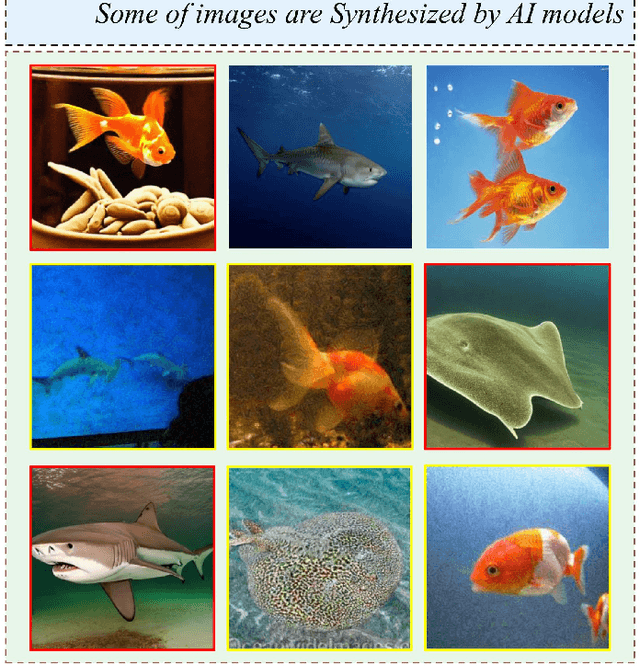
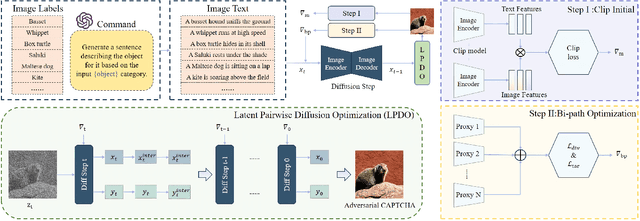
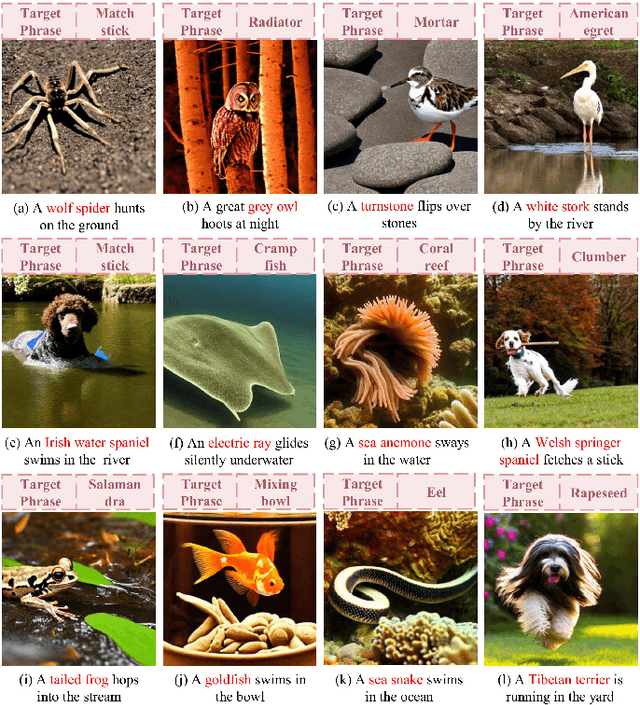
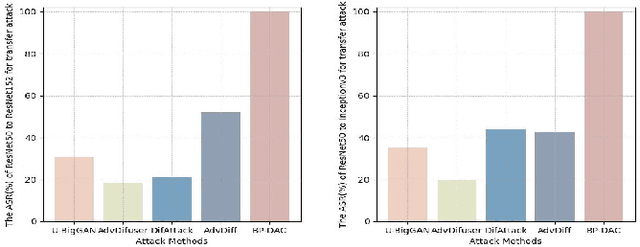
With the rapid advancements in deep learning, traditional CAPTCHA schemes are increasingly vulnerable to automated attacks powered by deep neural networks (DNNs). Existing adversarial attack methods often rely on original image characteristics, resulting in distortions that hinder human interpretation and limit applicability in scenarios lacking initial input images. To address these challenges, we propose the Unsourced Adversarial CAPTCHA (UAC), a novel framework generating high-fidelity adversarial examples guided by attacker-specified text prompts. Leveraging a Large Language Model (LLM), UAC enhances CAPTCHA diversity and supports both targeted and untargeted attacks. For targeted attacks, the EDICT method optimizes dual latent variables in a diffusion model for superior image quality. In untargeted attacks, especially for black-box scenarios, we introduce bi-path unsourced adversarial CAPTCHA (BP-UAC), a two-step optimization strategy employing multimodal gradients and bi-path optimization for efficient misclassification. Experiments show BP-UAC achieves high attack success rates across diverse systems, generating natural CAPTCHAs indistinguishable to humans and DNNs.
DP-TRAE: A Dual-Phase Merging Transferable Reversible Adversarial Example for Image Privacy Protection
May 11, 2025In the field of digital security, Reversible Adversarial Examples (RAE) combine adversarial attacks with reversible data hiding techniques to effectively protect sensitive data and prevent unauthorized analysis by malicious Deep Neural Networks (DNNs). However, existing RAE techniques primarily focus on white-box attacks, lacking a comprehensive evaluation of their effectiveness in black-box scenarios. This limitation impedes their broader deployment in complex, dynamic environments. Further more, traditional black-box attacks are often characterized by poor transferability and high query costs, significantly limiting their practical applicability. To address these challenges, we propose the Dual-Phase Merging Transferable Reversible Attack method, which generates highly transferable initial adversarial perturbations in a white-box model and employs a memory augmented black-box strategy to effectively mislead target mod els. Experimental results demonstrate the superiority of our approach, achieving a 99.0% attack success rate and 100% recovery rate in black-box scenarios, highlighting its robustness in privacy protection. Moreover, we successfully implemented a black-box attack on a commercial model, further substantiating the potential of this approach for practical use.