 Add to Chrome
 Add to Firefox
 Add to Edge
QUIDS: Quality-informed Incentive-driven Multi-agent Dispatching System for Mobile Crowdsensing
Dec 18, 2025


This paper addresses the challenge of achieving optimal Quality of Information (QoI) in non-dedicated vehicular mobile crowdsensing (NVMCS) systems. The key obstacles are the interrelated issues of sensing coverage, sensing reliability, and the dynamic participation of vehicles. To tackle these, we propose QUIDS, a QUality-informed Incentive-driven multi-agent Dispatching System, which ensures high sensing coverage and reliability under budget constraints. QUIDS introduces a novel metric, Aggregated Sensing Quality (ASQ), to quantitatively capture QoI by integrating both coverage and reliability. We also develop a Mutually Assisted Belief-aware Vehicle Dispatching algorithm that estimates sensing reliability and allocates incentives under uncertainty, further improving ASQ. Evaluation using real-world data from a metropolitan NVMCS deployment shows QUIDS improves ASQ by 38% over non-dispatching scenarios and by 10% over state-of-the-art methods. It also reduces reconstruction map errors by 39-74% across algorithms. By jointly optimizing coverage and reliability via a quality-informed incentive mechanism, QUIDS enables low-cost, high-quality urban monitoring without dedicated infrastructure, applicable to smart-city scenarios like traffic and environmental sensing.

SniffySquad: Patchiness-Aware Gas Source Localization with Multi-Robot Collaboration
Nov 09, 2024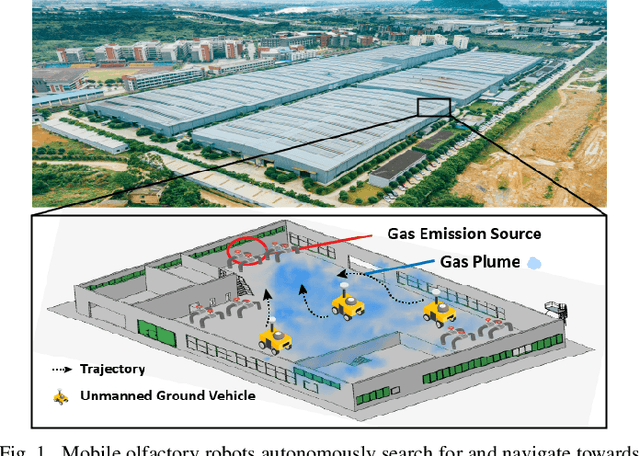
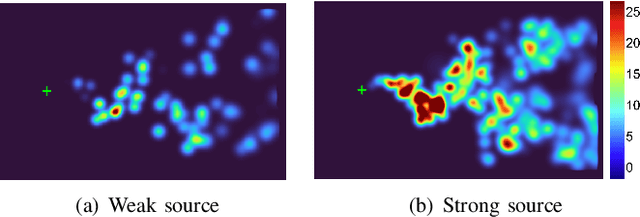
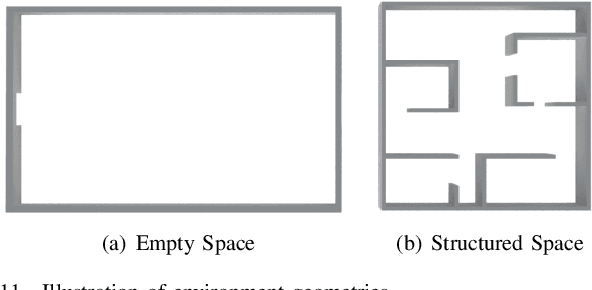
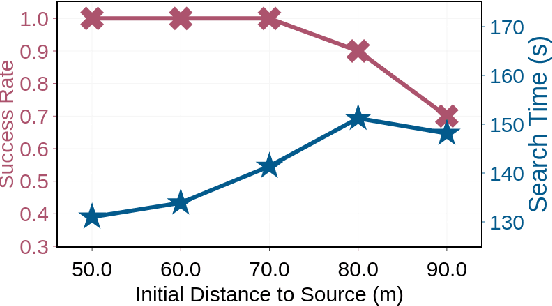
Gas source localization is pivotal for the rapid mitigation of gas leakage disasters, where mobile robots emerge as a promising solution. However, existing methods predominantly schedule robots' movements based on reactive stimuli or simplified gas plume models. These approaches typically excel in idealized, simulated environments but fall short in real-world gas environments characterized by their patchy distribution. In this work, we introduce SniffySquad, a multi-robot olfaction-based system designed to address the inherent patchiness in gas source localization. SniffySquad incorporates a patchiness-aware active sensing approach that enhances the quality of data collection and estimation. Moreover, it features an innovative collaborative role adaptation strategy to boost the efficiency of source-seeking endeavors. Extensive evaluations demonstrate that our system achieves an increase in the success rate by $20\%+$ and an improvement in path efficiency by $30\%+$, outperforming state-of-the-art gas source localization solutions.