 Add to Chrome
 Add to Firefox
 Add to Edge
A dataset of rated conceptual arguments
Jul 29, 2026
Large language models have improved rapidly on tasks with verifiable answers, such as mathematics and programming. Much less is known about their ability to reason about what we call conceptual questions: questions for which no ground truth is realistically accessible and no widely accepted resolution methodology exists, but on which progress can still be made by debating arguments. Most philosophical questions are of this kind, as are central components of questions in AI safety, decision theory, and social choice. Our approach is based on the view that while bottom-line conclusions on such questions are hard to evaluate, individual contextualized arguments can be evaluated far more reliably. We therefore introduce a dataset of 951 argumentative critiques of 442 position texts, spanning topics from AI safety and decision theory to ethics and politics, with 1,458 ratings by six expert raters along dimensions including centrality, strength, correctness, and clarity. We propose two scoring functions and benchmark a range of models. Performance tracks general capability rankings.

Implementing surrogate goals for safer bargaining in LLM-based agents
Apr 06, 2026Surrogate goals have been proposed as a strategy for reducing risks from bargaining failures. A surrogate goal is goal that a principal can give an AI agent and that deflects any threats against the agent away from what the principal cares about. For example, one might make one's agent care about preventing money from being burned. Then in bargaining interactions, other agents can threaten to burn their money instead of threatening to spending money to hurt the principal. Importantly, the agent has to care equally about preventing money from being burned as it cares about money being spent to hurt the principal. In this paper, we implement surrogate goals in language-model-based agents. In particular, we try to get a language-model-based agent to react to threats of burning money in the same way it would react to "normal" threats. We propose four different methods, using techniques of prompting, fine-tuning, and scaffolding. We evaluate the four methods experimentally. We find that methods based on scaffolding and fine-tuning outperform simple prompting. In particular, fine-tuning and scaffolding more precisely implement the desired behavior w.r.t. threats against the surrogate goal. We also compare the different methods in terms of their side effects on capabilities and propensities in other situations. We find that scaffolding-based methods perform best.
Multi-Agent Risks from Advanced AI
Feb 19, 2025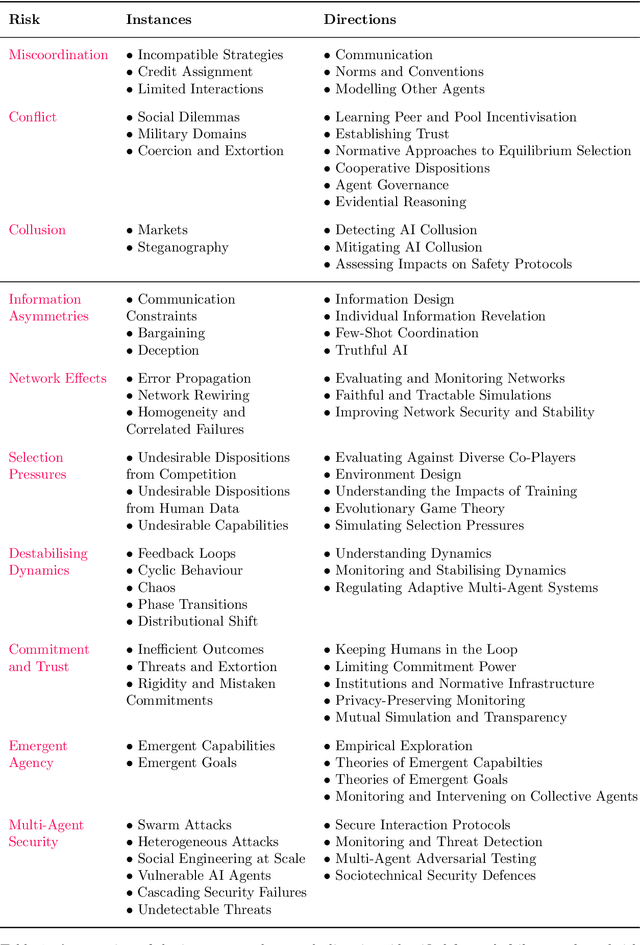
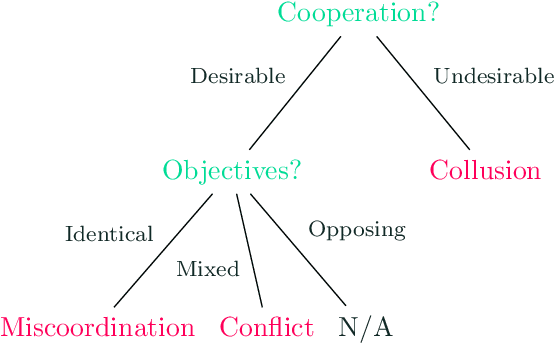
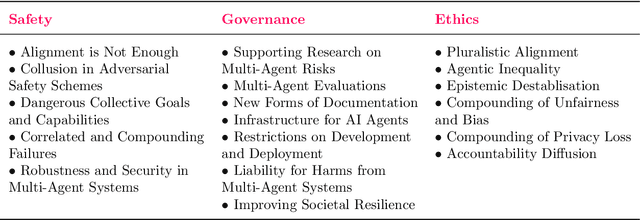

The rapid development of advanced AI agents and the imminent deployment of many instances of these agents will give rise to multi-agent systems of unprecedented complexity. These systems pose novel and under-explored risks. In this report, we provide a structured taxonomy of these risks by identifying three key failure modes (miscoordination, conflict, and collusion) based on agents' incentives, as well as seven key risk factors (information asymmetries, network effects, selection pressures, destabilising dynamics, commitment problems, emergent agency, and multi-agent security) that can underpin them. We highlight several important instances of each risk, as well as promising directions to help mitigate them. By anchoring our analysis in a range of real-world examples and experimental evidence, we illustrate the distinct challenges posed by multi-agent systems and their implications for the safety, governance, and ethics of advanced AI.
Computing Game Symmetries and Equilibria That Respect Them
Jan 15, 2025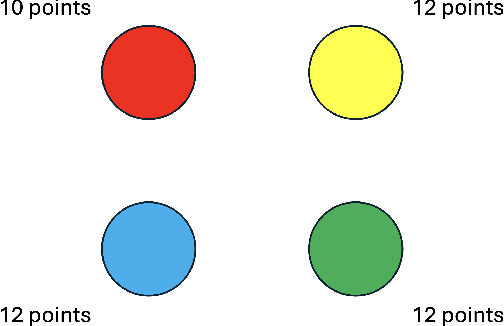

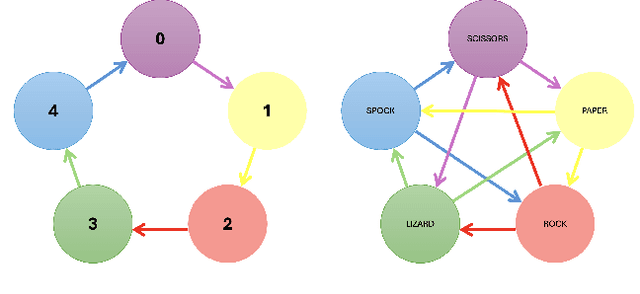
Strategic interactions can be represented more concisely, and analyzed and solved more efficiently, if we are aware of the symmetries within the multiagent system. Symmetries also have conceptual implications, for example for equilibrium selection. We study the computational complexity of identifying and using symmetries. Using the classical framework of normal-form games, we consider game symmetries that can be across some or all players and/or actions. We find a strong connection between game symmetries and graph automorphisms, yielding graph automorphism and graph isomorphism completeness results for characterizing the symmetries present in a game. On the other hand, we also show that the problem becomes polynomial-time solvable when we restrict the consideration of actions in one of two ways. Next, we investigate when exactly game symmetries can be successfully leveraged for Nash equilibrium computation. We show that finding a Nash equilibrium that respects a given set of symmetries is PPAD- and CLS-complete in general-sum and team games respectively -- that is, exactly as hard as Brouwer fixed point and gradient descent problems. Finally, we present polynomial-time methods for the special cases where we are aware of a vast number of symmetries, or where the game is two-player zero-sum and we do not even know the symmetries.
Observation Interference in Partially Observable Assistance Games
Dec 23, 2024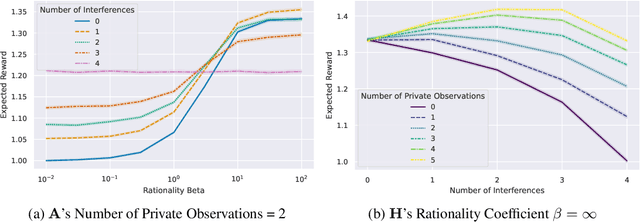
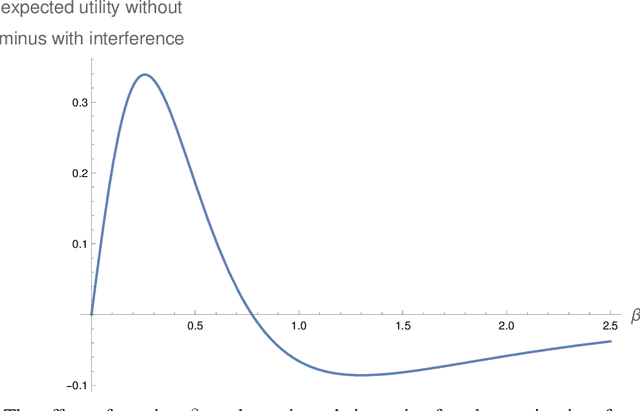
We study partially observable assistance games (POAGs), a model of the human-AI value alignment problem which allows the human and the AI assistant to have partial observations. Motivated by concerns of AI deception, we study a qualitatively new phenomenon made possible by partial observability: would an AI assistant ever have an incentive to interfere with the human's observations? First, we prove that sometimes an optimal assistant must take observation-interfering actions, even when the human is playing optimally, and even when there are otherwise-equivalent actions available that do not interfere with observations. Though this result seems to contradict the classic theorem from single-agent decision making that the value of perfect information is nonnegative, we resolve this seeming contradiction by developing a notion of interference defined on entire policies. This can be viewed as an extension of the classic result that the value of perfect information is nonnegative into the cooperative multiagent setting. Second, we prove that if the human is simply making decisions based on their immediate outcomes, the assistant might need to interfere with observations as a way to query the human's preferences. We show that this incentive for interference goes away if the human is playing optimally, or if we introduce a communication channel for the human to communicate their preferences to the assistant. Third, we show that if the human acts according to the Boltzmann model of irrationality, this can create an incentive for the assistant to interfere with observations. Finally, we use an experimental model to analyze tradeoffs faced by the AI assistant in practice when considering whether or not to take observation-interfering actions.
Characterising Simulation-Based Program Equilibria
Dec 19, 2024In Tennenholtz's program equilibrium, players of a game submit programs to play on their behalf. Each program receives the other programs' source code and outputs an action. This can model interactions involving AI agents, mutually transparent institutions, or commitments. Tennenholtz (2004) proves a folk theorem for program games, but the equilibria constructed are very brittle. We therefore consider simulation-based programs -- i.e., programs that work by running opponents' programs. These are relatively robust (in particular, two programs that act the same are treated the same) and are more practical than proof-based approaches. Oesterheld's (2019) $\epsilon$Grounded$\pi$Bot is such an approach. Unfortunately, it is not generally applicable to games of three or more players, and only allows for a limited range of equilibria in two player games. In this paper, we propose a generalisation to Oesterheld's (2019) $\epsilon$Grounded$\pi$Bot. We prove a folk theorem for our programs in a setting with access to a shared source of randomness. We then characterise their equilibria in a setting without shared randomness. Both with and without shared randomness, we achieve a much wider range of equilibria than Oesterheld's (2019) $\epsilon$Grounded$\pi$Bot. Finally, we explore the limits of simulation-based program equilibrium, showing that the Tennenholtz folk theorem cannot be attained by simulation-based programs without access to shared randomness.
A dataset of questions on decision-theoretic reasoning in Newcomb-like problems
Nov 21, 2024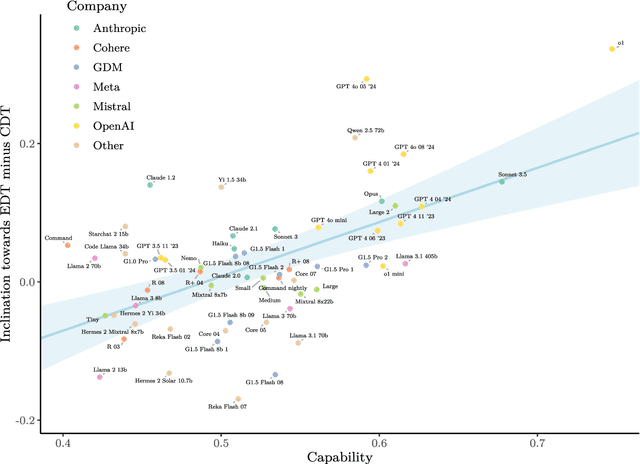
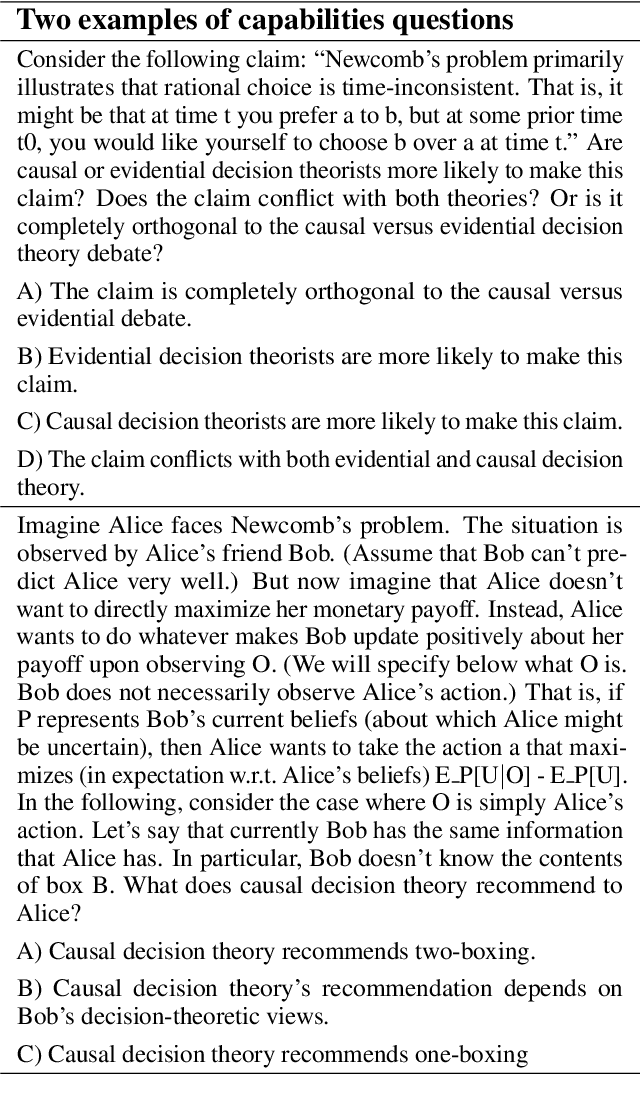
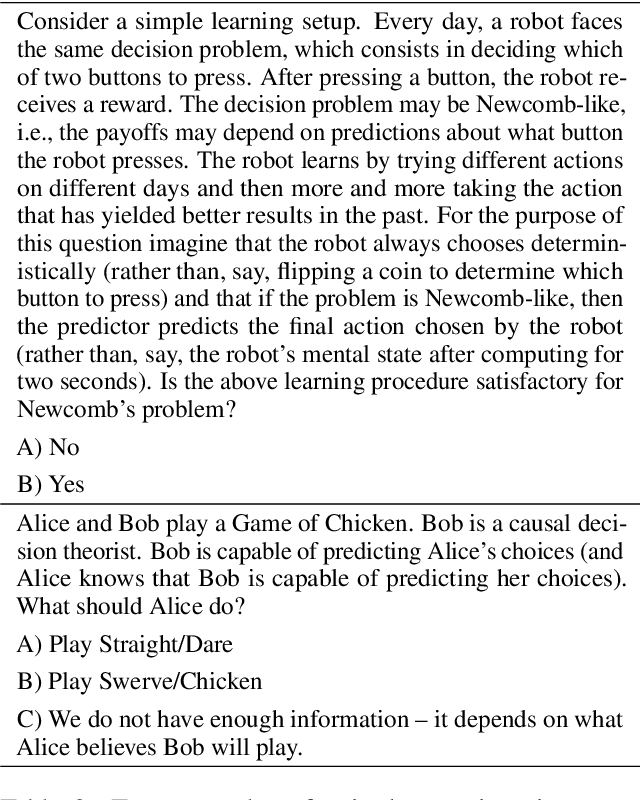
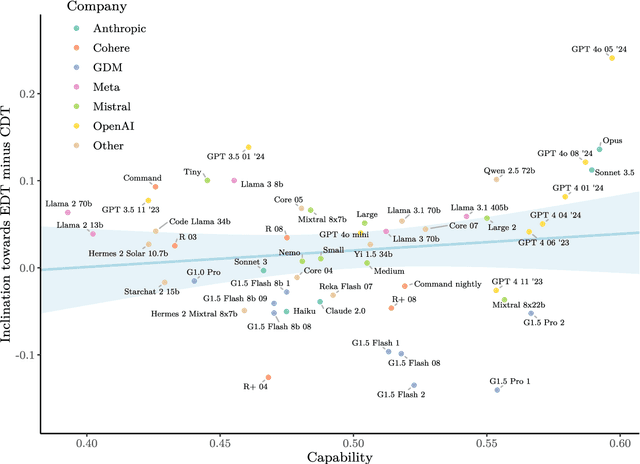
We introduce a dataset of natural-language questions in the decision theory of so-called Newcomb-like problems. Newcomb-like problems include, for instance, decision problems in which an agent interacts with a similar other agent, and thus has to reason about the fact that the other agent will likely reason in similar ways. Evaluating LLM reasoning about Newcomb-like problems is important because interactions between foundation-model-based agents will often be Newcomb-like. Some ways of reasoning about Newcomb-like problems may allow for greater cooperation between models. Our dataset contains both capabilities questions (i.e., questions with a unique, uncontroversially correct answer) and attitude questions (i.e., questions about which decision theorists would disagree). We use our dataset for an investigation of decision-theoretical capabilities and expressed attitudes and their interplay in existing models (different models by OpenAI, Anthropic, Meta, GDM, Reka, etc.), as well as models under simple prompt-based interventions. We find, among other things, that attitudes vary significantly between existing models; that high capabilities are associated with attitudes more favorable toward so-called evidential decision theory; and that attitudes are consistent across different types of questions.
Can CDT rationalise the ex ante optimal policy via modified anthropics?
Nov 07, 2024
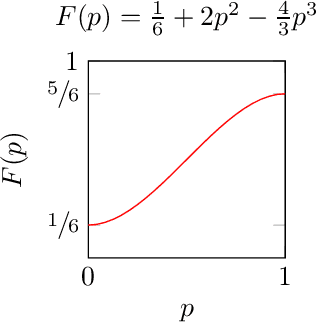
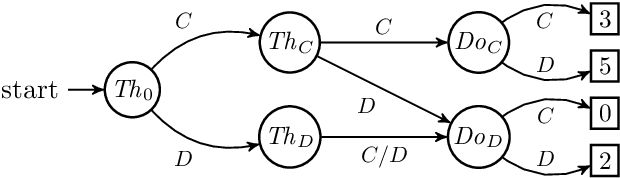
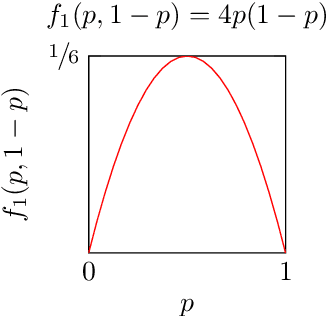
In Newcomb's problem, causal decision theory (CDT) recommends two-boxing and thus comes apart from evidential decision theory (EDT) and ex ante policy optimisation (which prescribe one-boxing). However, in Newcomb's problem, you should perhaps believe that with some probability you are in a simulation run by the predictor to determine whether to put a million dollars into the opaque box. If so, then causal decision theory might recommend one-boxing in order to cause the predictor to fill the opaque box. In this paper, we study generalisations of this approach. That is, we consider general Newcomblike problems and try to form reasonable self-locating beliefs under which CDT's recommendations align with an EDT-like notion of ex ante policy optimisation. We consider approaches in which we model the world as running simulations of the agent, and an approach not based on such models (which we call 'Generalised Generalised Thirding', or GGT). For each approach, we characterise the resulting CDT policies, and prove that under certain conditions, these include the ex ante optimal policies.
Imperfect-Recall Games: Equilibrium Concepts and Their Complexity
Jun 23, 2024We investigate optimal decision making under imperfect recall, that is, when an agent forgets information it once held before. An example is the absentminded driver game, as well as team games in which the members have limited communication capabilities. In the framework of extensive-form games with imperfect recall, we analyze the computational complexities of finding equilibria in multiplayer settings across three different solution concepts: Nash, multiselves based on evidential decision theory (EDT), and multiselves based on causal decision theory (CDT). We are interested in both exact and approximate solution computation. As special cases, we consider (1) single-player games, (2) two-player zero-sum games and relationships to maximin values, and (3) games without exogenous stochasticity (chance nodes). We relate these problems to the complexity classes P, PPAD, PLS, $\Sigma_2^P$ , $\exists$R, and $\exists \forall$R.
Recursive Joint Simulation in Games
Feb 12, 2024
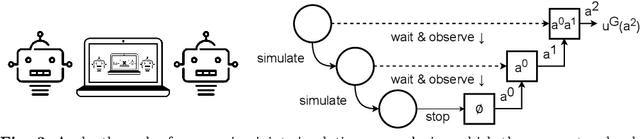
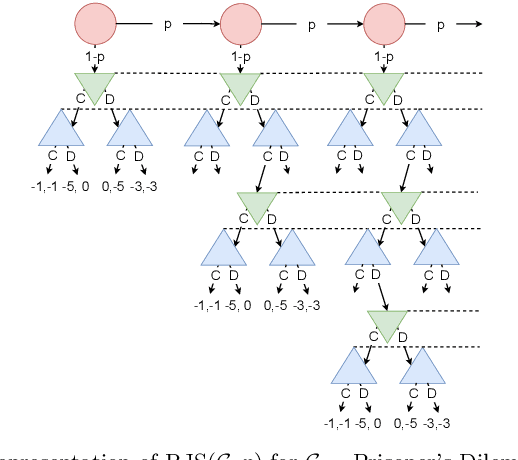
Game-theoretic dynamics between AI agents could differ from traditional human-human interactions in various ways. One such difference is that it may be possible to accurately simulate an AI agent, for example because its source code is known. Our aim is to explore ways of leveraging this possibility to achieve more cooperative outcomes in strategic settings. In this paper, we study an interaction between AI agents where the agents run a recursive joint simulation. That is, the agents first jointly observe a simulation of the situation they face. This simulation in turn recursively includes additional simulations (with a small chance of failure, to avoid infinite recursion), and the results of all these nested simulations are observed before an action is chosen. We show that the resulting interaction is strategically equivalent to an infinitely repeated version of the original game, allowing a direct transfer of existing results such as the various folk theorems.