 Add to Chrome
 Add to Firefox
 Add to Edge
LawThinker: A Deep Research Legal Agent in Dynamic Environments
Feb 12, 2026
Legal reasoning requires not only correct outcomes but also procedurally compliant reasoning processes. However, existing methods lack mechanisms to verify intermediate reasoning steps, allowing errors such as inapplicable statute citations to propagate undetected through the reasoning chain. To address this, we propose LawThinker, an autonomous legal research agent that adopts an Explore-Verify-Memorize strategy for dynamic judicial environments. The core idea is to enforce verification as an atomic operation after every knowledge exploration step. A DeepVerifier module examines each retrieval result along three dimensions of knowledge accuracy, fact-law relevance, and procedural compliance, with a memory module for cross-round knowledge reuse in long-horizon tasks. Experiments on the dynamic benchmark J1-EVAL show that LawThinker achieves a 24% improvement over direct reasoning and an 11% gain over workflow-based methods, with particularly strong improvements on process-oriented metrics. Evaluations on three static benchmarks further confirm its generalization capability. The code is available at https://github.com/yxy-919/LawThinker-agent .

INTERS: Unlocking the Power of Large Language Models in Search with Instruction Tuning
Jan 12, 2024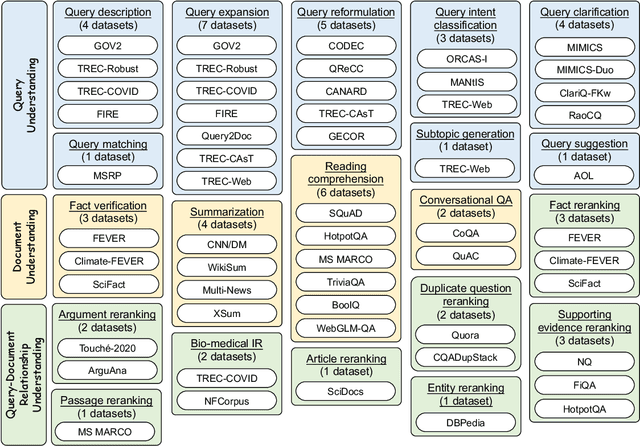
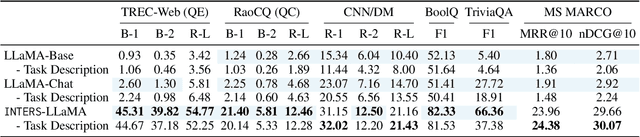
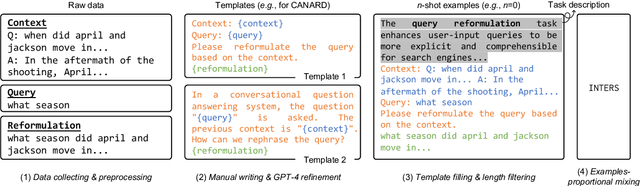
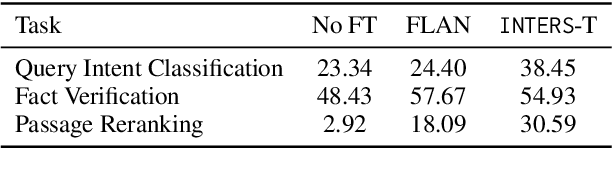
Large language models (LLMs) have demonstrated impressive capabilities in various natural language processing tasks. Despite this, their application to information retrieval (IR) tasks is still challenging due to the infrequent occurrence of many IR-specific concepts in natural language. While prompt-based methods can provide task descriptions to LLMs, they often fall short in facilitating comprehensive understanding and execution of IR tasks, thereby limiting LLMs' applicability. To address this gap, in this work, we explore the potential of instruction tuning to enhance LLMs' proficiency in IR tasks. We introduce a novel instruction tuning dataset, INTERS, encompassing 21 tasks across three fundamental IR categories: query understanding, document understanding, and query-document relationship understanding. The data are derived from 43 distinct datasets with manually written templates. Our empirical results reveal that INTERS significantly boosts the performance of various publicly available LLMs, such as LLaMA, Mistral, and Phi, in search-related tasks. Furthermore, we conduct a comprehensive analysis to ascertain the effects of base model selection, instruction design, volume of instructions, and task variety on performance. We make our dataset and the models fine-tuned on it publicly accessible at https://github.com/DaoD/INTERS.