 Add to Chrome
 Add to Firefox
 Add to Edge
Decoding EEG Signals to Explore Next-Word Predictability in the Human Brain
Jul 17, 2026
Humans invented reading and have passed down this complex skill across generations through language. This study provides empirical evidence of the neural mechanisms underlying bottom-up (related to high-order linguistic structure) and top-down (related to next-word predictability) processes, which interact to guide comprehension during reading. While previous studies have focused on either the N400 effects of predictability or lexical categories, research on how predictability influences N400 responses across different lexical categories is limited, mainly due to constraints in publicly available datasets. Here, we examine how predictability influences brain responses, recorded at millisecond resolution using electroencephalography (EEG), with a focus on the N400 time window (300-500 ms post-stimulus) across different lexical and grammatical categories. Our results indicate that significant differences in N400 responses between high and low cloze probability levels were more pronounced for content words than function words. Among the two primary content categories, verbs exhibited greater N400 differences than nouns, while nouns carried more distinct information about their predictability than verbs. Moreover, we demonstrate that the decoding technique is more effective than the event-related potential (ERP) traditional analysis in capturing more detailed and distinct representations of cognitive processes over time.

Encoding EEG Signals to Examine Human-Like Next-Word Prediction Behaviour in Language Models
Jul 17, 2026Language models (LMs) are trained to excel at predicting the next word in the sequence given prior context, and humans also share this predictability in reading comprehension. Neuroscience research reveals that next-word predictability influences brain response, as recorded at millisecond resolution using electroencephalography (EEG). While our evidence indicates that advanced LMs achieve accuracies closely aligned with human performance at the next-word prediction task, this raises the question: Does higher prediction accuracy necessarily mean that these models adequately capture the cognitive signals associated with human reading comprehension? Here, we generate regressors for both humans and LMs based on two information measures, including top-1 prediction and surprisal, to predict event-related potential (ERP) elicited from EEG recordings which reflect different stages of cognitive processing during reading. We argue that modelling ERP patterns offers fine-grained analysis of the cognitive plausibility of various LMs during reading. Our results indicate that only surprisal potentially correlates with language-processing ERPs, especially for open-class words with high semantic content. Moreover, our findings challenge the assumption that scaling LMs with increased parameters and computational budgets will consistently lead to improved convergence with human-like linguistic processing.
HANCLIP: A Family of Hyperbolic Angular Negation Vision Language Models
Jun 22, 2026Vision-Language Models (VLMs) are typically pre-trained on large-scale image-text datasets to capture semantic correspondences between visual content and natural language. However, they remain surprisingly brittle to negation: models often rely on shallow word co-occurrence and are easily distracted by misleading or irrelevant textual cues, even when their overall retrieval or classification performance is strong. Moreover, directly finetuning on negation data can interfere with previously acquired knowledge, causing noticeable degradation on standard vision-language benchmarks. To tackle these issues, this work introduces HANCLIP (Hyperbolic + Angular + Negation), a family of VLMs that explicitly restructures the embedding space to encode "what an image is not" alongside "what it is." HANCLIP is trained on a compact set of 20,000 image-text quadruplets and combines a hyperbolic formulation, which models hierarchical semantic relations and asymmetries, with an angular triplet objective that drives systematic separation between negated descriptions and their corresponding positives. This geometry-aware design strengthens negation sensitivity while preserving the global structure of pretrained representations, rather than overwriting them. Extensive experiments across multiple vision-language tasks show that HANCLIP delivers consistent gains on the negation-focused NegBench benchmark, while maintaining competitive or improved performance on standard classification and image-text retrieval benchmarks. The framework is model-agnostic and can be plugged into CLIP, LongCLIP, SmartCLIP, and HiMo-CLIP without large-scale retraining, demonstrating that a carefully designed geometric objective can substantially extend the reasoning capabilities of existing VLMs using only modest additional data.
When Generator Replay Degrades: Projected Rehearsal Orchestration for Heterogeneous Federated Class-Incremental Learning
Jun 14, 2026Federated class-incremental learning (FCIL) becomes substantially harder when clients observe different label subsets, progress through tasks at different stages, and provide uneven supervision for the same semantic concepts. Existing FCIL methods often preserve old knowledge through input-space synthesis, but they can be fragile under heterogeneous task streams and difficult to transfer across modalities. To alleviate such issues, we propose PRO, a framework that replaces synthetic input replay with projected rehearsal orchestration. To remove external pretraining, we evaluate all methods under the same warmup. After this, PRO maintains compact class-level projected memories on the server and allows clients perform balanced pseudo multi-task training over current examples and old projected memories. To handle stronger representation drift, we further introduce PRO-MAX, which augments PRO with neighborhood-weighted memory alignment while preserving the same server-light principle that the server only aggregates model updates and memory statistics. Across image, text, and graph benchmarks, PRO and PRO-MAX improve retention and final utility under heterogeneous streams while remaining competitive in homogeneous FCIL. Even when baselines are given expanded replay budgets, they degrade under supervision imbalance and stage misalignment, indicating that replay quantity alone does not resolve replay-quality failures. Additional weak-task diagnostics further show that larger replay mismatch is associated with larger downstream degradation, while our method keeps projected memories better aligned with the evolving representation.
PRISM: A Multi-Dimensional Benchmark for Evaluating LLM Peer Reviewers
May 27, 2026The rapid growth in submissions to machine learning venues has strained the scientific peer-review system and intensified interest in LLM-based automated peer reviewers. However, how good these systems are actually, especially compared to human reviewers at catching scientific gaps, remains poorly understood. In this work, we introduce PRISM (Peer Review Intelligence via Structured Multi-dimensional assessment), a benchmarking framework that evaluates review quality across four dimensions: Depth of Analysis, Novelty Assessment,Flaw Identification & Major Issues Prioritization, and Multi-dimensional Constructiveness. Unlike most existing evaluations based on surface-level metrics like ROUGE and BLEU, or unconstrained LLM-as-a-judge prompting that conflates fluency with rigor, PRISM grounds each dimension in argument mining, retrieval-augmented verification, and consensus-based scoring. We apply PRISM to benchmark five leading automated reviewer systems and human reviewers on a stratified corpus of reviews from ICLR, ICML, and NeurIPS. The results reveal that LLMs can match or beat human reviewers on individual dimensions: comparable depth of analysis, stronger novelty verification, and highly accurate critique prioritization. However, no single system consistently matches the balanced performance of the human baseline across all dimensions at once. Each exhibits a distinct specialization profile with characteristic blind spots -- failure modes that aggregate metrics miss entirely. The implication is that LLM reviewers are best understood as targeted supplements to human review, effective within specific dimensions, but unreliable as standalone replacements. Our demo and key results can be found at https://khanhthanhdev.github.io/prism-page/.
High-dimensional Many-to-many-to-many Mediation Analysis
Apr 03, 2026We study high-dimensional mediation analysis in which exposures, mediators, and outcomes are all multivariate, and both exposures and mediators may be high-dimensional. We formalize this as a many (exposures)-to-many (mediators)-to-many (outcomes) (MMM) mediation analysis problem. Methodologically, MMM mediation analysis simultaneously performs variable selection for high-dimensional exposures and mediators, estimates the indirect effect matrix (i.e., the coefficient matrices linking exposure-to-mediator and mediator-to-outcome pathways), and enables prediction of multivariate outcomes. Theoretically, we show that the estimated indirect effect matrices are consistent and element-wise asymptotically normal, and we derive error bounds for the estimators. To evaluate the efficacy of the MMM mediation framework, we first investigate its finite-sample performance, including convergence properties, the behavior of the asymptotic approximations, and robustness to noise, via simulation studies. We then apply MMM mediation analysis to data from the Alzheimer's Disease Neuroimaging Initiative to study how cortical thickness of 202 brain regions may mediate the effects of 688 genome-wide significant single nucleotide polymorphisms (SNPs) (selected from approximately 1.5 million SNPs) on eleven cognitive-behavioral and diagnostic outcomes. The MMM mediation framework identifies biologically interpretable, many-to-many-to-many genetic-neural-cognitive pathways and improves downstream out-of-sample classification and prediction performance. Taken together, our results demonstrate the potential of MMM mediation analysis and highlight the value of statistical methodology for investigating complex, high-dimensional multi-layer pathways in science. The MMM package is available at https://github.com/THELabTop/MMM-Mediation.
Revisiting Incremental Stochastic Majorization-Minimization Algorithms with Applications to Mixture of Experts
Jan 27, 2026Processing high-volume, streaming data is increasingly common in modern statistics and machine learning, where batch-mode algorithms are often impractical because they require repeated passes over the full dataset. This has motivated incremental stochastic estimation methods, including the incremental stochastic Expectation-Maximization (EM) algorithm formulated via stochastic approximation. In this work, we revisit and analyze an incremental stochastic variant of the Majorization-Minimization (MM) algorithm, which generalizes incremental stochastic EM as a special case. Our approach relaxes key EM requirements, such as explicit latent-variable representations, enabling broader applicability and greater algorithmic flexibility. We establish theoretical guarantees for the incremental stochastic MM algorithm, proving consistency in the sense that the iterates converge to a stationary point characterized by a vanishing gradient of the objective. We demonstrate these advantages on a softmax-gated mixture of experts (MoE) regression problem, for which no stochastic EM algorithm is available. Empirically, our method consistently outperforms widely used stochastic optimizers, including stochastic gradient descent, root mean square propagation, adaptive moment estimation, and second-order clipped stochastic optimization. These results support the development of new incremental stochastic algorithms, given the central role of softmax-gated MoE architectures in contemporary deep neural networks for heterogeneous data modeling. Beyond synthetic experiments, we also validate practical effectiveness on two real-world datasets, including a bioinformatics study of dent maize genotypes under drought stress that integrates high-dimensional proteomics with ecophysiological traits, where incremental stochastic MM yields stable gains in predictive performance.
Fusionista2.0: Efficiency Retrieval System for Large-Scale Datasets
Nov 15, 2025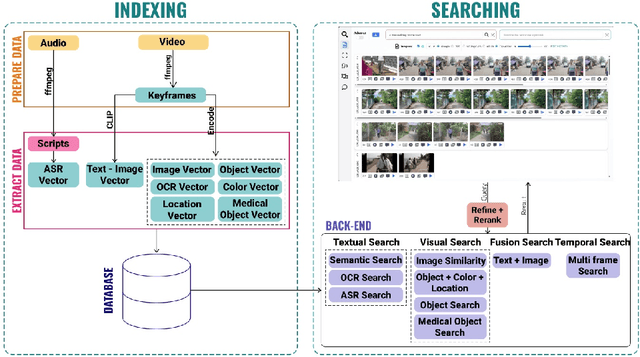

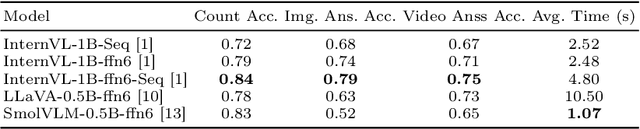
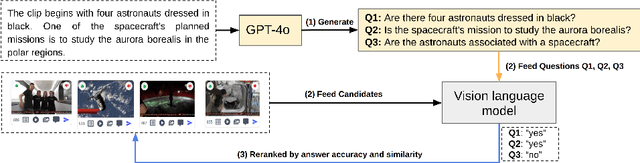
The Video Browser Showdown (VBS) challenges systems to deliver accurate results under strict time constraints. To meet this demand, we present Fusionista2.0, a streamlined video retrieval system optimized for speed and usability. All core modules were re-engineered for efficiency: preprocessing now relies on ffmpeg for fast keyframe extraction, optical character recognition uses Vintern-1B-v3.5 for robust multilingual text recognition, and automatic speech recognition employs faster-whisper for real-time transcription. For question answering, lightweight vision-language models provide quick responses without the heavy cost of large models. Beyond these technical upgrades, Fusionista2.0 introduces a redesigned user interface with improved responsiveness, accessibility, and workflow efficiency, enabling even non-expert users to retrieve relevant content rapidly. Evaluations demonstrate that retrieval time was reduced by up to 75% while accuracy and user satisfaction both increased, confirming Fusionista2.0 as a competitive and user-friendly system for large-scale video search.
ViConBERT: Context-Gloss Aligned Vietnamese Word Embedding for Polysemous and Sense-Aware Representations
Nov 15, 2025Recent advances in contextualized word embeddings have greatly improved semantic tasks such as Word Sense Disambiguation (WSD) and contextual similarity, but most progress has been limited to high-resource languages like English. Vietnamese, in contrast, still lacks robust models and evaluation resources for fine-grained semantic understanding. In this paper, we present ViConBERT, a novel framework for learning Vietnamese contextualized embeddings that integrates contrastive learning (SimCLR) and gloss-based distillation to better capture word meaning. We also introduce ViConWSD, the first large-scale synthetic dataset for evaluating semantic understanding in Vietnamese, covering both WSD and contextual similarity. Experimental results show that ViConBERT outperforms strong baselines on WSD (F1 = 0.87) and achieves competitive performance on ViCon (AP = 0.88) and ViSim-400 (Spearman's rho = 0.60), demonstrating its effectiveness in modeling both discrete senses and graded semantic relations. Our code, models, and data are available at https://github.com/tkhangg0910/ViConBERT
Dendrograms of Mixing Measures for Softmax-Gated Gaussian Mixture of Experts: Consistency without Model Sweeps
Oct 14, 2025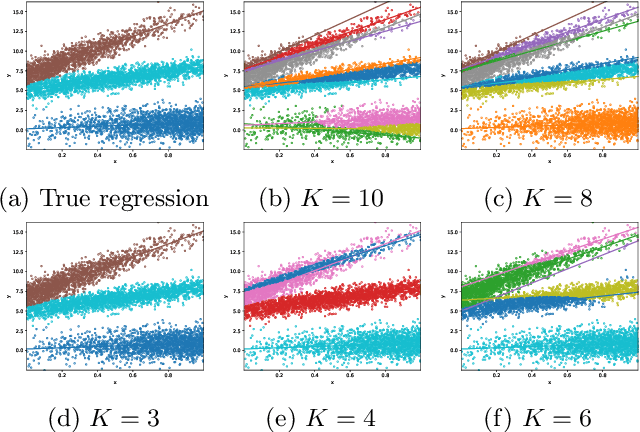

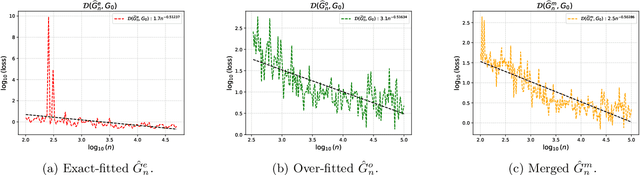
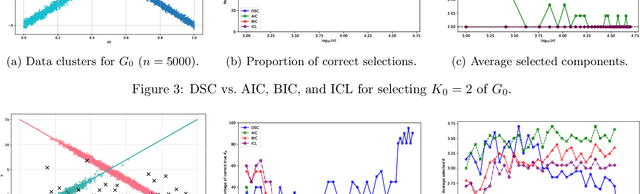
We develop a unified statistical framework for softmax-gated Gaussian mixture of experts (SGMoE) that addresses three long-standing obstacles in parameter estimation and model selection: (i) non-identifiability of gating parameters up to common translations, (ii) intrinsic gate-expert interactions that induce coupled differential relations in the likelihood, and (iii) the tight numerator-denominator coupling in the softmax-induced conditional density. Our approach introduces Voronoi-type loss functions aligned with the gate-partition geometry and establishes finite-sample convergence rates for the maximum likelihood estimator (MLE). In over-specified models, we reveal a link between the MLE's convergence rate and the solvability of an associated system of polynomial equations characterizing near-nonidentifiable directions. For model selection, we adapt dendrograms of mixing measures to SGMoE, yielding a consistent, sweep-free selector of the number of experts that attains pointwise-optimal parameter rates under overfitting while avoiding multi-size training. Simulations on synthetic data corroborate the theory, accurately recovering the expert count and achieving the predicted rates for parameter estimation while closely approximating the regression function. Under model misspecification (e.g., $\epsilon$-contamination), the dendrogram selection criterion is robust, recovering the true number of mixture components, while the Akaike information criterion, the Bayesian information criterion, and the integrated completed likelihood tend to overselect as sample size grows. On a maize proteomics dataset of drought-responsive traits, our dendrogram-guided SGMoE selects two experts, exposes a clear mixing-measure hierarchy, stabilizes the likelihood early, and yields interpretable genotype-phenotype maps, outperforming standard criteria without multi-size training.