 Add to Chrome
 Add to Firefox
 Add to Edge
RELATE: A Reinforcement Learning-Enhanced LLM Framework for Advertising Text Generation
Feb 12, 2026
In online advertising, advertising text plays a critical role in attracting user engagement and driving advertiser value. Existing industrial systems typically follow a two-stage paradigm, where candidate texts are first generated and subsequently aligned with online performance metrics such as click-through rate(CTR). This separation often leads to misaligned optimization objectives and low funnel efficiency, limiting global optimality. To address these limitations, we propose RELATE, a reinforcement learning-based end-to-end framework that unifies generation and objective alignment within a single model. Instead of decoupling text generation from downstream metric alignment, RELATE integrates performance and compliance objectives directly into the generation process via policy learning. To better capture ultimate advertiser value beyond click-level signals, We incorporate conversion-oriented metrics into the objective and jointly model them with compliance constraints as multi-dimensional rewards, enabling the model to generate high-quality ad texts that improve conversion performance under policy constraints. Extensive experiments on large-scale industrial datasets demonstrate that RELATE consistently outperforms baselines. Furthermore, online deployment on a production advertising platform yields statistically significant improvements in click-through conversion rate(CTCVR) under strict policy constraints, validating the robustness and real-world effectiveness of the proposed framework.

Leveraging GPT-4 for Food Effect Summarization to Enhance Product-Specific Guidance Development via Iterative Prompting
Jun 28, 2023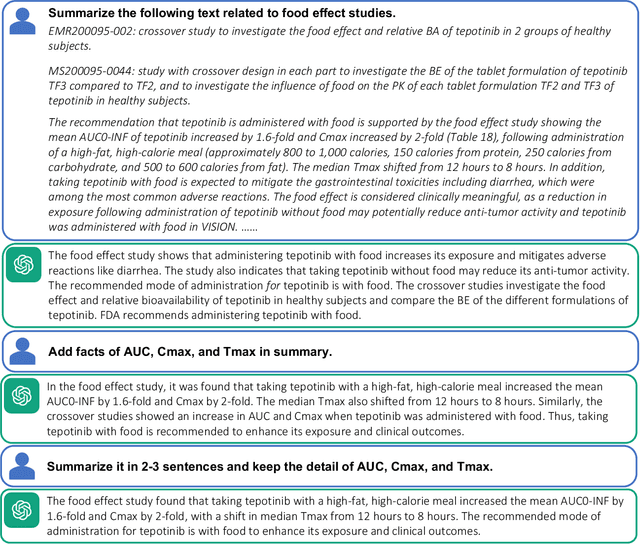
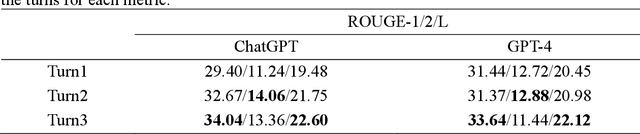
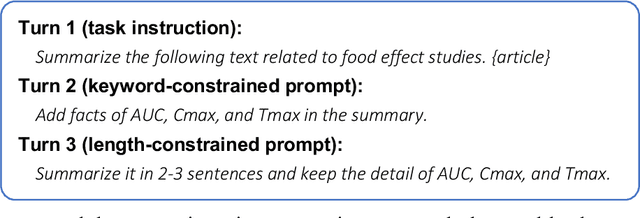
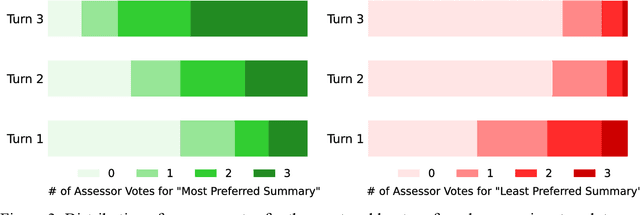
Food effect summarization from New Drug Application (NDA) is an essential component of product-specific guidance (PSG) development and assessment. However, manual summarization of food effect from extensive drug application review documents is time-consuming, which arouses a need to develop automated methods. Recent advances in large language models (LLMs) such as ChatGPT and GPT-4, have demonstrated great potential in improving the effectiveness of automated text summarization, but its ability regarding the accuracy in summarizing food effect for PSG assessment remains unclear. In this study, we introduce a simple yet effective approach, iterative prompting, which allows one to interact with ChatGPT or GPT-4 more effectively and efficiently through multi-turn interaction. Specifically, we propose a three-turn iterative prompting approach to food effect summarization in which the keyword-focused and length-controlled prompts are respectively provided in consecutive turns to refine the quality of the generated summary. We conduct a series of extensive evaluations, ranging from automated metrics to FDA professionals and even evaluation by GPT-4, on 100 NDA review documents selected over the past five years. We observe that the summary quality is progressively improved throughout the process. Moreover, we find that GPT-4 performs better than ChatGPT, as evaluated by FDA professionals (43% vs. 12%) and GPT-4 (64% vs. 35%). Importantly, all the FDA professionals unanimously rated that 85% of the summaries generated by GPT-4 are factually consistent with the golden reference summary, a finding further supported by GPT-4 rating of 72% consistency. These results strongly suggest a great potential for GPT-4 to draft food effect summaries that could be reviewed by FDA professionals, thereby improving the efficiency of PSG assessment cycle and promoting the generic drug product development.