 Add to Chrome
 Add to Firefox
 Add to Edge
Improving Dialectal Slot and Intent Detection with Auxiliary Tasks: A Multi-Dialectal Bavarian Case Study
Jan 07, 2025
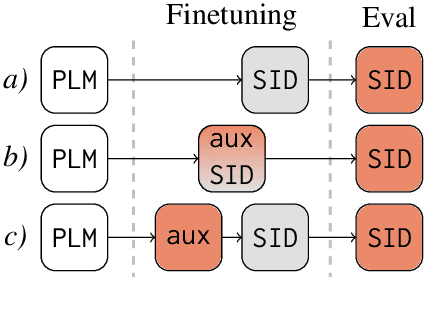
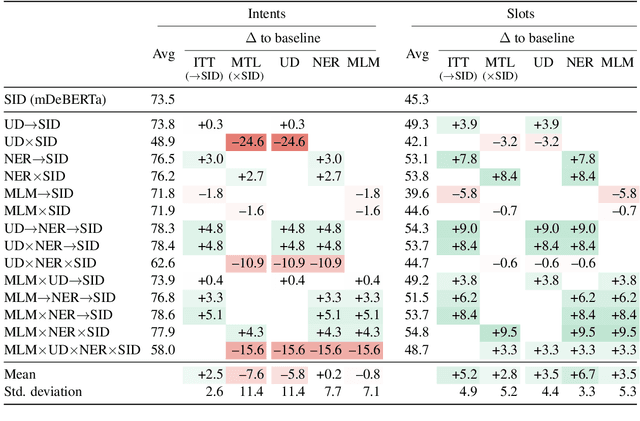
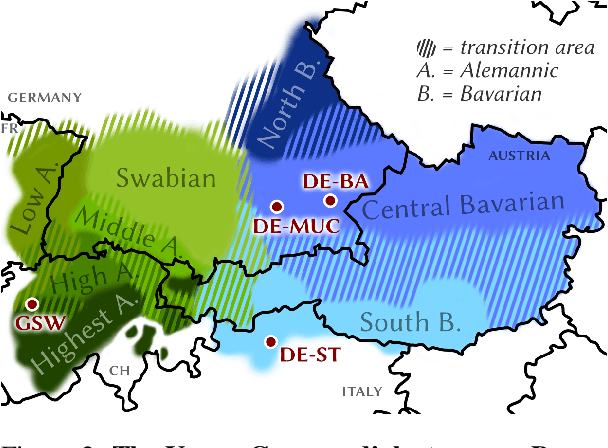
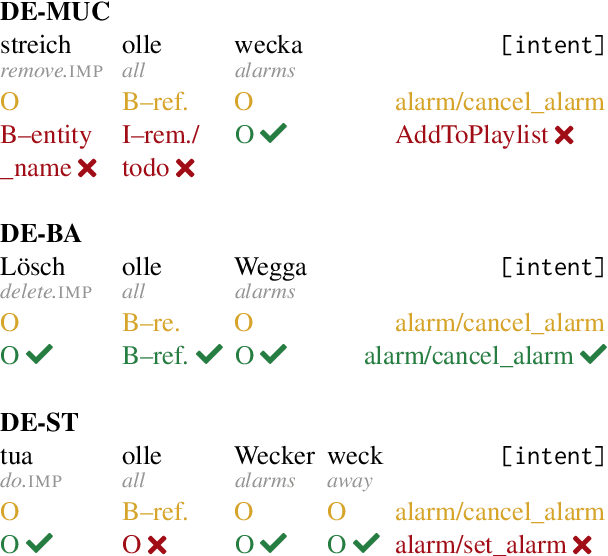
Reliable slot and intent detection (SID) is crucial in natural language understanding for applications like digital assistants. Encoder-only transformer models fine-tuned on high-resource languages generally perform well on SID. However, they struggle with dialectal data, where no standardized form exists and training data is scarce and costly to produce. We explore zero-shot transfer learning for SID, focusing on multiple Bavarian dialects, for which we release a new dataset for the Munich dialect. We evaluate models trained on auxiliary tasks in Bavarian, and compare joint multi-task learning with intermediate-task training. We also compare three types of auxiliary tasks: token-level syntactic tasks, named entity recognition (NER), and language modelling. We find that the included auxiliary tasks have a more positive effect on slot filling than intent classification (with NER having the most positive effect), and that intermediate-task training yields more consistent performance gains. Our best-performing approach improves intent classification performance on Bavarian dialects by 5.1 and slot filling F1 by 8.4 percentage points.

Add Noise, Tasks, or Layers? MaiNLP at the VarDial 2025 Shared Task on Norwegian Dialectal Slot and Intent Detection
Jan 07, 2025

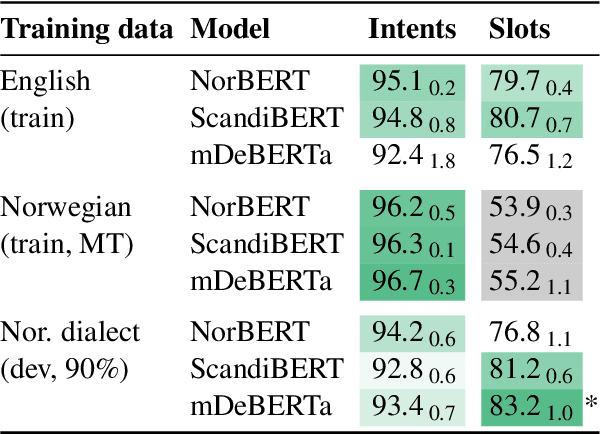

Slot and intent detection (SID) is a classic natural language understanding task. Despite this, research has only more recently begun focusing on SID for dialectal and colloquial varieties. Many approaches for low-resource scenarios have not yet been applied to dialectal SID data, or compared to each other on the same datasets. We participate in the VarDial 2025 shared task on slot and intent detection in Norwegian varieties, and compare multiple set-ups: varying the training data (English, Norwegian, or dialectal Norwegian), injecting character-level noise, training on auxiliary tasks, and applying Layer Swapping, a technique in which layers of models fine-tuned on different datasets are assembled into a model. We find noise injection to be beneficial while the effects of auxiliary tasks are mixed. Though some experimentation was required to successfully assemble a model from layers, it worked surprisingly well; a combination of models trained on English and small amounts of dialectal data produced the most robust slot predictions. Our best models achieve 97.6% intent accuracy and 85.6% slot F1 in the shared task.
KARRIEREWEGE: A Large Scale Career Path Prediction Dataset
Dec 19, 2024Accurate career path prediction can support many stakeholders, like job seekers, recruiters, HR, and project managers. However, publicly available data and tools for career path prediction are scarce. In this work, we introduce KARRIEREWEGE, a comprehensive, publicly available dataset containing over 500k career paths, significantly surpassing the size of previously available datasets. We link the dataset to the ESCO taxonomy to offer a valuable resource for predicting career trajectories. To tackle the problem of free-text inputs typically found in resumes, we enhance it by synthesizing job titles and descriptions resulting in KARRIEREWEGE+. This allows for accurate predictions from unstructured data, closely aligning with real-world application challenges. We benchmark existing state-of-the-art (SOTA) models on our dataset and a prior benchmark and observe improved performance and robustness, particularly for free-text use cases, due to the synthesized data.
A Rose by Any Other Name: LLM-Generated Explanations Are Good Proxies for Human Explanations to Collect Label Distributions on NLI
Dec 18, 2024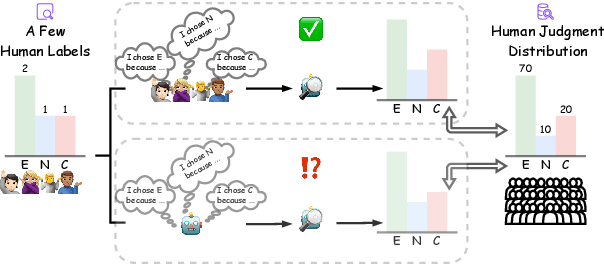
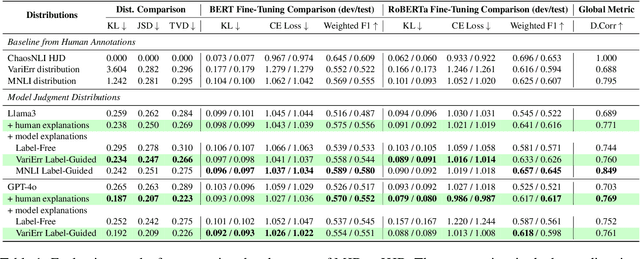
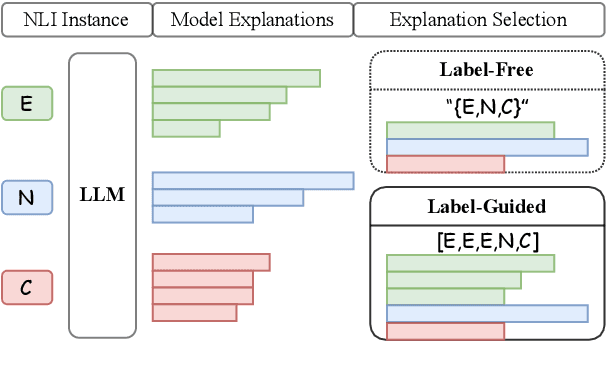
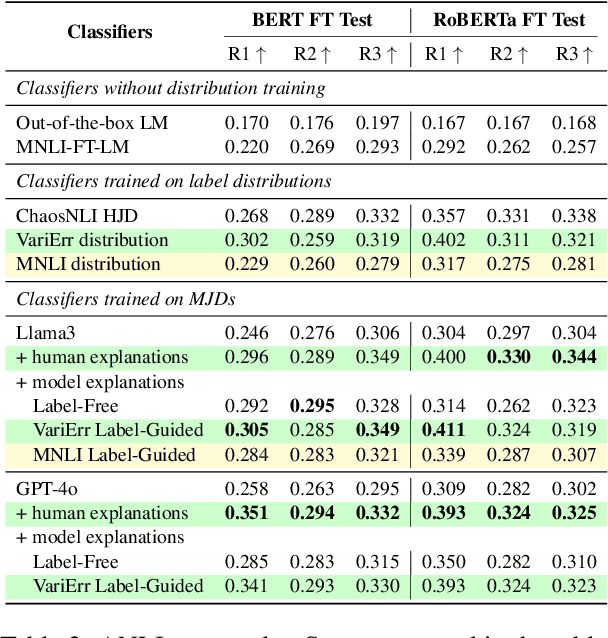
Disagreement in human labeling is ubiquitous, and can be captured in human judgment distributions (HJDs). Recent research has shown that explanations provide valuable information for understanding human label variation (HLV) and large language models (LLMs) can approximate HJD from a few human-provided label-explanation pairs. However, collecting explanations for every label is still time-consuming. This paper examines whether LLMs can be used to replace humans in generating explanations for approximating HJD. Specifically, we use LLMs as annotators to generate model explanations for a few given human labels. We test ways to obtain and combine these label-explanations with the goal to approximate human judgment distribution. We further compare the resulting human with model-generated explanations, and test automatic and human explanation selection. Our experiments show that LLM explanations are promising for NLI: to estimate HJD, generated explanations yield comparable results to human's when provided with human labels. Importantly, our results generalize from datasets with human explanations to i) datasets where they are not available and ii) challenging out-of-distribution test sets.
RACQUET: Unveiling the Dangers of Overlooked Referential Ambiguity in Visual LLMs
Dec 18, 2024
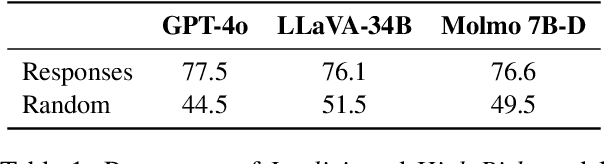

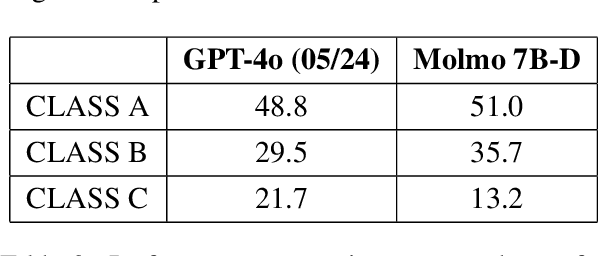
Ambiguity resolution is key to effective communication. While humans effortlessly address ambiguity through conversational grounding strategies, the extent to which current language models can emulate these strategies remains unclear. In this work, we examine referential ambiguity in image-based question answering by introducing RACQUET, a carefully curated dataset targeting distinct aspects of ambiguity. Through a series of evaluations, we reveal significant limitations and problems of overconfidence of state-of-the-art large multimodal language models in addressing ambiguity in their responses. The overconfidence issue becomes particularly relevant for RACQUET-BIAS, a subset designed to analyze a critical yet underexplored problem: failing to address ambiguity leads to stereotypical, socially biased responses. Our results underscore the urgency of equipping models with robust strategies to deal with uncertainty without resorting to undesirable stereotypes.
Cross-Dialect Information Retrieval: Information Access in Low-Resource and High-Variance Languages
Dec 17, 2024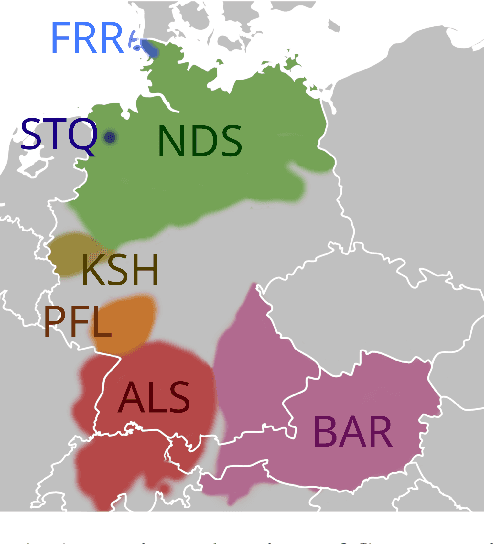
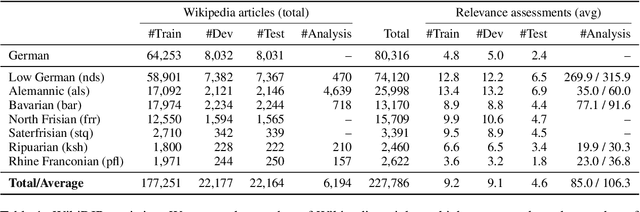
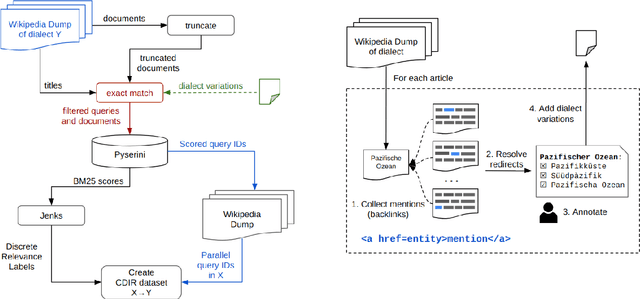
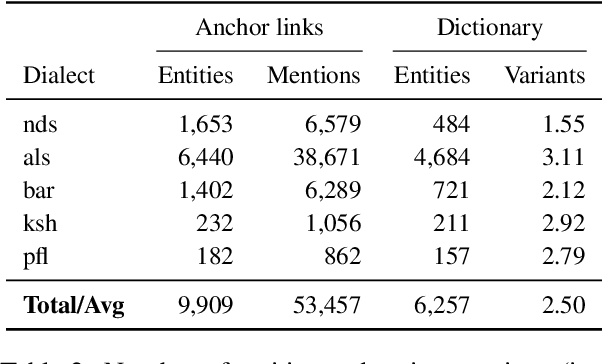
A large amount of local and culture-specific knowledge (e.g., people, traditions, food) can only be found in documents written in dialects. While there has been extensive research conducted on cross-lingual information retrieval (CLIR), the field of cross-dialect retrieval (CDIR) has received limited attention. Dialect retrieval poses unique challenges due to the limited availability of resources to train retrieval models and the high variability in non-standardized languages. We study these challenges on the example of German dialects and introduce the first German dialect retrieval dataset, dubbed WikiDIR, which consists of seven German dialects extracted from Wikipedia. Using WikiDIR, we demonstrate the weakness of lexical methods in dealing with high lexical variation in dialects. We further show that commonly used zero-shot cross-lingual transfer approach with multilingual encoders do not transfer well to extremely low-resource setups, motivating the need for resource-lean and dialect-specific retrieval models. We finally demonstrate that (document) translation is an effective way to reduce the dialect gap in CDIR.
Algorithmic Fidelity of Large Language Models in Generating Synthetic German Public Opinions: A Case Study
Dec 17, 2024In recent research, large language models (LLMs) have been increasingly used to investigate public opinions. This study investigates the algorithmic fidelity of LLMs, i.e., the ability to replicate the socio-cultural context and nuanced opinions of human participants. Using open-ended survey data from the German Longitudinal Election Studies (GLES), we prompt different LLMs to generate synthetic public opinions reflective of German subpopulations by incorporating demographic features into the persona prompts. Our results show that Llama performs better than other LLMs at representing subpopulations, particularly when there is lower opinion diversity within those groups. Our findings further reveal that the LLM performs better for supporters of left-leaning parties like The Greens and The Left compared to other parties, and matches the least with the right-party AfD. Additionally, the inclusion or exclusion of specific variables in the prompts can significantly impact the models' predictions. These findings underscore the importance of aligning LLMs to more effectively model diverse public opinions while minimizing political biases and enhancing robustness in representativeness.
Neural Text Normalization for Luxembourgish using Real-Life Variation Data
Dec 13, 2024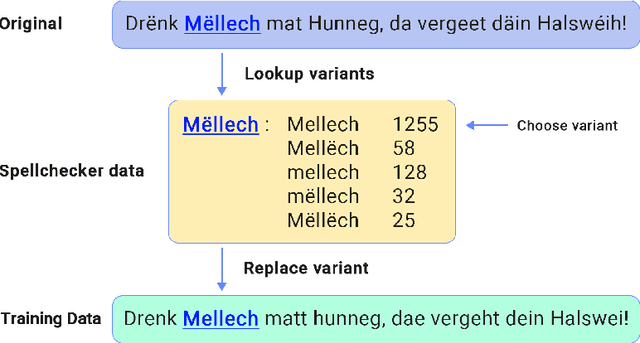
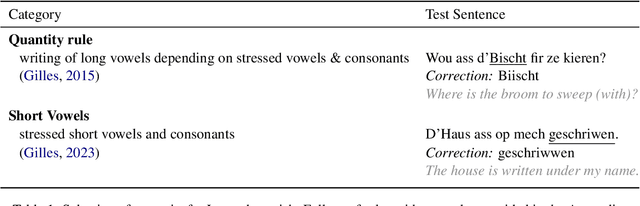
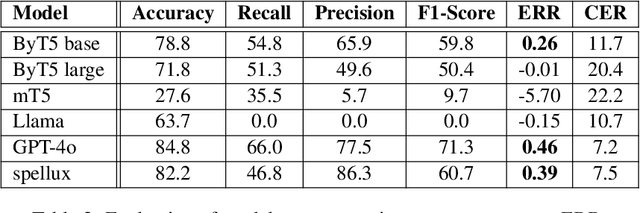
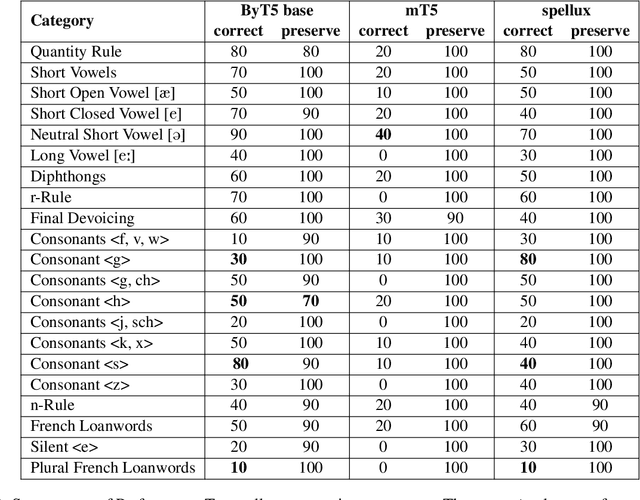
Orthographic variation is very common in Luxembourgish texts due to the absence of a fully-fledged standard variety. Additionally, developing NLP tools for Luxembourgish is a difficult task given the lack of annotated and parallel data, which is exacerbated by ongoing standardization. In this paper, we propose the first sequence-to-sequence normalization models using the ByT5 and mT5 architectures with training data obtained from word-level real-life variation data. We perform a fine-grained, linguistically-motivated evaluation to test byte-based, word-based and pipeline-based models for their strengths and weaknesses in text normalization. We show that our sequence model using real-life variation data is an effective approach for tailor-made normalization in Luxembourgish.
Evaluating Pixel Language Models on Non-Standardized Languages
Dec 12, 2024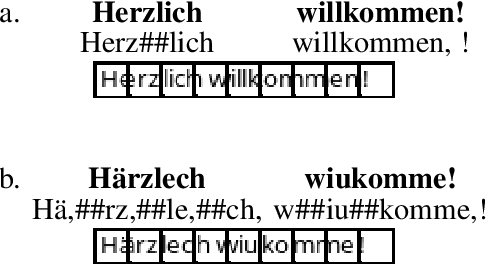
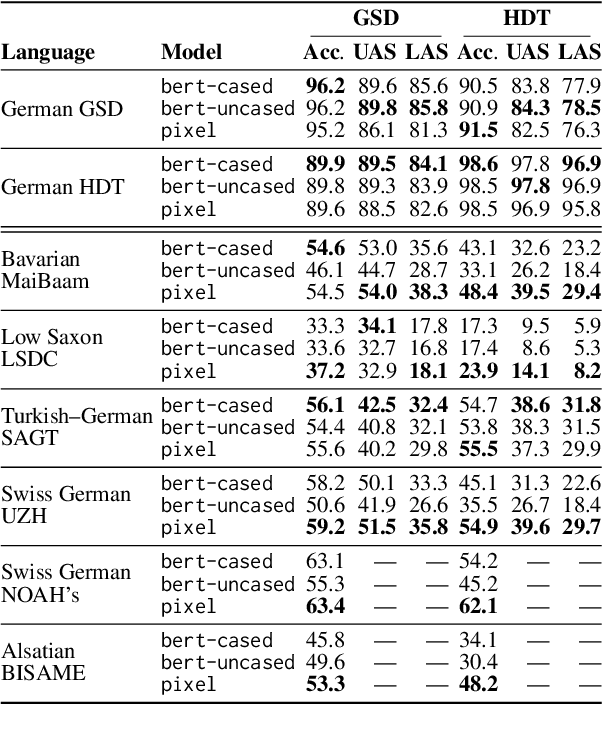
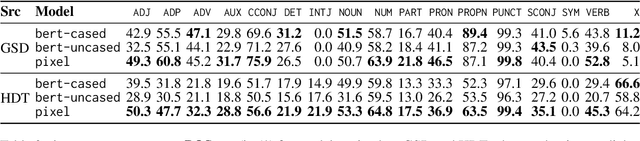
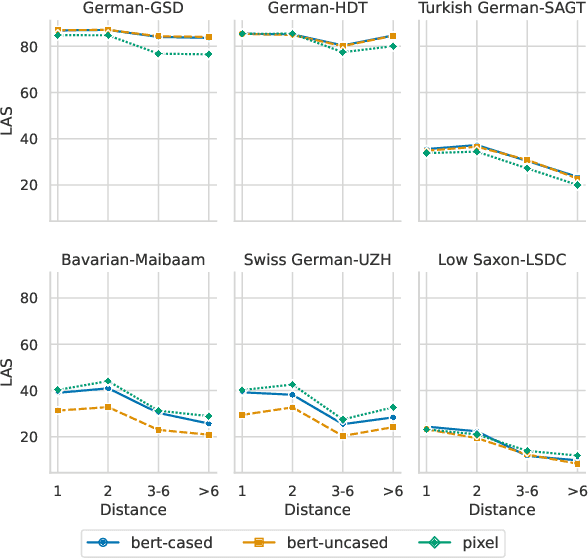
We explore the potential of pixel-based models for transfer learning from standard languages to dialects. These models convert text into images that are divided into patches, enabling a continuous vocabulary representation that proves especially useful for out-of-vocabulary words common in dialectal data. Using German as a case study, we compare the performance of pixel-based models to token-based models across various syntactic and semantic tasks. Our results show that pixel-based models outperform token-based models in part-of-speech tagging, dependency parsing and intent detection for zero-shot dialect evaluation by up to 26 percentage points in some scenarios, though not in Standard German. However, pixel-based models fall short in topic classification. These findings emphasize the potential of pixel-based models for handling dialectal data, though further research should be conducted to assess their effectiveness in various linguistic contexts.
A Deep Learning Approach to Language-independent Gender Prediction on Twitter
Nov 29, 2024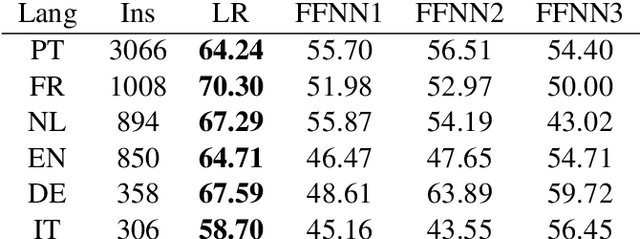

This work presents a set of experiments conducted to predict the gender of Twitter users based on language-independent features extracted from the text of the users' tweets. The experiments were performed on a version of TwiSty dataset including tweets written by the users of six different languages: Portuguese, French, Dutch, English, German, and Italian. Logistic regression (LR), and feed-forward neural networks (FFNN) with back-propagation were used to build models in two different settings: Inter-Lingual (IL) and Cross-Lingual (CL). In the IL setting, the training and testing were performed on the same language whereas in the CL, Italian and German datasets were set aside and only used as test sets and the rest were combined to compose training and development sets. In the IL, the highest accuracy score belongs to LR whereas in the CL, FFNN with three hidden layers yields the highest score. The results show that neural network based models underperform traditional models when the size of the training set is small; however, they beat traditional models by a non-trivial margin, when they are fed with large enough data. Finally, the feature analysis confirms that men and women have different writing styles independent of their language.