 Add to Chrome
 Add to Firefox
 Add to Edge
A Riemannian Approach to Low-Rank Optimal Transport
Jun 10, 2026
Low-rank optimal transport (OT) mitigates the quadratic scaling of classical solvers, yet existing approaches rely heavily on first-order mirror-descent updates that require careful hyperparameter tuning and ignore the optimization landscape's curvature. To address these limitations, we propose a unified Riemannian geometric framework for low-rank OT, modeling balanced and unbalanced rank-$r$ positive factored couplings as novel smooth embedded submanifolds of the positive orthant. By equipping these manifolds with the Fisher-Rao product metric, we derive tractable formulations for Riemannian projectors, retractions, and Hessian-vector products. Our cost-agnostic framework seamlessly extends to linear OT, Gromov-Wasserstein (GW), fused GW, and their unbalanced counterparts. For balanced OT, our geometric ingredients are computed via efficient conjugate-gradient and iterative Bregman updates. For the unbalanced OT, our operations elegantly reduce to closed-form scalings, completely eliminating inner iterative loops. In both regimes, per-iteration complexity scales linearly with dataset size, and we provide a rank-sufficiency certificate for global optimality verification. Extensive experiments across a range of problem sizes demonstrate that our regularization-free first- and second-order solvers achieve faster convergence and superior performance over existing state-of-the-art low-rank OT solvers.

Minibatch Selection via Partition Matroid Constrained Gradient Matching
Jun 06, 2026Training large language models (LLMs) on heterogeneous data requires selecting minibatches that balance convergence speed with coverage across domains. Existing methods either select samples independently within each domain or rely on computationally expensive proxy models to learn continuous domain weights. We propose PartitionSel, a cross-domain minibatch selection approach that maximizes a validation-guided gradient-matching utility under per-domain budgets encoded as a partition-matroid constraint. By coupling the per-domain budgets through a single utility, PartitionSel is designed to reduce redundancy in selections across domains. The proposed objective is weakly submodular and admits an orthogonal matching pursuit algorithm with provable approximation guarantees. Empirically, we evaluate PartitionSel for minibatch selection during the fine-tuning of Qwen2.5 and Llama-3 on MetaMathQA and Mol-Instructions. PartitionSel achieves robust gains over per-domain and domain-agnostic baselines on both benchmarks. It also reduces the number of conflicting gradient pairs within each batch, indicating that the cross-domain coupling translates into more compatible training updates.
* 28 pages, 12 figures, ICML 2026
Riemannian Optimization for Hadamard Products of Low-Rank Matrices
May 31, 2026The elementwise Hadamard product of two low-rank matrices provides a parameter-efficient model for data with multiplicative structure, but its modeling is challenging due to the presence of additional symmetries under coupled row/column scalings between the two factors. In order to leverage the geometry of the space, we formulate the learning of such matrices as optimization on a Riemannian quotient manifold. We propose a novel block-diagonal Riemannian metric derived from the pullback of the Frobenius inner product. The metric is shown to be invariant under the full symmetry group. We develop a Riemannian gradient descent algorithm that uses a tuning-free Gauss--Newton step size and scales linearly in the number of observed entries per iteration. Experiments on real and synthetic datasets illustrate the efficacy of our proposed Riemannian approach.
LOFT: Low-Rank Orthogonal Fine-Tuning via Task-Aware Support Selection
May 12, 2026Orthogonal parameter-efficient fine-tuning (PEFT) adapts pretrained weights through structure-preserving multiplicative transformations, but existing methods often conflate two distinct design choices: the subspace in which adaptation occurs and the transformation applied within that subspace. This paper introduces LOFT, a low-rank orthogonal fine-tuning framework that explicitly separates these two components. By viewing orthogonal adaptation as a multiplicative subspace rotation, LOFT provides a unified formulation that recovers representative orthogonal PEFT methods, including coordinate-, butterfly-, Householder-, and principal-subspace-based variants. More importantly, this perspective exposes support selection as a central design axis rather than a byproduct of a particular parameterization. We develop a first-order analysis showing that useful adaptation supports should be informed by the downstream training signal, motivating practical task-aware support selection strategies. Across language understanding, visual transfer, mathematical reasoning, and multilingual out-of-distribution adaptation, LOFT recovers principal-subspace orthogonal adaptation while gradient-informed supports improve the efficiency-performance trade-off under matched parameter, memory, and compute budgets. These results suggest that principled support selection is an important direction for improving orthogonal PEFT.
Intrinsic Muon: Spectral Optimization on Riemannian Matrix Manifolds
May 10, 2026Muon and related norm-constrained matrix optimizers have become central to large-scale learning problems. They are formulated as a linear maximization oracle (LMO) over an ambient matrix-norm ball in unconstrained Euclidean space. However, these do not generalize cleanly to manifold-valued parameters such as low-rank factorizations, orthogonality constraints, or symmetric positive definite (SPD) matrices. Naively restricting the Muon LMO to the tangent space (i) breaks quotient symmetries and (ii) couples the tangent-space constraint with an ambient norm bound, thereby obstructing closed-form solutions on various manifolds of interest. We resolve both issues with a single observation: every Riemannian metric canonically lifts a unitarily invariant Euclidean norm to an intrinsic norm on each tangent space, and the resulting intrinsic norm constrained LMO is symmetry preserving. Building on this, we introduce intrinsic Muon (iMuon), a unified framework that yields closed-form updates on the fixed-rank, SPD, Stiefel, and Grassmann manifolds for any unitarily invariant norm, including the spectral, Frobenius, and nuclear norms. We establish convergence guarantees for both deterministic and stochastic iMuon with rate constants that depend only on the manifold dimension. Notably, on the fixed-rank manifold this constant depends only on the rank, making the rate independent of factor conditioning and removing the runtime factor-rescaling required by prior work. Experiments on LoRA finetuning of LLMs, image classification, and subspace learning illustrate the efficacy of the proposed approach.
UniPROT: Uniform Prototype Selection via Partial Optimal Transport with Submodular Guarantees
Apr 13, 2026Selecting prototypical examples from a source distribution to represent a target data distribution is a fundamental problem in machine learning. Existing subset selection methods often rely on implicit importance scores, which can be skewed towards majority classes and lead to low-quality prototypes for minority classes. We present $\methodprop$, a novel subset selection framework that minimizes the optimal transport (OT) distance between a uniformly weighted prototypical distribution and the target distribution. While intuitive, this formulation leads to a cardinality-constrained maximization of a \emph{super-additive} objective, which is generally intractable to approximate efficiently. To address this, we propose a principled reformulation of the OT marginal constraints, yielding a partial optimal transport-based submodular objective. We prove that this reformulation enables a greedy algorithm with a $(1-1/e)$ approximation guarantee relative to the original super-additive maximization problem. Empirically, we showcase that enforcing uniform prototype weights in UniPROT consistently improves minority-class representation in imbalanced classification benchmarks without compromising majority-class accuracy. In both finetuning and pretraining regimes for large language models under domain imbalance, UniPROT enforces uniform source contributions, yielding robust performance gains. Our results establish UniPROT as a scalable, theoretically grounded solution for uniform-weighted prototype selection. Our code is publicly available at GitHub\footnote{Code: https://github.com/efficiency-learning/UniPROT}
Robust Least-Squares Optimization for Data-Driven Predictive Control: A Geometric Approach
Nov 12, 2025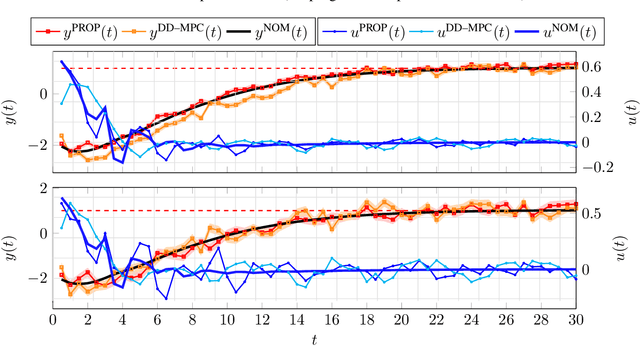
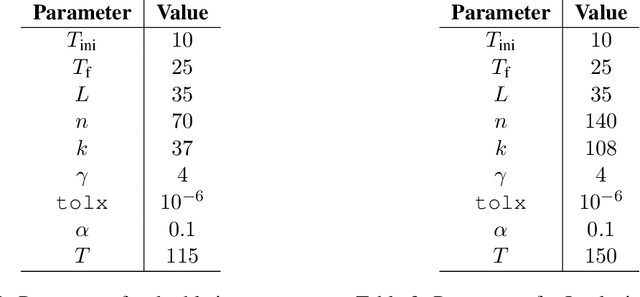
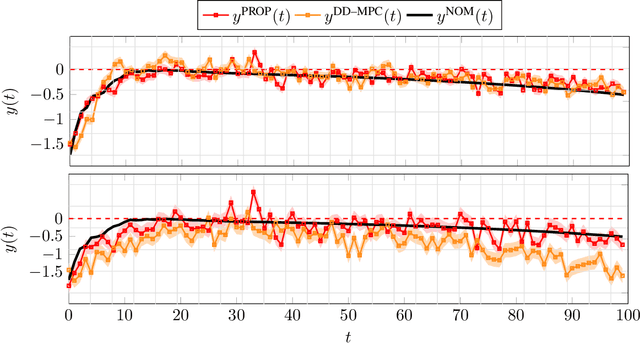
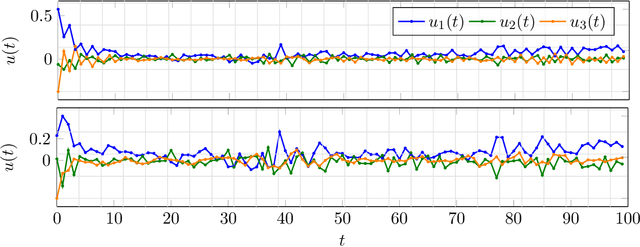
The paper studies a geometrically robust least-squares problem that extends classical and norm-based robust formulations. Rather than minimizing residual error for fixed or perturbed data, we interpret least-squares as enforcing approximate subspace inclusion between measured and true data spaces. The uncertainty in this geometric relation is modeled as a metric ball on the Grassmannian manifold, leading to a min-max problem over Euclidean and manifold variables. The inner maximization admits a closed-form solution, enabling an efficient algorithm with a transparent geometric interpretation. Applied to robust finite-horizon linear-quadratic tracking in data-enabled predictive control, the method improves upon existing robust least-squares formulations, achieving stronger robustness and favorable scaling under small uncertainty.
Generalized infinite dimensional Alpha-Procrustes based geometries
Nov 12, 2025This work extends the recently introduced Alpha-Procrustes family of Riemannian metrics for symmetric positive definite (SPD) matrices by incorporating generalized versions of the Bures-Wasserstein (GBW), Log-Euclidean, and Wasserstein distances. While the Alpha-Procrustes framework has unified many classical metrics in both finite- and infinite- dimensional settings, it previously lacked the structural components necessary to realize these generalized forms. We introduce a formalism based on unitized Hilbert-Schmidt operators and an extended Mahalanobis norm that allows the construction of robust, infinite-dimensional generalizations of GBW and Log-Hilbert-Schmidt distances. Our approach also incorporates a learnable regularization parameter that enhances geometric stability in high-dimensional comparisons. Preliminary experiments reproducing benchmarks from the literature demonstrate the improved performance of our generalized metrics, particularly in scenarios involving comparisons between datasets of varying dimension and scale. This work lays a theoretical and computational foundation for advancing robust geometric methods in machine learning, statistical inference, and functional data analysis.
A Riemannian Approach to Ground Metric Learning for Optimal Transport
Sep 16, 2024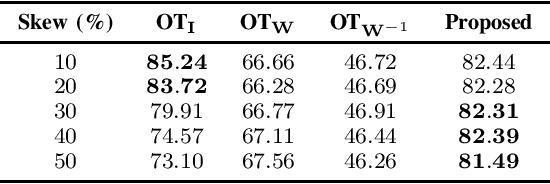
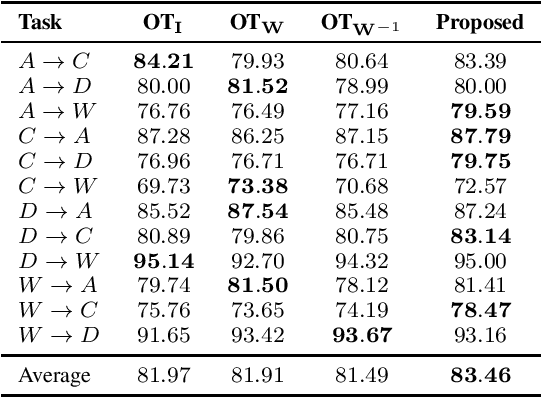
Optimal transport (OT) theory has attracted much attention in machine learning and signal processing applications. OT defines a notion of distance between probability distributions of source and target data points. A crucial factor that influences OT-based distances is the ground metric of the embedding space in which the source and target data points lie. In this work, we propose to learn a suitable latent ground metric parameterized by a symmetric positive definite matrix. We use the rich Riemannian geometry of symmetric positive definite matrices to jointly learn the OT distance along with the ground metric. Empirical results illustrate the efficacy of the learned metric in OT-based domain adaptation.
Riemannian Federated Learning via Averaging Gradient Stream
Sep 11, 2024In recent years, federated learning has garnered significant attention as an efficient and privacy-preserving distributed learning paradigm. In the Euclidean setting, Federated Averaging (FedAvg) and its variants are a class of efficient algorithms for expected (empirical) risk minimization. This paper develops and analyzes a Riemannian Federated Averaging Gradient Stream (RFedAGS) algorithm, which is a generalization of FedAvg, to problems defined on a Riemannian manifold. Under standard assumptions, the convergence rate of RFedAGS with fixed step sizes is proven to be sublinear for an approximate stationary solution. If decaying step sizes are used, the global convergence is established. Furthermore, assuming that the objective obeys the Riemannian Polyak-{\L}ojasiewicz property, the optimal gaps generated by RFedAGS with fixed step size are linearly decreasing up to a tiny upper bound, meanwhile, if decaying step sizes are used, then the gaps sublinearly vanish. Numerical simulations conducted on synthetic and real-world data demonstrate the performance of the proposed RFedAGS.