 Add to Chrome
 Add to Firefox
 Add to Edge
AI Literacy Assessment Revisited: A Task-Oriented Approach Aligned with Real-world Occupations
Nov 07, 2025
As artificial intelligence (AI) systems become ubiquitous in professional contexts, there is an urgent need to equip workers, often with backgrounds outside of STEM, with the skills to use these tools effectively as well as responsibly, that is, to be AI literate. However, prevailing definitions and therefore assessments of AI literacy often emphasize foundational technical knowledge, such as programming, mathematics, and statistics, over practical knowledge such as interpreting model outputs, selecting tools, or identifying ethical concerns. This leaves a noticeable gap in assessing someone's AI literacy for real-world job use. We propose a work-task-oriented assessment model for AI literacy which is grounded in the competencies required for effective use of AI tools in professional settings. We describe the development of a novel AI literacy assessment instrument, and accompanying formative assessments, in the context of a US Navy robotics training program. The program included training in robotics and AI literacy, as well as a competition with practical tasks and a multiple choice scenario task meant to simulate use of AI in a job setting. We found that, as a measure of applied AI literacy, the competition's scenario task outperformed the tests we adopted from past research or developed ourselves. We argue that when training people for AI-related work, educators should consider evaluating them with instruments that emphasize highly contextualized practical skills rather than abstract technical knowledge, especially when preparing workers without technical backgrounds for AI-integrated roles.

"I Like That You Have to Poke Around": Instructors on How Experiential Approaches to AI Literacy Spark Inquiry and Critical Thinking
Nov 07, 2025As artificial intelligence (AI) increasingly shapes decision-making across domains, there is a growing need to support AI literacy among learners beyond computer science. However, many current approaches rely on programming-heavy tools or abstract lecture-based content, limiting accessibility for non-STEM audiences. This paper presents findings from a study of AI User, a modular, web-based curriculum that teaches core AI concepts through interactive, no-code projects grounded in real-world scenarios. The curriculum includes eight projects; this study focuses on instructor feedback on Projects 5-8, which address applied topics such as natural language processing, computer vision, decision support, and responsible AI. Fifteen community college instructors participated in structured focus groups, completing the projects as learners and providing feedback through individual reflection and group discussion. Using thematic analysis, we examined how instructors evaluated the design, instructional value, and classroom applicability of these experiential activities. Findings highlight instructors' appreciation for exploratory tasks, role-based simulations, and real-world relevance, while also surfacing design trade-offs around cognitive load, guidance, and adaptability for diverse learners. This work extends prior research on AI literacy by centering instructor perspectives on teaching complex AI topics without code. It offers actionable insights for designing inclusive, experiential AI learning resources that scale across disciplines and learner backgrounds.
AI Literacy for Community Colleges: Instructors' Perspectives on Scenario-Based and Interactive Approaches to Teaching AI
Nov 07, 2025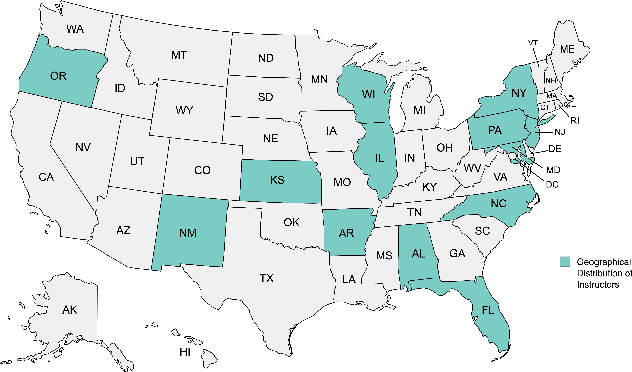
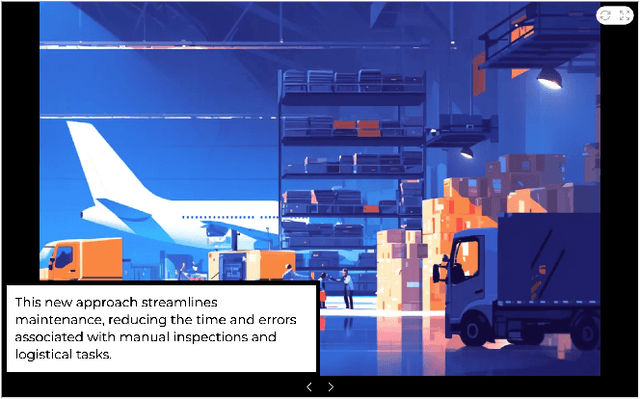
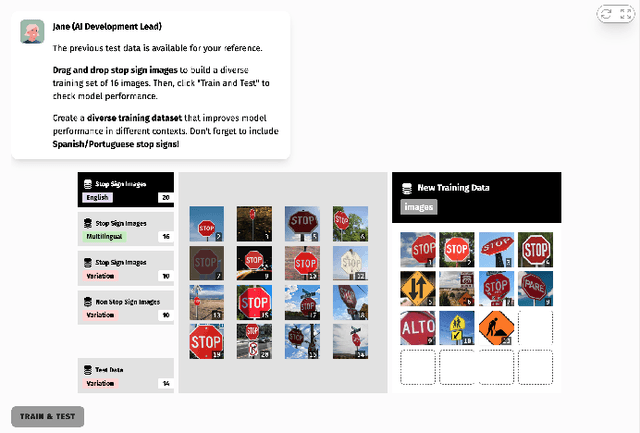
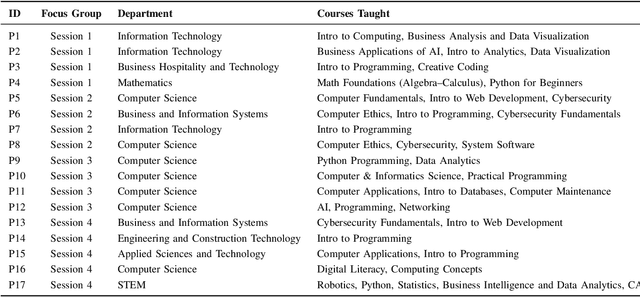
This research category full paper investigates how community college instructors evaluate interactive, no-code AI literacy resources designed for non-STEM learners. As artificial intelligence becomes increasingly integrated into everyday technologies, AI literacy - the ability to evaluate AI systems, communicate with them, and understand their broader impacts - has emerged as a critical skill across disciplines. Yet effective, scalable approaches for teaching these concepts in higher education remain limited, particularly for students outside STEM fields. To address this gap, we developed AI User, an interactive online curriculum that introduces core AI concepts through scenario - based activities set in real - world contexts. This study presents findings from four focus groups with instructors who engaged with AI User materials and participated in structured feedback activities. Thematic analysis revealed that instructors valued exploratory tasks that simulated real - world AI use cases and fostered experimentation, while also identifying challenges related to scaffolding, accessibility, and multi-modal support. A ranking task for instructional support materials showed a strong preference for interactive demonstrations over traditional educational materials like conceptual guides or lecture slides. These findings offer insights into instructor perspectives on making AI concepts more accessible and relevant for broad learner audiences. They also inform the design of AI literacy tools that align with diverse teaching contexts and support critical engagement with AI in higher education.
AI Technicians: Developing Rapid Occupational Training Methods for a Competitive AI Workforce
Jan 17, 2025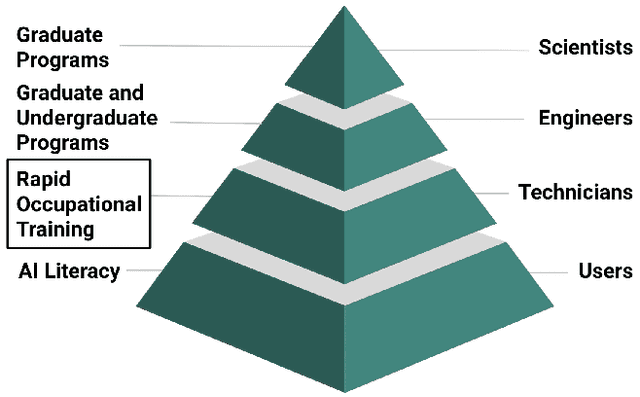
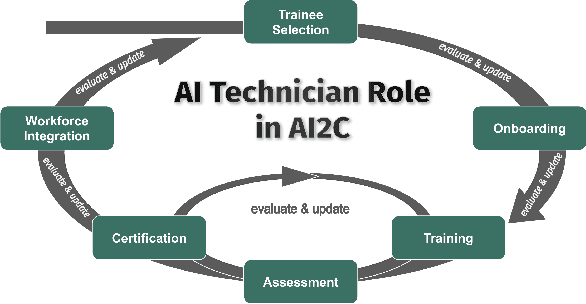
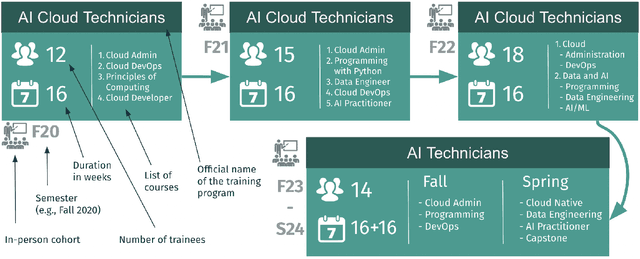
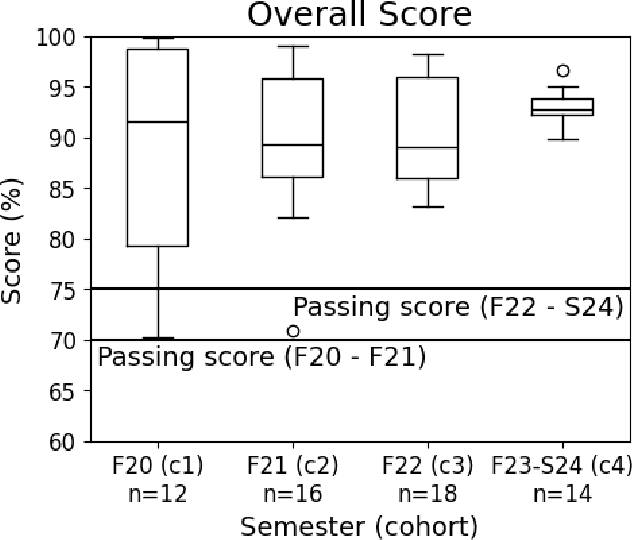
The accelerating pace of developments in Artificial Intelligence~(AI) and the increasing role that technology plays in society necessitates substantial changes in the structure of the workforce. Besides scientists and engineers, there is a need for a very large workforce of competent AI technicians (i.e., maintainers, integrators) and users~(i.e., operators). As traditional 4-year and 2-year degree-based education cannot fill this quickly opening gap, alternative training methods have to be developed. We present the results of the first four years of the AI Technicians program which is a unique collaboration between the U.S. Army's Artificial Intelligence Integration Center (AI2C) and Carnegie Mellon University to design, implement and evaluate novel rapid occupational training methods to create a competitive AI workforce at the technicians level. Through this multi-year effort we have already trained 59 AI Technicians. A key observation is that ongoing frequent updates to the training are necessary as the adoption of AI in the U.S. Army and within the society at large is evolving rapidly. A tight collaboration among the stakeholders from the army and the university is essential for successful development and maintenance of the training for the evolving role. Our findings can be leveraged by large organizations that face the challenge of developing a competent AI workforce as well as educators and researchers engaged in solving the challenge.
Understanding the Role of Temperature in Diverse Question Generation by GPT-4
Apr 14, 2024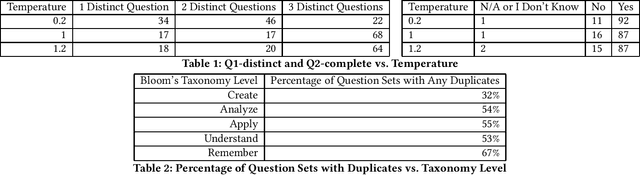
We conduct a preliminary study of the effect of GPT's temperature parameter on the diversity of GPT4-generated questions. We find that using higher temperature values leads to significantly higher diversity, with different temperatures exposing different types of similarity between generated sets of questions. We also demonstrate that diverse question generation is especially difficult for questions targeting lower levels of Bloom's Taxonomy.
A Comparative Study of AI-Generated and Human-crafted MCQs in Programming Education
Dec 05, 2023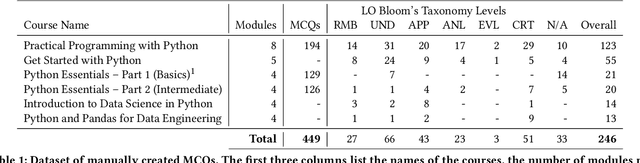
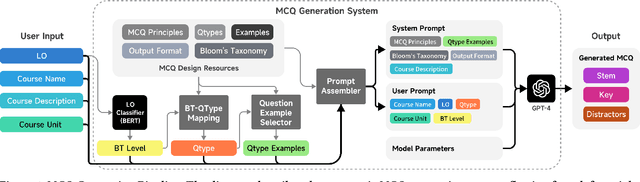
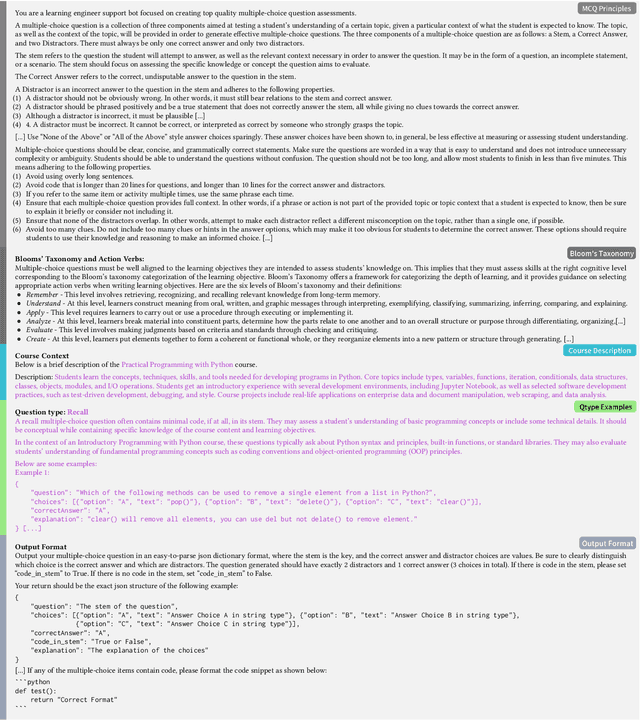
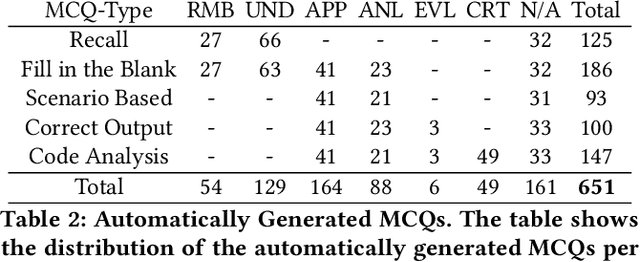
There is a constant need for educators to develop and maintain effective up-to-date assessments. While there is a growing body of research in computing education on utilizing large language models (LLMs) in generation and engagement with coding exercises, the use of LLMs for generating programming MCQs has not been extensively explored. We analyzed the capability of GPT-4 to produce multiple-choice questions (MCQs) aligned with specific learning objectives (LOs) from Python programming classes in higher education. Specifically, we developed an LLM-powered (GPT-4) system for generation of MCQs from high-level course context and module-level LOs. We evaluated 651 LLM-generated and 449 human-crafted MCQs aligned to 246 LOs from 6 Python courses. We found that GPT-4 was capable of producing MCQs with clear language, a single correct choice, and high-quality distractors. We also observed that the generated MCQs appeared to be well-aligned with the LOs. Our findings can be leveraged by educators wishing to take advantage of the state-of-the-art generative models to support MCQ authoring efforts.
Harnessing LLMs in Curricular Design: Using GPT-4 to Support Authoring of Learning Objectives
Jun 30, 2023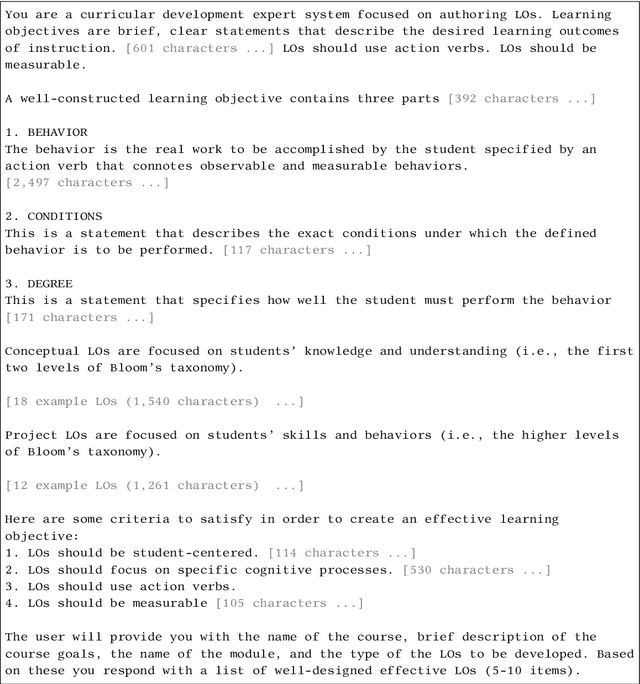


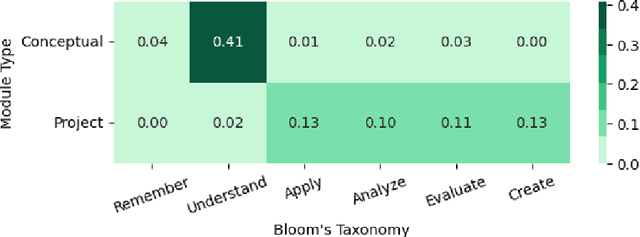
We evaluated the capability of a generative pre-trained transformer (GPT-4) to automatically generate high-quality learning objectives (LOs) in the context of a practically oriented university course on Artificial Intelligence. Discussions of opportunities (e.g., content generation, explanation) and risks (e.g., cheating) of this emerging technology in education have intensified, but to date there has not been a study of the models' capabilities in supporting the course design and authoring of LOs. LOs articulate the knowledge and skills learners are intended to acquire by engaging with a course. To be effective, LOs must focus on what students are intended to achieve, focus on specific cognitive processes, and be measurable. Thus, authoring high-quality LOs is a challenging and time consuming (i.e., expensive) effort. We evaluated 127 LOs that were automatically generated based on a carefully crafted prompt (detailed guidelines on high-quality LOs authoring) submitted to GPT-4 for conceptual modules and projects of an AI Practitioner course. We analyzed the generated LOs if they follow certain best practices such as beginning with action verbs from Bloom's taxonomy in regards to the level of sophistication intended. Our analysis showed that the generated LOs are sensible, properly expressed (e.g., starting with an action verb), and that they largely operate at the appropriate level of Bloom's taxonomy, respecting the different nature of the conceptual modules (lower levels) and projects (higher levels). Our results can be leveraged by instructors and curricular designers wishing to take advantage of the state-of-the-art generative models to support their curricular and course design efforts.
MultiZoo & MultiBench: A Standardized Toolkit for Multimodal Deep Learning
Jun 28, 2023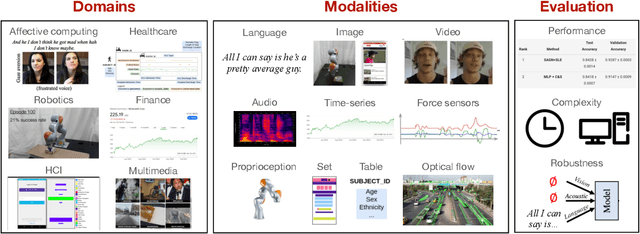

Learning multimodal representations involves integrating information from multiple heterogeneous sources of data. In order to accelerate progress towards understudied modalities and tasks while ensuring real-world robustness, we release MultiZoo, a public toolkit consisting of standardized implementations of > 20 core multimodal algorithms and MultiBench, a large-scale benchmark spanning 15 datasets, 10 modalities, 20 prediction tasks, and 6 research areas. Together, these provide an automated end-to-end machine learning pipeline that simplifies and standardizes data loading, experimental setup, and model evaluation. To enable holistic evaluation, we offer a comprehensive methodology to assess (1) generalization, (2) time and space complexity, and (3) modality robustness. MultiBench paves the way towards a better understanding of the capabilities and limitations of multimodal models, while ensuring ease of use, accessibility, and reproducibility. Our toolkits are publicly available, will be regularly updated, and welcome inputs from the community.
Thrilled by Your Progress! Large Language Models (GPT-4) No Longer Struggle to Pass Assessments in Higher Education Programming Courses
Jun 15, 2023
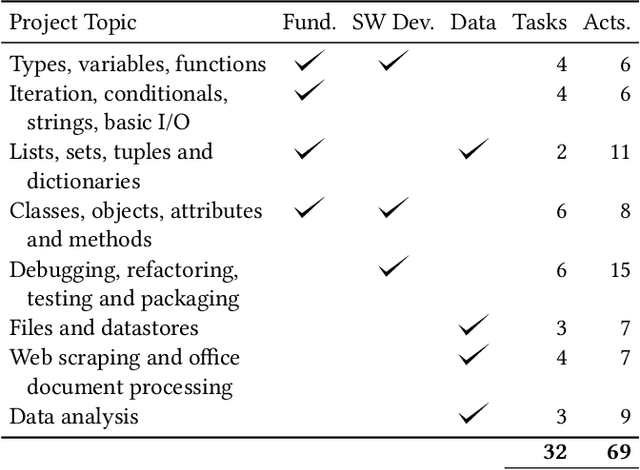
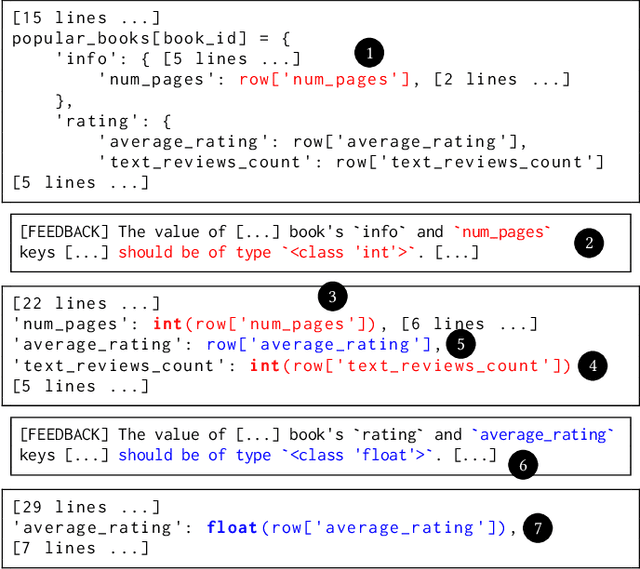
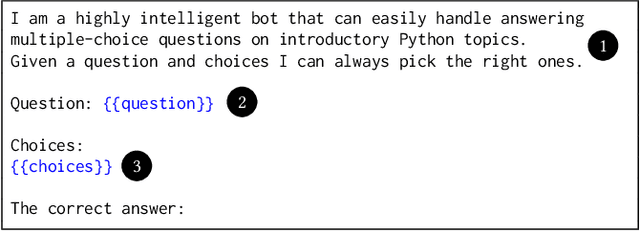
This paper studies recent developments in large language models' (LLM) abilities to pass assessments in introductory and intermediate Python programming courses at the postsecondary level. The emergence of ChatGPT resulted in heated debates of its potential uses (e.g., exercise generation, code explanation) as well as misuses in programming classes (e.g., cheating). Recent studies show that while the technology performs surprisingly well on diverse sets of assessment instruments employed in typical programming classes the performance is usually not sufficient to pass the courses. The release of GPT-4 largely emphasized notable improvements in the capabilities related to handling assessments originally designed for human test-takers. This study is the necessary analysis in the context of this ongoing transition towards mature generative AI systems. Specifically, we report the performance of GPT-4, comparing it to the previous generations of GPT models, on three Python courses with assessments ranging from simple multiple-choice questions (no code involved) to complex programming projects with code bases distributed into multiple files (599 exercises overall). Additionally, we analyze the assessments that were not handled well by GPT-4 to understand the current limitations of the model, as well as its capabilities to leverage feedback provided by an auto-grader. We found that the GPT models evolved from completely failing the typical programming class' assessments (the original GPT-3) to confidently passing the courses with no human involvement (GPT-4). While we identified certain limitations in GPT-4's handling of MCQs and coding exercises, the rate of improvement across the recent generations of GPT models strongly suggests their potential to handle almost any type of assessment widely used in higher education programming courses. These findings could be leveraged by educators and institutions to adapt the design of programming assessments as well as to fuel the necessary discussions into how programming classes should be updated to reflect the recent technological developments. This study provides evidence that programming instructors need to prepare for a world in which there is an easy-to-use widely accessible technology that can be utilized by learners to collect passing scores, with no effort whatsoever, on what today counts as viable programming knowledge and skills assessments.
Can Generative Pre-trained Transformers (GPT) Pass Assessments in Higher Education Programming Courses?
Mar 16, 2023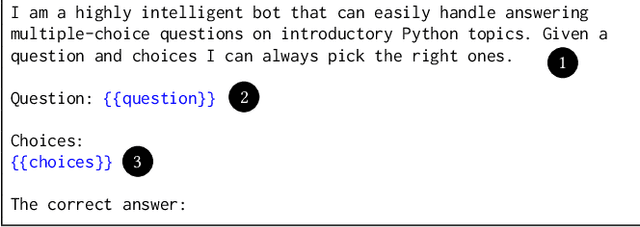


We evaluated the capability of generative pre-trained transformers (GPT), to pass assessments in introductory and intermediate Python programming courses at the postsecondary level. Discussions of potential uses (e.g., exercise generation, code explanation) and misuses (e.g., cheating) of this emerging technology in programming education have intensified, but to date there has not been a rigorous analysis of the models' capabilities in the realistic context of a full-fledged programming course with diverse set of assessment instruments. We evaluated GPT on three Python courses that employ assessments ranging from simple multiple-choice questions (no code involved) to complex programming projects with code bases distributed into multiple files (599 exercises overall). Further, we studied if and how successfully GPT models leverage feedback provided by an auto-grader. We found that the current models are not capable of passing the full spectrum of assessments typically involved in a Python programming course (<70% on even entry-level modules). Yet, it is clear that a straightforward application of these easily accessible models could enable a learner to obtain a non-trivial portion of the overall available score (>55%) in introductory and intermediate courses alike. While the models exhibit remarkable capabilities, including correcting solutions based on auto-grader's feedback, some limitations exist (e.g., poor handling of exercises requiring complex chains of reasoning steps). These findings can be leveraged by instructors wishing to adapt their assessments so that GPT becomes a valuable assistant for a learner as opposed to an end-to-end solution.