 Add to Chrome
 Add to Firefox
 Add to Edge
"I Like That You Have to Poke Around": Instructors on How Experiential Approaches to AI Literacy Spark Inquiry and Critical Thinking
Nov 07, 2025
As artificial intelligence (AI) increasingly shapes decision-making across domains, there is a growing need to support AI literacy among learners beyond computer science. However, many current approaches rely on programming-heavy tools or abstract lecture-based content, limiting accessibility for non-STEM audiences. This paper presents findings from a study of AI User, a modular, web-based curriculum that teaches core AI concepts through interactive, no-code projects grounded in real-world scenarios. The curriculum includes eight projects; this study focuses on instructor feedback on Projects 5-8, which address applied topics such as natural language processing, computer vision, decision support, and responsible AI. Fifteen community college instructors participated in structured focus groups, completing the projects as learners and providing feedback through individual reflection and group discussion. Using thematic analysis, we examined how instructors evaluated the design, instructional value, and classroom applicability of these experiential activities. Findings highlight instructors' appreciation for exploratory tasks, role-based simulations, and real-world relevance, while also surfacing design trade-offs around cognitive load, guidance, and adaptability for diverse learners. This work extends prior research on AI literacy by centering instructor perspectives on teaching complex AI topics without code. It offers actionable insights for designing inclusive, experiential AI learning resources that scale across disciplines and learner backgrounds.

AI Literacy Assessment Revisited: A Task-Oriented Approach Aligned with Real-world Occupations
Nov 07, 2025As artificial intelligence (AI) systems become ubiquitous in professional contexts, there is an urgent need to equip workers, often with backgrounds outside of STEM, with the skills to use these tools effectively as well as responsibly, that is, to be AI literate. However, prevailing definitions and therefore assessments of AI literacy often emphasize foundational technical knowledge, such as programming, mathematics, and statistics, over practical knowledge such as interpreting model outputs, selecting tools, or identifying ethical concerns. This leaves a noticeable gap in assessing someone's AI literacy for real-world job use. We propose a work-task-oriented assessment model for AI literacy which is grounded in the competencies required for effective use of AI tools in professional settings. We describe the development of a novel AI literacy assessment instrument, and accompanying formative assessments, in the context of a US Navy robotics training program. The program included training in robotics and AI literacy, as well as a competition with practical tasks and a multiple choice scenario task meant to simulate use of AI in a job setting. We found that, as a measure of applied AI literacy, the competition's scenario task outperformed the tests we adopted from past research or developed ourselves. We argue that when training people for AI-related work, educators should consider evaluating them with instruments that emphasize highly contextualized practical skills rather than abstract technical knowledge, especially when preparing workers without technical backgrounds for AI-integrated roles.
AI Literacy for Community Colleges: Instructors' Perspectives on Scenario-Based and Interactive Approaches to Teaching AI
Nov 07, 2025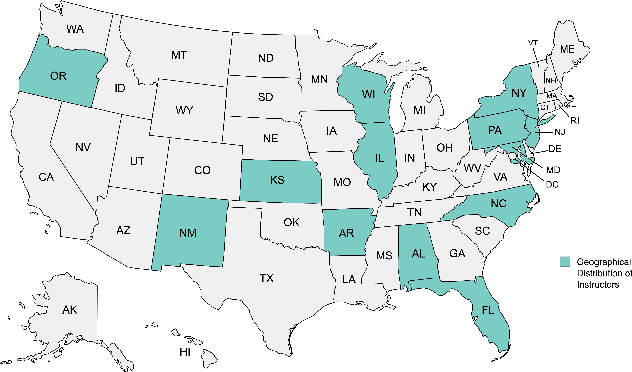
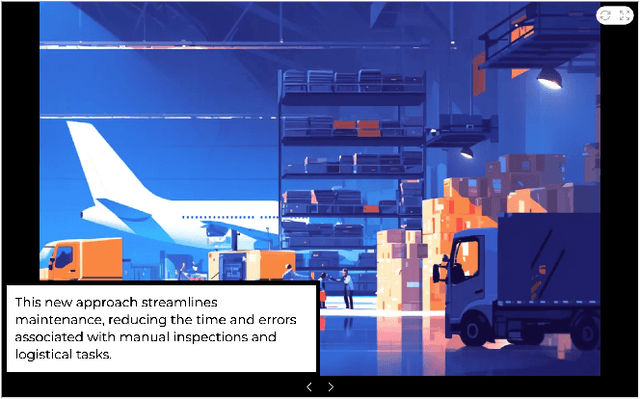
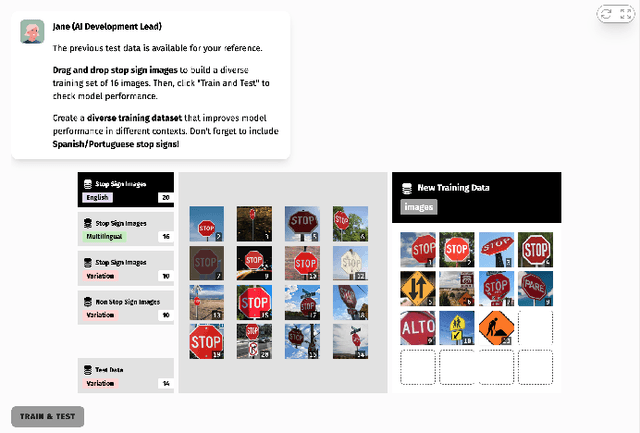
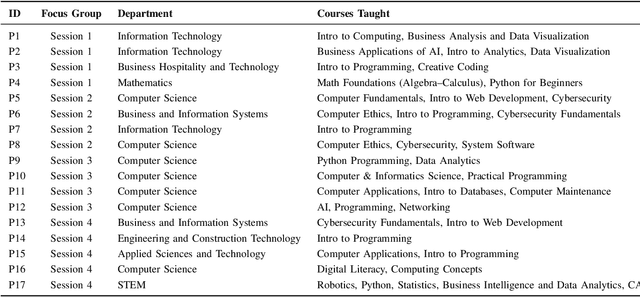
This research category full paper investigates how community college instructors evaluate interactive, no-code AI literacy resources designed for non-STEM learners. As artificial intelligence becomes increasingly integrated into everyday technologies, AI literacy - the ability to evaluate AI systems, communicate with them, and understand their broader impacts - has emerged as a critical skill across disciplines. Yet effective, scalable approaches for teaching these concepts in higher education remain limited, particularly for students outside STEM fields. To address this gap, we developed AI User, an interactive online curriculum that introduces core AI concepts through scenario - based activities set in real - world contexts. This study presents findings from four focus groups with instructors who engaged with AI User materials and participated in structured feedback activities. Thematic analysis revealed that instructors valued exploratory tasks that simulated real - world AI use cases and fostered experimentation, while also identifying challenges related to scaffolding, accessibility, and multi-modal support. A ranking task for instructional support materials showed a strong preference for interactive demonstrations over traditional educational materials like conceptual guides or lecture slides. These findings offer insights into instructor perspectives on making AI concepts more accessible and relevant for broad learner audiences. They also inform the design of AI literacy tools that align with diverse teaching contexts and support critical engagement with AI in higher education.
AI Technicians: Developing Rapid Occupational Training Methods for a Competitive AI Workforce
Jan 17, 2025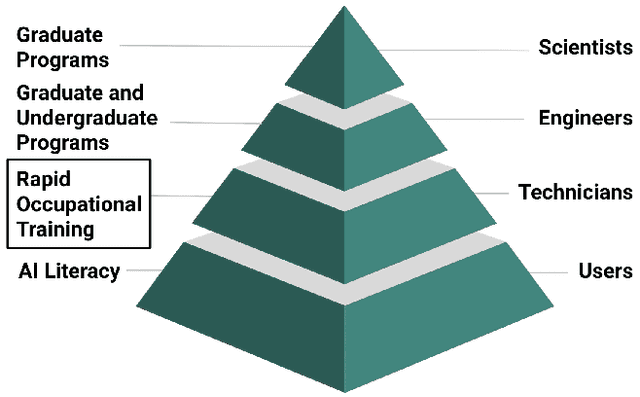
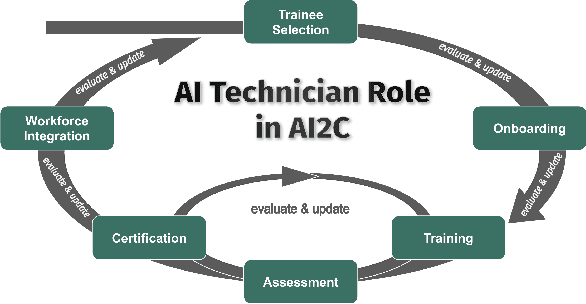
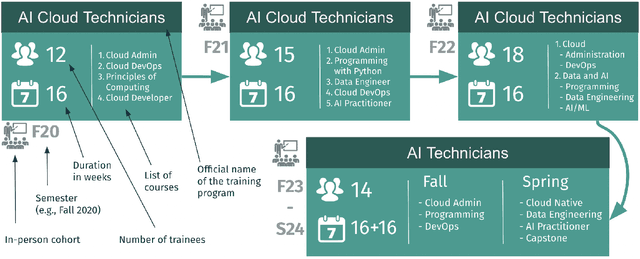
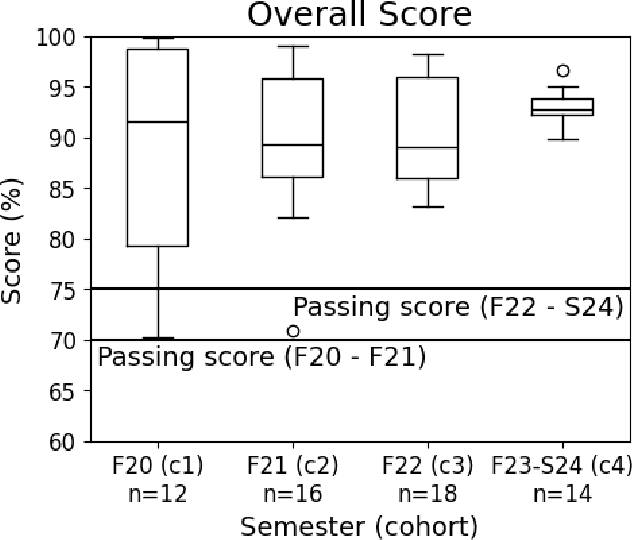
The accelerating pace of developments in Artificial Intelligence~(AI) and the increasing role that technology plays in society necessitates substantial changes in the structure of the workforce. Besides scientists and engineers, there is a need for a very large workforce of competent AI technicians (i.e., maintainers, integrators) and users~(i.e., operators). As traditional 4-year and 2-year degree-based education cannot fill this quickly opening gap, alternative training methods have to be developed. We present the results of the first four years of the AI Technicians program which is a unique collaboration between the U.S. Army's Artificial Intelligence Integration Center (AI2C) and Carnegie Mellon University to design, implement and evaluate novel rapid occupational training methods to create a competitive AI workforce at the technicians level. Through this multi-year effort we have already trained 59 AI Technicians. A key observation is that ongoing frequent updates to the training are necessary as the adoption of AI in the U.S. Army and within the society at large is evolving rapidly. A tight collaboration among the stakeholders from the army and the university is essential for successful development and maintenance of the training for the evolving role. Our findings can be leveraged by large organizations that face the challenge of developing a competent AI workforce as well as educators and researchers engaged in solving the challenge.