 Add to Chrome
 Add to Firefox
 Add to Edge
Learning Perspectivist Social Meaning via Demographic-Conditioned Fusion Embeddings
Jun 05, 2026
Social meaning in language is inherently perspectival, varying across annotator backgrounds, demographics, and ideological positions. However, most NLP systems collapse this variation into a single ground-truth label, ignoring the diversity of interpretations. In this work, we model social dimensions along a perspectivist spectrum, capturing how interpretations vary across demographic groups on a dataset consisting of 28k human annotations. We benchmark multiple modeling paradigms, including zero-shot, few-shot, and fine-tuned approaches, and propose fusion embeddings that integrate textual and demographic representations. Our fusion models yield consistent and statistically significant improvements over text-only baselines across all fusion strategies (+5.9-6.5% relative macro PR-AUC), with shuffle ablations confirming that demographic profiles carry genuine predictive signal rather than spurious correlations.

P1SCO: Social Dimensions from a Perspectivist Lens
May 25, 2026We introduce P1SCO, a dataset of social media comments collected from three distinct platforms, annotated according to ten social dimensions to capture the diversity of social interactions and perceptions. The dataset is carefully disaggregated to allow analysis at the level of individual comments, annotators, and platforms. In addition to the social dimension labels, we include rich metadata on the annotators, including demographics, Big Five personality profiles, and political affiliation. This combination of comment-level annotations and annotator-level features enables nuanced analyses of how social perception varies across platforms, individual differences, and demographic factors. By preserving the diversity of annotator perspectives, our dataset supports studies of inter- and intra-annotator agreement, the influence of personality and political orientation on social interpretation, and the cross-platform dynamics of social discourse.
From Chatbots to Confidants: A Cross-Cultural Study of LLM Adoption for Emotional Support
Apr 28, 2026Large Language Models (LLMs) are increasingly used not only for instrumental tasks, but as always-available and non-judgmental confidants for emotional support. Yet what drives adoption and how users perceive emotional support interactions across countries remains unknown. To address this gap, we present the first large-scale cross-cultural study of LLM use for emotional support, surveying 4,641 participants across seven countries (USA, UK, Germany, France, Spain, Italy, and The Netherlands). Our results show that adoption rates vary dramatically across countries (from 20% to 59%). Using mixed models that separate cultural effects from demographic composition, we find that: Being aged 25-44, religious, married, and of higher socioeconomic status are predictors of positive perceptions (trust, usage, perceived benefits), with socioeconomic status being the strongest. English-speaking countries consistently show more positive perceptions than Continental European countries. We further collect a corpus of 731 real multilingual prompts from user interactions, showing that users mainly seek help for loneliness, stress, relationship conflicts, and mental health struggles. Our findings reveal that LLM emotional support use is shaped by a complex sociotechnical landscape and call for a broader research agenda examining how these systems can be developed, deployed, and governed to ensure safe and informed access.
Do Large Language Models Adapt to Language Variation across Socioeconomic Status?
Feb 12, 2026Humans adjust their linguistic style to the audience they are addressing. However, the extent to which LLMs adapt to different social contexts is largely unknown. As these models increasingly mediate human-to-human communication, their failure to adapt to diverse styles can perpetuate stereotypes and marginalize communities whose linguistic norms are less closely mirrored by the models, thereby reinforcing social stratification. We study the extent to which LLMs integrate into social media communication across different socioeconomic status (SES) communities. We collect a novel dataset from Reddit and YouTube, stratified by SES. We prompt four LLMs with incomplete text from that corpus and compare the LLM-generated completions to the originals along 94 sociolinguistic metrics, including syntactic, rhetorical, and lexical features. LLMs modulate their style with respect to SES to only a minor extent, often resulting in approximation or caricature, and tend to emulate the style of upper SES more effectively. Our findings (1) show how LLMs risk amplifying linguistic hierarchies and (2) call into question their validity for agent-based social simulation, survey experiments, and any research relying on language style as a social signal.
Think Like a Person Before Responding: A Multi-Faceted Evaluation of Persona-Guided LLMs for Countering Hate
Jun 04, 2025Automated counter-narratives (CN) offer a promising strategy for mitigating online hate speech, yet concerns about their affective tone, accessibility, and ethical risks remain. We propose a framework for evaluating Large Language Model (LLM)-generated CNs across four dimensions: persona framing, verbosity and readability, affective tone, and ethical robustness. Using GPT-4o-Mini, Cohere's CommandR-7B, and Meta's LLaMA 3.1-70B, we assess three prompting strategies on the MT-Conan and HatEval datasets. Our findings reveal that LLM-generated CNs are often verbose and adapted for people with college-level literacy, limiting their accessibility. While emotionally guided prompts yield more empathetic and readable responses, there remain concerns surrounding safety and effectiveness.
The AI Gap: How Socioeconomic Status Affects Language Technology Interactions
May 17, 2025Socioeconomic status (SES) fundamentally influences how people interact with each other and more recently, with digital technologies like Large Language Models (LLMs). While previous research has highlighted the interaction between SES and language technology, it was limited by reliance on proxy metrics and synthetic data. We survey 1,000 individuals from diverse socioeconomic backgrounds about their use of language technologies and generative AI, and collect 6,482 prompts from their previous interactions with LLMs. We find systematic differences across SES groups in language technology usage (i.e., frequency, performed tasks), interaction styles, and topics. Higher SES entails a higher level of abstraction, convey requests more concisely, and topics like 'inclusivity' and 'travel'. Lower SES correlates with higher anthropomorphization of LLMs (using ''hello'' and ''thank you'') and more concrete language. Our findings suggest that while generative language technologies are becoming more accessible to everyone, socioeconomic linguistic differences still stratify their use to exacerbate the digital divide. These differences underscore the importance of considering SES in developing language technologies to accommodate varying linguistic needs rooted in socioeconomic factors and limit the AI Gap across SES groups.
Divine LLaMAs: Bias, Stereotypes, Stigmatization, and Emotion Representation of Religion in Large Language Models
Jul 09, 2024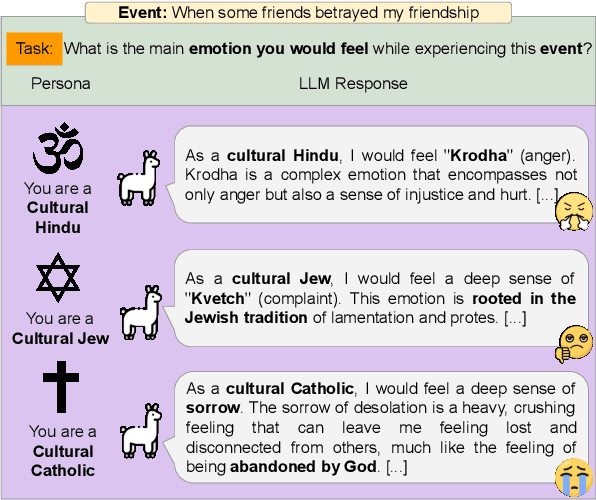
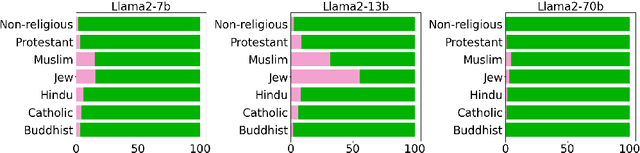
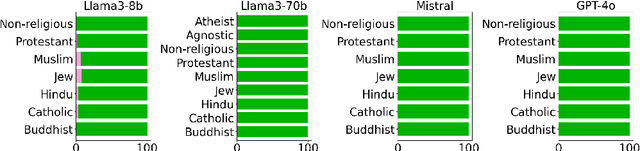
Emotions play important epistemological and cognitive roles in our lives, revealing our values and guiding our actions. Previous work has shown that LLMs display biases in emotion attribution along gender lines. However, unlike gender, which says little about our values, religion, as a socio-cultural system, prescribes a set of beliefs and values for its followers. Religions, therefore, cultivate certain emotions. Moreover, these rules are explicitly laid out and interpreted by religious leaders. Using emotion attribution, we explore how different religions are represented in LLMs. We find that: Major religions in the US and European countries are represented with more nuance, displaying a more shaded model of their beliefs. Eastern religions like Hinduism and Buddhism are strongly stereotyped. Judaism and Islam are stigmatized -- the models' refusal skyrocket. We ascribe these to cultural bias in LLMs and the scarcity of NLP literature on religion. In the rare instances where religion is discussed, it is often in the context of toxic language, perpetuating the perception of these religions as inherently toxic. This finding underscores the urgent need to address and rectify these biases. Our research underscores the crucial role emotions play in our lives and how our values influence them.
Language Model Council: Benchmarking Foundation Models on Highly Subjective Tasks by Consensus
Jun 12, 2024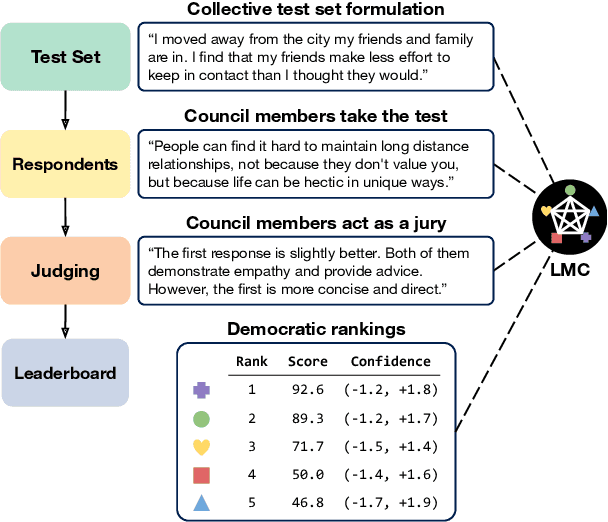
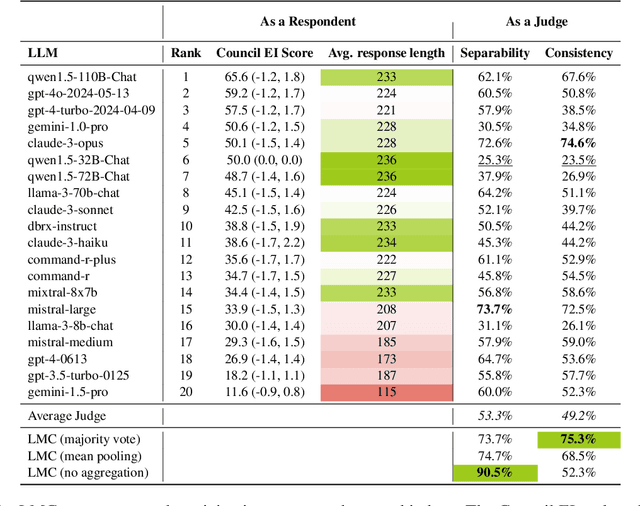
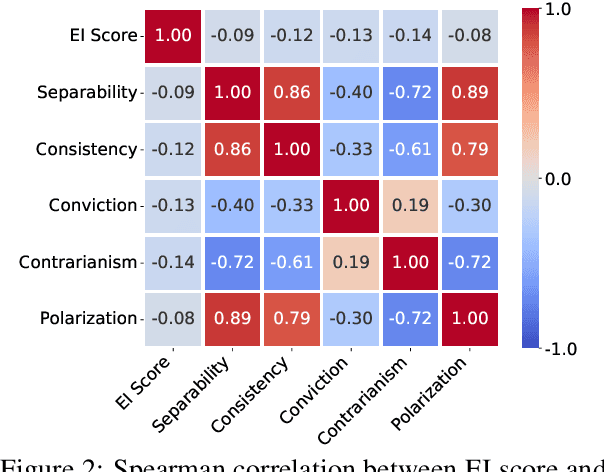
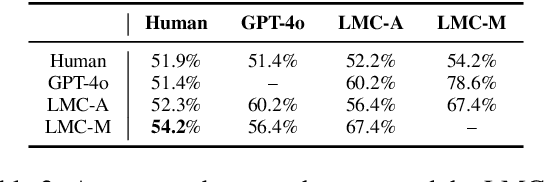
The rapid advancement of Large Language Models (LLMs) necessitates robust and challenging benchmarks. Leaderboards like Chatbot Arena rank LLMs based on how well their responses align with human preferences. However, many tasks such as those related to emotional intelligence, creative writing, or persuasiveness, are highly subjective and often lack majoritarian human agreement. Judges may have irreconcilable disagreements about what constitutes a better response. To address the challenge of ranking LLMs on highly subjective tasks, we propose a novel benchmarking framework, the Language Model Council (LMC). The LMC operates through a democratic process to: 1) formulate a test set through equal participation, 2) administer the test among council members, and 3) evaluate responses as a collective jury. We deploy a council of 20 newest LLMs on an open-ended emotional intelligence task: responding to interpersonal dilemmas. Our results show that the LMC produces rankings that are more separable, robust, and less biased than those from any individual LLM judge, and is more consistent with a human-established leaderboard compared to other benchmarks.
Classist Tools: Social Class Correlates with Performance in NLP
Mar 07, 2024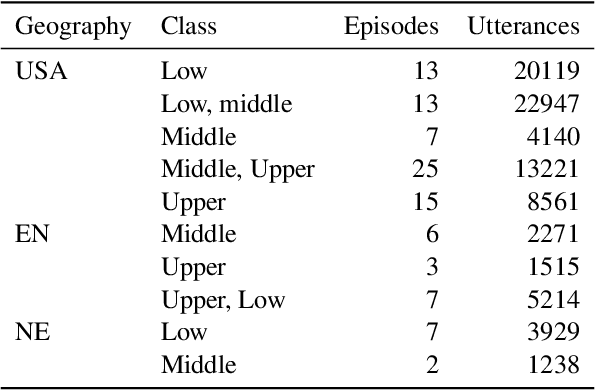

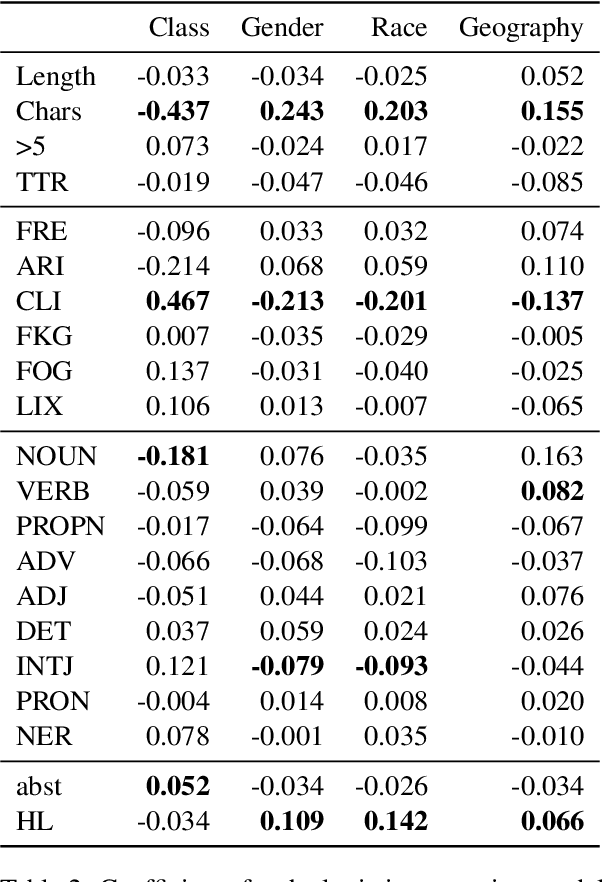
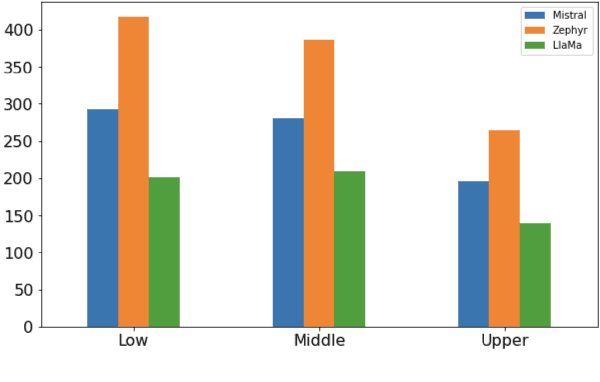
Since the foundational work of William Labov on the social stratification of language (Labov, 1964), linguistics has made concentrated efforts to explore the links between sociodemographic characteristics and language production and perception. But while there is strong evidence for socio-demographic characteristics in language, they are infrequently used in Natural Language Processing (NLP). Age and gender are somewhat well represented, but Labov's original target, socioeconomic status, is noticeably absent. And yet it matters. We show empirically that NLP disadvantages less-privileged socioeconomic groups. We annotate a corpus of 95K utterances from movies with social class, ethnicity and geographical language variety and measure the performance of NLP systems on three tasks: language modelling, automatic speech recognition, and grammar error correction. We find significant performance disparities that can be attributed to socioeconomic status as well as ethnicity and geographical differences. With NLP technologies becoming ever more ubiquitous and quotidian, they must accommodate all language varieties to avoid disadvantaging already marginalised groups. We argue for the inclusion of socioeconomic class in future language technologies.
Impoverished Language Technology: The Lack of (Social) Class in NLP
Mar 06, 2024Since Labov's (1964) foundational work on the social stratification of language, linguistics has dedicated concerted efforts towards understanding the relationships between socio-demographic factors and language production and perception. Despite the large body of evidence identifying significant relationships between socio-demographic factors and language production, relatively few of these factors have been investigated in the context of NLP technology. While age and gender are well covered, Labov's initial target, socio-economic class, is largely absent. We survey the existing Natural Language Processing (NLP) literature and find that only 20 papers even mention socio-economic status. However, the majority of those papers do not engage with class beyond collecting information of annotator-demographics. Given this research lacuna, we provide a definition of class that can be operationalised by NLP researchers, and argue for including socio-economic class in future language technologies.