 Add to Chrome
 Add to Firefox
 Add to Edge
Information on trajectories: martingales and random times
Aug 20, 2026
Accounting for information flow on the path space of trajectories of a nonnegative martingale yields exact variational identities for it, even at arbitrary random times. This recovers the widely used classical concentration inequalities, from Ville to PAC-Bayes, and measures what each one discards. The tail a bound controls is itself a relative entropy, resolved by the chain rule into per-step conditional divergences. The discarded slack has an exact form in each of three geometries: a Gibbs tilt for the Azuma-Hoeffding and PAC-Bayes bounds, the crossing itself for Ville's and for pooled tests, and a dominating certificate for the $L^p$ maximal bound. That certificate's optional-stopping deficit resolves per step into Bregman divergences of the running maximum. On a path-time space, the same identity gains one factor that prices anticipation: an arbitrary random time carries an e-process ``peeking penalty.'' The partition function can be read as a coalescent--a prefix-sharing probability of independent copies--and geometric mixtures of test martingales gain a pooling benefit for multi-model safe testing.

The concentration game: Bayesian updating, regret, and information
Aug 18, 2026We give a two-player zero-sum repeated game between a learner and nature whose value identity generates Bayesian updating and an exact accounting of exponential-weights regret at once, and supplies the comparator-class variational form that a wide class of concentration phenomena share. The terminal payoff is the most a comparator can gain at fixed relative entropy from the prior, and the one-step constraint is an information budget on nature's move under the learner's mixed action. With the learner's move otherwise unrestricted, Gibbs/Bayes weights emerge as its unique Bellman equalizer -- the mixed action that makes the per-round loss independent of which direction nature moves -- with log-partition functions playing the role of value functions. The regret decomposes exactly into three parts: a per-round information loss reflecting the variation in observed outcomes, an additive retempering drift that accounts exactly for any change of measurement scale between rounds, and the information the comparator carries relative to the prior. The variance and bounded-range proxies that drive standard regret bounds are looser relaxations of this decomposition, which holds generally and governs them all. Both players' strategies are read off from the decomposition term by term, and repeated play yields an information-theoretic ledger of self-play in place of the usual quadratic-variation surrogate. The same comparator-class geometry accounts for the classical large-deviation bounds, and methods across bandits, posterior sampling, aggregation, and boosting are specializations of the one regret decomposition.
All you need is log
Jun 25, 2026Comparing two probability distributions is a basic building block of statistics and machine learning, and the right family is well understood: the Rényi divergences of order $α\in[0,\infty]$ are the unique family monotone under data processing and additive on independent products. Many problems instead compare more than two distributions at once -- multi-population fairness, multi-prior PAC-Bayes bounds, multi-hypothesis testing -- and the right multi-distribution generalization of the Rényi family has been an open question. We characterize it. Every functional of $W$-tuples of distributions that is monotone under data processing and additive on independent products is a positive integral of multi-way coincidence divergences $C_α(π_1,\dots,π_W) := -\log\int π_1^{α_1}\cdotsπ_W^{α_W}$ (with $\sum_k α_k = 1$) over a parameter space with four strata: the simplex interior; mixed-sign exponent cones (the analogue of Rényi orders $>1$); a tropical boundary at infinity carrying max-divergences; and pairwise Kullback-Leibler edges at the simplex vertices. Each stratum is necessary -- the destination of an explicit data-processing-monotone, product-additive divergence the others cannot reproduce -- and each is a clean limit of simplex-interior atoms. The same family arises from five independent routes -- the structural axioms, Kolmogorov-Nagumo means with Rényi's entropy axiomatics, classical entropy characterizations, multi-hypothesis testing error exponents, and a multi-lottery betting interpretation -- structural evidence that this is the canonical multi-distribution Rényi calculus rather than an artefact of any one axiomatic input. The two-prior case recovers the standard Rényi result; a worked $W=3$ instance, numerical verification, and a conditional extension round out the treatment.
Deviance-style normalization for jointly overdispersed counts
Jun 24, 2026We introduce a Dirichlet--multinomial (DM) deviance residualization for sparse, jointly overdispersed count matrices, the regime that dominates sequencing-based biochemical assays. The DM null treats each sample's count vector as a fixed-total composition with a single scalar concentration $α_0$ governing overdispersion, and arises exactly by conditioning independent negative-binomial feature counts on the observed sample total -- making the DM the joint conditional analogue of standard feature-wise overdispersed count models. The resulting transform preserves exact sparsity, evaluates in constant time per nonzero entry, agrees with multinomial residuals on singleton counts, shrinks repeated-count residuals according to the overdispersion the null tolerates, and recovers the multinomial residual as $α_0\to\infty$. The same fixed-dispersion comparison principle extends to ordered and tree-structured features via the generalized DM and the Dirichlet-tree multinomial, giving a single residual family that subsumes joint and feature-wise count nulls under a common compositional logic and is computationally lightweight enough to drop into existing sparse pipelines.
Information from coincidences
Jun 23, 2026We prove a single algebraic mixed coincidence identity that unifies a broad swath of information-theoretic variational results. For any family of priors $\{π_i\}$ and real exponents $\{ α_i \}$, the log of the mixed count $E_{x\simν}\!\left[\prod_{i=1}^W π_i^{α_i}(x)\right]$ is simultaneously a Boltzmann coincidence weight, an exponential-family normalizer, a maximum-entropy value, and a KL-barycenter optimum. The identity yields a unified derivation of classical cornerstones of information theory: concentration of empirical distributions (Sanov-type decompositions and Gibbs conditioning), hypothesis-testing error exponents (Chernoff information and its multi-way analogue), change-of-measure inequalities (Donsker-Varadhan and PAC-Bayes), and laws governing rare-pattern coincidences (Erdos-Renyi run-length, iterative guesswork, rate-distortion, and birthday thresholds). Each is recovered as a specialization of the same algebraic equality. It strictly generalizes the classical Renyi entropy and divergence variational formulas (one and two priors respectively) to a $W$-prior simplex, and holds for unnormalized and continuum-indexed priors. Among its consequences are an exact multi-prior PAC-Bayes penalty that subtracts an explicit "coincidence bonus" from the usual single-prior posterior penalty, and the asymptotic MAP error exponent for $W$-ary hypothesis testing as an edge-restricted simplex optimum. We demonstrate the calculus at scale on two large alphabets encoding richly modeled sequential languages: on language-model next-token predictives where we recover contrastive decoding, and on human genomic regulatory sequence where it separates correlated from diverse prior families along a sliding-window trace.
Laws of thermodynamics for exponential families
Jan 03, 2025We develop the laws of thermodynamics in terms of general exponential families. By casting learning (log-loss minimization) problems in max-entropy and statistical mechanics terms, we translate thermodynamics results to learning scenarios. We extend the well-known way in which exponential families characterize thermodynamic and learning equilibria. Basic ideas of work and heat, and advanced concepts of thermodynamic cycles and equipartition of energy, find exact and useful counterparts in AI / statistics terms. These ideas have broad implications for quantifying and addressing distribution shift.
Entropy, concentration, and learning: a statistical mechanics primer
Sep 27, 2024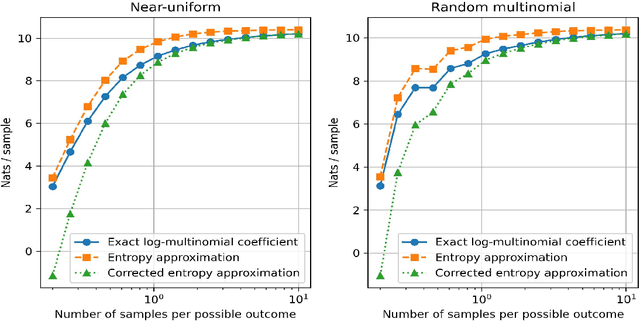
Artificial intelligence models trained through loss minimization have demonstrated significant success, grounded in principles from fields like information theory and statistical physics. This work explores these established connections through the lens of statistical mechanics, starting from first-principles sample concentration behaviors that underpin AI and machine learning. Our development of statistical mechanics for modeling highlights the key role of exponential families, and quantities of statistics, physics, and information theory.
WILDS: A Benchmark of in-the-Wild Distribution Shifts
Dec 14, 2020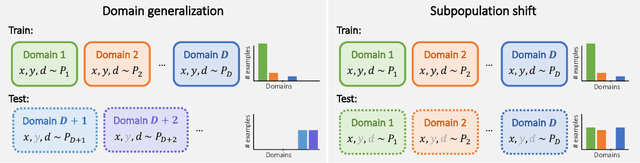
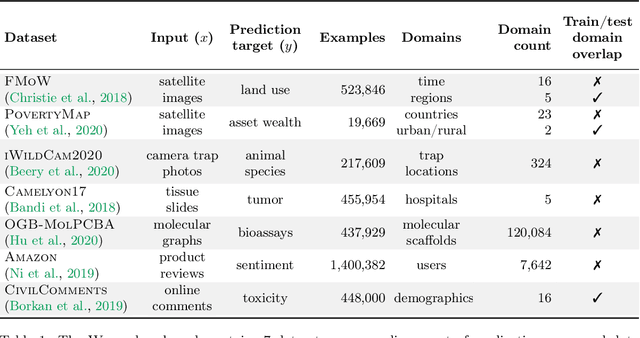
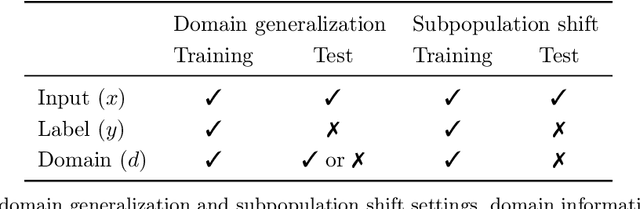
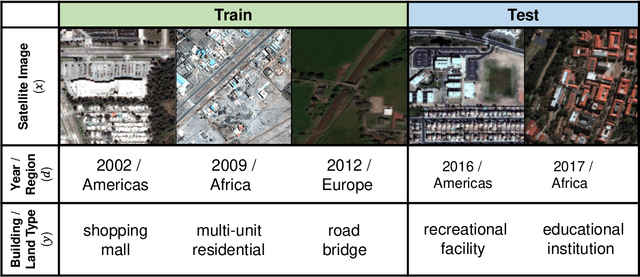
Distribution shifts can cause significant degradation in a broad range of machine learning (ML) systems deployed in the wild. However, many widely-used datasets in the ML community today were not designed for evaluating distribution shifts. These datasets typically have training and test sets drawn from the same distribution, and prior work on retrofitting them with distribution shifts has generally relied on artificial shifts that need not represent the kinds of shifts encountered in the wild. In this paper, we present WILDS, a benchmark of in-the-wild distribution shifts spanning diverse data modalities and applications, from tumor identification to wildlife monitoring to poverty mapping. WILDS builds on top of recent data collection efforts by domain experts in these applications and provides a unified collection of datasets with evaluation metrics and train/test splits that are representative of real-world distribution shifts. These datasets reflect distribution shifts arising from training and testing on different hospitals, cameras, countries, time periods, demographics, molecular scaffolds, etc., all of which cause substantial performance drops in our baseline models. Finally, we survey other applications that would be promising additions to the benchmark but for which we did not manage to find appropriate datasets; we discuss their associated challenges and detail datasets and shifts where we did not see an appreciable performance drop. By unifying datasets from a variety of application areas and making them accessible to the ML community, we hope to encourage the development of general-purpose methods that are anchored to real-world distribution shifts and that work well across different applications and problem settings. Data loaders, default models, and leaderboards are available at https://wilds.stanford.edu.
p-value peeking and estimating extrema
Nov 02, 2020A pervasive issue in statistical hypothesis testing is that the reported $p$-values are biased downward by data "peeking" -- the practice of reporting only progressively extreme values of the test statistic as more data samples are collected. We develop principled mechanisms to estimate such running extrema of test statistics, which directly address the effect of peeking in some general scenarios.
Sharp finite-sample large deviation bounds for independent variables
Sep 15, 2020We show an extension of Sanov's theorem in large deviations theory, controlling the tail probabilities of i.i.d. random variables with matching concentration and anti-concentration bounds. This result applies to samples of any size, and has a short information-theoretic proof using elementary techniques.