 Add to Chrome
 Add to Firefox
 Add to Edge
Variance Reduction for Non-Log-Concave Sampling with Applications to Inverse Problems
Jun 15, 2026
Sampling from high-dimensional, non-log-concave distributions with unnormalized densities is a fundamental challenge in machine learning, particularly when the exact gradient of the potential is unavailable and must be approximated via stochastic gradients that exhibit high variance under a fixed budget of gradient computations per iteration. Although variance reduction techniques such as SGD with momentum, STORM, and PAGE have demonstrated improved convergence properties in non-convex optimization, their implications for sampling from non-log-concave distributions remain largely unexplored. In this work, we develop the first unified analysis of these estimators for sampling from non-log-concave distributions. We establish improved non-asymptotic convergence rates in $\varepsilon$-relative Fisher information and, under a Poincaré inequality assumption, in squared total variation distance, and further prove weak convergence to the target distribution. We extend our analysis to solving inverse problems with score-based generative priors. We empirically validate our theory and demonstrate that, under a fixed gradient computations per iteration, variance-reduction techniques consistently improve sample quality in two standard imaging applications.

Mitigating Spurious Correlations with Memorization-Guided Dataset De-Biasing
Jun 01, 2026Real-world datasets often contain spurious correlations that are not causally related to the target label. When such correlations dominate the majority of training samples, models tend to rely on them, leading to misclassification of minority samples that do not exhibit the same spurious patterns. While a potential approach is to select subsets of data to better represent the minority samples, this may require access to group labels, which are typically unknown. Furthermore, as we demonstrate, widely used sample scoring functions in the invariant subset or coreset selection literature largely depend on spurious features and therefore fail to accurately capture the importance or difficulty of core, causally relevant features. Accordingly, we propose to mitigate spurious correlations by developing a two-stage sample scoring function that disentangles the learning dynamics of core and spurious features and evaluates their difficulty separately. Based on our proposed metric, we introduce a new algorithm to find and prioritize informative samples both with and without spurious correlations. Extensive experiments demonstrate that a standard ERM model trained on our selected samples achieves superior performance compared to state-of-the-art debiasing techniques, while requiring as little as 10\% of the original training data.
Zeroth-Order Non-Log-Concave Sampling with Variance Reduction and Applications to Inverse Problems
May 28, 2026Sampling from high-dimensional, non-log-concave distributions with unnormalized densities remains a fundamental challenge in machine learning, particularly in black-box settings where gradient information is inaccessible or computationally prohibitive. While Langevin dynamics provides a principled framework for sampling when gradients are accessible, its extension to the black-box settings suffers from high variance and lacks non-asymptotic convergence guarantees for non-log-concave sampling. To address these limitations, we propose a variance-reduced zeroth-order Langevin sampling method. Our method employs a gradient estimator that substantially reduces the variance of the classical batched zeroth-order estimator and eliminates the unfavorable dimensional dependence of the batch size required for accurate estimation, enabling practical and stable sampling. We establish the first non-asymptotic convergence guarantees for zeroth-order non-log-concave sampling in terms of $\varepsilon$-relative Fisher information, and, under a Poincaré inequality assumption, squared total variation distance. We further propose ZO-APMC, a posterior sampling algorithm for black-box inverse problems with pre-trained score-based generative priors, establishing the first non-asymptotic convergence guarantees for such methods. We validate our theory through synthetic experiments and demonstrate strong empirical performance on practical linear and nonlinear inverse problems.
RAMPAGE: RAndomized Mid-Point for debiAsed Gradient Extrapolation
Mar 23, 2026A celebrated method for Variational Inequalities (VIs) is Extragradient (EG), which can be viewed as a standard discrete-time integration scheme. With this view in mind, in this paper we show that EG may suffer from discretization bias when applied to non-linear vector fields, conservative or otherwise. To resolve this discretization shortcoming, we introduce RAndomized Mid-Point for debiAsed Gradient Extrapolation (RAMPAGE) and its variance-reduced counterpart, RAMPAGE+ which leverages antithetic sampling. In contrast with EG, both methods are unbiased. Furthermore, leveraging negative correlation, RAMPAGE+ acts as an unbiased, geometric path-integrator that completely removes internal first-order terms from the variance, provably improving upon RAMPAGE. We further demonstrate that both methods enjoy provable $\mathcal{O}(1/k)$ convergence guarantees for a range of problems including root finding under co-coercive, co-hypomonotone, and generalized Lipschitzness regimes. Furthermore, we introduce symmetrically scaled variants to extend our results to constrained VIs. Finally, we provide convergence guarantees of both methods for stochastic and deterministic smooth convex-concave games. Somewhat interestingly, despite being a randomized method, RAMPAGE+ attains purely deterministic bounds for a number of the studied settings.
FedSGM: A Unified Framework for Constraint Aware, Bidirectionally Compressed, Multi-Step Federated Optimization
Jan 23, 2026We introduce FedSGM, a unified framework for federated constrained optimization that addresses four major challenges in federated learning (FL): functional constraints, communication bottlenecks, local updates, and partial client participation. Building on the switching gradient method, FedSGM provides projection-free, primal-only updates, avoiding expensive dual-variable tuning or inner solvers. To handle communication limits, FedSGM incorporates bi-directional error feedback, correcting the bias introduced by compression while explicitly understanding the interaction between compression noise and multi-step local updates. We derive convergence guarantees showing that the averaged iterate achieves the canonical $\boldsymbol{\mathcal{O}}(1/\sqrt{T})$ rate, with additional high-probability bounds that decouple optimization progress from sampling noise due to partial participation. Additionally, we introduce a soft switching version of FedSGM to stabilize updates near the feasibility boundary. To our knowledge, FedSGM is the first framework to unify functional constraints, compression, multiple local updates, and partial client participation, establishing a theoretically grounded foundation for constrained federated learning. Finally, we validate the theoretical guarantees of FedSGM via experimentation on Neyman-Pearson classification and constrained Markov decision process (CMDP) tasks.
Structural Properties, Cycloid Trajectories and Non-Asymptotic Guarantees of EM Algorithm for Mixed Linear Regression
Nov 07, 2025This work investigates the structural properties, cycloid trajectories, and non-asymptotic convergence guarantees of the Expectation-Maximization (EM) algorithm for two-component Mixed Linear Regression (2MLR) with unknown mixing weights and regression parameters. Recent studies have established global convergence for 2MLR with known balanced weights and super-linear convergence in noiseless and high signal-to-noise ratio (SNR) regimes. However, the theoretical behavior of EM in the fully unknown setting remains unclear, with its trajectory and convergence order not yet fully characterized. We derive explicit EM update expressions for 2MLR with unknown mixing weights and regression parameters across all SNR regimes and analyze their structural properties and cycloid trajectories. In the noiseless case, we prove that the trajectory of the regression parameters in EM iterations traces a cycloid by establishing a recurrence relation for the sub-optimality angle, while in high SNR regimes we quantify its discrepancy from the cycloid trajectory. The trajectory-based analysis reveals the order of convergence: linear when the EM estimate is nearly orthogonal to the ground truth, and quadratic when the angle between the estimate and ground truth is small at the population level. Our analysis establishes non-asymptotic guarantees by sharpening bounds on statistical errors between finite-sample and population EM updates, relating EM's statistical accuracy to the sub-optimality angle, and proving convergence with arbitrary initialization at the finite-sample level. This work provides a novel trajectory-based framework for analyzing EM in Mixed Linear Regression.
Characterizing Evolution in Expectation-Maximization Estimates for Overspecified Mixed Linear Regression
Aug 13, 2025Mixture models have attracted significant attention due to practical effectiveness and comprehensive theoretical foundations. A persisting challenge is model misspecification, which occurs when the model to be fitted has more mixture components than those in the data distribution. In this paper, we develop a theoretical understanding of the Expectation-Maximization (EM) algorithm's behavior in the context of targeted model misspecification for overspecified two-component Mixed Linear Regression (2MLR) with unknown $d$-dimensional regression parameters and mixing weights. In Theorem 5.1 at the population level, with an unbalanced initial guess for mixing weights, we establish linear convergence of regression parameters in $O(\log(1/\epsilon))$ steps. Conversely, with a balanced initial guess for mixing weights, we observe sublinear convergence in $O(\epsilon^{-2})$ steps to achieve the $\epsilon$-accuracy at Euclidean distance. In Theorem 6.1 at the finite-sample level, for mixtures with sufficiently unbalanced fixed mixing weights, we demonstrate a statistical accuracy of $O((d/n)^{1/2})$, whereas for those with sufficiently balanced fixed mixing weights, the accuracy is $O((d/n)^{1/4})$ given $n$ data samples. Furthermore, we underscore the connection between our population level and finite-sample level results: by setting the desired final accuracy $\epsilon$ in Theorem 5.1 to match that in Theorem 6.1 at the finite-sample level, namely letting $\epsilon = O((d/n)^{1/2})$ for sufficiently unbalanced fixed mixing weights and $\epsilon = O((d/n)^{1/4})$ for sufficiently balanced fixed mixing weights, we intuitively derive iteration complexity bounds $O(\log (1/\epsilon))=O(\log (n/d))$ and $O(\epsilon^{-2})=O((n/d)^{1/2})$ at the finite-sample level for sufficiently unbalanced and balanced initial mixing weights. We further extend our analysis in overspecified setting to low SNR regime.
Learning to Localize Leakage of Cryptographic Sensitive Variables
Mar 10, 2025While cryptographic algorithms such as the ubiquitous Advanced Encryption Standard (AES) are secure, *physical implementations* of these algorithms in hardware inevitably 'leak' sensitive data such as cryptographic keys. A particularly insidious form of leakage arises from the fact that hardware consumes power and emits radiation in a manner that is statistically associated with the data it processes and the instructions it executes. Supervised deep learning has emerged as a state-of-the-art tool for carrying out *side-channel attacks*, which exploit this leakage by learning to map power/radiation measurements throughout encryption to the sensitive data operated on during that encryption. In this work we develop a principled deep learning framework for determining the relative leakage due to measurements recorded at different points in time, in order to inform *defense* against such attacks. This information is invaluable to cryptographic hardware designers for understanding *why* their hardware leaks and how they can mitigate it (e.g. by indicating the particular sections of code or electronic components which are responsible). Our framework is based on an adversarial game between a family of classifiers trained to estimate the conditional distributions of sensitive data given subsets of measurements, and a budget-constrained noise distribution which probabilistically erases individual measurements to maximize the loss of these classifiers. We demonstrate our method's efficacy and ability to overcome limitations of prior work through extensive experimental comparison with 8 baseline methods using 3 evaluation metrics and 6 publicly-available power/EM trace datasets from AES, ECC and RSA implementations. We provide an open-source PyTorch implementation of these experiments.
Building Machine Learning Challenges for Anomaly Detection in Science
Mar 03, 2025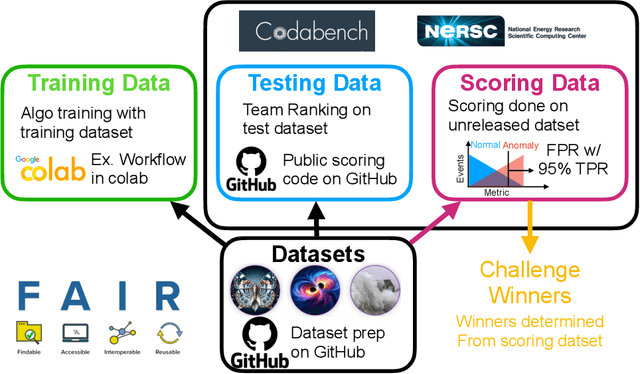
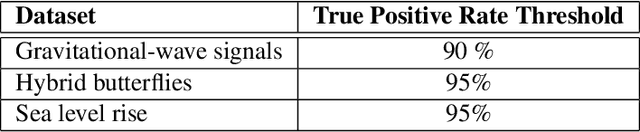
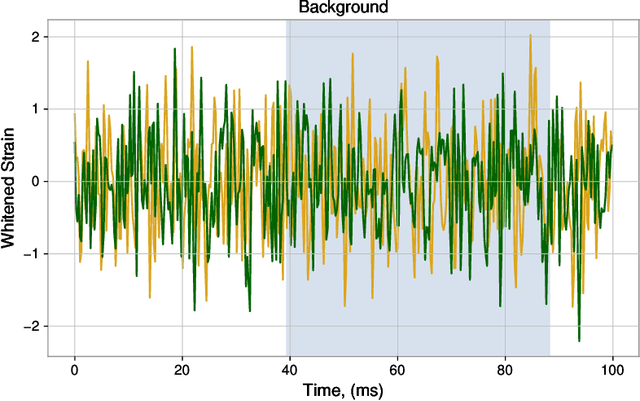
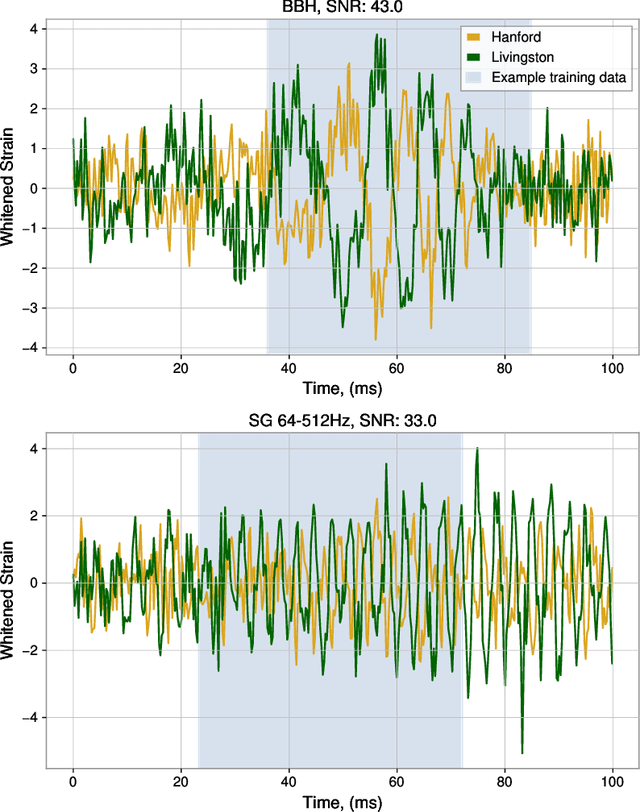
Scientific discoveries are often made by finding a pattern or object that was not predicted by the known rules of science. Oftentimes, these anomalous events or objects that do not conform to the norms are an indication that the rules of science governing the data are incomplete, and something new needs to be present to explain these unexpected outliers. The challenge of finding anomalies can be confounding since it requires codifying a complete knowledge of the known scientific behaviors and then projecting these known behaviors on the data to look for deviations. When utilizing machine learning, this presents a particular challenge since we require that the model not only understands scientific data perfectly but also recognizes when the data is inconsistent and out of the scope of its trained behavior. In this paper, we present three datasets aimed at developing machine learning-based anomaly detection for disparate scientific domains covering astrophysics, genomics, and polar science. We present the different datasets along with a scheme to make machine learning challenges around the three datasets findable, accessible, interoperable, and reusable (FAIR). Furthermore, we present an approach that generalizes to future machine learning challenges, enabling the possibility of large, more compute-intensive challenges that can ultimately lead to scientific discovery.
Equitable Federated Learning with Activation Clustering
Oct 24, 2024Federated learning is a prominent distributed learning paradigm that incorporates collaboration among diverse clients, promotes data locality, and thus ensures privacy. These clients have their own technological, cultural, and other biases in the process of data generation. However, the present standard often ignores this bias/heterogeneity, perpetuating bias against certain groups rather than mitigating it. In response to this concern, we propose an equitable clustering-based framework where the clients are categorized/clustered based on how similar they are to each other. We propose a unique way to construct the similarity matrix that uses activation vectors. Furthermore, we propose a client weighing mechanism to ensure that each cluster receives equal importance and establish $O(1/\sqrt{K})$ rate of convergence to reach an $\epsilon-$stationary solution. We assess the effectiveness of our proposed strategy against common baselines, demonstrating its efficacy in terms of reducing the bias existing amongst various client clusters and consequently ameliorating algorithmic bias against specific groups.