 Add to Chrome
 Add to Firefox
 Add to Edge
Towards Risk-free AI Agent Deployment
Aug 17, 2026
LLM-based agents are rapidly moving from research prototypes into the core business processes of organizations, but these agents pose deployment risks to security, compliance, and functionality. In this article, we argue that risk-free deployment must be grounded in the agent's trajectory: the recorded sequence of reasoning steps, tool invocations, and environmental observations. Trajectories are available for any agent, and many failures are visible only in the trajectory. To make agents deployable and sustainable, we advocate agent testing and debugging as a systematic research direction for detecting and mitigating these risks. This article begins with the challenges of testing agents, including the oracle problem, non-determinism, trajectory validation, and the absence of adequacy metrics. We then turn to debugging agents, from automated failure attribution to repair and self-evolution. We distill these directions into a practical deployment-readiness checklist covering the full deployment lifecycle. Finally, we identify open problems, i.e., formal adequacy metrics, root-cause attribution over long-horizon trajectories, and the reliability of self-evolving agents, that the community must address to enable trustworthy agent deployment.

Skills for the future software profession: beyond agentic AI!
Jun 23, 2026As coding agents are rapidly changing software engineering, a natural question is: what are the core skills needed by future software engineers? To identify where software engineering is headed and thus what skills will be needed, we summarize the results of two round-tables with researchers and industrial practitioners, held in 2026 in New York and Singapore. One key finding is that verification and validation is increasing in importance as agents handle implementation, as highlighted by anecdotes from the events. From our observations, we identify the skills developers need in the agentic era of development, with implications for training and educating future software engineers in coming years.
Code-Augur: Agentic Vulnerability Detection via Specification Inference
Jun 17, 2026The advent of agentic vulnerability detection is already becoming a watershed moment for software security. Audits conducted entirely by autonomous LLM agents are uncovering critical vulnerabilities in fundamental software underpinning digital society. Many of these vulnerabilities remained masked for years, surfacing only now with AI agents. Yet the reasoning behind these discoveries remains alarmingly opaque and unvalidated. What assumptions did the agent make about a function's inputs when it deemed that function to be secure? Failures in reasoning and incorrect assumptions can lead to missed vulnerabilities and reduce trust in agentic analysis. We propose a security-specification-first paradigm that (1) exposes the agent's tacit assumptions explicitly as security specifications and (2) continuously refines those specifications via runtime falsification. We realize our approach in Code-Augur, a novel harness for agentic vulnerability detection. Given a codebase, Code-Augur analyzes each component of the system for vulnerable code. When it deems a component to be secure, it commits the local invariants behind that judgment as in-source assertions. In parallel, Code-Augur leverages a guided fuzzer to attempt to falsify those assumptions. When the fuzzer triggers an assertion, this either reveals a genuine vulnerability or a flawed specification to refine. In both cases, this process grounds the agent's understanding, aligning its view of code intent with how the code actually behaves. On real-world subjects, Code-Augur effectively leverages security specifications to detect more vulnerabilities than other state-of-the-art agents. Additionally, Code-Augur found 22 new vulnerabilities in key open-source projects. Compared to curated specialized models like Claude Mythos, Code-Augur offers effective agentic vulnerability detection built on widely available LLMs like Sonnet and DeepSeek.
Code Review Agent Benchmark
Mar 24, 2026Software engineering agents have shown significant promise in writing code. As AI agents permeate code writing, and generate huge volumes of code automatically -- the matter of code quality comes front and centre. As the automatically generated code gets integrated into huge code-bases -- the issue of code review and broadly quality assurance becomes important. In this paper, we take a fresh look at the problem and curate a code review dataset for AI agents to work with. Our dataset called c-CRAB (pronounced see-crab) can evaluate agents for code review tasks. Specifically given a pull-request (which could be coming from code generation agents or humans), if a code review agent produces a review, our evaluation framework can asses the reviewing capability of the code review agents. Our evaluation framework is used to evaluate the state of the art today -- the open-source PR-agent, as well as commercial code review agents from Devin, Claude Code, and Codex. Our c-CRAB dataset is systematically constructed from human reviews -- given a human review of a pull request instance we generate corresponding tests to evaluate the code review agent generated reviews. Such a benchmark construction gives us several insights. Firstly, the existing review agents taken together can solve only around 40% of the c-CRAB tasks, indicating the potential to close this gap by future research. Secondly, we observe that the agent reviews often consider different aspects from the human reviews -- indicating the potential for human-agent collaboration for code review that could be deployed in future software teams. Last but not the least, the agent generated tests from our data-set act as a held out test-suite and hence quality gate for agent generated reviews. What this will mean for future collaboration of code generation agents, test generation agents and code review agents -- remains to be investigated.
VeriGrey: Greybox Agent Validation
Mar 18, 2026Agentic AI has been a topic of great interest recently. A Large Language Model (LLM) agent involves one or more LLMs in the back-end. In the front end, it conducts autonomous decision-making by combining the LLM outputs with results obtained by invoking several external tools. The autonomous interactions with the external environment introduce critical security risks. In this paper, we present a grey-box approach to explore diverse behaviors and uncover security risks in LLM agents. Our approach VeriGrey uses the sequence of tools invoked as a feedback function to drive the testing process. This helps uncover infrequent but dangerous tool invocations that cause unexpected agent behavior. As mutation operators in the testing process, we mutate prompts to design pernicious injection prompts. This is carefully accomplished by linking the task of the agent to an injection task, so that the injection task becomes a necessary step of completing the agent functionality. Comparing our approach with a black-box baseline on the well-known AgentDojo benchmark, VeriGrey achieves 33% additional efficacy in finding indirect prompt injection vulnerabilities with a GPT-4.1 back-end. We also conduct real-world case studies with the widely used coding agent Gemini CLI, and the well-known OpenClaw personal assistant. VeriGrey finds prompts inducing several attack scenarios that could not be identified by black-box approaches. In OpenClaw, by constructing a conversation agent which employs mutational fuzz testing as needed, VeriGrey is able to discover malicious skill variants from 10 malicious skills (with 10/10= 100% success rate on the Kimi-K2.5 LLM backend, and 9/10= 90% success rate on Opus 4.6 LLM backend). This demonstrates the value of a dynamic approach like VeriGrey to test agents, and to eventually lead to an agent assurance framework.
Agentic AI for Software: thoughts from Software Engineering community
Aug 24, 2025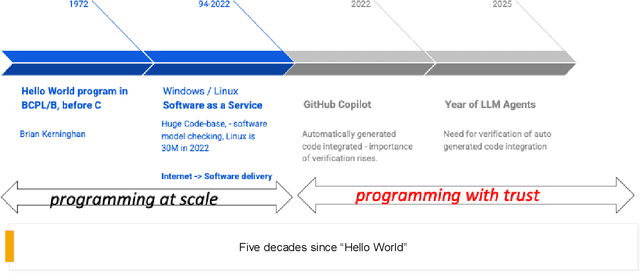
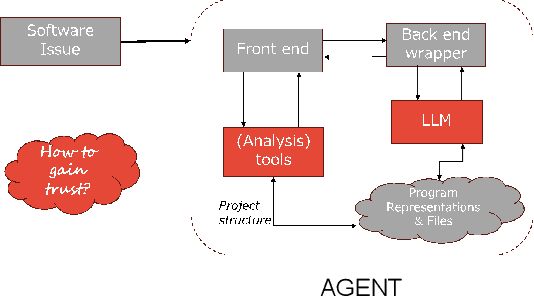
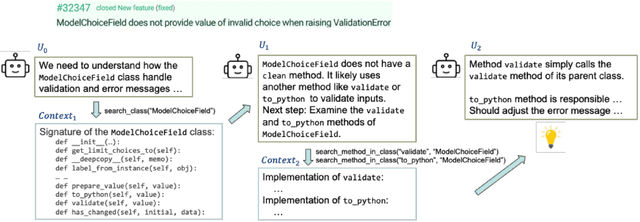
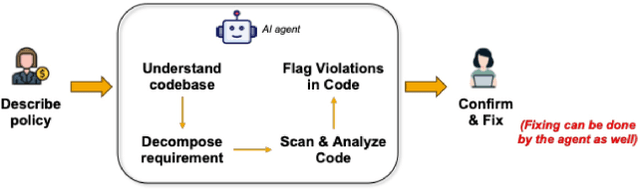
AI agents have recently shown significant promise in software engineering. Much public attention has been transfixed on the topic of code generation from Large Language Models (LLMs) via a prompt. However, software engineering is much more than programming, and AI agents go far beyond instructions given by a prompt. At the code level, common software tasks include code generation, testing, and program repair. Design level software tasks may include architecture exploration, requirements understanding, and requirements enforcement at the code level. Each of these software tasks involves micro-decisions which can be taken autonomously by an AI agent, aided by program analysis tools. This creates the vision of an AI software engineer, where the AI agent can be seen as a member of a development team. Conceptually, the key to successfully developing trustworthy agentic AI-based software workflows will be to resolve the core difficulty in software engineering - the deciphering and clarification of developer intent. Specification inference, or deciphering the intent, thus lies at the heart of many software tasks, including software maintenance and program repair. A successful deployment of agentic technology into software engineering would involve making conceptual progress in such intent inference via agents. Trusting the AI agent becomes a key aspect, as software engineering becomes more automated. Higher automation also leads to higher volume of code being automatically generated, and then integrated into code-bases. Thus to deal with this explosion, an emerging direction is AI-based verification and validation (V & V) of AI generated code. We posit that agentic software workflows in future will include such AIbased V&V.
Unified Software Engineering agent as AI Software Engineer
Jun 17, 2025The growth of Large Language Model (LLM) technology has raised expectations for automated coding. However, software engineering is more than coding and is concerned with activities including maintenance and evolution of a project. In this context, the concept of LLM agents has gained traction, which utilize LLMs as reasoning engines to invoke external tools autonomously. But is an LLM agent the same as an AI software engineer? In this paper, we seek to understand this question by developing a Unified Software Engineering agent or USEagent. Unlike existing work which builds specialized agents for specific software tasks such as testing, debugging, and repair, our goal is to build a unified agent which can orchestrate and handle multiple capabilities. This gives the agent the promise of handling complex scenarios in software development such as fixing an incomplete patch, adding new features, or taking over code written by others. We envision USEagent as the first draft of a future AI Software Engineer which can be a team member in future software development teams involving both AI and humans. To evaluate the efficacy of USEagent, we build a Unified Software Engineering bench (USEbench) comprising of myriad tasks such as coding, testing, and patching. USEbench is a judicious mixture of tasks from existing benchmarks such as SWE-bench, SWT-bench, and REPOCOD. In an evaluation on USEbench consisting of 1,271 repository-level software engineering tasks, USEagent shows improved efficacy compared to existing general agents such as OpenHands CodeActAgent. There exist gaps in the capabilities of USEagent for certain coding tasks, which provides hints on further developing the AI Software Engineer of the future.
Will AI replace Software Engineers? Hold your Breath
Feb 27, 2025Artificial Intelligence (AI) technology such as Large Language Models (LLMs) have become extremely popular in creating code. This has led to the conjecture that future software jobs will be exclusively conducted by LLMs, and the software industry will cease to exist. But software engineering is much more than producing code -- notably, \emph{maintaining} large software and keeping it reliable is a major part of software engineering, which LLMs are not yet capable of.
AI Software Engineer: Programming with Trust
Feb 19, 2025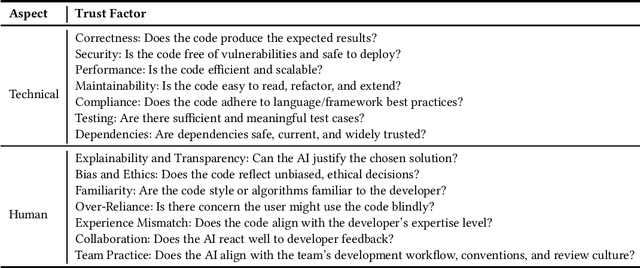
Large Language Models (LLMs) have shown surprising proficiency in generating code snippets, promising to automate large parts of software engineering via artificial intelligence (AI). We argue that successfully deploying AI software engineers requires a level of trust equal to or even greater than the trust established by human-driven software engineering practices. The recent trend toward LLM agents offers a path toward integrating the power of LLMs to create new code with the power of analysis tools to increase trust in the code. This opinion piece comments on whether LLM agents could dominate software engineering workflows in the future and whether the focus of programming will shift from programming at scale to programming with trust.
Assured Automatic Programming via Large Language Models
Oct 24, 2024


With the advent of AI-based coding engines, it is possible to convert natural language requirements to executable code in standard programming languages. However, AI-generated code can be unreliable, and the natural language requirements driving this code may be ambiguous. In other words, the intent may not be accurately captured in the code generated from AI-coding engines like Copilot. The goal of our work is to discover the programmer intent, while generating code which conforms to the intent and a proof of this conformance. Our approach to intent discovery is powered by a novel repair engine called program-proof co-evolution, where the object of repair is a tuple (code, logical specification, test) generated by an LLM from the same natural language description. The program and the specification capture the initial operational and declarative description of intent, while the test represents a concrete, albeit partial, understanding of the intent. Our objective is to achieve consistency between the program, the specification, and the test by incrementally refining our understanding of the user intent. Reaching consistency through this repair process provides us with a formal, logical description of the intent, which is then translated back into natural language for the developer's inspection. The resultant intent description is now unambiguous, though expressed in natural language. We demonstrate how the unambiguous intent discovered through our approach increases the percentage of verifiable auto-generated programs on a recently proposed dataset in the Dafny programming language.