 Add to Chrome
 Add to Firefox
 Add to Edge
generative adversarial network
Papers and Code
Regression generation adversarial network based on dual data evaluation strategy for industrial application
Dec 22, 2025
Soft sensing infers hard-to-measure data through a large number of easily obtainable variables. However, in complex industrial scenarios, the issue of insufficient data volume persists, which diminishes the reliability of soft sensing. Generative Adversarial Networks (GAN) are one of the effective solutions for addressing insufficient samples. Nevertheless, traditional GAN fail to account for the mapping relationship between labels and features, which limits further performance improvement. Although some studies have proposed solutions, none have considered both performance and efficiency simultaneously. To address these problems, this paper proposes the multi-task learning-based regression GAN framework that integrates regression information into both the discriminator and generator, and implements a shallow sharing mechanism between the discriminator and regressor. This approach significantly enhances the quality of generated samples while improving the algorithm's operational efficiency. Moreover, considering the importance of training samples and generated samples, a dual data evaluation strategy is designed to make GAN generate more diverse samples, thereby increasing the generalization of subsequent modeling. The superiority of method is validated through four classic industrial soft sensing cases: wastewater treatment plants, surface water, $CO_2$ absorption towers, and industrial gas turbines.

Logic-Driven Semantic Communication for Resilient Multi-Agent Systems
Jan 11, 2026The advent of 6G networks is accelerating autonomy and intelligence in large-scale, decentralized multi-agent systems (MAS). While this evolution enables adaptive behavior, it also heightens vulnerability to stressors such as environmental changes and adversarial behavior. Existing literature on resilience in decentralized MAS largely focuses on isolated aspects, such as fault tolerance, without offering a principled unified definition of multi-agent resilience. This gap limits the ability to design systems that can continuously sense, adapt, and recover under dynamic conditions. This article proposes a formal definition of MAS resilience grounded in two complementary dimensions: epistemic resilience, wherein agents recover and sustain accurate knowledge of the environment, and action resilience, wherein agents leverage that knowledge to coordinate and sustain goals under disruptions. We formalize resilience via temporal epistemic logic and quantify it using recoverability time (how quickly desired properties are re-established after a disturbance) and durability time (how long accurate beliefs and goal-directed behavior are sustained after recovery). We design an agent architecture and develop decentralized algorithms to achieve both epistemic and action resilience. We provide formal verification guarantees, showing that our specifications are sound with respect to the metric bounds and admit finite-horizon verification, enabling design-time certification and lightweight runtime monitoring. Through a case study on distributed multi-agent decision-making under stressors, we show that our approach outperforms baseline methods. Our formal verification analysis and simulation results highlight that the proposed framework enables resilient, knowledge-driven decision-making and sustained operation, laying the groundwork for resilient decentralized MAS in next-generation communication systems.
Synthetic Financial Data Generation for Enhanced Financial Modelling
Dec 25, 2025
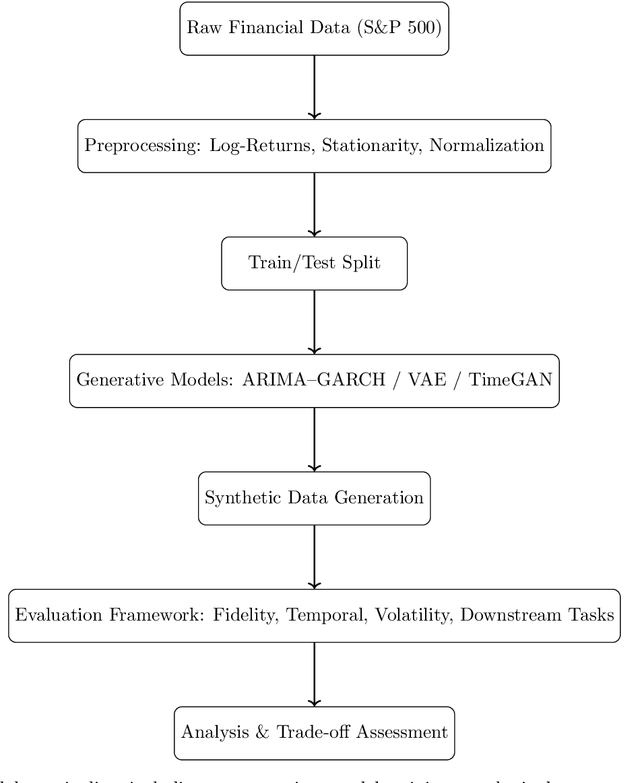

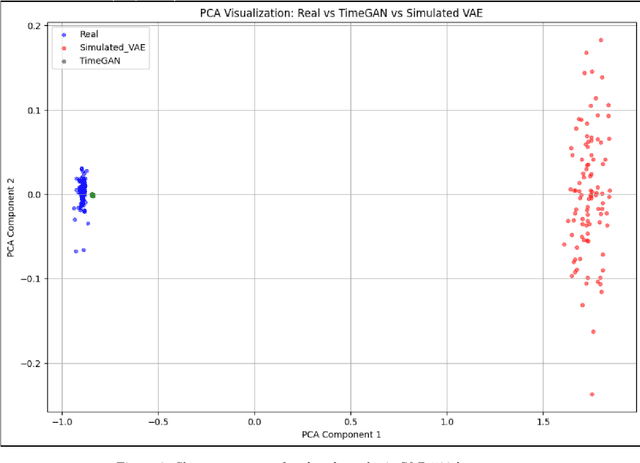
Data scarcity and confidentiality in finance often impede model development and robust testing. This paper presents a unified multi-criteria evaluation framework for synthetic financial data and applies it to three representative generative paradigms: the statistical ARIMA-GARCH baseline, Variational Autoencoders (VAEs), and Time-series Generative Adversarial Networks (TimeGAN). Using historical S and P 500 daily data, we evaluate fidelity (Maximum Mean Discrepancy, MMD), temporal structure (autocorrelation and volatility clustering), and practical utility in downstream tasks, specifically mean-variance portfolio optimization and volatility forecasting. Empirical results indicate that ARIMA-GARCH captures linear trends and conditional volatility but fails to reproduce nonlinear dynamics; VAEs produce smooth trajectories that underestimate extreme events; and TimeGAN achieves the best trade-off between realism and temporal coherence (e.g., TimeGAN attained the lowest MMD: 1.84e-3, average over 5 seeds). Finally, we articulate practical guidelines for selecting generative models according to application needs and computational constraints. Our unified evaluation protocol and reproducible codebase aim to standardize benchmarking in synthetic financial data research.
ARREST: Adversarial Resilient Regulation Enhancing Safety and Truth in Large Language Models
Jan 07, 2026Human cognition, driven by complex neurochemical processes, oscillates between imagination and reality and learns to self-correct whenever such subtle drifts lead to hallucinations or unsafe associations. In recent years, LLMs have demonstrated remarkable performance in a wide range of tasks. However, they still lack human cognition to balance factuality and safety. Bearing the resemblance, we argue that both factual and safety failures in LLMs arise from a representational misalignment in their latent activation space, rather than addressing those as entirely separate alignment issues. We hypothesize that an external network, trained to understand the fluctuations, can selectively intervene in the model to regulate falsehood into truthfulness and unsafe output into safe output without fine-tuning the model parameters themselves. Reflecting the hypothesis, we propose ARREST (Adversarial Resilient Regulation Enhancing Safety and Truth), a unified framework that identifies and corrects drifted features, engaging both soft and hard refusals in addition to factual corrections. Our empirical results show that ARREST not only regulates misalignment but is also more versatile compared to the RLHF-aligned models in generating soft refusals due to adversarial training. We make our codebase available at https://github.com/sharanya-dasgupta001/ARREST.
Speak the Art: A Direct Speech to Image Generation Framework
Dec 24, 2025Direct speech-to-image generation has recently shown promising results. However, compared to text-to-image generation, there is still a large gap to enclose. Current approaches use two stages to tackle this task: speech encoding network and image generative adversarial network (GAN). The speech encoding networks in these approaches produce embeddings that do not capture sufficient linguistic information to semantically represent the input speech. GANs suffer from issues such as non-convergence, mode collapse, and diminished gradient, which result in unstable model parameters, limited sample diversity, and ineffective generator learning, respectively. To address these weaknesses, we introduce a framework called \textbf{Speak the Art (STA)} which consists of a speech encoding network and a VQ-Diffusion network conditioned on speech embeddings. To improve speech embeddings, the speech encoding network is supervised by a large pre-trained image-text model during training. Replacing GANs with diffusion leads to more stable training and the generation of diverse images. Additionally, we investigate the feasibility of extending our framework to be multilingual. As a proof of concept, we trained our framework with two languages: English and Arabic. Finally, we show that our results surpass state-of-the-art models by a large margin.
GANeXt: A Fully ConvNeXt-Enhanced Generative Adversarial Network for MRI- and CBCT-to-CT Synthesis
Dec 22, 2025The synthesis of computed tomography (CT) from magnetic resonance imaging (MRI) and cone-beam CT (CBCT) plays a critical role in clinical treatment planning by enabling accurate anatomical representation in adaptive radiotherapy. In this work, we propose GANeXt, a 3D patch-based, fully ConvNeXt-powered generative adversarial network for unified CT synthesis across different modalities and anatomical regions. Specifically, GANeXt employs an efficient U-shaped generator constructed from stacked 3D ConvNeXt blocks with compact convolution kernels, while the discriminator adopts a conditional PatchGAN. To improve synthesis quality, we incorporate a combination of loss functions, including mean absolute error (MAE), perceptual loss, segmentation-based masked MAE, and adversarial loss and a combination of Dice loss and cross-entropy for multi-head segmentation discriminator. For both tasks, training is performed with a batch size of 8 using two separate AdamW optimizers for the generator and discriminator, each equipped with a warmup and cosine decay scheduler, with learning rates of $5\times10^{-4}$ and $1\times10^{-3}$, respectively. Data preprocessing includes deformable registration, foreground cropping, percentile normalization for the input modality, and linear normalization of the CT to the range $[-1024, 1000]$. Data augmentation involves random zooming within $(0.8, 1.3)$ (for MRI-to-CT only), fixed-size cropping to $32\times160\times192$ for MRI-to-CT and $32\times128\times128$ for CBCT-to-CT, and random flipping. During inference, we apply a sliding-window approach with $0.8$ overlap and average folding to reconstruct the full-size sCT, followed by inversion of the CT normalization. After joint training on all regions without any fine-tuning, the final models are selected at the end of 3000 epochs for MRI-to-CT and 1000 epochs for CBCT-to-CT using the full training dataset.
Inference-based GAN Video Generation
Dec 25, 2025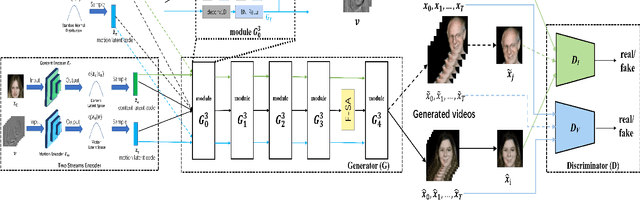
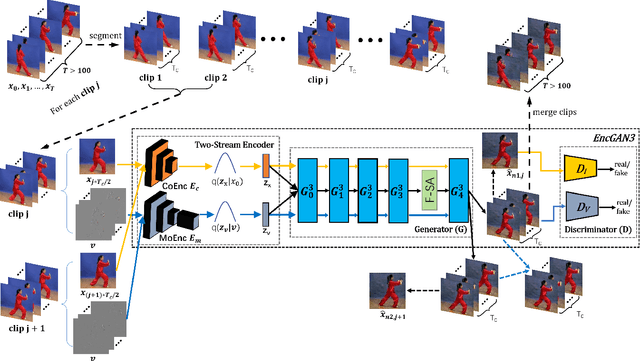
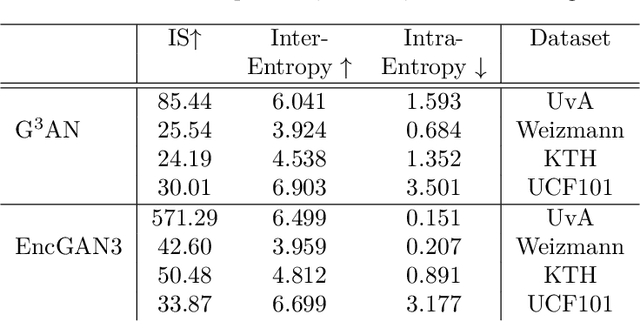
Video generation has seen remarkable progresses thanks to advancements in generative deep learning. Generated videos should not only display coherent and continuous movement but also meaningful movement in successions of scenes. Generating models such as Generative Adversarial Networks (GANs) or Variational Autoencoders (VAEs) and more recently Diffusion Networks have been used for generating short video sequences, usually of up to 16 frames. In this paper, we first propose a new type of video generator by enabling adversarial-based unconditional video generators with a variational encoder, akin to a VAE-GAN hybrid structure, in order to enable the generation process with inference capabilities. The proposed model, as in other video deep learning-based processing frameworks, incorporates two processing branches, one for content and another for movement. However, existing models struggle with the temporal scaling of the generated videos. In classical approaches when aiming to increase the generated video length, the resulting video quality degrades, particularly when considering generating significantly long sequences. To overcome this limitation, our research study extends the initially proposed VAE-GAN video generation model by employing a novel, memory-efficient approach to generate long videos composed of hundreds or thousands of frames ensuring their temporal continuity, consistency and dynamics. Our approach leverages a Markov chain framework with a recall mechanism, with each state representing a VAE-GAN short-length video generator. This setup allows for the sequential connection of generated video sub-sequences, enabling temporal dependencies, resulting in meaningful long video sequences.
IoT-based Android Malware Detection Using Graph Neural Network With Adversarial Defense
Dec 23, 2025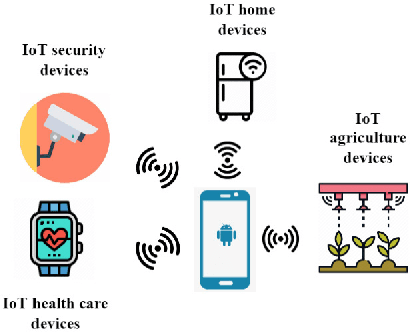
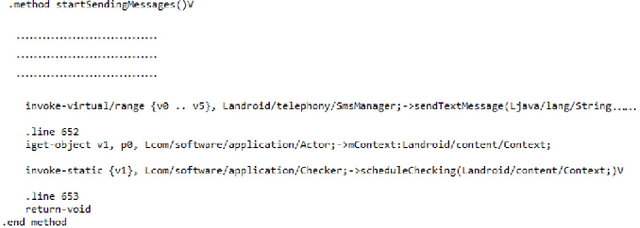
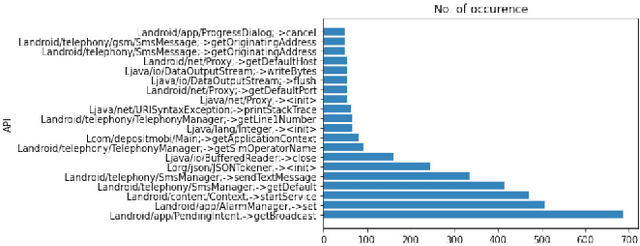
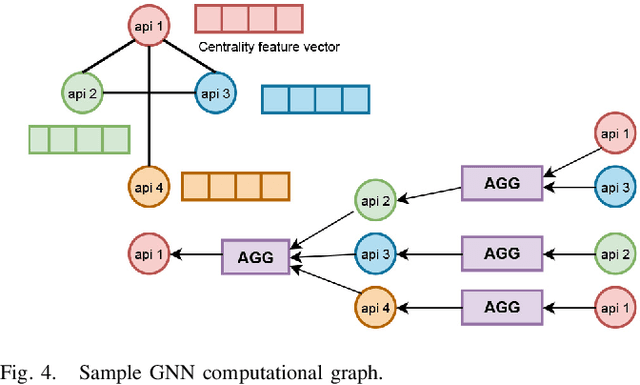
Since the Internet of Things (IoT) is widely adopted using Android applications, detecting malicious Android apps is essential. In recent years, Android graph-based deep learning research has proposed many approaches to extract relationships from applications as graphs to generate graph embeddings. First, we demonstrate the effectiveness of graph-based classification using a Graph Neural Network (GNN)-based classifier to generate API graph embeddings. The graph embeddings are combined with Permission and Intent features to train multiple machine learning and deep learning models for Android malware detection. The proposed classification approach achieves an accuracy of 98.33 percent on the CICMaldroid dataset and 98.68 percent on the Drebin dataset. However, graph-based deep learning models are vulnerable, as attackers can add fake relationships to evade detection by the classifier. Second, we propose a Generative Adversarial Network (GAN)-based attack algorithm named VGAE-MalGAN targeting graph-based GNN Android malware classifiers. The VGAE-MalGAN generator produces adversarial malware API graphs, while the VGAE-MalGAN substitute detector attempts to mimic the target detector. Experimental results show that VGAE-MalGAN can significantly reduce the detection rate of GNN-based malware classifiers. Although the model initially fails to detect adversarial malware, retraining with generated adversarial samples improves robustness and helps mitigate adversarial attacks.
* 13 pages
HGAN-SDEs: Learning Neural Stochastic Differential Equations with Hermite-Guided Adversarial Training
Dec 23, 2025Neural Stochastic Differential Equations (Neural SDEs) provide a principled framework for modeling continuous-time stochastic processes and have been widely adopted in fields ranging from physics to finance. Recent advances suggest that Generative Adversarial Networks (GANs) offer a promising solution to learning the complex path distributions induced by SDEs. However, a critical bottleneck lies in designing a discriminator that faithfully captures temporal dependencies while remaining computationally efficient. Prior works have explored Neural Controlled Differential Equations (CDEs) as discriminators due to their ability to model continuous-time dynamics, but such architectures suffer from high computational costs and exacerbate the instability of adversarial training. To address these limitations, we introduce HGAN-SDEs, a novel GAN-based framework that leverages Neural Hermite functions to construct a structured and efficient discriminator. Hermite functions provide an expressive yet lightweight basis for approximating path-level dynamics, enabling both reduced runtime complexity and improved training stability. We establish the universal approximation property of our framework for a broad class of SDE-driven distributions and theoretically characterize its convergence behavior. Extensive empirical evaluations on synthetic and real-world systems demonstrate that HGAN-SDEs achieve superior sample quality and learning efficiency compared to existing generative models for SDEs
Base Station Deployment under EMF constrain by Deep Reinforcement learning
Dec 23, 2025As 5G networks rapidly expand and 6G technologies emerge, characterized by dense deployments, millimeter-wave communications, and dynamic beamforming, the need for scalable simulation tools becomes increasingly critical. These tools must support efficient evaluation of key performance metrics such as coverage and radio-frequency electromagnetic field (RF-EMF) exposure, inform network design decisions, and ensure compliance with safety regulations. Moreover, base station (BS) placement is a crucial task in the network design, where satisfying coverage requirements is essential. To address these, based on our previous work, we first propose a conditional generative adversarial network (cGAN) that predicts location specific received signal strength (RSS), and EMF exposure simultaneously from the network topology, as images. As a network designing application, we propose a Deep Q Network (DQN) framework, using the trained cGAN, for optimal base station (BS) deployment in the network. Compared to conventional ray tracing simulations, the proposed cGAN reduces inference and deployment time from several hours to seconds. Unlike a standalone cGAN, which provides static performance maps, the proposed GAN-DQN framework enables sequential decision making under coverage and exposure constraints, learning effective deployment strategies that directly solve the BS placement problem. Thus making it well suited for real time design and adaptation in dynamic scenarios in order to satisfy pre defined network specific heterogeneous performance goals.