 Add to Chrome
 Add to Firefox
 Add to Edge
Agentic SABRE: An Uncertainty-Aware Neuro-Symbolic Multi-Agent Framework for Adaptive Ransomware Detection
Jul 05, 2026
Ransomware has evolved into a complex, adaptive, and fast-moving adversary category in which static signatures and monolithic classifiers fail to generalise under concept drift, evasion, and behavioural polymorphism. In this paper, we present Agentic SABRE (Semantic-Behavioural Arbitration for Ransomware Evaluation), an uncertainty-aware, neuro-symbolic, multi-agent framework for adaptive ransomware detection. SABRE fuses semantic, representation-based evidence with behavioural, time-window forensic telemetry and employs Monte Carlo Dropout inference to quantify epistemic uncertainty for each agent. We introduce a decision-layer orchestrator that performs risk- and uncertainty-aware triage using two interpretable thresholds: a risk score and an uncertainty budget. High-confidence, high-risk samples are automatically contained, while uncertain or borderline cases are escalated to human analysts, establishing a flexible computational contract between autonomous response and analyst oversight. To support auditability and trust, SABRE integrates post-hoc explainability mechanisms, including gradient saliency, permutation importance, and counterfactual analysis, enabling both local and global interpretation of agent decisions. Extensive evaluation on RDset and RanSMAP demonstrates that Agentic SABRE preserves perfect discrimination on saturated semantic datasets, with AUC equal to 1.0, while improving robustness under weak behavioural signals. It achieves up to a 4.9 percent relative reduction in false escalations at equal recall while maintaining calibrated predictive uncertainty. Counterfactual analysis further shows that semantic and behavioural decisions can be reversed with bounded perturbation cost, indicating stable and interpretable decision boundaries.

IoT-based Android Malware Detection Using Graph Neural Network With Adversarial Defense
Dec 23, 2025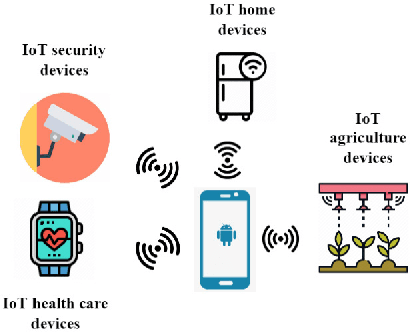
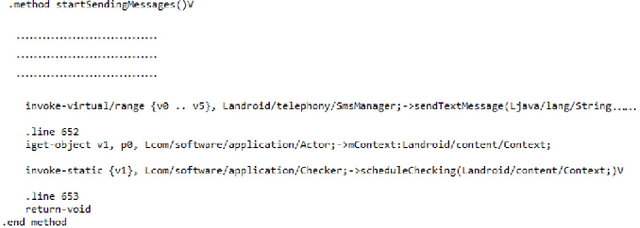
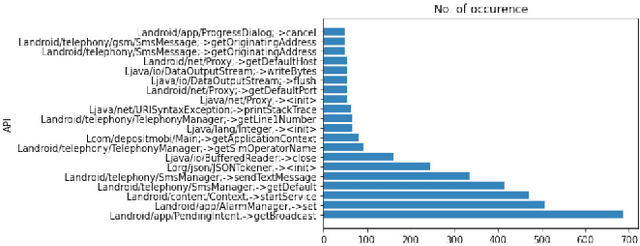
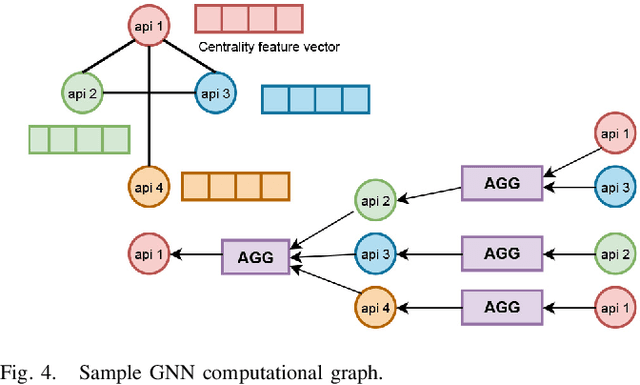
Since the Internet of Things (IoT) is widely adopted using Android applications, detecting malicious Android apps is essential. In recent years, Android graph-based deep learning research has proposed many approaches to extract relationships from applications as graphs to generate graph embeddings. First, we demonstrate the effectiveness of graph-based classification using a Graph Neural Network (GNN)-based classifier to generate API graph embeddings. The graph embeddings are combined with Permission and Intent features to train multiple machine learning and deep learning models for Android malware detection. The proposed classification approach achieves an accuracy of 98.33 percent on the CICMaldroid dataset and 98.68 percent on the Drebin dataset. However, graph-based deep learning models are vulnerable, as attackers can add fake relationships to evade detection by the classifier. Second, we propose a Generative Adversarial Network (GAN)-based attack algorithm named VGAE-MalGAN targeting graph-based GNN Android malware classifiers. The VGAE-MalGAN generator produces adversarial malware API graphs, while the VGAE-MalGAN substitute detector attempts to mimic the target detector. Experimental results show that VGAE-MalGAN can significantly reduce the detection rate of GNN-based malware classifiers. Although the model initially fails to detect adversarial malware, retraining with generated adversarial samples improves robustness and helps mitigate adversarial attacks.
* 13 pages
Enhancing Decision-Making in Windows PE Malware Classification During Dataset Shifts with Uncertainty Estimation
Dec 20, 2025Artificial intelligence techniques have achieved strong performance in classifying Windows Portable Executable (PE) malware, but their reliability often degrades under dataset shifts, leading to misclassifications with severe security consequences. To address this, we enhance an existing LightGBM (LGBM) malware detector by integrating Neural Networks (NN), PriorNet, and Neural Network Ensembles, evaluated across three benchmark datasets: EMBER, BODMAS, and UCSB. The UCSB dataset, composed mainly of packed malware, introduces a substantial distributional shift relative to EMBER and BODMAS, making it a challenging testbed for robustness. We study uncertainty-aware decision strategies, including probability thresholding, PriorNet, ensemble-derived estimates, and Inductive Conformal Evaluation (ICE). Our main contribution is the use of ensemble-based uncertainty estimates as Non-Conformity Measures within ICE, combined with a novel threshold optimisation method. On the UCSB dataset, where the shift is most severe, the state-of-the-art probability-based ICE (SOTA) yields an incorrect acceptance rate (IA%) of 22.8%. In contrast, our method reduces this to 16% a relative reduction of about 30% while maintaining competitive correct acceptance rates (CA%). These results demonstrate that integrating ensemble-based uncertainty with conformal prediction provides a more reliable safeguard against misclassifications under extreme dataset shifts, particularly in the presence of packed malware, thereby offering practical benefits for real-world security operations.
* 20 pages
Insider Threat Detection Using GCN and Bi-LSTM with Explicit and Implicit Graph Representations
Dec 20, 2025


Insider threat detection (ITD) is challenging due to the subtle and concealed nature of malicious activities performed by trusted users. This paper proposes a post-hoc ITD framework that integrates explicit and implicit graph representations with temporal modelling to capture complex user behaviour patterns. An explicit graph is constructed using predefined organisational rules to model direct relationships among user activities. To mitigate noise and limitations in this hand-crafted structure, an implicit graph is learned from feature similarities using the Gumbel-Softmax trick, enabling the discovery of latent behavioural relationships. Separate Graph Convolutional Networks (GCNs) process the explicit and implicit graphs to generate node embeddings, which are concatenated and refined through an attention mechanism to emphasise threat-relevant features. The refined representations are then passed to a bidirectional Long Short-Term Memory (Bi-LSTM) network to capture temporal dependencies in user behaviour. Activities are flagged as anomalous when their probability scores fall below a predefined threshold. Extensive experiments on CERT r5.2 and r6.2 datasets demonstrate that the proposed framework outperforms state-of-the-art methods. On r5.2, the model achieves an AUC of 98.62, a detection rate of 100%, and a false positive rate of 0.05. On the more challenging r6.2 dataset, it attains an AUC of 88.48, a detection rate of 80.15%, and a false positive rate of 0.15, highlighting the effectiveness of combining graph-based and temporal representations for robust ITD.
Detection of AI Generated Images Using Combined Uncertainty Measures and Particle Swarm Optimised Rejection Mechanism
Dec 20, 2025As AI-generated images become increasingly photorealistic, distinguishing them from natural images poses a growing challenge. This paper presents a robust detection framework that leverages multiple uncertainty measures to decide whether to trust or reject a model's predictions. We focus on three complementary techniques: Fisher Information, which captures the sensitivity of model parameters to input variations; entropy-based uncertainty from Monte Carlo Dropout, which reflects predictive variability; and predictive variance from a Deep Kernel Learning framework using a Gaussian Process classifier. To integrate these diverse uncertainty signals, Particle Swarm Optimisation is used to learn optimal weightings and determine an adaptive rejection threshold. The model is trained on Stable Diffusion-generated images and evaluated on GLIDE, VQDM, Midjourney, BigGAN, and StyleGAN3, each introducing significant distribution shifts. While standard metrics such as prediction probability and Fisher-based measures perform well in distribution, their effectiveness degrades under shift. In contrast, the Combined Uncertainty measure consistently achieves an incorrect rejection rate of approximately 70 percent on unseen generators, successfully filtering most misclassified AI samples. Although the system occasionally rejects correct predictions from newer generators, this conservative behaviour is acceptable, as rejected samples can support retraining. The framework maintains high acceptance of accurate predictions for natural images and in-domain AI data. Under adversarial attacks using FGSM and PGD, the Combined Uncertainty method rejects around 61 percent of successful attacks, while GP-based uncertainty alone achieves up to 80 percent. Overall, the results demonstrate that multi-source uncertainty fusion provides a resilient and adaptive solution for AI-generated image detection.
Flow-based Detection of Botnets through Bio-inspired Optimisation of Machine Learning
Dec 07, 2024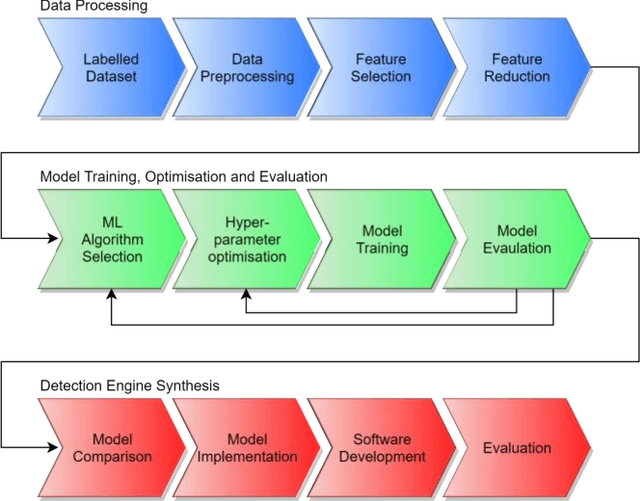
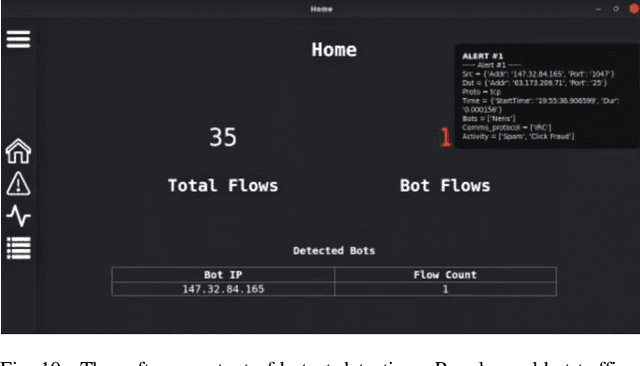
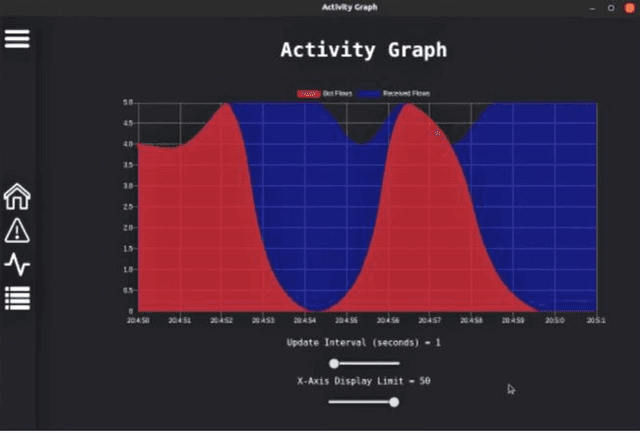
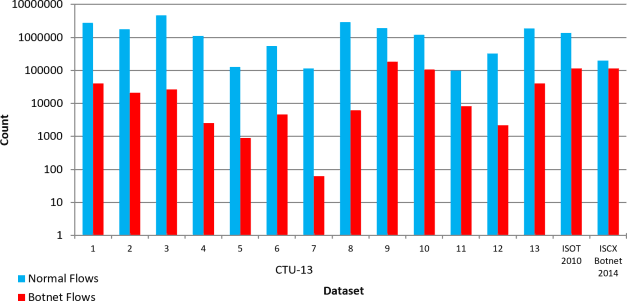
Botnets could autonomously infect, propagate, communicate and coordinate with other members in the botnet, enabling cybercriminals to exploit the cumulative computing and bandwidth of its bots to facilitate cybercrime. Traditional detection methods are becoming increasingly unsuitable against various network-based detection evasion methods. These techniques ultimately render signature-based fingerprinting detection infeasible and thus this research explores the application of network flow-based behavioural modelling to facilitate the binary classification of bot network activity, whereby the detection is independent of underlying communications architectures, ports, protocols and payload-based detection evasion mechanisms. A comparative evaluation of various machine learning classification methods is conducted, to precisely determine the average accuracy of each classifier on bot datasets like CTU-13, ISOT 2010 and ISCX 2014. Additionally, hyperparameter tuning using Genetic Algorithm (GA), aiming to efficiently converge to the fittest hyperparameter set for each dataset was done. The bioinspired optimisation of Random Forest (RF) with GA achieved an average accuracy of 99.85% when it was tested against the three datasets. The model was then developed into a software product. The YouTube link of the project and demo of the software developed: https://youtu.be/gNQjC91VtOI
Comprehensive Botnet Detection by Mitigating Adversarial Attacks, Navigating the Subtleties of Perturbation Distances and Fortifying Predictions with Conformal Layers
Sep 01, 2024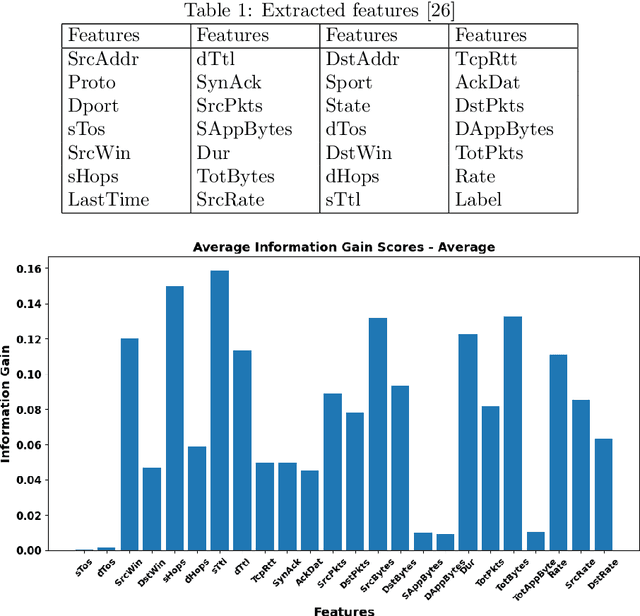
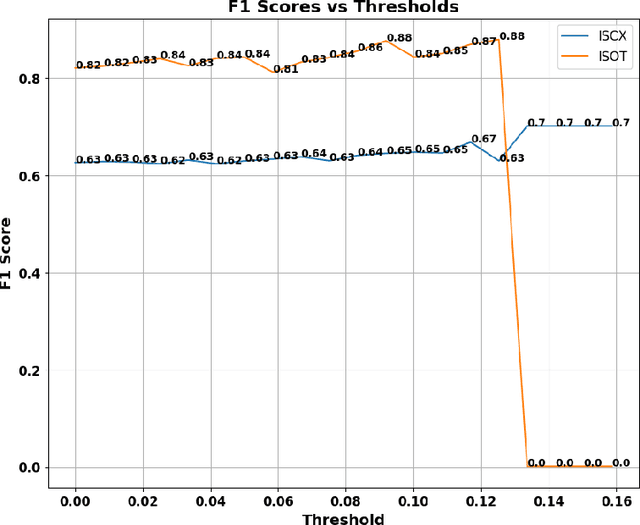
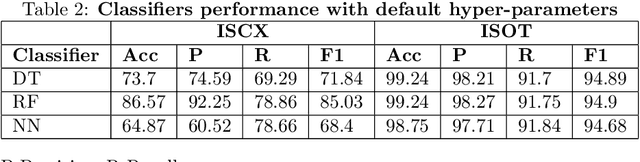
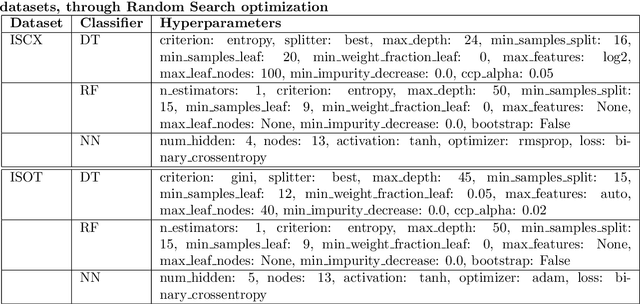
Botnets are computer networks controlled by malicious actors that present significant cybersecurity challenges. They autonomously infect, propagate, and coordinate to conduct cybercrimes, necessitating robust detection methods. This research addresses the sophisticated adversarial manipulations posed by attackers, aiming to undermine machine learning-based botnet detection systems. We introduce a flow-based detection approach, leveraging machine learning and deep learning algorithms trained on the ISCX and ISOT datasets. The detection algorithms are optimized using the Genetic Algorithm and Particle Swarm Optimization to obtain a baseline detection method. The Carlini & Wagner (C&W) attack and Generative Adversarial Network (GAN) generate deceptive data with subtle perturbations, targeting each feature used for classification while preserving their semantic and syntactic relationships, which ensures that the adversarial samples retain meaningfulness and realism. An in-depth analysis of the required L2 distance from the original sample for the malware sample to misclassify is performed across various iteration checkpoints, showing different levels of misclassification at different L2 distances of the Pertrub sample from the original sample. Our work delves into the vulnerability of various models, examining the transferability of adversarial examples from a Neural Network surrogate model to Tree-based algorithms. Subsequently, models that initially misclassified the perturbed samples are retrained, enhancing their resilience and detection capabilities. In the final phase, a conformal prediction layer is integrated, significantly rejecting incorrect predictions, of 58.20 % in the ISCX dataset and 98.94 % in the ISOT dataset.
* 46 pages
Performance Comparison of Intrusion Detection Systems and Application of Machine Learning to Snort System
Nov 07, 2017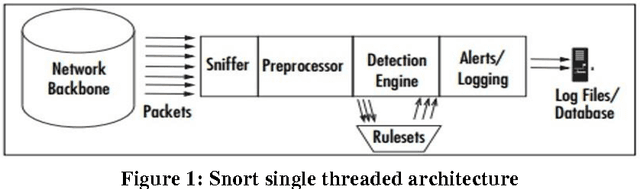
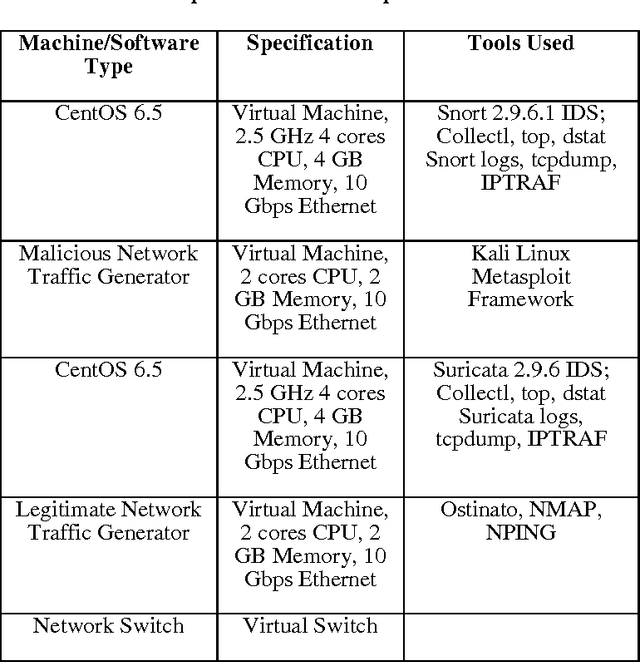
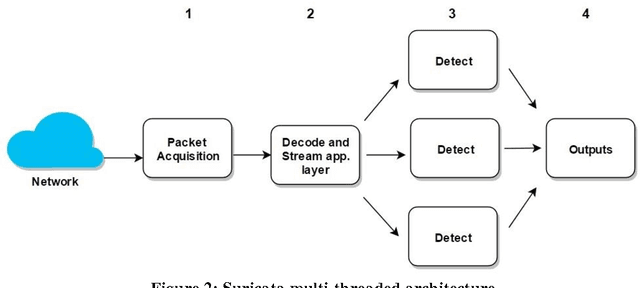
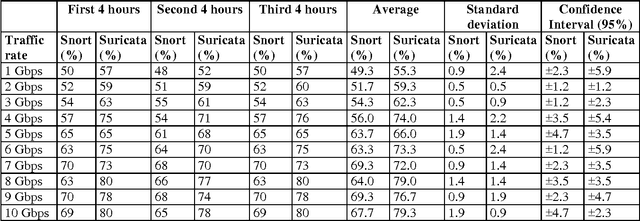
This study investigates the performance of two open source intrusion detection systems (IDSs) namely Snort and Suricata for accurately detecting the malicious traffic on computer networks. Snort and Suricata were installed on two different but identical computers and the performance was evaluated at 10 Gbps network speed. It was noted that Suricata could process a higher speed of network traffic than Snort with lower packet drop rate but it consumed higher computational resources. Snort had higher detection accuracy and was thus selected for further experiments. It was observed that the Snort triggered a high rate of false positive alarms. To solve this problem a Snort adaptive plug-in was developed. To select the best performing algorithm for Snort adaptive plug-in, an empirical study was carried out with different learning algorithms and Support Vector Machine (SVM) was selected. A hybrid version of SVM and Fuzzy logic produced a better detection accuracy. But the best result was achieved using an optimised SVM with firefly algorithm with FPR (false positive rate) as 8.6% and FNR (false negative rate) as 2.2%, which is a good result. The novelty of this work is the performance comparison of two IDSs at 10 Gbps and the application of hybrid and optimised machine learning algorithms to Snort.
* 25 pages
Analysis of Intelligent Classifiers and Enhancing the Detection Accuracy for Intrusion Detection System
Sep 28, 2015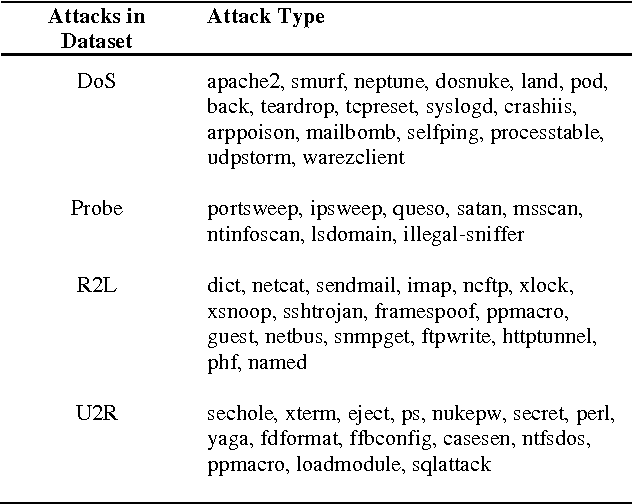
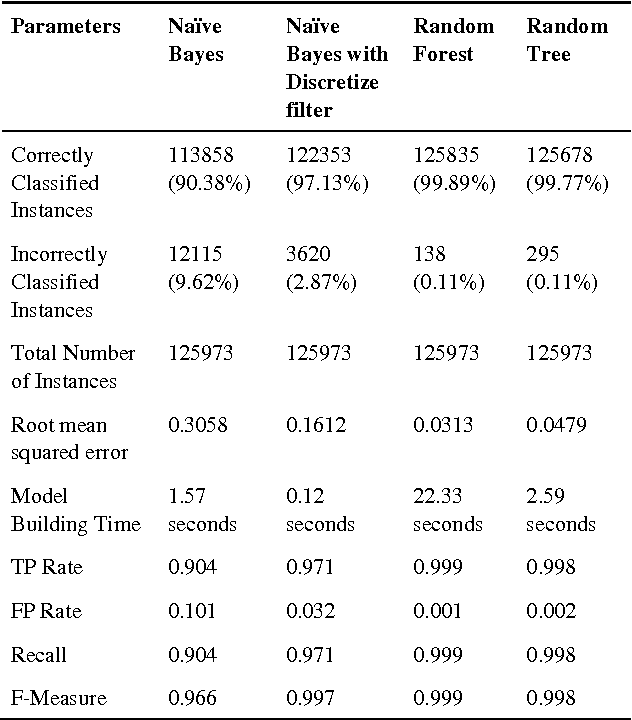
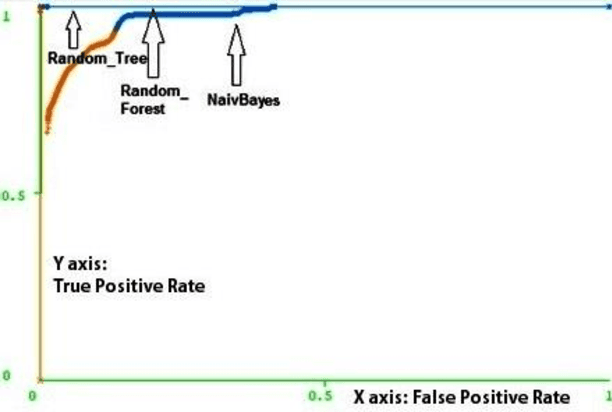
In this paper we discuss and analyze some of the intelligent classifiers which allows for automatic detection and classification of networks attacks for any intrusion detection system. We will proceed initially with their analysis using the WEKA software to work with the classifiers on a well-known IDS (Intrusion Detection Systems) dataset like NSL-KDD dataset. The NSL-KDD dataset of network attacks was created in a military network by MIT Lincoln Labs. Then we will discuss and experiment some of the hybrid AI (Artificial Intelligence) classifiers that can be used for IDS, and finally we developed a Java software with three most efficient classifiers and compared it with other options. The outputs would show the detection accuracy and efficiency of the single and combined classifiers used.