 Add to Chrome
 Add to Firefox
 Add to Edge
Vietnamese Speech Data
Papers and Code
Human-Guided Reasoning with Large Language Models for Vietnamese Speech Emotion Recognition
Apr 02, 2026
Vietnamese Speech Emotion Recognition (SER) remains challenging due to ambiguous acoustic patterns and the lack of reliable annotated data, especially in real-world conditions where emotional boundaries are not clearly separable. To address this problem, this paper proposes a human-machine collaborative framework that integrates human knowledge into the learning process rather than relying solely on data-driven models. The proposed framework is centered around LLM-based reasoning, where acoustic feature-based models are used to provide auxiliary signals such as confidence and feature-level evidence. A confidence-based routing mechanism is introduced to distinguish between easy and ambiguous samples, allowing uncertain cases to be delegated to LLMs for deeper reasoning guided by structured rules derived from human annotation behavior. In addition, an iterative refinement strategy is employed to continuously improve system performance through error analysis and rule updates. Experiments are conducted on a Vietnamese speech dataset of 2,764 samples across three emotion classes (calm, angry, panic), with high inter-annotator agreement (Fleiss Kappa = 0.8574), ensuring reliable ground truth. The proposed method achieves strong performance, reaching up to 86.59% accuracy and Macro F1 around 0.85-0.86, demonstrating its effectiveness in handling ambiguous and hard-to-classify cases. Overall, this work highlights the importance of combining data-driven models with human reasoning, providing a robust and model-agnostic approach for speech emotion recognition in low-resource settings.

Vietnamese Automatic Speech Recognition: A Revisit
Mar 16, 2026Automatic Speech Recognition (ASR) performance is heavily dependent on the availability of large-scale, high-quality datasets. For low-resource languages, existing open-source ASR datasets often suffer from insufficient quality and inconsistent annotation, hindering the development of robust models. To address these challenges, we propose a novel and generalizable data aggregation and preprocessing pipeline designed to construct high-quality ASR datasets from diverse, potentially noisy, open-source sources. Our pipeline incorporates rigorous processing steps to ensure data diversity, balance, and the inclusion of crucial features like word-level timestamps. We demonstrate the effectiveness of our methodology by applying it to Vietnamese, resulting in a unified, high-quality 500-hour dataset that provides a foundation for training and evaluating state-of-the-art Vietnamese ASR systems. Our project page is available at https://github.com/qualcomm-ai-research/PhoASR.
SEAHateCheck: Functional Tests for Detecting Hate Speech in Low-Resource Languages of Southeast Asia
Mar 17, 2026Hate speech detection relies heavily on linguistic resources, which are primarily available in high-resource languages such as English and Chinese, creating barriers for researchers and platforms developing tools for low-resource languages in Southeast Asia, where diverse socio-linguistic contexts complicate online hate moderation. To address this, we introduce SEAHateCheck, a pioneering dataset tailored to Indonesia, Thailand, the Philippines, and Vietnam, covering Indonesian, Tagalog, Thai, and Vietnamese. Building on HateCheck's functional testing framework and refining SGHateCheck's methods, SEAHateCheck provides culturally relevant test cases, augmented by large language models and validated by local experts for accuracy. Experiments with state-of-the-art and multilingual models revealed limitations in detecting hate speech in specific low-resource languages. In particular, Tagalog test cases showed the lowest model accuracy, likely due to linguistic complexity and limited training data. In contrast, slang-based functional tests proved the hardest, as models struggled with culturally nuanced expressions. The diagnostic insights of SEAHateCheck further exposed model weaknesses in implicit hate detection and models' struggles with counter-speech expression. As the first functional test suite for these Southeast Asian languages, this work equips researchers with a robust benchmark, advancing the development of practical, culturally attuned hate speech detection tools for inclusive online content moderation.
ViCocktail: Automated Multi-Modal Data Collection for Vietnamese Audio-Visual Speech Recognition
Jun 05, 2025Audio-Visual Speech Recognition (AVSR) has gained significant attention recently due to its robustness against noise, which often challenges conventional speech recognition systems that rely solely on audio features. Despite this advantage, AVSR models remain limited by the scarcity of extensive datasets, especially for most languages beyond English. Automated data collection offers a promising solution. This work presents a practical approach to generate AVSR datasets from raw video, refining existing techniques for improved efficiency and accessibility. We demonstrate its broad applicability by developing a baseline AVSR model for Vietnamese. Experiments show the automatically collected dataset enables a strong baseline, achieving competitive performance with robust ASR in clean conditions and significantly outperforming them in noisy environments like cocktail parties. This efficient method provides a pathway to expand AVSR to more languages, particularly under-resourced ones.
MultiMed-ST: Large-scale Many-to-many Multilingual Medical Speech Translation
Apr 04, 2025Multilingual speech translation (ST) in the medical domain enhances patient care by enabling efficient communication across language barriers, alleviating specialized workforce shortages, and facilitating improved diagnosis and treatment, particularly during pandemics. In this work, we present the first systematic study on medical ST, to our best knowledge, by releasing MultiMed-ST, a large-scale ST dataset for the medical domain, spanning all translation directions in five languages: Vietnamese, English, German, French, Traditional Chinese and Simplified Chinese, together with the models. With 290,000 samples, our dataset is the largest medical machine translation (MT) dataset and the largest many-to-many multilingual ST among all domains. Secondly, we present the most extensive analysis study in ST research to date, including: empirical baselines, bilingual-multilingual comparative study, end-to-end vs. cascaded comparative study, task-specific vs. multi-task sequence-to-sequence (seq2seq) comparative study, code-switch analysis, and quantitative-qualitative error analysis. All code, data, and models are available online: https://github.com/leduckhai/MultiMed-ST.
AdaCS: Adaptive Normalization for Enhanced Code-Switching ASR
Jan 13, 2025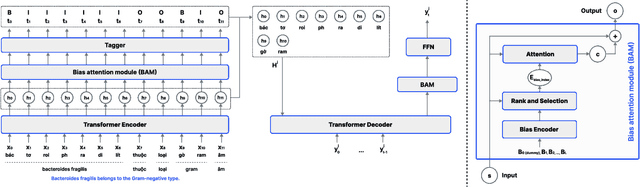
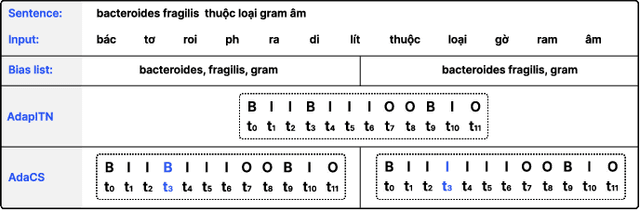
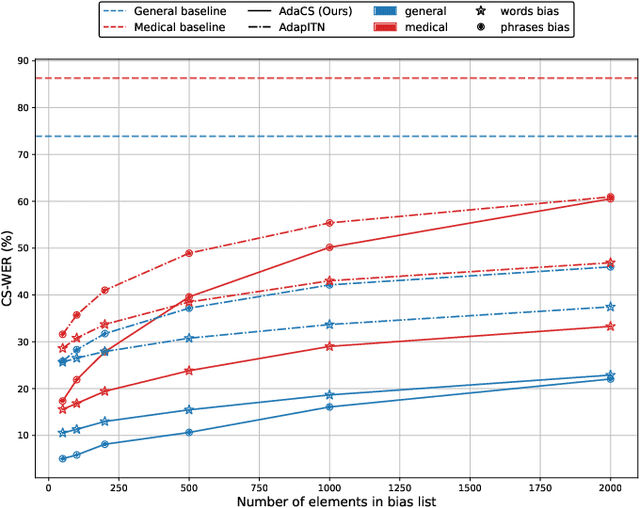
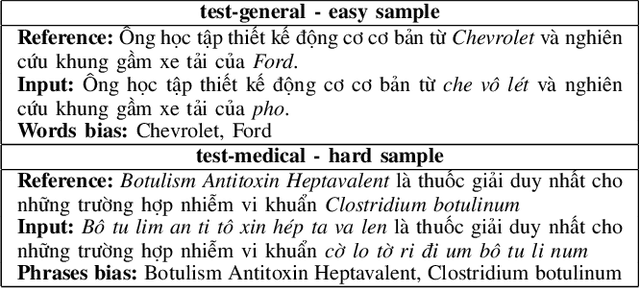
Intra-sentential code-switching (CS) refers to the alternation between languages that happens within a single utterance and is a significant challenge for Automatic Speech Recognition (ASR) systems. For example, when a Vietnamese speaker uses foreign proper names or specialized terms within their speech. ASR systems often struggle to accurately transcribe intra-sentential CS due to their training on monolingual data and the unpredictable nature of CS. This issue is even more pronounced for low-resource languages, where limited data availability hinders the development of robust models. In this study, we propose AdaCS, a normalization model integrates an adaptive bias attention module (BAM) into encoder-decoder network. This novel approach provides a robust solution to CS ASR in unseen domains, thereby significantly enhancing our contribution to the field. By utilizing BAM to both identify and normalize CS phrases, AdaCS enhances its adaptive capabilities with a biased list of words provided during inference. Our method demonstrates impressive performance and the ability to handle unseen CS phrases across various domains. Experiments show that AdaCS outperforms previous state-of-the-art method on Vietnamese CS ASR normalization by considerable WER reduction of 56.2% and 36.8% on the two proposed test sets.
A Big Data-empowered System for Real-time Detection of Regional Discriminatory Comments on Vietnamese Social Media
Oct 29, 2024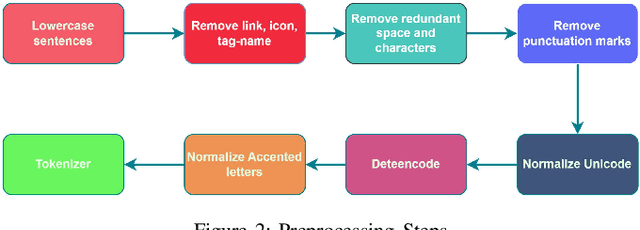
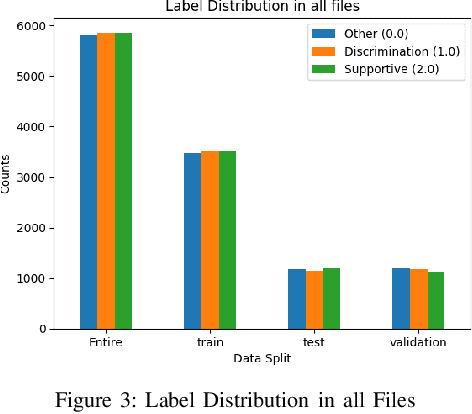
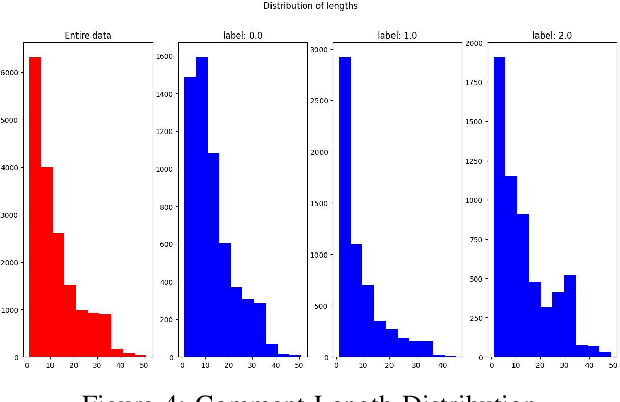
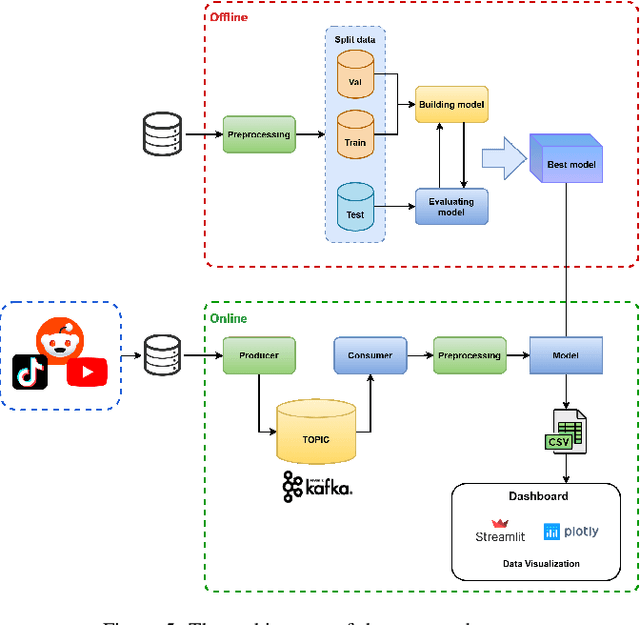
Regional discrimination is a persistent social issue in Vietnam. While existing research has explored hate speech in the Vietnamese language, the specific issue of regional discrimination remains under-addressed. Previous studies primarily focused on model development without considering practical system implementation. In this work, we propose a task called Detection of Regional Discriminatory Comments on Vietnamese Social Media, leveraging the power of machine learning and transfer learning models. We have built the ViRDC (Vietnamese Regional Discrimination Comments) dataset, which contains comments from social media platforms, providing a valuable resource for further research and development. Our approach integrates streaming capabilities to process real-time data from social media networks, ensuring the system's scalability and responsiveness. We developed the system on the Apache Spark framework to efficiently handle increasing data inputs during streaming. Our system offers a comprehensive solution for the real-time detection of regional discrimination in Vietnam.
Multi-Dialect Vietnamese: Task, Dataset, Baseline Models and Challenges
Oct 04, 2024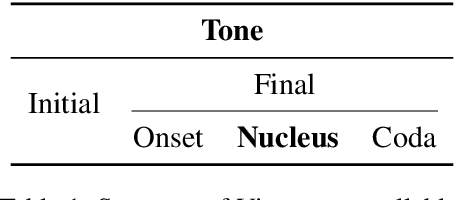

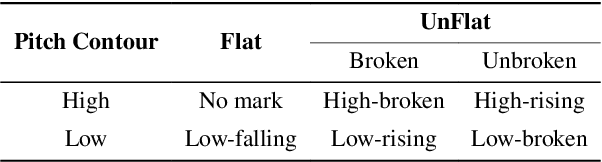
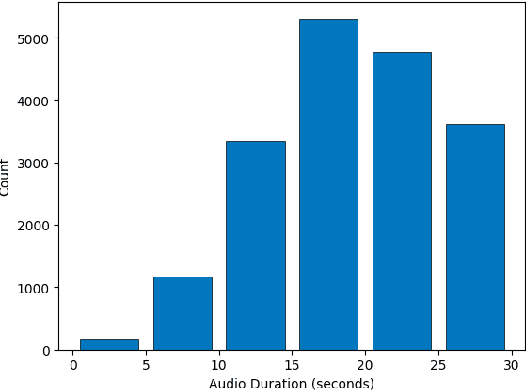
Vietnamese, a low-resource language, is typically categorized into three primary dialect groups that belong to Northern, Central, and Southern Vietnam. However, each province within these regions exhibits its own distinct pronunciation variations. Despite the existence of various speech recognition datasets, none of them has provided a fine-grained classification of the 63 dialects specific to individual provinces of Vietnam. To address this gap, we introduce Vietnamese Multi-Dialect (ViMD) dataset, a novel comprehensive dataset capturing the rich diversity of 63 provincial dialects spoken across Vietnam. Our dataset comprises 102.56 hours of audio, consisting of approximately 19,000 utterances, and the associated transcripts contain over 1.2 million words. To provide benchmarks and simultaneously demonstrate the challenges of our dataset, we fine-tune state-of-the-art pre-trained models for two downstream tasks: (1) Dialect identification and (2) Speech recognition. The empirical results suggest two implications including the influence of geographical factors on dialects, and the constraints of current approaches in speech recognition tasks involving multi-dialect speech data. Our dataset is available for research purposes.
GigaSpeech 2: An Evolving, Large-Scale and Multi-domain ASR Corpus for Low-Resource Languages with Automated Crawling, Transcription and Refinement
Jun 17, 2024The evolution of speech technology has been spurred by the rapid increase in dataset sizes. Traditional speech models generally depend on a large amount of labeled training data, which is scarce for low-resource languages. This paper presents GigaSpeech 2, a large-scale, multi-domain, multilingual speech recognition corpus. It is designed for low-resource languages and does not rely on paired speech and text data. GigaSpeech 2 comprises about 30,000 hours of automatically transcribed speech, including Thai, Indonesian, and Vietnamese, gathered from unlabeled YouTube videos. We also introduce an automated pipeline for data crawling, transcription, and label refinement. Specifically, this pipeline uses Whisper for initial transcription and TorchAudio for forced alignment, combined with multi-dimensional filtering for data quality assurance. A modified Noisy Student Training is developed to further refine flawed pseudo labels iteratively, thus enhancing model performance. Experimental results on our manually transcribed evaluation set and two public test sets from Common Voice and FLEURS confirm our corpus's high quality and broad applicability. Notably, ASR models trained on GigaSpeech 2 can reduce the word error rate for Thai, Indonesian, and Vietnamese on our challenging and realistic YouTube test set by 25% to 40% compared to the Whisper large-v3 model, with merely 10% model parameters. Furthermore, our ASR models trained on Gigaspeech 2 yield superior performance compared to commercial services. We believe that our newly introduced corpus and pipeline will open a new avenue for low-resource speech recognition and significantly facilitate research in this area.
MultiMed: Multilingual Medical Speech Recognition via Attention Encoder Decoder
Sep 21, 2024
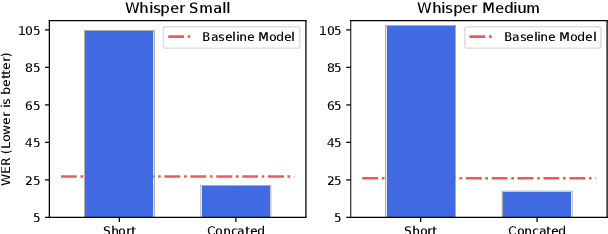


Multilingual automatic speech recognition (ASR) in the medical domain serves as a foundational task for various downstream applications such as speech translation, spoken language understanding, and voice-activated assistants. This technology enhances patient care by enabling efficient communication across language barriers, alleviating specialized workforce shortages, and facilitating improved diagnosis and treatment, particularly during pandemics. In this work, we introduce MultiMed, a collection of small-to-large end-to-end ASR models for the medical domain, spanning five languages: Vietnamese, English, German, French, and Mandarin Chinese, together with the corresponding real-world ASR dataset. To our best knowledge, MultiMed stands as the largest and the first multilingual medical ASR dataset, in terms of total duration, number of speakers, diversity of diseases, recording conditions, speaker roles, unique medical terms, accents, and ICD-10 codes. Secondly, we establish the empirical baselines, present the first reproducible study of multilinguality in medical ASR, conduct a layer-wise ablation study for end-to-end ASR training, and provide the first linguistic analysis for multilingual medical ASR. All code, data, and models are available online https://github.com/leduckhai/MultiMed/tree/master/MultiMed