 Add to Chrome
 Add to Firefox
 Add to Edge
ViDia2Std: A Parallel Corpus and Methods for Low-Resource Vietnamese Dialect-to-Standard Translation
Mar 10, 2026
Vietnamese exhibits extensive dialectal variation, posing challenges for NLP systems trained predominantly on standard Vietnamese. Such systems often underperform on dialectal inputs, especially from underrepresented Central and Southern regions. Previous work on dialect normalization has focused narrowly on Central-to-Northern dialect transfer using synthetic data and limited dialectal diversity. These efforts exclude Southern varieties and intra-regional variants within the North. We introduce ViDia2Std, the first manually annotated parallel corpus for dialect-to-standard Vietnamese translation covering all 63 provinces. Unlike prior datasets, ViDia2Std includes diverse dialects from Central, Southern, and non-standard Northern regions often absent from existing resources, making it the most dialectally inclusive corpus to date. The dataset consists of over 13,000 sentence pairs sourced from real-world Facebook comments and annotated by native speakers across all three dialect regions. To assess annotation consistency, we define a semantic mapping agreement metric that accounts for synonymous standard mappings across annotators. Based on this criterion, we report agreement rates of 86% (North), 82% (Central), and 85% (South). We benchmark several sequence-to-sequence models on ViDia2Std. mBART-large-50 achieves the best results (BLEU 0.8166, ROUGE-L 0.9384, METEOR 0.8925), while ViT5-base offers competitive performance with fewer parameters. ViDia2Std demonstrates that dialect normalization substantially improves downstream tasks, highlighting the need for dialect-aware resources in building robust Vietnamese NLP systems.

Multi-Dialect Vietnamese: Task, Dataset, Baseline Models and Challenges
Oct 04, 2024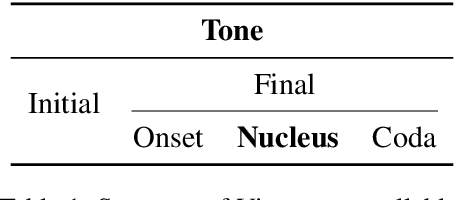

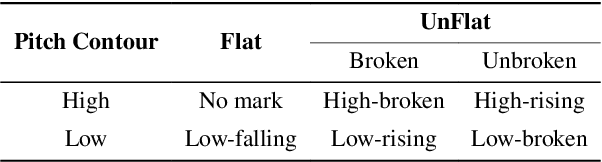
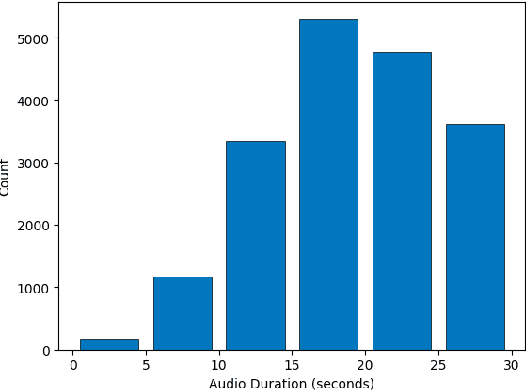
Vietnamese, a low-resource language, is typically categorized into three primary dialect groups that belong to Northern, Central, and Southern Vietnam. However, each province within these regions exhibits its own distinct pronunciation variations. Despite the existence of various speech recognition datasets, none of them has provided a fine-grained classification of the 63 dialects specific to individual provinces of Vietnam. To address this gap, we introduce Vietnamese Multi-Dialect (ViMD) dataset, a novel comprehensive dataset capturing the rich diversity of 63 provincial dialects spoken across Vietnam. Our dataset comprises 102.56 hours of audio, consisting of approximately 19,000 utterances, and the associated transcripts contain over 1.2 million words. To provide benchmarks and simultaneously demonstrate the challenges of our dataset, we fine-tune state-of-the-art pre-trained models for two downstream tasks: (1) Dialect identification and (2) Speech recognition. The empirical results suggest two implications including the influence of geographical factors on dialects, and the constraints of current approaches in speech recognition tasks involving multi-dialect speech data. Our dataset is available for research purposes.