 Add to Chrome
 Add to Firefox
 Add to Edge
Superresolution
Papers and Code
Deep Learning Superresolution for 7T Knee MR Imaging: Impact on Image Quality and Diagnostic Performance
Jan 05, 2026
Background: Deep learning superresolution (SR) may enhance musculoskeletal MR image quality, but its diagnostic value in knee imaging at 7T is unclear. Objectives: To compare image quality and diagnostic performance of SR, low-resolution (LR), and high-resolution (HR) 7T knee MRI. Methods: In this prospective study, 42 participants underwent 7T knee MRI with LR (0.8*0.8*2 mm3) and HR (0.4*0.4*2 mm3) sequences. SR images were generated from LR data using a Hybrid Attention Transformer model. Three radiologists assessed image quality, anatomic conspicuity, and detection of knee pathologies. Arthroscopy served as reference in 10 cases. Results: SR images showed higher overall quality than LR (median score 5 vs 4, P<.001) and lower noise than HR (5 vs 4, P<.001). Visibility of cartilage, menisci, and ligaments was superior in SR and HR compared to LR (P<.001). Detection rates and diagnostic performance (sensitivity, specificity, AUC) for intra-articular pathology were similar across image types (P>=.095). Conclusions: Deep learning superresolution improved subjective image quality in 7T knee MRI but did not increase diagnostic accuracy compared with standard LR imaging.

CD-TVD: Contrastive Diffusion for 3D Super-Resolution with Scarce High-Resolution Time-Varying Data
Aug 13, 2025Large-scale scientific simulations require significant resources to generate high-resolution time-varying data (TVD). While super-resolution is an efficient post-processing strategy to reduce costs, existing methods rely on a large amount of HR training data, limiting their applicability to diverse simulation scenarios. To address this constraint, we proposed CD-TVD, a novel framework that combines contrastive learning and an improved diffusion-based super-resolution model to achieve accurate 3D super-resolution from limited time-step high-resolution data. During pre-training on historical simulation data, the contrastive encoder and diffusion superresolution modules learn degradation patterns and detailed features of high-resolution and low-resolution samples. In the training phase, the improved diffusion model with a local attention mechanism is fine-tuned using only one newly generated high-resolution timestep, leveraging the degradation knowledge learned by the encoder. This design minimizes the reliance on large-scale high-resolution datasets while maintaining the capability to recover fine-grained details. Experimental results on fluid and atmospheric simulation datasets confirm that CD-TVD delivers accurate and resource-efficient 3D super-resolution, marking a significant advancement in data augmentation for large-scale scientific simulations. The code is available at https://github.com/Xin-Gao-private/CD-TVD.
Demonstrating Superresolution in Radar Range Estimation Using a Denoising Autoencoder
Jun 17, 2025We apply machine learning methods to demonstrate range superresolution in remote sensing radar detection. Specifically, we implement a denoising autoencoder to estimate the distance between two equal intensity scatterers in the subwavelength regime. The machine learning models are trained on waveforms subject to a bandlimit constraint such that ranges much smaller than the inverse bandlimit are optimized in their precision. The autoencoder achieves effective dimensionality reduction, with the bottleneck layer exhibiting a strong and consistent correlation with the true scatterer separation. We confirm reproducibility across different training sessions and network initializations by analyzing the scaled encoder outputs and their robustness to noise. We investigate the behavior of the bottleneck layer for the following types of pulses: a traditional sinc pulse, a bandlimited triangle-type pulse, and a theoretically near-optimal pulse created from a spherical Bessel function basis. The Bessel signal performs best, followed by the triangle wave, with the sinc signal performing worst, highlighting the crucial role of signal design in the success of machine-learning-based range resolution.
Deep regularization networks for inverse problems with noisy operators
Jun 08, 2025A supervised learning approach is proposed for regularization of large inverse problems where the main operator is built from noisy data. This is germane to superresolution imaging via the sampling indicators of the inverse scattering theory. We aim to accelerate the spatiotemporal regularization process for this class of inverse problems to enable real-time imaging. In this approach, a neural operator maps each pattern on the right-hand side of the scattering equation to its affiliated regularization parameter. The network is trained in two steps which entails: (1) training on low-resolution regularization maps furnished by the Morozov discrepancy principle with nonoptimal thresholds, and (2) optimizing network predictions through minimization of the Tikhonov loss function regulated by the validation loss. Step 2 allows for tailoring of the approximate maps of Step 1 toward construction of higher quality images. This approach enables direct learning from test data and dispenses with the need for a-priori knowledge of the optimal regularization maps. The network, trained on low-resolution data, quickly generates dense regularization maps for high-resolution imaging. We highlight the importance of the training loss function on the network's generalizability. In particular, we demonstrate that networks informed by the logic of discrepancy principle lead to images of higher contrast. In this case, the training process involves many-objective optimization. We propose a new method to adaptively select the appropriate loss weights during training without requiring an additional optimization process. The proposed approach is synthetically examined for imaging damage evolution in an elastic plate. The results indicate that the discrepancy-informed regularization networks not only accelerate the imaging process, but also remarkably enhance the image quality in complex environments.
Linear Convergence of Plug-and-Play Algorithms with Kernel Denoisers
May 21, 2025The use of denoisers for image reconstruction has shown significant potential, especially for the Plug-and-Play (PnP) framework. In PnP, a powerful denoiser is used as an implicit regularizer in proximal algorithms such as ISTA and ADMM. The focus of this work is on the convergence of PnP iterates for linear inverse problems using kernel denoisers. It was shown in prior work that the update operator in standard PnP is contractive for symmetric kernel denoisers under appropriate conditions on the denoiser and the linear forward operator. Consequently, we could establish global linear convergence of the iterates using the contraction mapping theorem. In this work, we develop a unified framework to establish global linear convergence for symmetric and nonsymmetric kernel denoisers. Additionally, we derive quantitative bounds on the contraction factor (convergence rate) for inpainting, deblurring, and superresolution. We present numerical results to validate our theoretical findings.
Breaking the Diffraction Barrier for Passive Sources: Parameter-Decoupled Superresolution Assisted by Physics-Informed Machine Learning
Apr 19, 2025We present a parameter-decoupled superresolution framework for estimating sub-wavelength separations of passive two-point sources without requiring prior knowledge or control of the source. Our theoretical foundation circumvents the need to estimate multiple challenging parameters such as partial coherence, brightness imbalance, random relative phase, and photon statistics. A physics-informed machine learning (ML) model (trained with a standard desktop workstation), synergistically integrating this theory, further addresses practical imperfections including background noise, photon loss, and centroid/orientation misalignment. The integrated parameter-decoupling superresolution method achieves resolution 14 and more times below the diffraction limit (corresponding to ~ 13.5 nm in optical microscopy) on experimentally generated realistic images with >82% fidelity, performance rivaling state-of-the-art techniques for actively controllable sources. Critically, our method's robustness against source parameter variability and source-independent noises enables potential applications in realistic scenarios where source control is infeasible, such as astrophysical imaging, live-cell microscopy, and quantum metrology. This work bridges a critical gap between theoretical superresolution limits and practical implementations for passive systems.
On the Logic Elements Associated with Round-Off Errors and Gaussian Blur in Image Registration: A Simple Case of Commingling
Feb 17, 2025Discrete image registration can be a strategy to reconstruct signals from samples corrupted by blur and noise. We examine superresolution and discrete image registration for one-dimensional spatially-limited piecewise constant functions which are subject to blur which is Gaussian or a mixture of Gaussians as well as to round-off errors. Previous approaches address the signal recovery problem as an optimization problem. We focus on a regime with low blur and suggest that the operations of blur, sampling, and quantization are not unlike the operation of a computer program and have an abstraction that can be studied with a type of logic. When the minimum distance between discontinuity points is between $1.5$ and 2 times the sampling interval, we can encounter the simplest form of a type of interference between discontinuity points that we call ``commingling.'' We describe a way to reason about two sets of samples of the same signal that will often result in the correct recovery of signal amplitudes. We also discuss ways to estimate bounds on the distances between discontinuity points.
On Round-Off Errors and Gaussian Blur in Superresolution and in Image Registration
Dec 12, 2024Superresolution theory and techniques seek to recover signals from samples in the presence of blur and noise. Discrete image registration can be an approach to fuse information from different sets of samples of the same signal. Quantization errors in the spatial domain are inherent to digital images. We consider superresolution and discrete image registration for one-dimensional spatially-limited piecewise constant functions which are subject to blur which is Gaussian or a mixture of Gaussians as well as to round-off errors. We describe a signal-dependent measurement matrix which captures both types of effects. For this setting we show that the difficulties in determining the discontinuity points from two sets of samples even in the absence of other types of noise. If the samples are also subject to statistical noise, then it is necessary to align and segment the data sequences to make the most effective inferences about the amplitudes and discontinuity points. Under some conditions on the blur, the noise, and the distance between discontinuity points, we prove that we can correctly align and determine the first samples following each discontinuity point in two data sequences with an approach based on dynamic programming.
VIPaint: Image Inpainting with Pre-Trained Diffusion Models via Variational Inference
Nov 28, 2024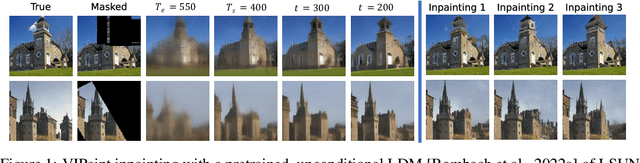
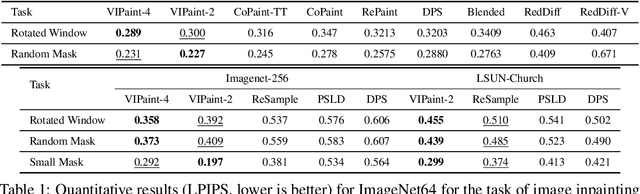
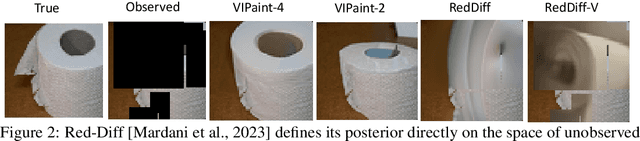
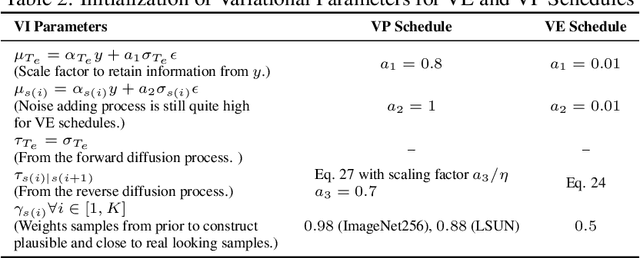
Diffusion probabilistic models learn to remove noise that is artificially added to the data during training. Novel data, like images, may then be generated from Gaussian noise through a sequence of denoising operations. While this Markov process implicitly defines a joint distribution over noise-free data, it is not simple to condition the generative process on masked or partial images. A number of heuristic sampling procedures have been proposed for solving inverse problems with diffusion priors, but these approaches do not directly approximate the true conditional distribution imposed by inference queries, and are often ineffective for large masked regions. Moreover, many of these baselines cannot be applied to latent diffusion models which use image encodings for efficiency. We instead develop a hierarchical variational inference algorithm that analytically marginalizes missing features, and uses a rigorous variational bound to optimize a non-Gaussian Markov approximation of the true diffusion posterior. Through extensive experiments with both pixel-based and latent diffusion models of images, we show that our VIPaint method significantly outperforms previous approaches in both the plausibility and diversity of imputations, and is easily generalized to other inverse problems like deblurring and superresolution.
SuperResolution Radar Gesture Recognitio
Nov 23, 2024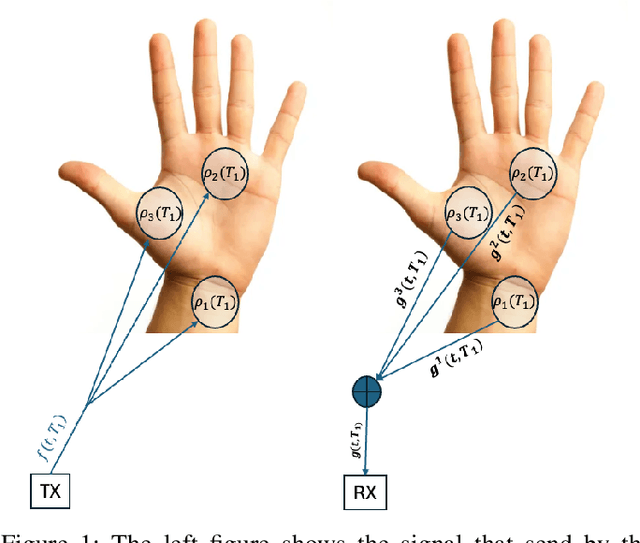
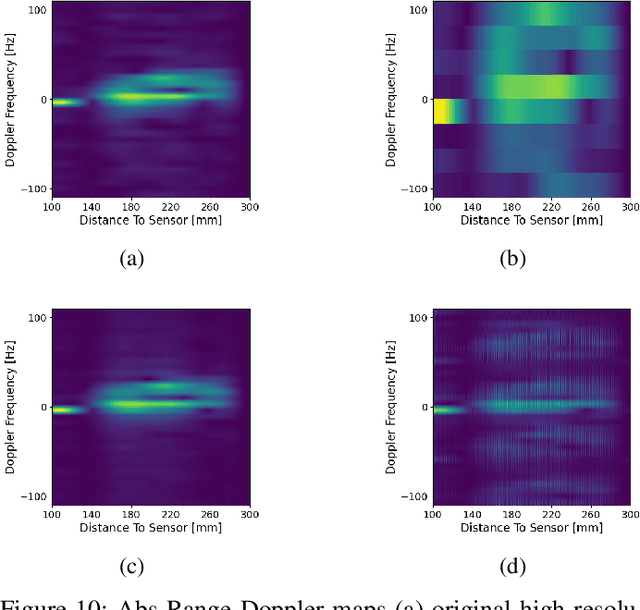
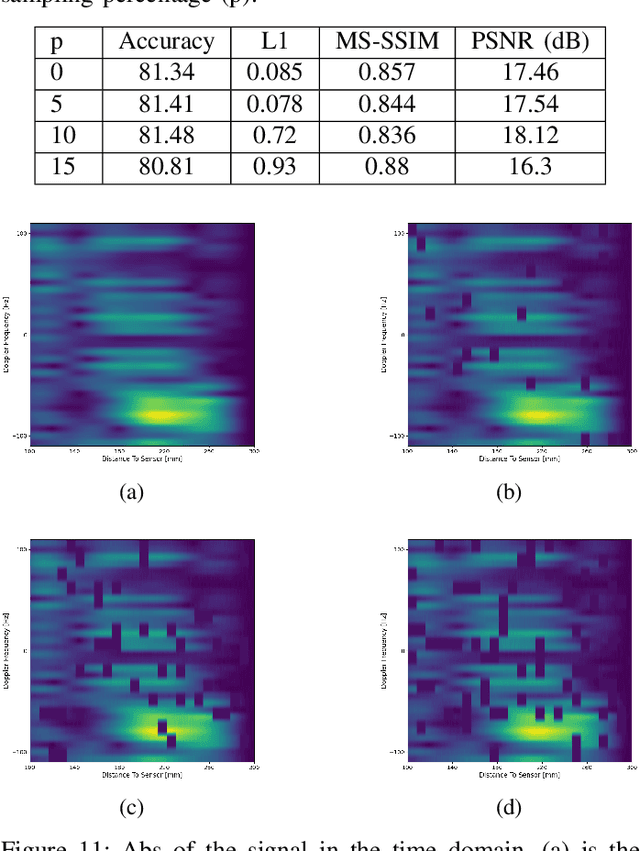
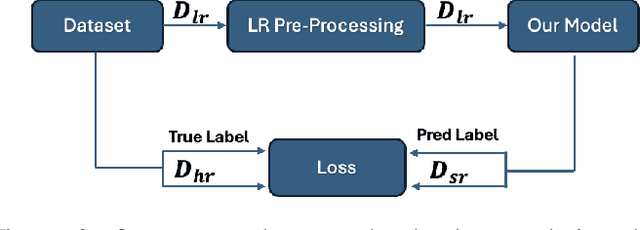
"This work has been submitted to the IEEE for possible publication. Copyright may be transferred without notice, after which this version may no longer be accessible." Driver's interaction with a vehicle via automatic gesture recognition is expected to enhance driving safety by decreasing driver's distraction. Optical and infrared-based gesture recognition systems are limited by occlusions, poor lighting, and varying thermal conditions and, therefore, have limited performance in practical in-cabin applications. Radars are insensitive to lighting or thermal conditions and, therefore, are more suitable for in-cabin applications. However, the spatial resolution of conventional radars is insufficient for accurate gesture recognition. The main objective of this research is to derive an accurate gesture recognition approach using low-resolution radars with deep learning-based super-resolution processing. The main idea is to reconstruct high-resolution information from the radar's low-resolution measurements. The major challenge is the derivation of the real-time processing approach. The proposed approach combines conventional signal processing and deep learning methods. The radar echoes are arranged in 3D data cubes and processed using a super-resolution model to enhance range and Doppler resolution. The FFT is used to generate the range-Doppler maps, which enter the deep neural network for efficient gesture recognition. The preliminary results demonstrated the proposed approach's efficiency in achieving high gesture recognition performance using conventional low-resolution radars.