 Add to Chrome
 Add to Firefox
 Add to Edge
Node2vec
Papers and Code
Cyberswarm: a novel swarm intelligence algorithm inspired by cyber community dynamics
Dec 14, 2025
Recommendation systems face challenges in dynamically adapting to evolving user preferences and interactions within complex social networks. Traditional approaches often fail to account for the intricate interactions within cyber-social systems and lack the flexibility to generalize across diverse domains, highlighting the need for more adaptive and versatile solutions. In this work, we introduce a general-purpose swarm intelligence algorithm for recommendation systems, designed to adapt seamlessly to varying applications. It was inspired by social psychology principles. The framework models user preferences and community influences within a dynamic hypergraph structure. It leverages centrality-based feature extraction and Node2Vec embeddings. Preference evolution is guided by message-passing mechanisms and hierarchical graph modeling, enabling real-time adaptation to changing behaviors. Experimental evaluations demonstrated the algorithm's superior performance in various recommendation tasks, including social networks and content discovery. Key metrics such as Hit Rate (HR), Mean Reciprocal Rank (MRR), and Normalized Discounted Cumulative Gain (NDCG) consistently outperformed baseline methods across multiple datasets. The model's adaptability to dynamic environments allowed for contextually relevant and precise recommendations. The proposed algorithm represents an advancement in recommendation systems by bridging individual preferences and community influences. Its general-purpose design enables applications in diverse domains, including social graphs, personalized learning, and medical graphs. This work highlights the potential of integrating swarm intelligence with network dynamics to address complex optimization challenges in recommendation systems.
* 49 pages, 15 figures

Bi-View Embedding Fusion: A Hybrid Learning Approach for Knowledge Graph's Nodes Classification Addressing Problems with Limited Data
Nov 17, 2025Traditional Machine Learning (ML) methods require large amounts of data to perform well, limiting their applicability in sparse or incomplete scenarios and forcing the usage of additional synthetic data to improve the model training. To overcome this challenge, the research community is looking more and more at Graph Machine Learning (GML) as it offers a powerful alternative by using relationships within data. However, this method also faces limitations, particularly when dealing with Knowledge Graphs (KGs), which can hide huge information due to their semantic nature. This study introduces Bi-View, a novel hybrid approach that increases the informative content of node features in KGs to generate enhanced Graph Embeddings (GEs) that are used to improve GML models without relying on additional synthetic data. The proposed work combines two complementary GE techniques: Node2Vec, which captures structural patterns through unsupervised random walks, and GraphSAGE, which aggregates neighbourhood information in a supervised way. Node2Vec embeddings are first computed to represent the graph topology, and node features are then enriched with centrality-based metrics, which are used as input for the GraphSAGE model. Moreover, a fusion layer combines the original Node2Vec embeddings with the GraphSAGE-influenced representations, resulting in a dual-perspective embedding space. Such a fusion captures both topological and semantic properties of the graph, enabling the model to exploit informative features that may exist in the dataset but that are not explicitly represented. Our approach improves downstream task performance, especially in scenarios with poor initial features, giving the basis for more accurate and precise KG-enanched GML models.
Improving Graph Embeddings in Machine Learning Using Knowledge Completion with Validation in a Case Study on COVID-19 Spread
Nov 15, 2025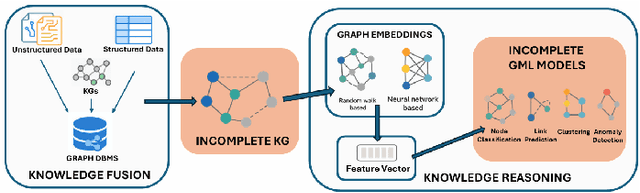
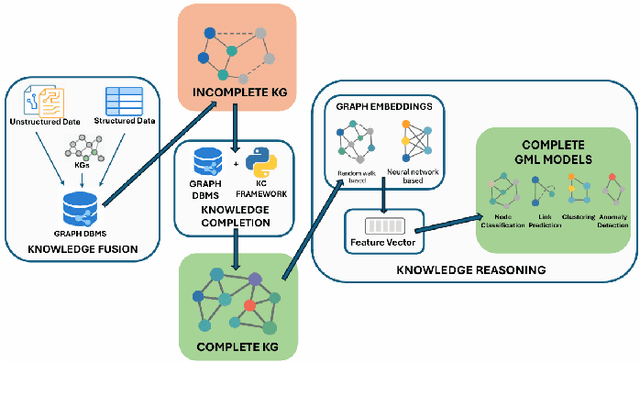
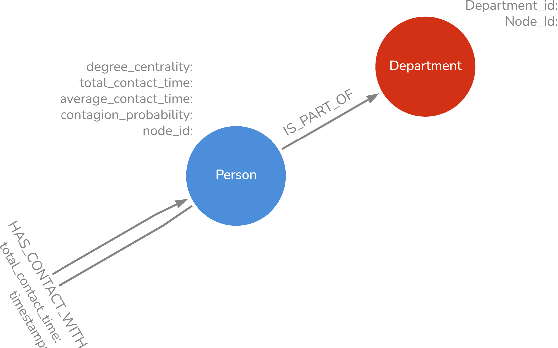
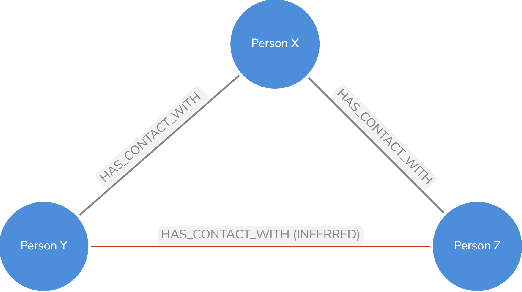
The rise of graph-structured data has driven major advances in Graph Machine Learning (GML), where graph embeddings (GEs) map features from Knowledge Graphs (KGs) into vector spaces, enabling tasks like node classification and link prediction. However, since GEs are derived from explicit topology and features, they may miss crucial implicit knowledge hidden in seemingly sparse datasets, affecting graph structure and their representation. We propose a GML pipeline that integrates a Knowledge Completion (KC) phase to uncover latent dataset semantics before embedding generation. Focusing on transitive relations, we model hidden connections with decay-based inference functions, reshaping graph topology, with consequences on embedding dynamics and aggregation processes in GraphSAGE and Node2Vec. Experiments show that our GML pipeline significantly alters the embedding space geometry, demonstrating that its introduction is not just a simple enrichment but a transformative step that redefines graph representation quality.
Deep sequence models tend to memorize geometrically; it is unclear why
Oct 30, 2025In sequence modeling, the parametric memory of atomic facts has been predominantly abstracted as a brute-force lookup of co-occurrences between entities. We contrast this associative view against a geometric view of how memory is stored. We begin by isolating a clean and analyzable instance of Transformer reasoning that is incompatible with memory as strictly a storage of the local co-occurrences specified during training. Instead, the model must have somehow synthesized its own geometry of atomic facts, encoding global relationships between all entities, including non-co-occurring ones. This in turn has simplified a hard reasoning task involving an $\ell$-fold composition into an easy-to-learn 1-step geometric task. From this phenomenon, we extract fundamental aspects of neural embedding geometries that are hard to explain. We argue that the rise of such a geometry, despite optimizing over mere local associations, cannot be straightforwardly attributed to typical architectural or optimizational pressures. Counterintuitively, an elegant geometry is learned even when it is not more succinct than a brute-force lookup of associations. Then, by analyzing a connection to Node2Vec, we demonstrate how the geometry stems from a spectral bias that -- in contrast to prevailing theories -- indeed arises naturally despite the lack of various pressures. This analysis also points to practitioners a visible headroom to make Transformer memory more strongly geometric. We hope the geometric view of parametric memory encourages revisiting the default intuitions that guide researchers in areas like knowledge acquisition, capacity, discovery and unlearning.
iN2V: Bringing Transductive Node Embeddings to Inductive Graphs
Jun 05, 2025Shallow node embeddings like node2vec (N2V) can be used for nodes without features or to supplement existing features with structure-based information. Embedding methods like N2V are limited in their application on new nodes, which restricts them to the transductive setting where the entire graph, including the test nodes, is available during training. We propose inductive node2vec (iN2V), which combines a post-hoc procedure to compute embeddings for nodes unseen during training and modifications to the original N2V training procedure to prepare the embeddings for this post-hoc procedure. We conduct experiments on several benchmark datasets and demonstrate that iN2V is an effective approach to bringing transductive embeddings to an inductive setting. Using iN2V embeddings improves node classification by 1 point on average, with up to 6 points of improvement depending on the dataset and the number of unseen nodes. Our iN2V is a plug-in approach to create new or enrich existing embeddings. It can also be combined with other embedding methods, making it a versatile approach for inductive node representation learning. Code to reproduce the results is available at https://github.com/Foisunt/iN2V .
Graph-Based Floor Separation Using Node Embeddings and Clustering of WiFi Trajectories
May 12, 2025Indoor positioning systems (IPSs) are increasingly vital for location-based services in complex multi-storey environments. This study proposes a novel graph-based approach for floor separation using Wi-Fi fingerprint trajectories, addressing the challenge of vertical localization in indoor settings. We construct a graph where nodes represent Wi-Fi fingerprints, and edges are weighted by signal similarity and contextual transitions. Node2Vec is employed to generate low-dimensional embeddings, which are subsequently clustered using K-means to identify distinct floors. Evaluated on the Huawei University Challenge 2021 dataset, our method outperforms traditional community detection algorithms, achieving an accuracy of 68.97%, an F1- score of 61.99%, and an Adjusted Rand Index of 57.19%. By publicly releasing the preprocessed dataset and implementation code, this work contributes to advancing research in indoor positioning. The proposed approach demonstrates robustness to signal noise and architectural complexities, offering a scalable solution for floor-level localization.
Node2Vec-DGI-EL: A Hierarchical Graph Representation Learning Model for Ingredient-Disease Association Prediction
May 01, 2025Traditional Chinese medicine, as an essential component of traditional medicine, contains active ingredients that serve as a crucial source for modern drug development, holding immense therapeutic potential and development value. A multi-layered and complex network is formed from Chinese medicine to diseases and used to predict the potential associations between Chinese medicine ingredients and diseases. This study proposes an ingredient-disease association prediction model (Node2Vec-DGI-EL) based on hierarchical graph representation learning. First, the model uses the Node2Vec algorithm to extract node embedding vectors from the network as the initial features of the nodes. Next, the network nodes are deeply represented and learned using the DGI algorithm to enhance the model's expressive power. To improve prediction accuracy and robustness, an ensemble learning method is incorporated to achieve more accurate ingredient-disease association predictions. The effectiveness of the model is then evaluated through a series of theoretical verifications. The results demonstrated that the proposed model significantly outperformed existing methods, achieving an AUC of 0.9987 and an AUPR of 0.9545, thereby indicating superior predictive capability. Ablation experiments further revealed the contribution and importance of each module. Additionally, case studies explored potential associations, such as triptonide with hypertensive retinopathy and methyl ursolate with colorectal cancer. Molecular docking experiments validated these findings, showing the triptonide-PGR interaction and the methyl ursolate-NFE2L2 interaction can bind stable. In conclusion, the Node2Vec-DGI-EL model focuses on TCM datasets and effectively predicts ingredient-disease associations, overcoming the reliance on node semantic information.
DeepSTA: A Spatial-Temporal Attention Network for Logistics Delivery Timely Rate Prediction in Anomaly Conditions
May 01, 2025Prediction of couriers' delivery timely rates in advance is essential to the logistics industry, enabling companies to take preemptive measures to ensure the normal operation of delivery services. This becomes even more critical during anomaly conditions like the epidemic outbreak, during which couriers' delivery timely rate will decline markedly and fluctuates significantly. Existing studies pay less attention to the logistics scenario. Moreover, many works focusing on prediction tasks in anomaly scenarios fail to explicitly model abnormal events, e.g., treating external factors equally with other features, resulting in great information loss. Further, since some anomalous events occur infrequently, traditional data-driven methods perform poorly in these scenarios. To deal with them, we propose a deep spatial-temporal attention model, named DeepSTA. To be specific, to avoid information loss, we design an anomaly spatio-temporal learning module that employs a recurrent neural network to model incident information. Additionally, we utilize Node2vec to model correlations between road districts, and adopt graph neural networks and long short-term memory to capture the spatial-temporal dependencies of couriers. To tackle the issue of insufficient training data in abnormal circumstances, we propose an anomaly pattern attention module that adopts a memory network for couriers' anomaly feature patterns storage via attention mechanisms. The experiments on real-world logistics datasets during the COVID-19 outbreak in 2022 show the model outperforms the best baselines by 12.11% in MAE and 13.71% in MSE, demonstrating its superior performance over multiple competitive baselines.
SCMPPI: Supervised Contrastive Multimodal Framework for Predicting Protein-Protein Interactions
Apr 03, 2025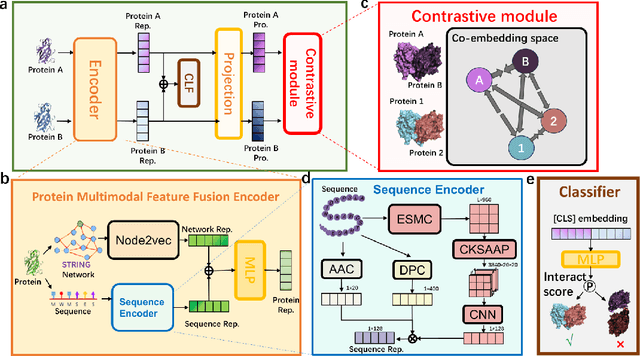
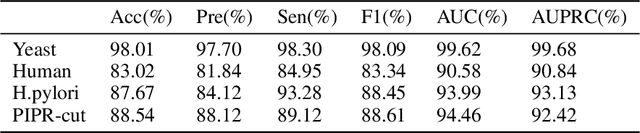
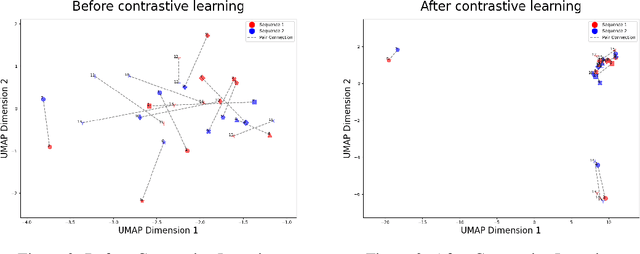
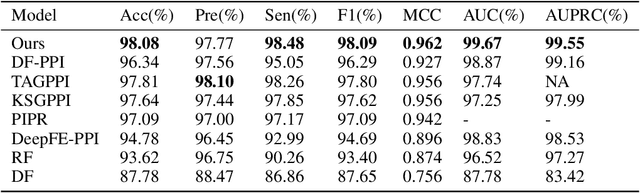
Protein-Protein Interaction (PPI) prediction is a key task in uncovering cellular functional networks and disease mechanisms. However, traditional experimental methods are time-consuming and costly, and existing computational models face challenges in cross-modal feature fusion, robustness, and false-negative suppression. In this paper, we propose a novel supervised contrastive multimodal framework, SCMPPI, for PPI prediction. By integrating protein sequence features (AAC, DPC, CKSAAP-ESMC) with PPI network topology information (Node2Vec graph embedding), and combining an improved supervised contrastive learning strategy, SCMPPI significantly enhances PPI prediction performance. For the PPI task, SCMPPI introduces a negative sample filtering mechanism and modifies the contrastive loss function, effectively optimizing multimodal features. Experiments on eight benchmark datasets, including yeast, human, and H.pylori, show that SCMPPI outperforms existing state-of-the-art methods (such as DF-PPI and TAGPPI) in key metrics such as accuracy ( 98.01%) and AUC (99.62%), and demonstrates strong generalization in cross-species prediction (AUC > 99% on multi-species datasets). Furthermore, SCMPPI has been successfully applied to CD9 networks, the Wnt pathway, and cancer-specific networks, providing a reliable tool for disease target discovery. This framework also offers a new paradigm for multimodal biological information fusion and contrastive learning in collaborative optimization for various combined predictions.
Node Embeddings via Neighbor Embeddings
Mar 31, 2025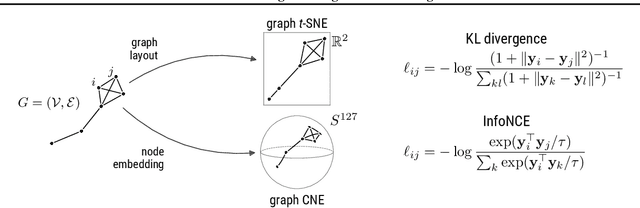
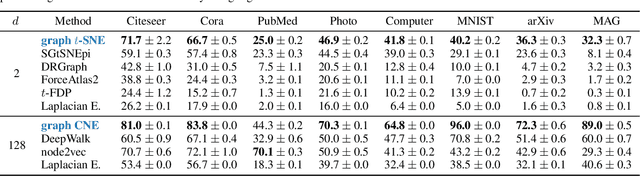
Graph layouts and node embeddings are two distinct paradigms for non-parametric graph representation learning. In the former, nodes are embedded into 2D space for visualization purposes. In the latter, nodes are embedded into a high-dimensional vector space for downstream processing. State-of-the-art algorithms for these two paradigms, force-directed layouts and random-walk-based contrastive learning (such as DeepWalk and node2vec), have little in common. In this work, we show that both paradigms can be approached with a single coherent framework based on established neighbor embedding methods. Specifically, we introduce graph t-SNE, a neighbor embedding method for two-dimensional graph layouts, and graph CNE, a contrastive neighbor embedding method that produces high-dimensional node representations by optimizing the InfoNCE objective. We show that both graph t-SNE and graph CNE strongly outperform state-of-the-art algorithms in terms of local structure preservation, while being conceptually simpler.