 Add to Chrome
 Add to Firefox
 Add to Edge
Graph-Augmented Topological Internalization with Dual-Stream Classifiers for Medical Report Generation
May 04, 2026
Automated medical report generation, MRG, holds substantial value for alleviating radiologist workload and enhancing diagnostic efficiency. However, mainstream approaches typically treat diverse chest abnormalities as isolated classification targets. This paradigm often overlooks inherent disease co-occurrences and struggles to translate medical topological structures into explicit data correlations, constraining the model's reasoning capacity on complex or subtle lesions. To address this, we propose a Graph-Augmented Dual-Stream Medical Report Generation with Topological Internalization, GDMRG. Our framework introduces a Topological Knowledge Internalization module, TKI, which leverages a Graph Convolutional Network, GCN, to generate an explicit parameterized weight matrix based on global disease co-occurrence priors. This facilitates efficient topological knowledge injection without relying on external retrieval mechanisms. Building upon this, we construct a dual-stream classification system: the main branch generates discrete diagnostic prompts under topological constraints, while the auxiliary branch employs an asymmetric optimization strategy to dynamically calibrate decision boundaries for highly imbalanced samples. Concurrently, to establish a logical closed loop between diagnosis and visual grounding, we design a diagnostic-driven Diagnosis-Guided Spatial Attention, DGSA, that utilizes high-dimensional clinical semantics to recalibrate the visual encoder, mitigating feature hallucinations. Comprehensive experiments on the MIMIC-CXR dataset demonstrate that GDMRG achieves competitive clinical efficacy, CE, while maintaining natural language fluency. Furthermore, our model exhibits robust zero-shot generalization on the IU X-Ray dataset. In summary, this work presents an integrated and interpretable paradigm for medical report generation.

PathMoG: A Pathway-Centric Modular Graph Neural Network for Multi-Omics Survival Prediction
Apr 27, 2026Cancer survival prediction from multi-omics data remains challenging because prognostic signals are high-dimensional, heterogeneous, and distributed across interacting genes and pathways. We propose PathMoG, a pathway-centric modular graph neural network for multi-omics survival prediction. PathMoG reorganizes genome-scale inputs into 354 KEGG-informed pathway modules, introduces a Hierarchical Omics Modulation module to condition gene-expression representations on mutation, copy number variation, pathway, and clinical context, and uses dual-level attention to capture both intra-pathway driver signals and inter-pathway clinical relevance. We evaluated PathMoG on 5,650 patients across 10 TCGA cancer types and observed consistent improvements over representative survival baselines. The framework further provides gene-level, pathway-level, and patient-level interpretability, supporting biologically grounded and clinically relevant risk stratification.
HBGSA: Hydrogen Bond Graph with Self-Attention for Drug-Target Binding Affinity Prediction
Apr 25, 2026Accurate prediction of drug-target binding affinity accelerates drug discovery by prioritizing compounds for experimental validation. Current methods face three limitations: sequence-based approaches discard spatial geometric constraints, structure-based methods fail to exploit hydrogen bond features, and conventional loss functions neglect prediction-target correlation, a key factor for identifying high-affinity compounds in virtual screening. We developed HBGSA (Hydrogen Bond Graph with Self-Attention), a 3.06M-parameter model that encodes hydrogen bond spatial features. HBGSA uses graph neural networks to model hydrogen bond spatial topology with self-attention enhancement and Pearson correlation loss. Experimental results on PDBbind Core Set and CSAR-HiQ dataset demonstrate that HBGSA outperforms baseline methods with strong generalization capability. Ablation studies confirm the effectiveness of hydrogen bond modeling and Pearson correlation loss.
MEDNA-DFM: A Dual-View FiLM-MoE Model for Explainable DNA Methylation Prediction
Feb 26, 2026Accurate computational identification of DNA methylation is essential for understanding epigenetic regulation. Although deep learning excels in this binary classification task, its "black-box" nature impedes biological insight. We address this by introducing a high-performance model MEDNA-DFM, alongside mechanism-inspired signal purification algorithms. Our investigation demonstrates that MEDNA-DFM effectively captures conserved methylation patterns, achieving robust distinction across diverse species. Validation on external independent datasets confirms that the model's generalization is driven by conserved intrinsic motifs (e.g., GC content) rather than phylogenetic proximity. Furthermore, applying our developed algorithms extracted motifs with significantly higher reliability than prior studies. Finally, empirical evidence from a Drosophila 6mA case study prompted us to propose a "sequence-structure synergy" hypothesis, suggesting that the GAGG core motif and an upstream A-tract element function cooperatively. We further validated this hypothesis via in silico mutagenesis, confirming that the ablation of either or both elements significantly degrades the model's recognition capabilities. This work provides a powerful tool for methylation prediction and demonstrates how explainable deep learning can drive both methodological innovation and the generation of biological hypotheses.
SCMPPI: Supervised Contrastive Multimodal Framework for Predicting Protein-Protein Interactions
Apr 03, 2025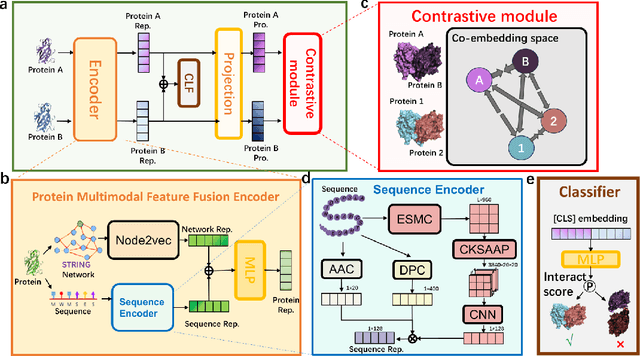
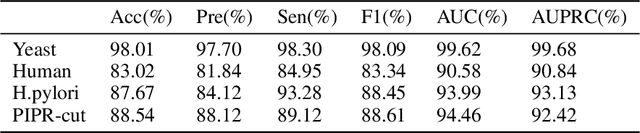
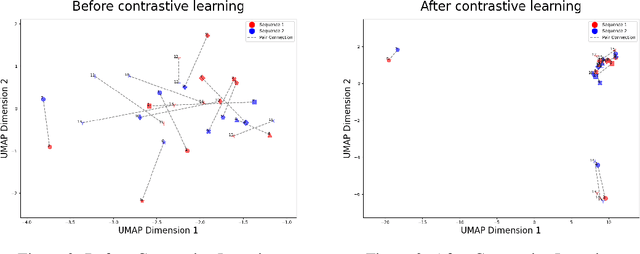
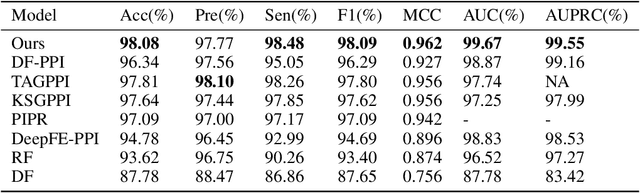
Protein-Protein Interaction (PPI) prediction is a key task in uncovering cellular functional networks and disease mechanisms. However, traditional experimental methods are time-consuming and costly, and existing computational models face challenges in cross-modal feature fusion, robustness, and false-negative suppression. In this paper, we propose a novel supervised contrastive multimodal framework, SCMPPI, for PPI prediction. By integrating protein sequence features (AAC, DPC, CKSAAP-ESMC) with PPI network topology information (Node2Vec graph embedding), and combining an improved supervised contrastive learning strategy, SCMPPI significantly enhances PPI prediction performance. For the PPI task, SCMPPI introduces a negative sample filtering mechanism and modifies the contrastive loss function, effectively optimizing multimodal features. Experiments on eight benchmark datasets, including yeast, human, and H.pylori, show that SCMPPI outperforms existing state-of-the-art methods (such as DF-PPI and TAGPPI) in key metrics such as accuracy ( 98.01%) and AUC (99.62%), and demonstrates strong generalization in cross-species prediction (AUC > 99% on multi-species datasets). Furthermore, SCMPPI has been successfully applied to CD9 networks, the Wnt pathway, and cancer-specific networks, providing a reliable tool for disease target discovery. This framework also offers a new paradigm for multimodal biological information fusion and contrastive learning in collaborative optimization for various combined predictions.
PDeepPP:A Deep learning framework with Pretrained Protein language for peptide classification
Feb 21, 2025Protein post-translational modifications (PTMs) and bioactive peptides (BPs) play critical roles in various biological processes and have significant therapeutic potential. However, identifying PTM sites and bioactive peptides through experimental methods is often labor-intensive, costly, and time-consuming. As a result, computational tools, particularly those based on deep learning, have become effective solutions for predicting PTM sites and peptide bioactivity. Despite progress in this field, existing methods still struggle with the complexity of protein sequences and the challenge of requiring high-quality predictions across diverse datasets. To address these issues, we propose a deep learning framework that integrates pretrained protein language models with a neural network combining transformer and CNN for peptide classification. By leveraging the ability of pretrained models to capture complex relationships within protein sequences, combined with the predictive power of parallel networks, our approach improves feature extraction while enhancing prediction accuracy. This framework was applied to multiple tasks involving PTM site and bioactive peptide prediction, utilizing large-scale datasets to enhance the model's robustness. In the comparison across 33 tasks, the model achieved state-of-the-art (SOTA) performance in 25 of them, surpassing existing methods and demonstrating its versatility across different datasets. Our results suggest that this approach provides a scalable and effective solution for large-scale peptide discovery and PTM analysis, paving the way for more efficient peptide classification and functional annotation.