 Add to Chrome
 Add to Firefox
 Add to Edge
Arma
Papers and Code
Nansde-net: A neural sde framework for generating time series with memory
Feb 09, 2026
Modeling time series with long- or short-memory characteristics is a fundamental challenge in many scientific and engineering domains. While fractional Brownian motion has been widely used as a noise source to capture such memory effects, its incompatibility with Itô calculus limits its applicability in neural stochastic differential equation~(SDE) frameworks. In this paper, we propose a novel class of noise, termed Neural Network-kernel ARMA-type noise~(NA-noise), which is an Itô-process-based alternative capable of capturing both long- and short-memory behaviors. The kernel function defining the noise structure is parameterized via neural networks and decomposed into a product form to preserve the Markov property. Based on this noise process, we develop NANSDE-Net, a generative model that extends Neural SDEs by incorporating NA-noise. We prove the theoretical existence and uniqueness of the solution under mild conditions and derive an efficient backpropagation scheme for training. Empirical results on both synthetic and real-world datasets demonstrate that NANSDE-Net matches or outperforms existing models, including fractional SDE-Net, in reproducing long- and short-memory features of the data, while maintaining computational tractability within the Itô calculus framework.

Attention-Enhanced Graph Filtering for False Data Injection Attack Detection and Localization
Jan 26, 2026The increasing deployment of Internet-of-Things (IoT)-enabled measurement devices in modern power systems has expanded the cyberattack surface of the grid. As a result, this critical infrastructure is increasingly exposed to cyberattacks, including false data injection attacks (FDIAs) that compromise measurement integrity and threaten reliable system operation. Existing FDIA detection methods primarily exploit spatial correlations and network topology using graph-based learning; however, these approaches often rely on high-dimensional representations and shallow classifiers, limiting their ability to capture local structural dependencies and global contextual relationships. Moreover, naively incorporating Transformer architectures can result in overly deep models that struggle to model localized grid dynamics. This paper proposes a joint FDIA detection and localization framework that integrates auto-regressive moving average (ARMA) graph convolutional filters with an Encoder-Only Transformer architecture. The ARMA-based graph filters provide robust, topology-aware feature extraction and adaptability to abrupt spectral changes, while the Transformer encoder leverages self-attention to capture long-range dependencies among grid elements without sacrificing essential local context. The proposed method is evaluated using real-world load data from the New York Independent System Operator (NYISO) applied to the IEEE 14- and 300-bus systems. Numerical results demonstrate that the proposed model effectively exploits both the state and topology of the power grid, achieving high accuracy in detecting FDIA events and localizing compromised nodes.
ARMARecon: An ARMA Convolutional Filter based Graph Neural Network for Neurodegenerative Dementias Classification
Jan 17, 2026Early detection of neurodegenerative diseases such as Alzheimer's Disease (AD) and Frontotemporal Dementia (FTD) is essential for reducing the risk of progression to severe disease stages. As AD and FTD propagate along white-matter regions in a global, graph-dependent manner, graph-based neural networks are well suited to capture these patterns. Hence, we introduce ARMARecon, a unified graph learning framework that integrates Autoregressive Moving Average (ARMA) graph filtering with a reconstruction-driven objective to enhance feature representation and improve classification accuracy. ARMARecon effectively models both local and global connectivity by leveraging 20-bin Fractional Anisotropy (FA) histogram features extracted from white-matter regions, while mitigating over-smoothing. Overall, ARMARecon achieves superior performance compared to state-of-the-art methods on the multi-site dMRI datasets ADNI and NIFD.
QHARMA-GAN: Quasi-Harmonic Neural Vocoder based on Autoregressive Moving Average Model
Jul 02, 2025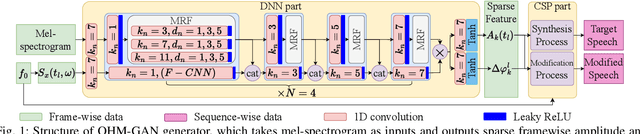
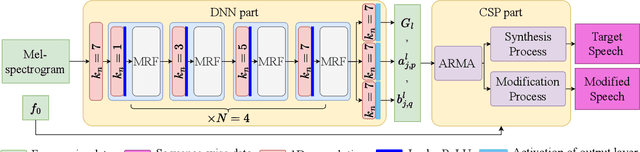
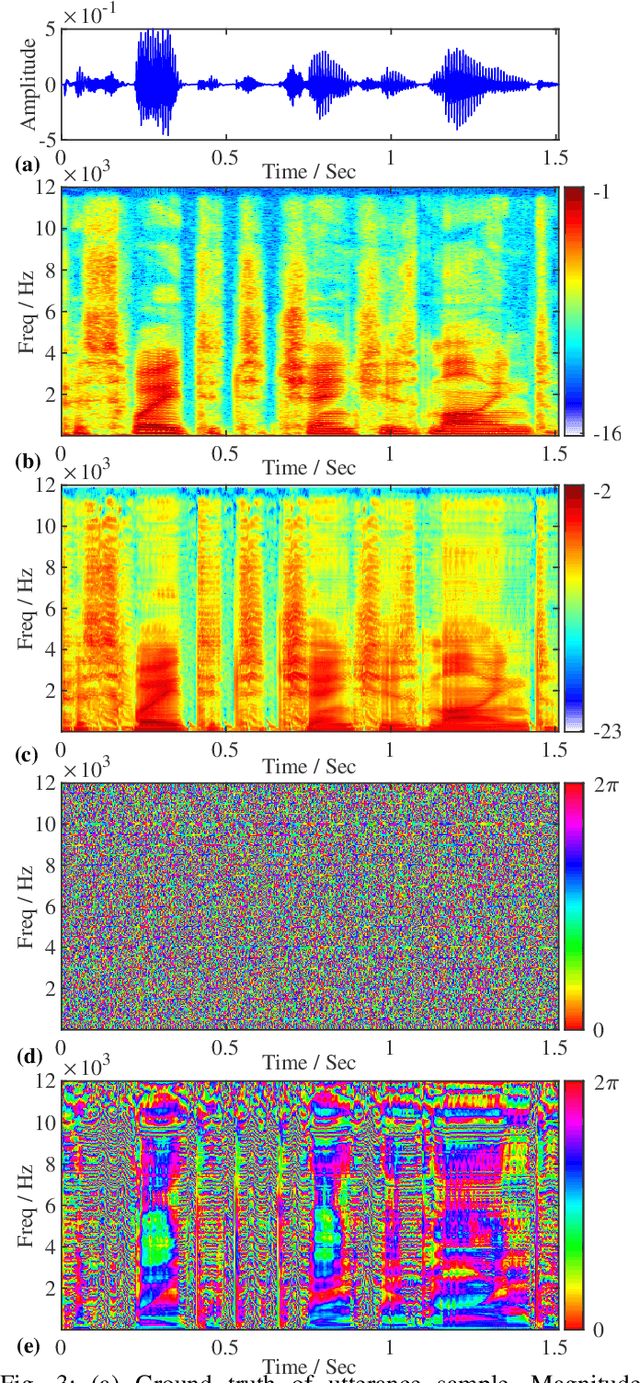
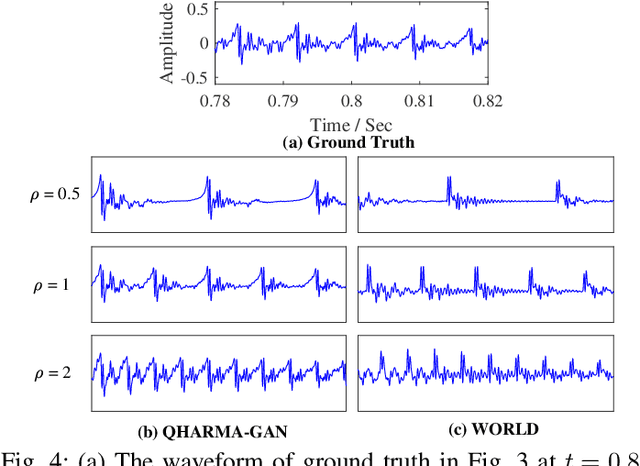
Vocoders, encoding speech signals into acoustic features and allowing for speech signal reconstruction from them, have been studied for decades. Recently, the rise of deep learning has particularly driven the development of neural vocoders to generate high-quality speech signals. On the other hand, the existing end-to-end neural vocoders suffer from a black-box nature that blinds the speech production mechanism and the intrinsic structure of speech, resulting in the ambiguity of separately modeling source excitation and resonance characteristics and the loss of flexibly synthesizing or modifying speech with high quality. Moreover, their sequence-wise waveform generation usually requires complicated networks, leading to substantial time consumption. In this work, inspired by the quasi-harmonic model (QHM) that represents speech as sparse components, we combine the neural network and QHM synthesis process to propose a novel framework for the neural vocoder. Accordingly, speech signals can be encoded into autoregressive moving average (ARMA) functions to model the resonance characteristics, yielding accurate estimates of the amplitudes and phases of quasi-harmonics at any frequency. Subsequently, the speech can be resynthesized and arbitrarily modified in terms of pitch shifting and time stretching with high quality, whereas the time consumption and network size decrease. The experiments indicate that the proposed method leverages the strengths of QHM, the ARMA model, and neural networks, leading to the outperformance of our methods over other methods in terms of generation speed, synthesis quality, and modification flexibility.
Data-driven Fuzzy Control for Time-Optimal Aggressive Trajectory Following
Apr 09, 2025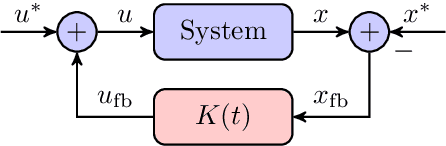
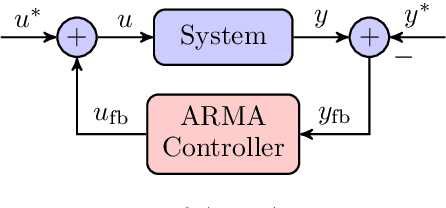
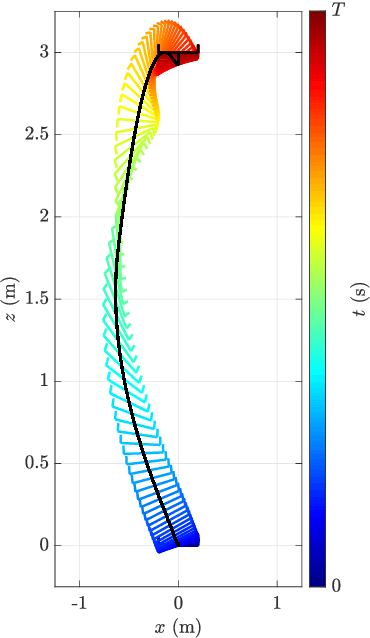
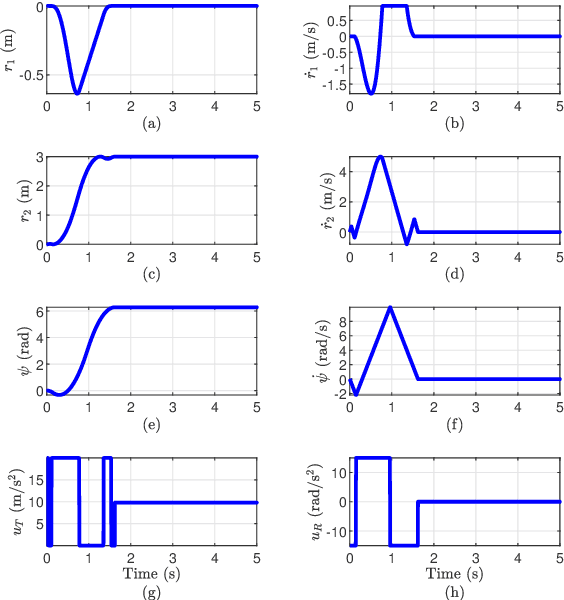
Optimal trajectories that minimize a user-defined cost function in dynamic systems require the solution of a two-point boundary value problem. The optimization process yields an optimal control sequence that depends on the initial conditions and system parameters. However, the optimal sequence may result in undesirable behavior if the system's initial conditions and parameters are erroneous. This work presents a data-driven fuzzy controller synthesis framework that is guided by a time-optimal trajectory for multicopter tracking problems. In particular, we consider an aggressive maneuver consisting of a mid-air flip and generate a time-optimal trajectory by numerically solving the two-point boundary value problem. A fuzzy controller consisting of a stabilizing controller near hover conditions and an autoregressive moving average (ARMA) controller, trained to mimic the time-optimal aggressive trajectory, is constructed using the Takagi-Sugeno fuzzy framework.
Knowledge Distillation and Enhanced Subdomain Adaptation Using Graph Convolutional Network for Resource-Constrained Bearing Fault Diagnosis
Jan 13, 2025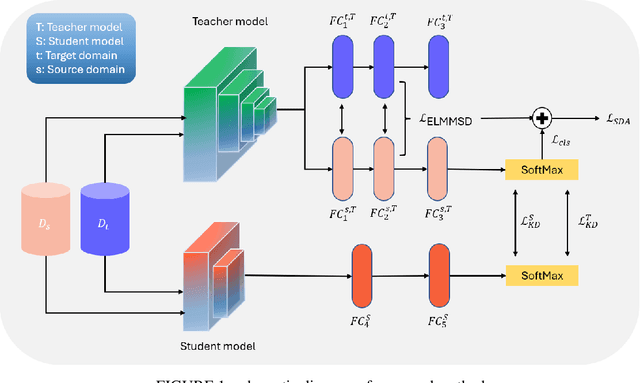
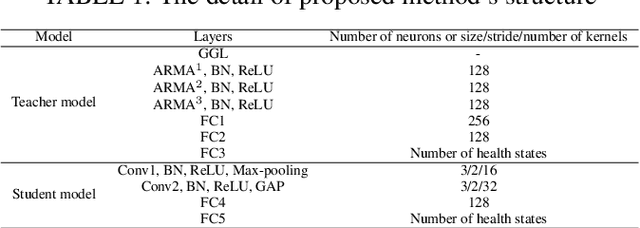

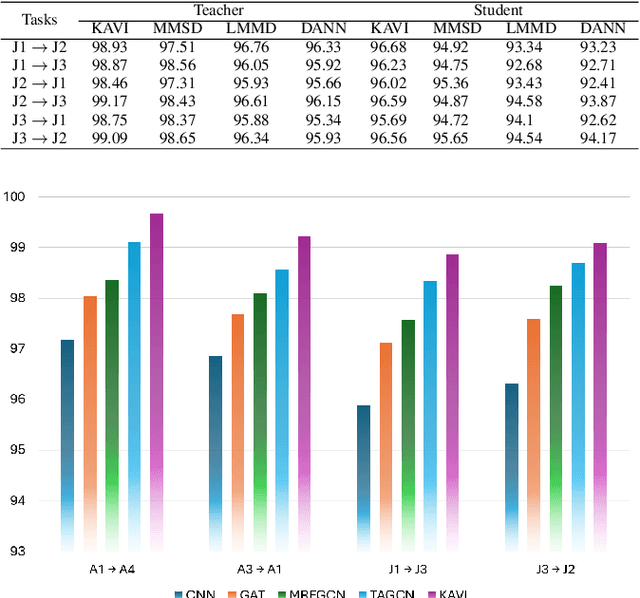
Bearing fault diagnosis under varying working conditions faces challenges, including a lack of labeled data, distribution discrepancies, and resource constraints. To address these issues, we propose a progressive knowledge distillation framework that transfers knowledge from a complex teacher model, utilizing a Graph Convolutional Network (GCN) with Autoregressive moving average (ARMA) filters, to a compact and efficient student model. To mitigate distribution discrepancies and labeling uncertainty, we introduce Enhanced Local Maximum Mean Squared Discrepancy (ELMMSD), which leverages mean and variance statistics in the Reproducing Kernel Hilbert Space (RKHS) and incorporates a priori probability distributions between labels. This approach increases the distance between clustering centers, bridges subdomain gaps, and enhances subdomain alignment reliability. Experimental results on benchmark datasets (CWRU and JNU) demonstrate that the proposed method achieves superior diagnostic accuracy while significantly reducing computational costs. Comprehensive ablation studies validate the effectiveness of each component, highlighting the robustness and adaptability of the approach across diverse working conditions.
Auto-Regressive Moving Diffusion Models for Time Series Forecasting
Dec 12, 2024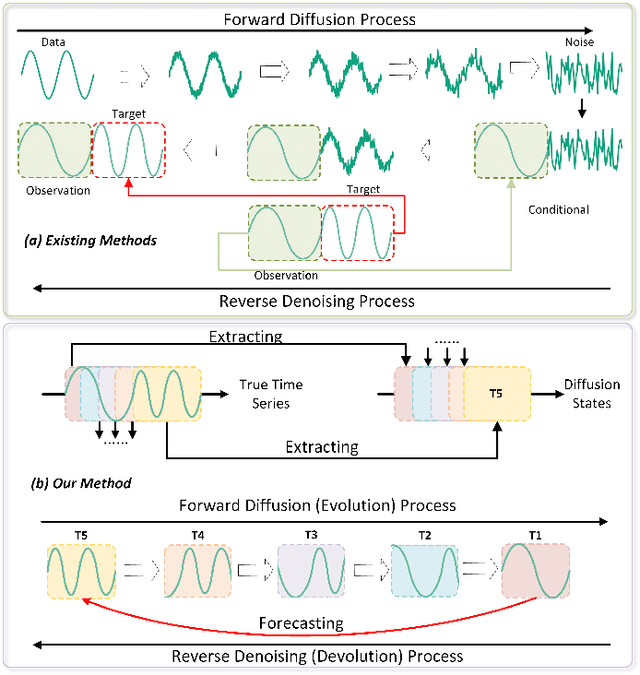
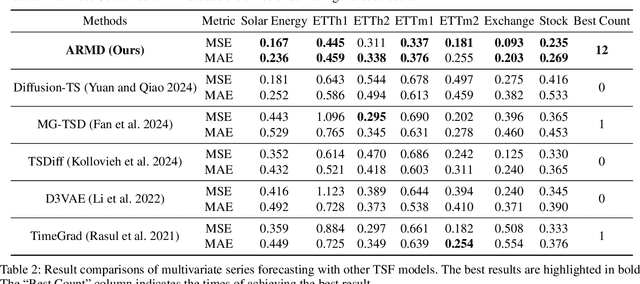
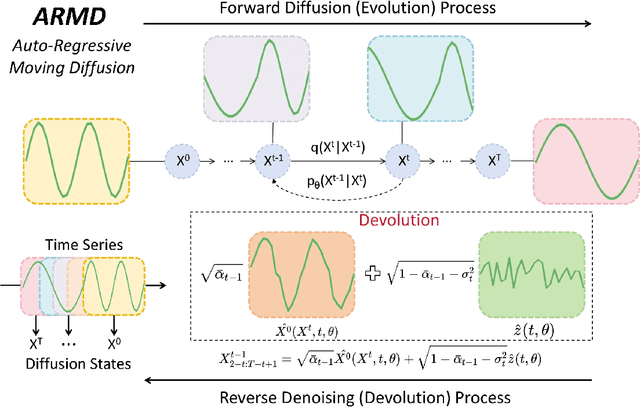

Time series forecasting (TSF) is essential in various domains, and recent advancements in diffusion-based TSF models have shown considerable promise. However, these models typically adopt traditional diffusion patterns, treating TSF as a noise-based conditional generation task. This approach neglects the inherent continuous sequential nature of time series, leading to a fundamental misalignment between diffusion mechanisms and the TSF objective, thereby severely impairing performance. To bridge this misalignment, and inspired by the classic Auto-Regressive Moving Average (ARMA) theory, which views time series as continuous sequential progressions evolving from previous data points, we propose a novel Auto-Regressive Moving Diffusion (ARMD) model to first achieve the continuous sequential diffusion-based TSF. Unlike previous methods that start from white Gaussian noise, our model employs chain-based diffusion with priors, accurately modeling the evolution of time series and leveraging intermediate state information to improve forecasting accuracy and stability. Specifically, our approach reinterprets the diffusion process by considering future series as the initial state and historical series as the final state, with intermediate series generated using a sliding-based technique during the forward process. This design aligns the diffusion model's sampling procedure with the forecasting objective, resulting in an unconditional, continuous sequential diffusion TSF model. Extensive experiments conducted on seven widely used datasets demonstrate that our model achieves state-of-the-art performance, significantly outperforming existing diffusion-based TSF models. Our code is available on GitHub: https://github.com/daxin007/ARMD.
UnSeGArmaNet: Unsupervised Image Segmentation using Graph Neural Networks with Convolutional ARMA Filters
Oct 08, 2024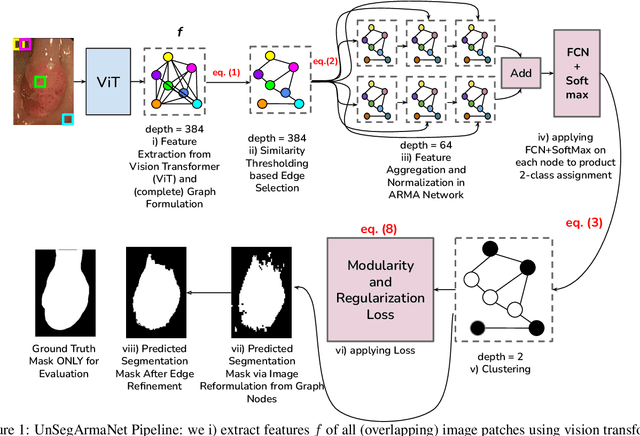

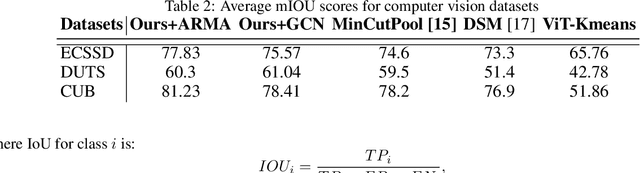
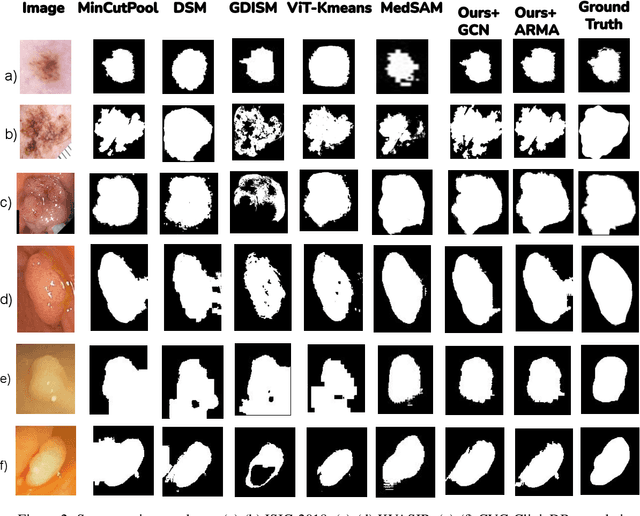
The data-hungry approach of supervised classification drives the interest of the researchers toward unsupervised approaches, especially for problems such as medical image segmentation, where labeled data are difficult to get. Motivated by the recent success of Vision transformers (ViT) in various computer vision tasks, we propose an unsupervised segmentation framework with a pre-trained ViT. Moreover, by harnessing the graph structure inherent within the image, the proposed method achieves a notable performance in segmentation, especially in medical images. We further introduce a modularity-based loss function coupled with an Auto-Regressive Moving Average (ARMA) filter to capture the inherent graph topology within the image. Finally, we observe that employing Scaled Exponential Linear Unit (SELU) and SILU (Swish) activation functions within the proposed Graph Neural Network (GNN) architecture enhances the performance of segmentation. The proposed method provides state-of-the-art performance (even comparable to supervised methods) on benchmark image segmentation datasets such as ECSSD, DUTS, and CUB, as well as challenging medical image segmentation datasets such as KVASIR, CVC-ClinicDB, ISIC-2018. The github repository of the code is available on \url{https://github.com/ksgr5566/UnSeGArmaNet}.
Autoregressive Moving-average Attention Mechanism for Time Series Forecasting
Oct 04, 2024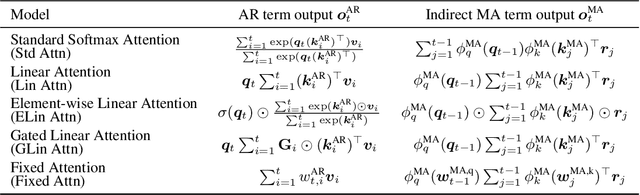
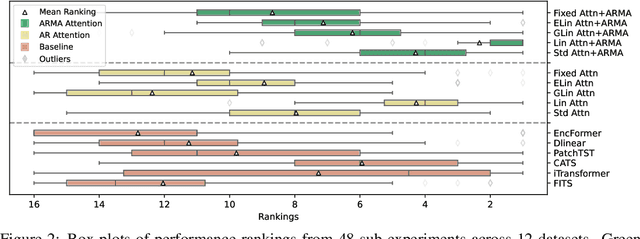
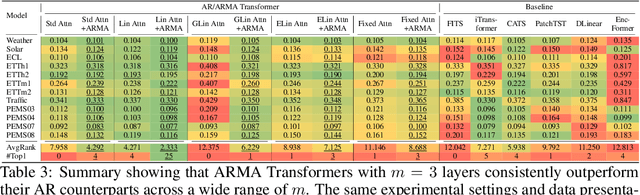
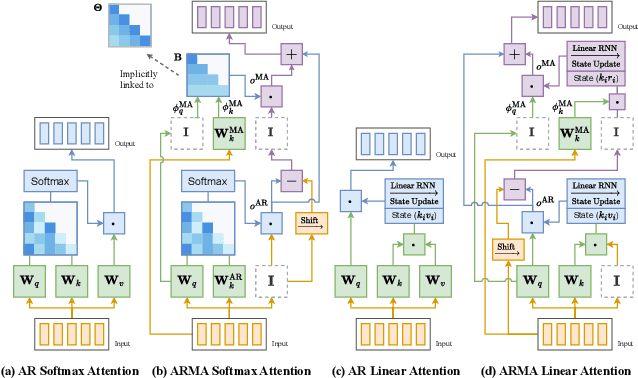
We propose an Autoregressive (AR) Moving-average (MA) attention structure that can adapt to various linear attention mechanisms, enhancing their ability to capture long-range and local temporal patterns in time series. In this paper, we first demonstrate that, for the time series forecasting (TSF) task, the previously overlooked decoder-only autoregressive Transformer model can achieve results comparable to the best baselines when appropriate tokenization and training methods are applied. Moreover, inspired by the ARMA model from statistics and recent advances in linear attention, we introduce the full ARMA structure into existing autoregressive attention mechanisms. By using an indirect MA weight generation method, we incorporate the MA term while maintaining the time complexity and parameter size of the underlying efficient attention models. We further explore how indirect parameter generation can produce implicit MA weights that align with the modeling requirements for local temporal impacts. Experimental results show that incorporating the ARMA structure consistently improves the performance of various AR attentions on TSF tasks, achieving state-of-the-art results.
On the Approximability of Stationary Processes using the ARMA Model
Aug 20, 2024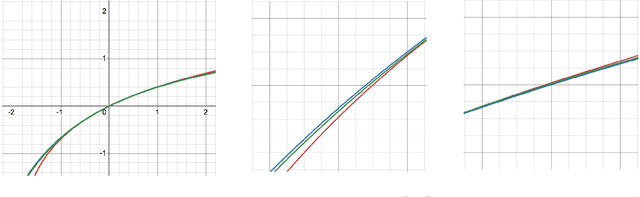
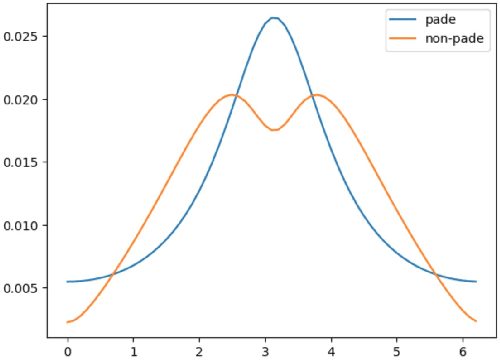
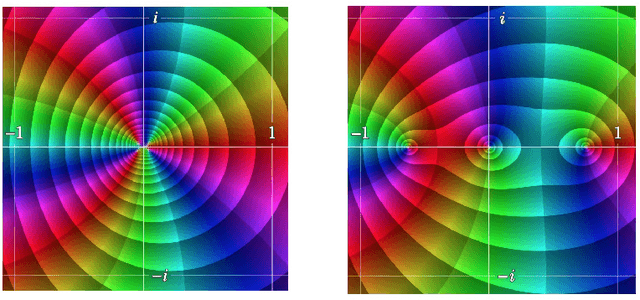
We identify certain gaps in the literature on the approximability of stationary random variables using the Autoregressive Moving Average (ARMA) model. To quantify approximability, we propose that an ARMA model be viewed as an approximation of a stationary random variable. We map these stationary random variables to Hardy space functions, and formulate a new function approximation problem that corresponds to random variable approximation, and thus to ARMA. Based on this Hardy space formulation we identify a class of stationary processes where approximation guarantees are feasible. We also identify an idealized stationary random process for which we conjecture that a good ARMA approximation is not possible. Next, we provide a constructive proof that Pad\'e approximations do not always correspond to the best ARMA approximation. Finally, we note that the spectral methods adopted in this paper can be seen as a generalization of unit root methods for stationary processes even when an ARMA model is not defined.