 Add to Chrome
 Add to Firefox
 Add to Edge
Rateless DeepJSCC for Broadcast Channels: a Rate-Distortion-Complexity Tradeoff
Mar 23, 2026
In recent years, numerous data-intensive broadcasting applications have emerged at the wireless edge, calling for a flexible tradeoff between distortion, transmission rate, and processing complexity. While deep learning-based joint source-channel coding (DeepJSCC) has been identified as a potential solution to data-intensive communications, most of these schemes are confined to worst-case solutions, lack adaptive complexity, and are inefficient in broadcast settings. To overcome these limitations, this paper introduces nonlinear transform rateless source-channel coding (NTRSCC), a variable-length JSCC framework for broadcast channels based on rateless codes. In particular, we integrate learned source transformations with physical-layer LT codes, develop unequal protection schemes that exploit decoder side information, and devise approximations to enable end-to-end optimization of rateless parameters. Our framework enables heterogeneous receivers to adaptively adjust their received number of rateless symbols and decoding iterations in belief propagation, thereby achieving a controllable tradeoff between distortion, rate, and decoding complexity. Simulation results demonstrate that the proposed method enhances image broadcast quality under stringent communication and processing budgets over heterogeneous edge devices.

Practical Marketplace Optimization at Uber Using Causally-Informed Machine Learning
Jul 26, 2024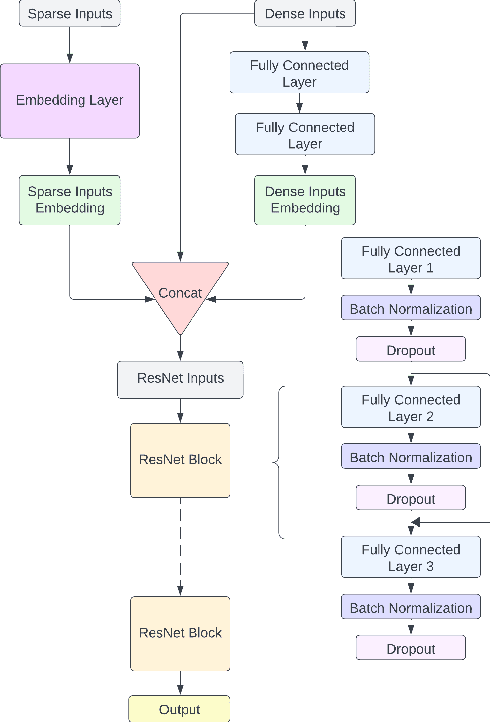
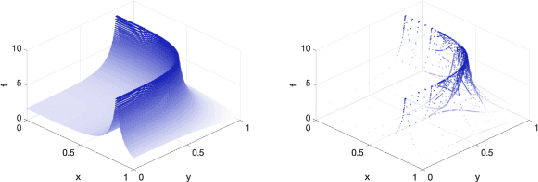
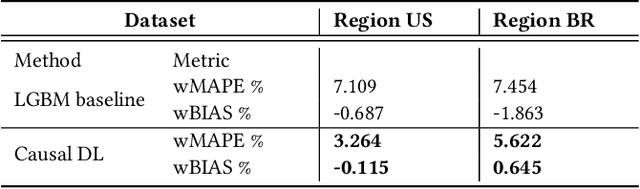
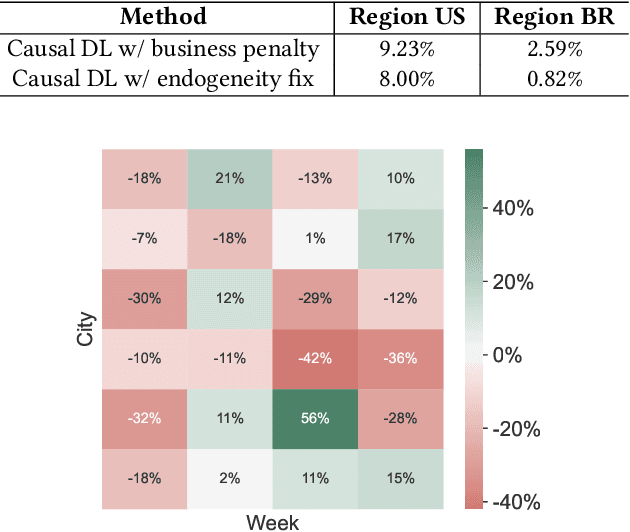
Budget allocation of marketplace levers, such as incentives for drivers and promotions for riders, has long been a technical and business challenge at Uber; understanding lever budget changes' impact and estimating cost efficiency to achieve predefined budgets is crucial, with the goal of optimal allocations that maximize business value; we introduce an end-to-end machine learning and optimization procedure to automate budget decision-making for cities, relying on feature store, model training and serving, optimizers, and backtesting; proposing state-of-the-art deep learning (DL) estimator based on S-Learner and a novel tensor B-Spline regression model, we solve high-dimensional optimization with ADMM and primal-dual interior point convex optimization, substantially improving Uber's resource allocation efficiency.