 Add to Chrome
 Add to Firefox
 Add to Edge
A Monolithic Hand with Asymmetric Origami Bending and Dual-chamber Actuators
Jul 24, 2026
The passive adaptability inherent in soft robotic hands affords them advantages in applications that require safe and compliant interaction. However, existing soft robotic hands often struggle to simultaneously achieve adequate output performance and easy manufacturing due to their complicated structures. In this paper, we introduce the asymmetric origami bending (AOB) pattern for generating bending motion and the asymmetric dual-chamber (ADC) design for obtaining multifunction capability. The AOB single (AOB-S) chamber and AOB dual-chamber (AOB-D) units are designed and constitute the finger and palm actuators of the proposed Origami-inspired SOft Robotic (OSOR) hand. The OSOR hand achieves bio-inspired fingers-palm motions and adequate output performance within a monolithic structure that significantly simplifies the manufacturing process. By defining the asymmetric ratio to characterize the geometric asymmetry of the unit, the analytical models of the AOB and ADC structures are proposed. The Finite Element Analysis tool for the design of AOB actuators is obtained by geometric analysis. The asymmetric origami design grants the integrated manufacturing of the OSOR hand through a Selective Laser Sintering printing process with a single thermoplastic polyurethane material. The model and simulations are validated by experimental results. Experiments show the finger and palm maximum bending motion range of 203° and 40°, respectively, with output forces of 6.3 N and 16 N. The OSOR hand is capable of pinching a piece of tissue, stably grasping water bottles with two fingers, palm-only grasping, and completing the power grasps in the taxonomy of manufacturing grasps. The compactness, performance, and easy manufacturing of the proposed hand benefit the development of the soft robotic hand with new possibilities.

Temporal Clustering with External Memory Network for Disease Progression Modeling
Oct 09, 2021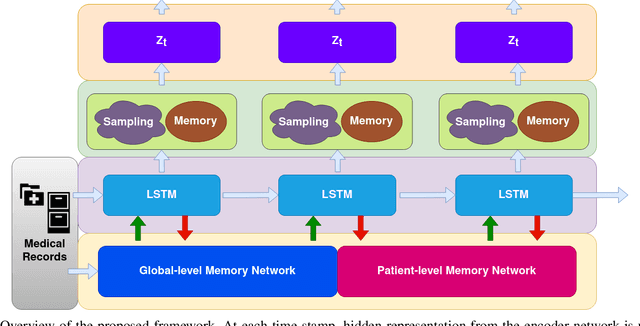
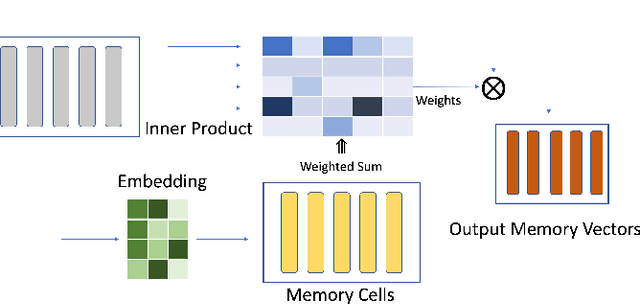
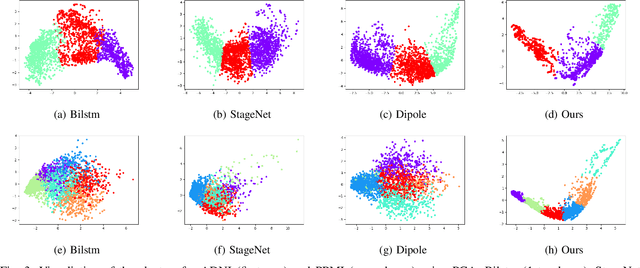
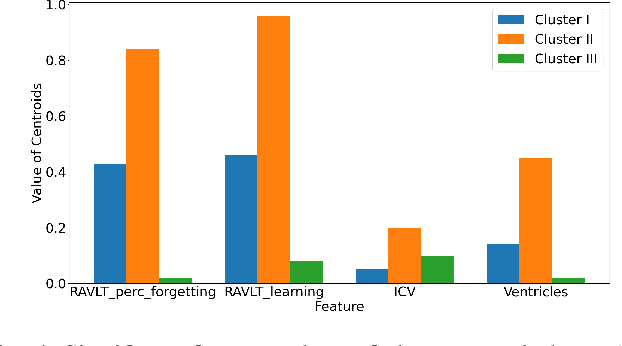
Disease progression modeling (DPM) involves using mathematical frameworks to quantitatively measure the severity of how certain disease progresses. DPM is useful in many ways such as predicting health state, categorizing disease stages, and assessing patients disease trajectory etc. Recently, with wider availability of electronic health records (EHR) and the broad application of data-driven machine learning method, DPM has attracted much attention yet remains two major challenges: (i) Due to the existence of irregularity, heterogeneity and long-term dependency in EHRs, most existing DPM methods might not be able to provide comprehensive patient representations. (ii) Lots of records in EHRs might be irrelevant to the target disease. Most existing models learn to automatically focus on the relevant information instead of explicitly capture the target-relevant events, which might make the learned model suboptimal. To address these two issues, we propose Temporal Clustering with External Memory Network (TC-EMNet) for DPM that groups patients with similar trajectories to form disease clusters/stages. TC-EMNet uses a variational autoencoder (VAE) to capture internal complexity from the input data and utilizes an external memory work to capture long term distance information, both of which are helpful for producing comprehensive patient states. Last but not least, k-means algorithm is adopted to cluster the extracted comprehensive patient states to capture disease progression. Experiments on two real-world datasets show that our model demonstrates competitive clustering performance against state-of-the-art methods and is able to identify clinically meaningful clusters. The visualization of the extracted patient states shows that the proposed model can generate better patient states than the baselines.
Brain Atlas Guided Attention U-Net for White Matter Hyperintensity Segmentation
Oct 19, 2020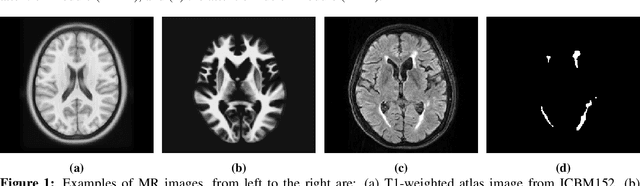
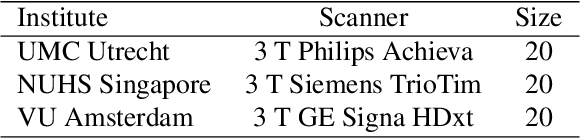
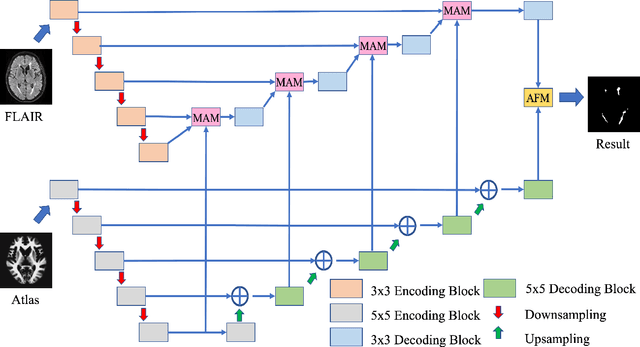
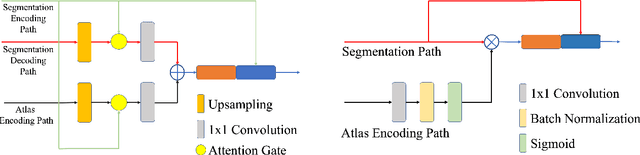
White Matter Hyperintensities (WMH) are the most common manifestation of cerebral small vessel disease (cSVD) on the brain MRI. Accurate WMH segmentation algorithms are important to determine cSVD burden and its clinical consequences. Most of existing WMH segmentation algorithms require both fluid attenuated inversion recovery (FLAIR) images and T1-weighted images as inputs. However, T1-weighted images are typically not part of standard clinicalscans which are acquired for patients with acute stroke. In this paper, we propose a novel brain atlas guided attention U-Net (BAGAU-Net) that leverages only FLAIR images with a spatially-registered white matter (WM) brain atlas to yield competitive WMH segmentation performance. Specifically, we designed a dual-path segmentation model with two novel connecting mechanisms, namely multi-input attention module (MAM) and attention fusion module (AFM) to fuse the information from two paths for accurate results. Experiments on two publicly available datasets show the effectiveness of the proposed BAGAU-Net. With only FLAIR images and WM brain atlas, BAGAU-Net outperforms the state-of-the-art method with T1-weighted images, paving the way for effective development of WMH segmentation. Availability:https://github.com/Ericzhang1/BAGAU-Net