 Add to Chrome
 Add to Firefox
 Add to Edge
CoRect: Context-Aware Logit Contrast for Hidden State Rectification to Resolve Knowledge Conflicts
Feb 09, 2026
Retrieval-Augmented Generation (RAG) often struggles with knowledge conflicts, where model-internal parametric knowledge overrides retrieved evidence, leading to unfaithful outputs. Existing approaches are often limited, relying either on superficial decoding adjustments or weight editing that necessitates ground-truth targets. Through layer-wise analysis, we attribute this failure to a parametric suppression phenomenon: specifically, in deep layers, certain FFN layers overwrite context-sensitive representations with memorized priors. To address this, we propose CoRect (Context-Aware Logit Contrast for Hidden State Rectification). By contrasting logits from contextualized and non-contextualized forward passes, CoRect identifies layers that exhibit high parametric bias without requiring ground-truth labels. It then rectifies the hidden states to preserve evidence-grounded information. Across question answering (QA) and summarization benchmarks, CoRect consistently improves faithfulness and reduces hallucinations compared to strong baselines.

Learning to Select: Query-Aware Adaptive Dimension Selection for Dense Retrieval
Feb 03, 2026Dense retrieval represents queries and docu-002 ments as high-dimensional embeddings, but003 these representations can be redundant at the004 query level: for a given information need, only005 a subset of dimensions is consistently help-006 ful for ranking. Prior work addresses this via007 pseudo-relevance feedback (PRF) based dimen-008 sion importance estimation, which can produce009 query-aware masks without labeled data but010 often relies on noisy pseudo signals and heuris-011 tic test-time procedures. In contrast, super-012 vised adapter methods leverage relevance labels013 to improve embedding quality, yet they learn014 global transformations shared across queries015 and do not explicitly model query-aware di-016 mension importance. We propose a Query-017 Aware Adaptive Dimension Selection frame-018 work that learns to predict per-dimension im-019 portance directly from query embedding. We020 first construct oracle dimension importance dis-021 tributions over embedding dimensions using022 supervised relevance labels, and then train a023 predictor to map a query embedding to these024 label-distilled importance scores. At inference,025 the predictor selects a query-aware subset of026 dimensions for similarity computation based027 solely on the query embedding, without pseudo-028 relevance feedback. Experiments across multi-029 ple dense retrievers and benchmarks show that030 our learned dimension selector improves re-031 trieval effectiveness over the full-dimensional032 baseline as well as PRF-based masking and033 supervised adapter baselines.
AR-BENCH: Benchmarking Legal Reasoning with Judgment Error Detection, Classification and Correction
Jan 30, 2026Legal judgments may contain errors due to the complexity of case circumstances and the abstract nature of legal concepts, while existing appellate review mechanisms face efficiency pressures from a surge in case volumes. Although current legal AI research focuses on tasks like judgment prediction and legal document generation, the task of judgment review differs fundamentally in its objectives and paradigm: it centers on detecting, classifying, and correcting errors after a judgment is issued, constituting anomaly detection rather than prediction or generation. To address this research gap, we introduce a novel task APPELLATE REVIEW, aiming to assess models' diagnostic reasoning and reliability in legal practice. We also construct a novel dataset benchmark AR-BENCH, which comprises 8,700 finely annotated decisions and 34,617 supplementary corpora. By evaluating 14 large language models, we reveal critical limitations in existing models' ability to identify legal application errors, providing empirical evidence for future improvements.
inversedMixup: Data Augmentation via Inverting Mixed Embeddings
Jan 29, 2026Mixup generates augmented samples by linearly interpolating inputs and labels with a controllable ratio. However, since it operates in the latent embedding level, the resulting samples are not human-interpretable. In contrast, LLM-based augmentation methods produce sentences via prompts at the token level, yielding readable outputs but offering limited control over the generation process. Inspired by recent advances in LLM inversion, which reconstructs natural language from embeddings and helps bridge the gap between latent embedding space and discrete token space, we propose inversedMixup, a unified framework that combines the controllability of Mixup with the interpretability of LLM-based generation. Specifically, inversedMixup adopts a three-stage training procedure to align the output embedding space of a task-specific model with the input embedding space of an LLM. Upon successful alignment, inversedMixup can reconstruct mixed embeddings with a controllable mixing ratio into human-interpretable augmented sentences, thereby improving the augmentation performance. Additionally, inversedMixup provides the first empirical evidence of the manifold intrusion phenomenon in text Mixup and introduces a simple yet effective strategy to mitigate it. Extensive experiments demonstrate the effectiveness and generalizability of our approach in both few-shot and fully supervised scenarios.
General Table Question Answering via Answer-Formula Joint Generation
Mar 16, 2025Advanced table question answering (TableQA) methods prompt large language models (LLMs) to generate answer text, SQL query, Python code, or custom operations, which impressively improve the complex reasoning problems in the TableQA task. However, these methods lack the versatility to cope with specific question types or table structures. In contrast, the Spreadsheet Formula, the widely-used and well-defined operation language for tabular data, has not been thoroughly explored to solve TableQA. In this paper, we first attempt to use Formula as the logical form for solving complex reasoning on the tables with different structures. Specifically, we construct a large Formula-annotated TableQA dataset \texttt{FromulaQA} from existing datasets. In addition, we propose \texttt{TabAF}, a general table answering framework to solve multiple types of tasks over multiple types of tables simultaneously. Unlike existing methods, \texttt{TabAF} decodes answers and Formulas with a single LLM backbone, demonstrating great versatility and generalization. \texttt{TabAF} based on Llama3.1-70B achieves new state-of-the-art performance on the WikiTableQuestion, HiTab and TabFact.
A Graph-based Verification Framework for Fact-Checking
Mar 10, 2025Fact-checking plays a crucial role in combating misinformation. Existing methods using large language models (LLMs) for claim decomposition face two key limitations: (1) insufficient decomposition, introducing unnecessary complexity to the verification process, and (2) ambiguity of mentions, leading to incorrect verification results. To address these challenges, we suggest introducing a claim graph consisting of triplets to address the insufficient decomposition problem and reduce mention ambiguity through graph structure. Based on this core idea, we propose a graph-based framework, GraphFC, for fact-checking. The framework features three key components: graph construction, which builds both claim and evidence graphs; graph-guided planning, which prioritizes the triplet verification order; and graph-guided checking, which verifies the triples one by one between claim and evidence graphs. Extensive experiments show that GraphFC enables fine-grained decomposition while resolving referential ambiguities through relational constraints, achieving state-of-the-art performance across three datasets.
Rethink the Evaluation Protocol of Model Merging on Classification Task
Dec 18, 2024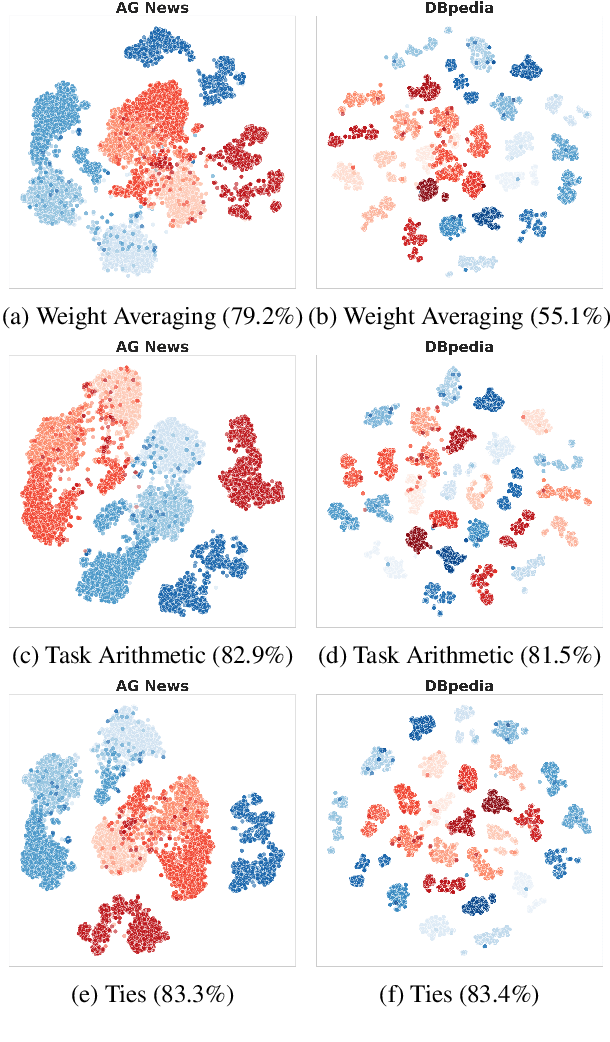
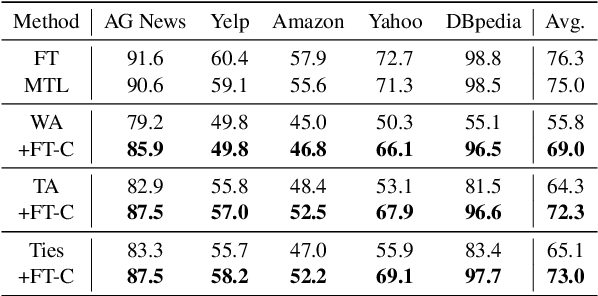
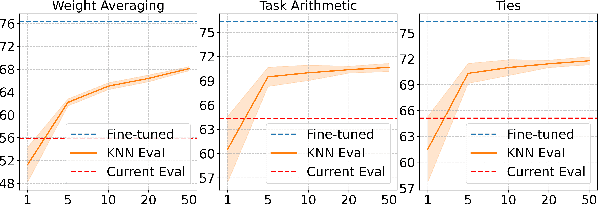
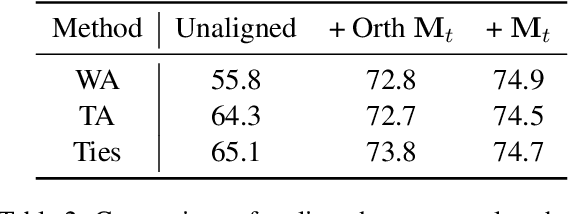
Model merging combines multiple fine-tuned models into a single one via parameter fusion, achieving improvements across many tasks. However, in the classification task, we find a misalignment issue between merging outputs and the fine-tuned classifier, which limits its effectiveness. In this paper, we demonstrate the following observations: (1) The embedding quality of the merging outputs is already very high, and the primary reason for the differences in classification performance lies in the misalignment issue. (2) We propose FT-Classifier, a new protocol that fine-tunes an aligned classifier with few-shot samples to alleviate misalignment, enabling better evaluation of merging outputs and improved classification performance. (3) The misalignment is relatively straightforward and can be formulated as an orthogonal transformation. Experiments demonstrate the existence of misalignment and the effectiveness of our FT-Classifier evaluation protocol.
When Text Embedding Meets Large Language Model: A Comprehensive Survey
Dec 12, 2024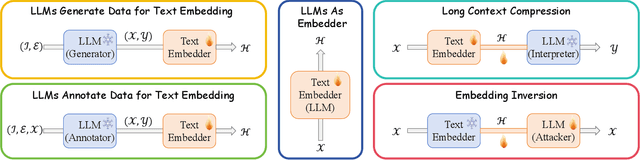
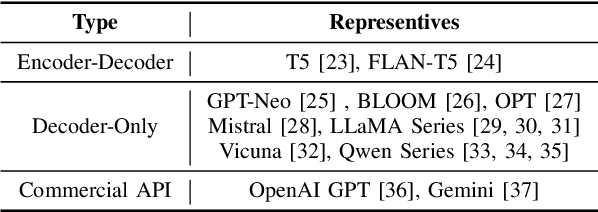
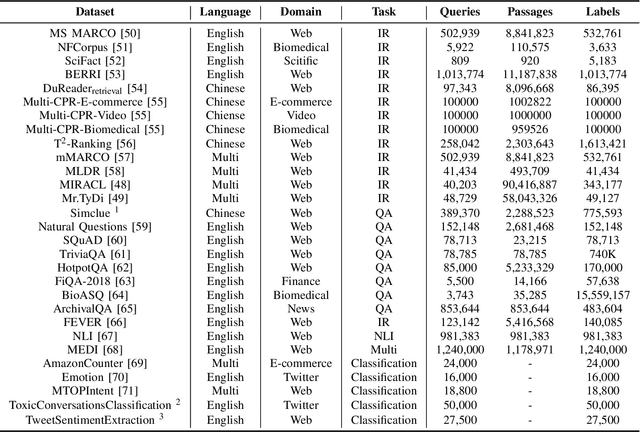
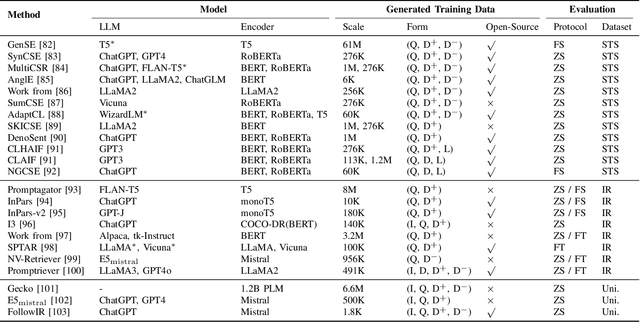
Text embedding has become a foundational technology in natural language processing (NLP) during the deep learning era, driving advancements across a wide array of downstream tasks. While many natural language understanding challenges can now be modeled using generative paradigms and leverage the robust generative and comprehension capabilities of large language models (LLMs), numerous practical applications, such as semantic matching, clustering, and information retrieval, continue to rely on text embeddings for their efficiency and effectiveness. In this survey, we categorize the interplay between LLMs and text embeddings into three overarching themes: (1) LLM-augmented text embedding, enhancing traditional embedding methods with LLMs; (2) LLMs as text embedders, utilizing their innate capabilities for embedding generation; and (3) Text embedding understanding with LLMs, leveraging LLMs to analyze and interpret embeddings. By organizing these efforts based on interaction patterns rather than specific downstream applications, we offer a novel and systematic overview of contributions from various research and application domains in the era of LLMs. Furthermore, we highlight the unresolved challenges that persisted in the pre-LLM era with pre-trained language models (PLMs) and explore the emerging obstacles brought forth by LLMs. Building on this analysis, we outline prospective directions for the evolution of text embedding, addressing both theoretical and practical opportunities in the rapidly advancing landscape of NLP.
Improving General Text Embedding Model: Tackling Task Conflict and Data Imbalance through Model Merging
Oct 19, 2024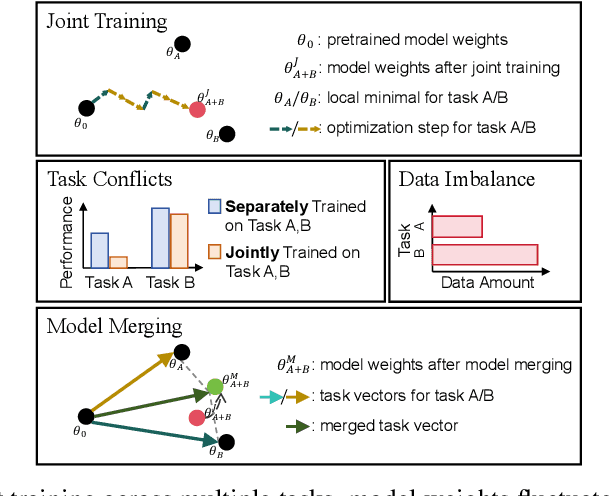
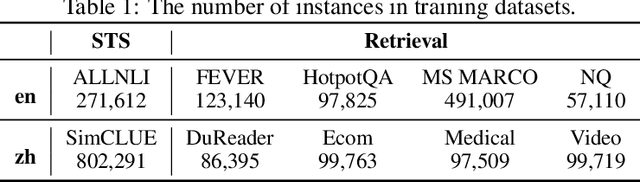
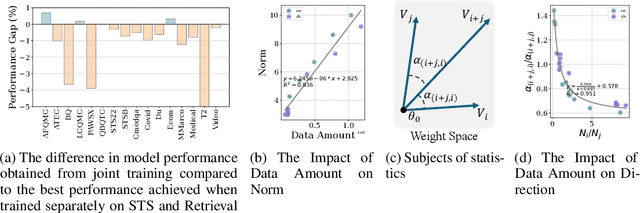
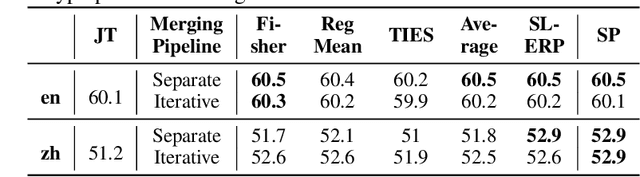
Text embeddings are vital for tasks such as text retrieval and semantic textual similarity (STS). Recently, the advent of pretrained language models, along with unified benchmarks like the Massive Text Embedding Benchmark (MTEB), has facilitated the development of versatile general-purpose text embedding models. Advanced embedding models are typically developed using large-scale multi-task data and joint training across multiple tasks. However, our experimental analysis reveals two significant drawbacks of joint training: 1) Task Conflict: Gradients from different tasks interfere with each other, leading to negative transfer. 2) Data Imbalance: Disproportionate data distribution introduces biases that negatively impact performance across tasks. To overcome these challenges, we explore model merging-a technique that combines independently trained models to mitigate gradient conflicts and balance data distribution. We introduce a novel method, Self Positioning, which efficiently searches for optimal model combinations within the interpolation space of task vectors using stochastic gradient descent. Our experiments demonstrate that Self Positioning significantly enhances multi-task performance on the MTEB dataset, achieving an absolute improvement of 0.7 points. It outperforms traditional resampling methods while reducing computational costs. This work offers a robust approach to building generalized text embedding models with superior performance across diverse embedding-related tasks.
EasyRAG: Efficient Retrieval-Augmented Generation Framework for Automated Network Operations
Oct 15, 2024This paper presents EasyRAG, a simple, lightweight, and efficient retrieval-augmented generation framework for automated network operations. Our framework has three advantages. The first is accurate question answering. We designed a straightforward RAG scheme based on (1) a specific data processing workflow (2) dual-route sparse retrieval for coarse ranking (3) LLM Reranker for reranking (4) LLM answer generation and optimization. This approach achieved first place in the GLM4 track in the preliminary round and second place in the GLM4 track in the semifinals. The second is simple deployment. Our method primarily consists of BM25 retrieval and BGE-reranker reranking, requiring no fine-tuning of any models, occupying minimal VRAM, easy to deploy, and highly scalable; we provide a flexible code library with various search and generation strategies, facilitating custom process implementation. The last one is efficient inference. We designed an efficient inference acceleration scheme for the entire coarse ranking, reranking, and generation process that significantly reduces the inference latency of RAG while maintaining a good level of accuracy; each acceleration scheme can be plug-and-play into any component of the RAG process, consistently enhancing the efficiency of the RAG system. Our code and data are released at \url{https://github.com/BUAADreamer/EasyRAG}.