 Add to Chrome
 Add to Firefox
 Add to Edge
OS-SPEAR: A Toolkit for the Safety, Performance,Efficiency, and Robustness Analysis of OS Agents
Apr 27, 2026
The evolution of Multimodal Large Language Models (MLLMs) has shifted the focus from text generation to active behavioral execution, particularly via OS agents navigating complex GUIs. However, the transition of these agents into trustworthy daily partners is hindered by a lack of rigorous evaluation regarding safety, efficiency, and multi-modal robustness. Current benchmarks suffer from narrow safety scenarios, noisy trajectory labeling, and limited robustness metrics. To bridge this gap, we propose OS-SPEAR, a comprehensive toolkit for the systematic analysis of OS agents across four dimensions: Safety, Performance, Efficiency, and Robustness. OS-SPEAR introduces four specialized subsets: (1) a S(afety)-subset encompassing diverse environment- and human-induced hazards; (2) a P(erformance)-subset curated via trajectory value estimation and stratified sampling; (3) an E(fficiency)-subset quantifying performance through the dual lenses of temporal latency and token consumption; and (4) a R(obustness)-subset that applies cross-modal disturbances to both visual and textual inputs. Additionally, we provide an automated analysis tool to generate human-readable diagnostic reports. We conduct an extensive evaluation of 22 popular OS agents using OS-SPEAR. Our empirical results reveal critical insights into the current landscape: notably, a prevalent trade-off between efficiency and safety or robustness, the performance superiority of specialized agents over general-purpose models, and varying robustness vulnerabilities across different modalities. By providing a multidimensional ranking and a standardized evaluation framework, OS-SPEAR offers a foundational resource for developing the next generation of reliable and efficient OS agents. The dataset and codes are available at https://github.com/Wuzheng02/OS-SPEAR.

LaPON: A Lagrange's-mean-value-theorem-inspired operator network for solving PDEs and its application on NSE
May 18, 2025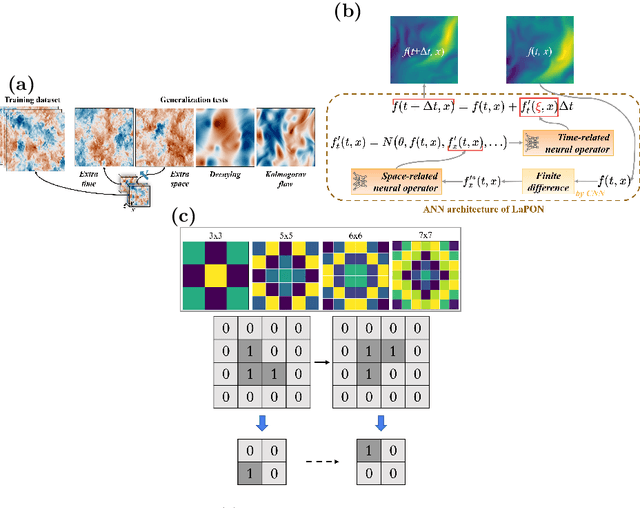
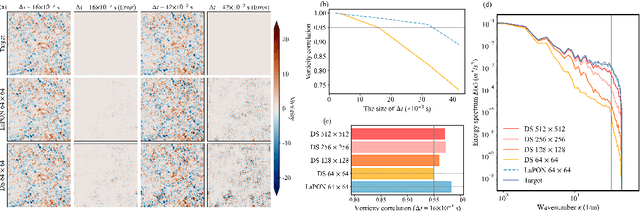
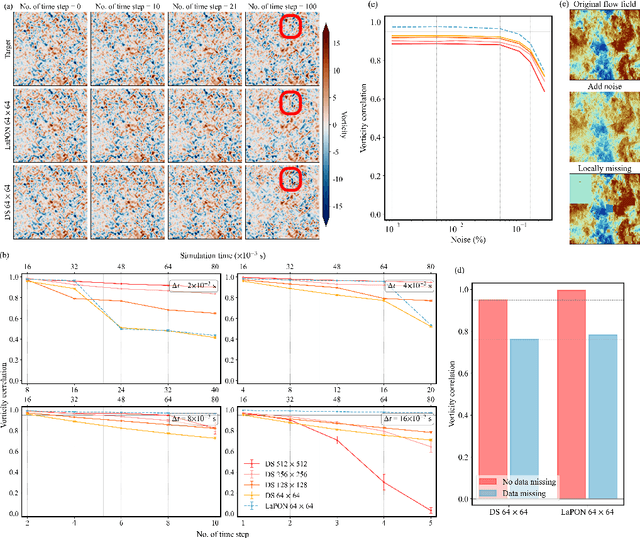
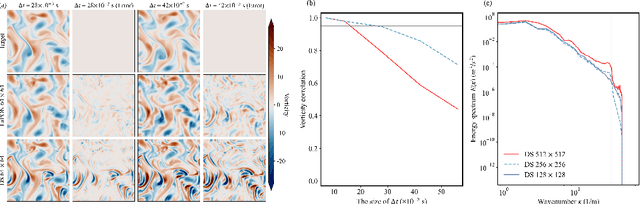
Accelerating the solution of nonlinear partial differential equations (PDEs) while maintaining accuracy at coarse spatiotemporal resolution remains a key challenge in scientific computing. Physics-informed machine learning (ML) methods such as Physics-Informed Neural Networks (PINNs) introduce prior knowledge through loss functions to ensure physical consistency, but their "soft constraints" are usually not strictly satisfied. Here, we propose LaPON, an operator network inspired by the Lagrange's mean value theorem, which embeds prior knowledge directly into the neural network architecture instead of the loss function, making the neural network naturally satisfy the given constraints. This is a hybrid framework that combines neural operators with traditional numerical methods, where neural operators are used to compensate for the effect of discretization errors on the analytical scale in under-resolution simulations. As evaluated on turbulence problem modeled by the Navier-Stokes equations (NSE), the multiple time step extrapolation accuracy and stability of LaPON exceed the direct numerical simulation baseline at 8x coarser grids and 8x larger time steps, while achieving a vorticity correlation of more than 0.98 with the ground truth. It is worth noting that the model can be well generalized to unseen flow states, such as turbulence with different forcing, without retraining. In addition, with the same training data, LaPON's comprehensive metrics on the out-of-distribution test set are at least approximately twice as good as two popular ML baseline methods. By combining numerical computing with machine learning, LaPON provides a scalable and reliable solution for high-fidelity fluid dynamics simulation, showing the potential for wide application in fields such as weather forecasting and engineering design.