 Add to Chrome
 Add to Firefox
 Add to Edge
SWE-AGI: Benchmarking Specification-Driven Software Construction with MoonBit in the Era of Autonomous Agents
Feb 11, 2026
Although large language models (LLMs) have demonstrated impressive coding capabilities, their ability to autonomously build production-scale software from explicit specifications remains an open question. We introduce SWE-AGI, an open-source benchmark for evaluating end-to-end, specification-driven construction of software systems written in MoonBit. SWE-AGI tasks require LLM-based agents to implement parsers, interpreters, binary decoders, and SAT solvers strictly from authoritative standards and RFCs under a fixed API scaffold. Each task involves implementing 1,000-10,000 lines of core logic, corresponding to weeks or months of engineering effort for an experienced human developer. By leveraging the nascent MoonBit ecosystem, SWE-AGI minimizes data leakage, forcing agents to rely on long-horizon architectural reasoning rather than code retrieval. Across frontier models, gpt-5.3-codex achieves the best overall performance (solving 19/22 tasks, 86.4%), outperforming claude-opus-4.6 (15/22, 68.2%), and kimi-2.5 exhibits the strongest performance among open-source models. Performance degrades sharply with increasing task difficulty, particularly on hard, specification-intensive systems. Behavioral analysis further reveals that as codebases scale, code reading, rather than writing, becomes the dominant bottleneck in AI-assisted development. Overall, while specification-driven autonomous software engineering is increasingly viable, substantial challenges remain before it can reliably support production-scale development.

CyberLoc: Towards Accurate Long-term Visual Localization
Jan 06, 2023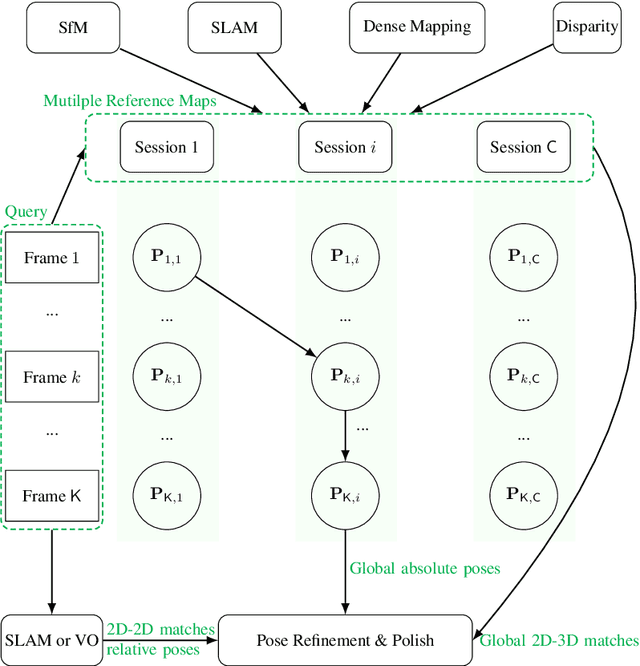

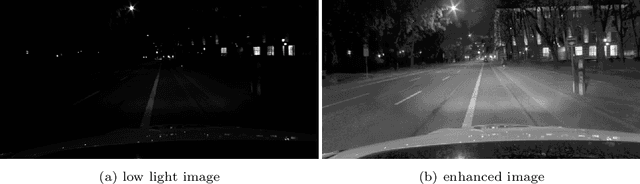
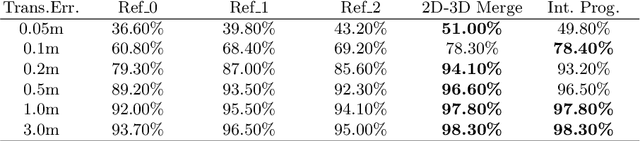
This technical report introduces CyberLoc, an image-based visual localization pipeline for robust and accurate long-term pose estimation under challenging conditions. The proposed method comprises four modules connected in a sequence. First, a mapping module is applied to build accurate 3D maps of the scene, one map for each reference sequence if there exist multiple reference sequences under different conditions. Second, a single-image-based localization pipeline (retrieval--matching--PnP) is performed to estimate 6-DoF camera poses for each query image, one for each 3D map. Third, a consensus set maximization module is proposed to filter out outlier 6-DoF camera poses, and outputs one 6-DoF camera pose for a query. Finally, a robust pose refinement module is proposed to optimize 6-DoF query poses, taking candidate global 6-DoF camera poses and their corresponding global 2D-3D matches, sparse 2D-2D feature matches between consecutive query images and SLAM poses of the query sequence as input. Experiments on the 4seasons dataset show that our method achieves high accuracy and robustness. In particular, our approach wins the localization challenge of ECCV 2022 workshop on Map-based Localization for Autonomous Driving (MLAD-ECCV2022).