 Add to Chrome
 Add to Firefox
 Add to Edge
ContextWeave: A Real-World Workflow Benchmark
Aug 05, 2026
Memory is essential as language agents move from isolated tasks to long-horizon, stateful workflows, yet existing evaluations often reduce it to retrieval or question answering. We introduce ContextWeave, a longitudinal benchmark that evaluates whether recalled experience improves downstream agent performance in realistic office-work streams. ContextWeave reconstructs privacy-preserved, multi-month workflows of 14 participants into 1,005 executable tasks, including 568 core evaluation tasks, with instructions, containerized environments, trajectories, and task-specific rubrics. It measures workspace quality and alignment with participant-specific preferences, complemented by diagnostics of relevance, continuity, solvability, and robustness to misleading recall. Across six memory components under a fixed model, the strongest configuration raises Workspace Score from 68.08 to 78.20 and Preference Score from 41.50 to 70.60. With a fixed memory component, recall improves both outcomes for all five tested base models, although gains vary substantially. Our analysis shows that actionable, experience-rich memory supports workflow continuation and reduces redundant exploration more effectively than compact summaries, while it can also be more susceptible to misleading recall. These findings motivate memory systems that optimize not only retrieval relevance but also reliable use during execution.

BandPO: Bridging Trust Regions and Ratio Clipping via Probability-Aware Bounds for LLM Reinforcement Learning
Mar 05, 2026Proximal constraints are fundamental to the stability of the Large Language Model reinforcement learning. While the canonical clipping mechanism in PPO serves as an efficient surrogate for trust regions, we identify a critical bottleneck: fixed bounds strictly constrain the upward update margin of low-probability actions, disproportionately suppressing high-advantage tail strategies and inducing rapid entropy collapse. To address this, we introduce Band-constrained Policy Optimization (BandPO). BandPO replaces canonical clipping with Band, a unified theoretical operator that projects trust regions defined by f-divergences into dynamic, probability-aware clipping intervals. Theoretical analysis confirms that Band effectively resolves this exploration bottleneck. We formulate this mapping as a convex optimization problem, guaranteeing a globally optimal numerical solution while deriving closed-form solutions for specific divergences. Extensive experiments across diverse models and datasets demonstrate that BandPO consistently outperforms canonical clipping and Clip-Higher, while robustly mitigating entropy collapse.
E2-Capsule Neural Networks for Facial Expression Recognition Using AU-Aware Attention
Dec 05, 2019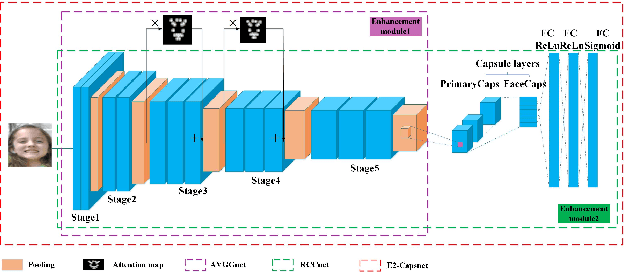
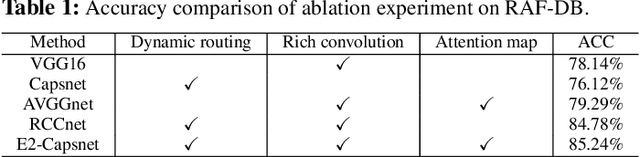
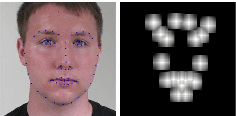
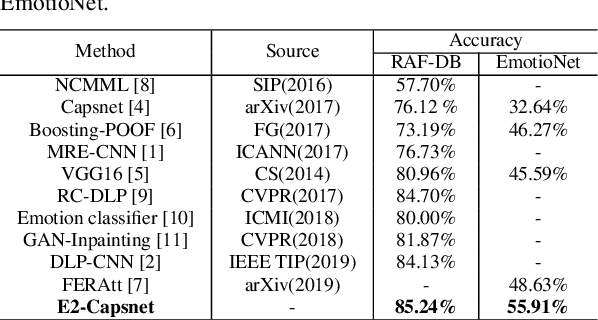
Capsule neural network is a new and popular technique in deep learning. However, the traditional capsule neural network does not extract features sufficiently before the dynamic routing between the capsules. In this paper, the one Double Enhanced Capsule Neural Network (E2-Capsnet) that uses AU-aware attention for facial expression recognition (FER) is proposed. The E2-Capsnet takes advantage of dynamic routing between the capsules, and has two enhancement modules which are beneficial for FER. The first enhancement module is the convolutional neural network with AU-aware attention, which can help focus on the active areas of the expression. The second enhancement module is the capsule neural network with multiple convolutional layers, which enhances the ability of the feature representation. Finally, squashing function is used to classify the facial expression. We demonstrate the effectiveness of E2-Capsnet on the two public benchmark datasets, RAF-DB and EmotioNet. The experimental results show that our E2-Capsnet is superior to the state-of-the-art methods. Our implementation will be publicly available online.