 Add to Chrome
 Add to Firefox
 Add to Edge
JADE: Expert-Grounded Dynamic Evaluation for Open-Ended Professional Tasks
Feb 06, 2026
Evaluating agentic AI on open-ended professional tasks faces a fundamental dilemma between rigor and flexibility. Static rubrics provide rigorous, reproducible assessment but fail to accommodate diverse valid response strategies, while LLM-as-a-judge approaches adapt to individual responses yet suffer from instability and bias. Human experts address this dilemma by combining domain-grounded principles with dynamic, claim-level assessment. Inspired by this process, we propose JADE, a two-layer evaluation framework. Layer 1 encodes expert knowledge as a predefined set of evaluation skills, providing stable evaluation criteria. Layer 2 performs report-specific, claim-level evaluation to flexibly assess diverse reasoning strategies, with evidence-dependency gating to invalidate conclusions built on refuted claims. Experiments on BizBench show that JADE improves evaluation stability and reveals critical agent failure modes missed by holistic LLM-based evaluators. We further demonstrate strong alignment with expert-authored rubrics and effective transfer to a medical-domain benchmark, validating JADE across professional domains. Our code is publicly available at https://github.com/smiling-world/JADE.

Learning Spatial Similarity Distribution for Few-shot Object Counting
May 20, 2024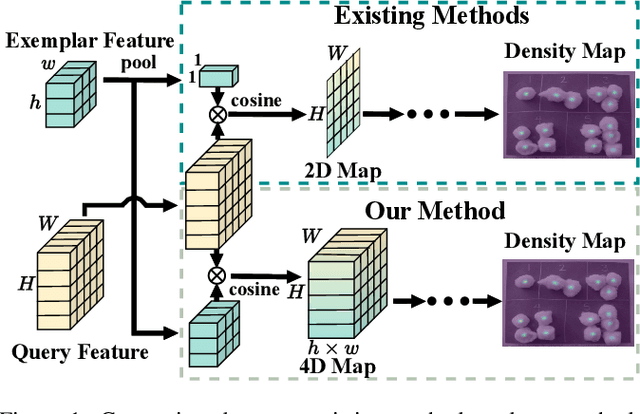

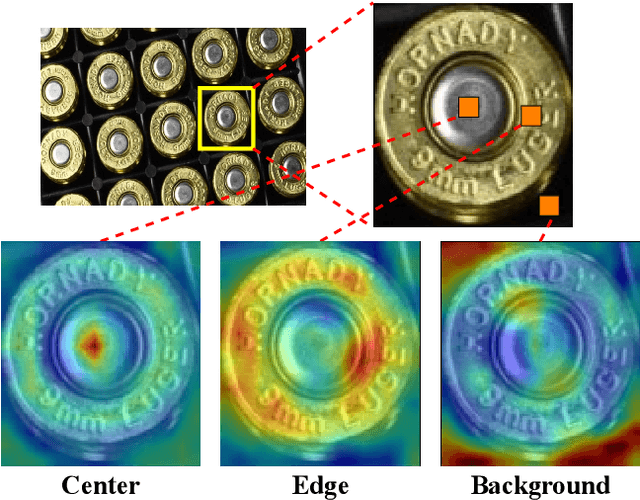
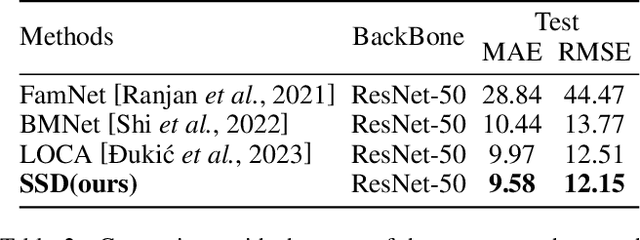
Few-shot object counting aims to count the number of objects in a query image that belong to the same class as the given exemplar images. Existing methods compute the similarity between the query image and exemplars in the 2D spatial domain and perform regression to obtain the counting number. However, these methods overlook the rich information about the spatial distribution of similarity on the exemplar images, leading to significant impact on matching accuracy. To address this issue, we propose a network learning Spatial Similarity Distribution (SSD) for few-shot object counting, which preserves the spatial structure of exemplar features and calculates a 4D similarity pyramid point-to-point between the query features and exemplar features, capturing the complete distribution information for each point in the 4D similarity space. We propose a Similarity Learning Module (SLM) which applies the efficient center-pivot 4D convolutions on the similarity pyramid to map different similarity distributions to distinct predicted density values, thereby obtaining accurate count. Furthermore, we also introduce a Feature Cross Enhancement (FCE) module that enhances query and exemplar features mutually to improve the accuracy of feature matching. Our approach outperforms state-of-the-art methods on multiple datasets, including FSC-147 and CARPK. Code is available at https://github.com/CBalance/SSD.