 Add to Chrome
 Add to Firefox
 Add to Edge
AgenticSimLaw: A Juvenile Courtroom Multi-Agent Debate Simulation for Explainable High-Stakes Tabular Decision Making
Jan 29, 2026
We introduce AgenticSimLaw, a role-structured, multi-agent debate framework that provides transparent and controllable test-time reasoning for high-stakes tabular decision-making tasks. Unlike black-box approaches, our courtroom-style orchestration explicitly defines agent roles (prosecutor, defense, judge), interaction protocols (7-turn structured debate), and private reasoning strategies, creating a fully auditable decision-making process. We benchmark this framework on young adult recidivism prediction using the NLSY97 dataset, comparing it against traditional chain-of-thought (CoT) prompting across almost 90 unique combinations of models and strategies. Our results demonstrate that structured multi-agent debate provides more stable and generalizable performance compared to single-agent reasoning, with stronger correlation between accuracy and F1-score metrics. Beyond performance improvements, AgenticSimLaw offers fine-grained control over reasoning steps, generates complete interaction transcripts for explainability, and enables systematic profiling of agent behaviors. While we instantiate this framework in the criminal justice domain to stress-test reasoning under ethical complexity, the approach generalizes to any deliberative, high-stakes decision task requiring transparency and human oversight. This work addresses key LLM-based multi-agent system challenges: organization through structured roles, observability through logged interactions, and responsibility through explicit non-deployment constraints for sensitive domains. Data, results, and code will be available on github.com under the MIT license.

Do Multimodal Large Language Models Understand Welding?
Mar 18, 2025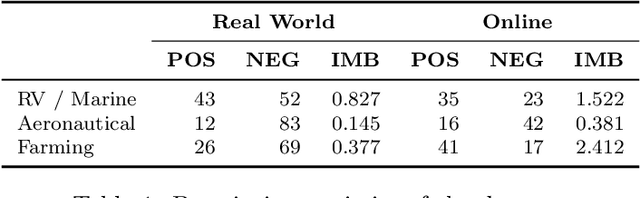
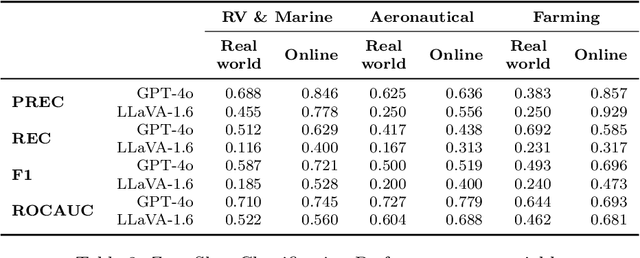
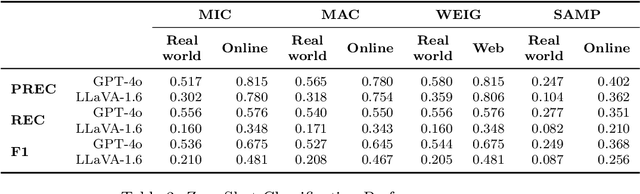
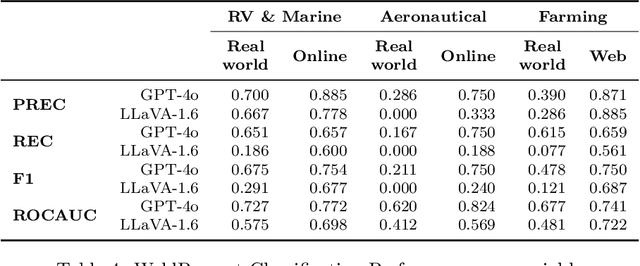
This paper examines the performance of Multimodal LLMs (MLLMs) in skilled production work, with a focus on welding. Using a novel data set of real-world and online weld images, annotated by a domain expert, we evaluate the performance of two state-of-the-art MLLMs in assessing weld acceptability across three contexts: RV \& Marine, Aeronautical, and Farming. While both models perform better on online images, likely due to prior exposure or memorization, they also perform relatively well on unseen, real-world weld images. Additionally, we introduce WeldPrompt, a prompting strategy that combines Chain-of-Thought generation with in-context learning to mitigate hallucinations and improve reasoning. WeldPrompt improves model recall in certain contexts but exhibits inconsistent performance across others. These results underscore the limitations and potentials of MLLMs in high-stakes technical domains and highlight the importance of fine-tuning, domain-specific data, and more sophisticated prompting strategies to improve model reliability. The study opens avenues for further research into multimodal learning in industry applications.
Near to Mid-term Risks and Opportunities of Open Source Generative AI
Apr 25, 2024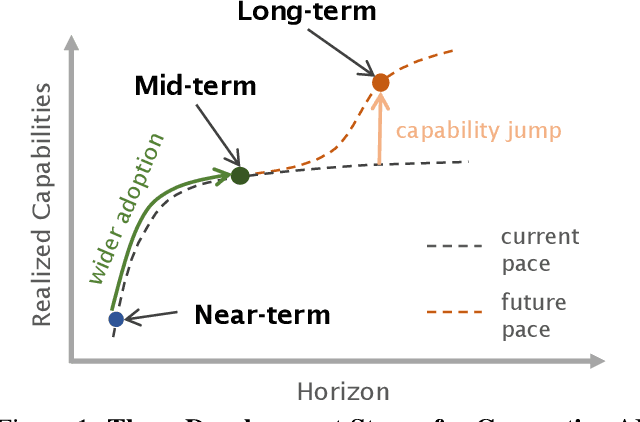

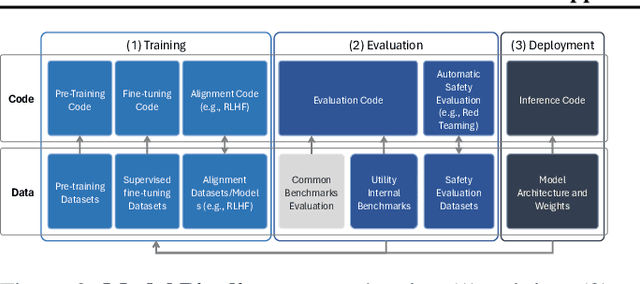

In the next few years, applications of Generative AI are expected to revolutionize a number of different areas, ranging from science & medicine to education. The potential for these seismic changes has triggered a lively debate about potential risks and resulted in calls for tighter regulation, in particular from some of the major tech companies who are leading in AI development. This regulation is likely to put at risk the budding field of open source Generative AI. We argue for the responsible open sourcing of generative AI models in the near and medium term. To set the stage, we first introduce an AI openness taxonomy system and apply it to 40 current large language models. We then outline differential benefits and risks of open versus closed source AI and present potential risk mitigation, ranging from best practices to calls for technical and scientific contributions. We hope that this report will add a much needed missing voice to the current public discourse on near to mid-term AI safety and other societal impact.