 Add to Chrome
 Add to Firefox
 Add to Edge
LoopsBench: From Harness Engineering to Loop Engineering in Benchmarking Coding Agent
Jul 31, 2026
Coding agent infrastructure is shifting from harness engineering toward loop engineering as coding agents are deployed for sustained long-horizon software development. Existing benchmarks often center on localized tasks or end-state outcomes, offering limited insight into sustained execution. We introduce LOOPSBENCH, a long-horizon benchmark for loop engineering in coding agent evaluation. Each task is a dependency DAG over separately testable development units with source-evidenced prerequisite edges. LOOPSBENCH comprises 112 tasks from authentic sources spanning 8 programming languages and 9 domains. Its flow-aware runtime releases tests along the ready frontier and retains completed nodes as regression obligations. We evaluate frontier coding agents paired with widely used loop implementations. The strongest configuration, Opus-4.7 with Claude Code and outer continuation, resolves 25.00% of tasks. Recorded plans recover only part of the source-recovered prerequisite DAG, and regression events remain visible across the evaluated loop profiles. We open source the benchmark data and code, including all tasks, more than 5,300 development units, and executable tests, at microsoft/Loopsbench.

Label-free SERS Discrimination of Proline from Hydroxylated Proline at Single-molecule Level Assisted by a Deep Learning Model
Dec 25, 2024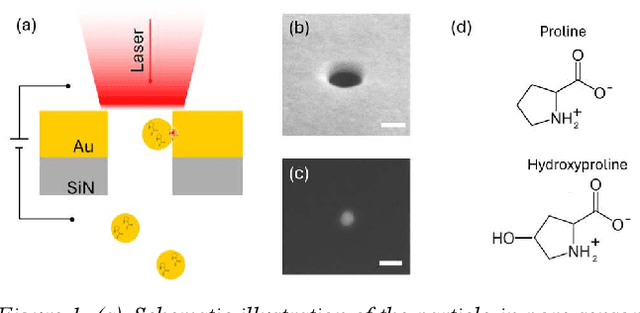
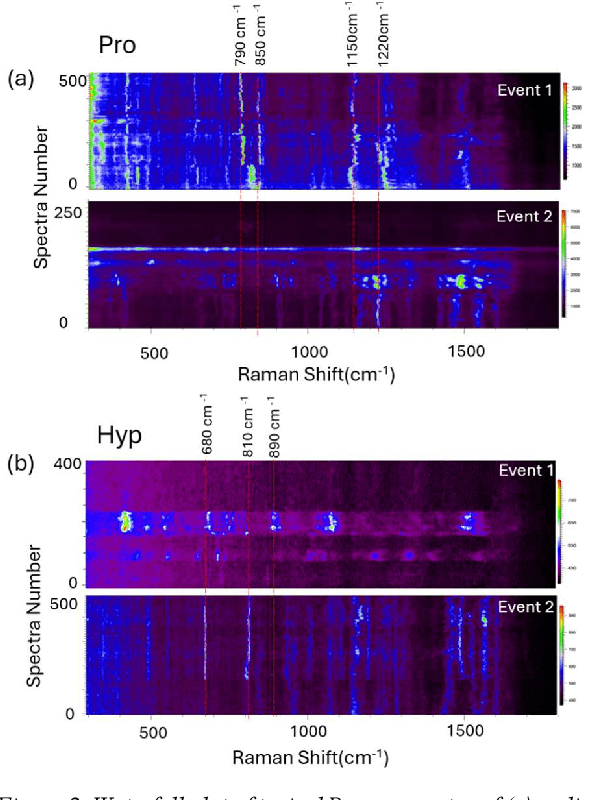
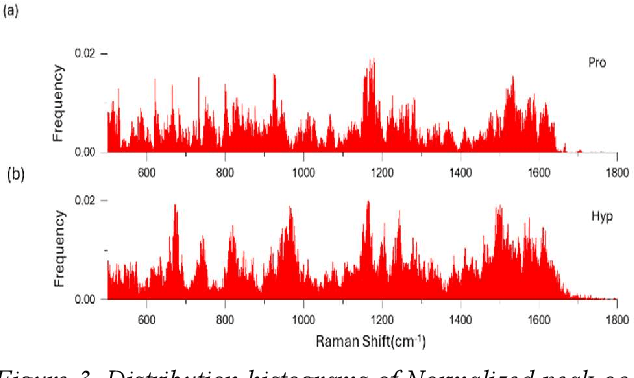
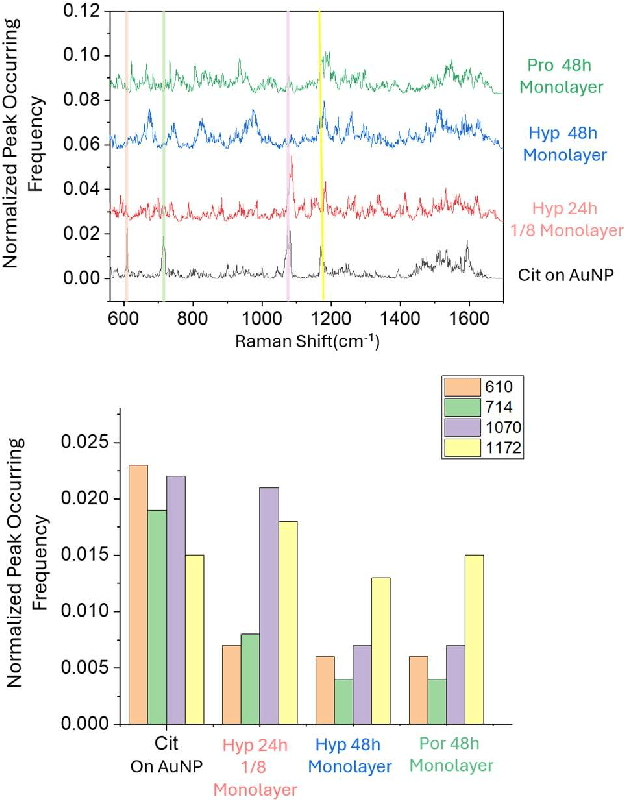
Discriminating the low-abundance hydroxylated proline from hydroxylated proline is crucial for monitoring diseases and eval-uating therapeutic outcomes that require single-molecule sensors. While the plasmonic nanopore sensor can detect the hydrox-ylation with single-molecule sensitivity by surface enhanced Raman spectroscopy (SERS), it suffers from intrinsic fluctuations of single-molecule signals as well as strong interference from citrates. Here, we used the occurrence frequency histogram of the single-molecule SERS peaks to extract overall dataset spectral features, overcome the signal fluctuations and investigate the citrate-replaced plasmonic nanopore sensors for clean and distinguishable signals of proline and hydroxylated proline. By ligand exchange of the citrates by analyte molecules, the representative peaks of citrates decreased with incubation time, prov-ing occupation of the plasmonic hot spot by the analytes. As a result, the discrimination of the single-molecule SERS signals of proline and hydroxylated proline was possible with the convolutional neural network model with 96.6% accuracy.