 Add to Chrome
 Add to Firefox
 Add to Edge
Human-Centric Intelligence in the Era of Foundation Models: A Survey
Aug 18, 2026
Human-centric intelligence is evolving in the foundation-model era, with growing emphasis on scale, transferability, and general-purpose modeling. Yet it has not fully integrated with foundation models to achieve the comparable progress seen in them. More importantly, recent advances across this broad landscape remain fragmented across tasks, modalities, and research communities, leaving their intrinsic conceptual and methodological connections unclear. To bridge these divides and rethink human-centric intelligence in the foundation-model era, we introduce a full-spectrum human context taxonomy that integrates six interconnected levels by viewing humans as observable subjects through visual appearance and spatial geometry, as dynamic actors through kinematic dynamics and interaction modeling, and as situated agents through world simulation and embodied agency. We next present the methodological foundations of the field, covering human-centric data families, computational architecture paradigms, and representative training and inference optimization strategies. We then systematically review representative methods across these levels and organize the associated datasets, benchmarks, and evaluation metrics. We further discuss open challenges and promising research directions toward human-centric intelligence that is scalable, trustworthy, physically grounded, and deployable, aiming to provide a coherent framework and practical reference for advancing the field. Finally, we provide a systematically organized and continuously updated collection of human-centric AI literature and resources on our project page.

Differentiable architecture search with multi-dimensional attention for spiking neural networks
Nov 01, 2024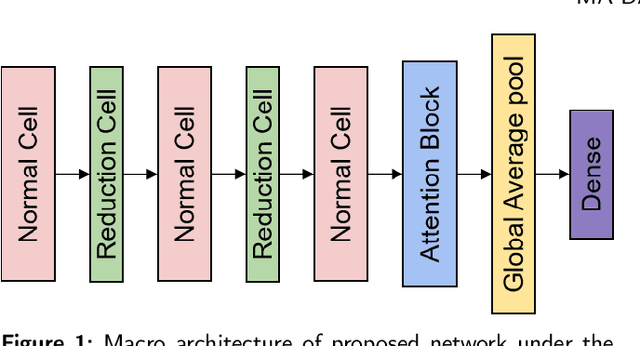
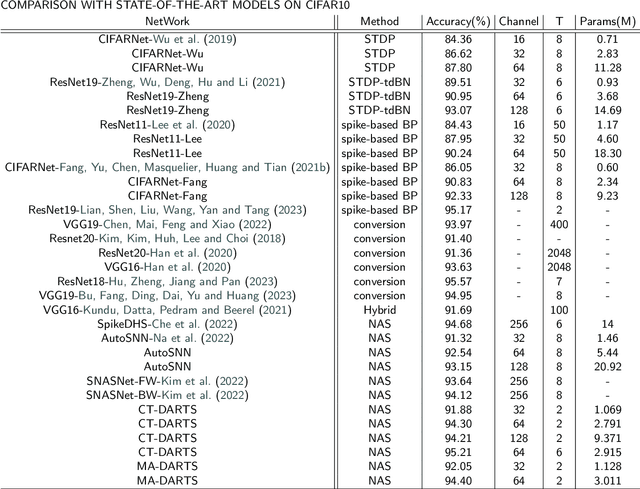
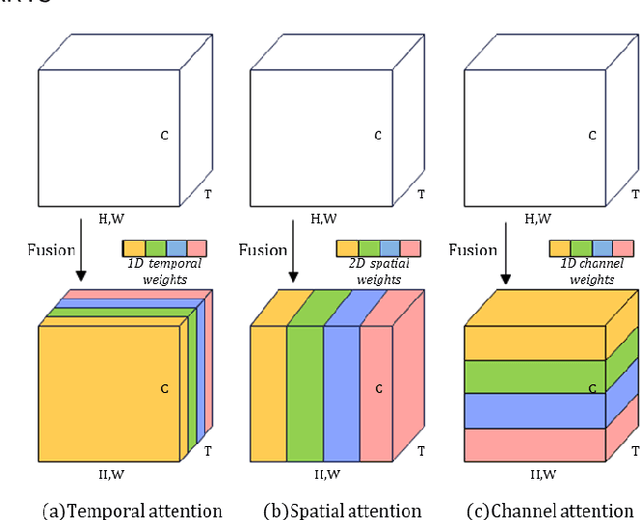
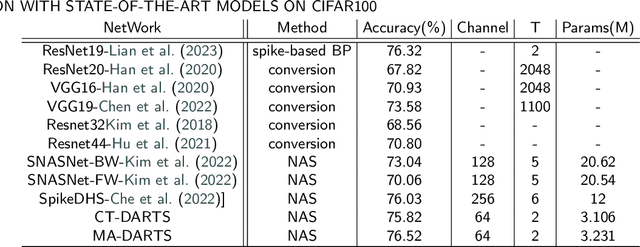
Spiking Neural Networks (SNNs) have gained enormous popularity in the field of artificial intelligence due to their low power consumption. However, the majority of SNN methods directly inherit the structure of Artificial Neural Networks (ANN), usually leading to sub-optimal model performance in SNNs. To alleviate this problem, we integrate Neural Architecture Search (NAS) method and propose Multi-Attention Differentiable Architecture Search (MA-DARTS) to directly automate the search for the optimal network structure of SNNs. Initially, we defined a differentiable two-level search space and conducted experiments within micro architecture under a fixed layer. Then, we incorporated a multi-dimensional attention mechanism and implemented the MA-DARTS algorithm in this search space. Comprehensive experiments demonstrate our model achieves state-of-the-art performance on classification compared to other methods under the same parameters with 94.40% accuracy on CIFAR10 dataset and 76.52% accuracy on CIFAR100 dataset. Additionally, we monitored and assessed the number of spikes (NoS) in each cell during the whole experiment. Notably, the number of spikes of the whole model stabilized at approximately 110K in validation and 100k in training on datasets.