 Add to Chrome
 Add to Firefox
 Add to Edge
Stage-Aware and Roughness-Constrained Diffusion Policy for Multi-Stage Robotic Polishing
Jun 24, 2026
Polishing is a critical finishing process in high-end manufacturing fields such as aerospace, where surface quality directly affects the service performance and reliability of components. Robotic imitation learning provides a flexible solution for such tasks, but current methods remain limited in industrial polishing because of long-horizon dependencies, uncertain stage transitions, and the difficulty of modeling and regulating coupled process parameters. To address these issues, this paper proposes a Stage-Aware and Roughness-Constrained Diffusion Policy (SRDP) for robotic polishing. SRDP infers the process-stage posterior from multimodal observation histories and uses it to condition the shared reverse denoising process, enabling stage-consistent action generation without external stage labels during execution. Furthermore, a roughness-oriented process-constrained diffusion sampling method is incorporated to generate constrained feed speed and normal contact force under stage-wise preset spindle speeds, thereby improving process consistency and physical feasibility. Systematic experiments are conducted on two representative scenarios, namely spacecraft cabin coating-surface polishing and inner-cavity structural surface finishing. Comparisons with advanced baselines, ablation studies, and real-robot validations comprehensively evaluate the proposed method. The results show that SRD improves stage-transition stability, process-parameter consistency, and final surface quality across different polishing scenarios.

Surface Constraint Policy for Learning Surface-Constrained and Dynamically Feasible Robot Skills
May 29, 2026Diffusion-based imitation learning methods have driven rapid progress in robot dexterous manipulation tasks. However, they have limitations when applied to tasks that involve complex free-form surface constraints because of their lack of explicit surface geometry constraint modeling and the dynamic feasibility issue, resulting in stochastic action generation that fails to achieve reliable surface alignment and maintain stable contact. To address these limitations, we propose a novel surface constraint policy (SCP) for generating robot actions that satisfy free-form surface constraints on the basis of human demonstrations and real-time visual observations. First, the surface geometry constraint is encoded using a two-dimensional weighted Gaussian kernel function that is derived from demonstrations. Building on the encoded surface geometry constraints, the diffusion-based policy is used to infer task-level action intentions from multimodal sensory inputs, including visual observations and robot state feedback. These intentions are further transformed into surface-constrained dynamic movement primitives (DMPs) through a similarity-based action mapping method, thereby enabling smooth and compliant motion execution. The SCP achieves generation of structured surface geometric intent and dynamically admissible actions. The proposed method is validated on multiple surface manipulation tasks and compared with existing techniques. The experimental results demonstrate superior task success rates and contact stability under surface constraints.
Revealing Physical-World Semantic Vulnerabilities: Universal Adversarial Patches for Infrared Vision-Language Models
Apr 03, 2026Infrared vision-language models (IR-VLMs) have emerged as a promising paradigm for multimodal perception in low-visibility environments, yet their robustness to adversarial attacks remains largely unexplored. Existing adversarial patch methods are mainly designed for RGB-based models in closed-set settings and are not readily applicable to the open-ended semantic understanding and physical deployment requirements of infrared VLMs. To bridge this gap, we propose Universal Curved-Grid Patch (UCGP), a universal physical adversarial patch framework for IR-VLMs. UCGP integrates Curved-Grid Mesh (CGM) parameterization for continuous, low-frequency, and deployable patch generation with a unified representation-driven objective that promotes subspace departure, topology disruption, and stealth. To improve robustness under real-world deployment and domain shift, we further incorporate Meta Differential Evolution and EOT-augmented TPS deformation modeling. Rather than manipulating labels or prompts, UCGP directly disrupts the visual representation space, weakening cross-modal semantic alignment. Extensive experiments demonstrate that UCGP consistently compromises semantic understanding across diverse IR-VLM architectures while maintaining cross-model transferability, cross-dataset generalization, real-world physical effectiveness, and robustness against defenses. These findings reveal a previously overlooked robustness vulnerability in current infrared multimodal systems.
Thermal Topology Collapse: Universal Physical Patch Attacks on Infrared Vision Systems
Mar 23, 2026Although infrared pedestrian detectors have been widely deployed in visual perception tasks, their vulnerability to physical adversarial attacks is becoming increasingly apparent. Existing physical attack methods predominantly rely on instance-specific online optimization and rigid pattern design, leading to high deployment costs and insufficient physical robustness. To address these limitations, this work proposes the Universal Physical Patch Attack (UPPA), the first universal physical attack method in the infrared domain. This method employs geometrically constrained parameterized Bezier blocks to model perturbations and utilizes the Particle Swarm Optimization (PSO) algorithm to perform unified optimization across the global data distribution, thus maintaining topological stability under dynamic deformations. In the physical deployment phase, we materialize the optimized digital perturbations into physical cold patches, achieving a continuous and smooth low-temperature distribution that naturally aligns with the thermal radiation characteristics of infrared imaging. Extensive experiments demonstrate that UPPA achieves an outstanding physical attack success rate without any online computational overhead, while also exhibiting strong cross-domain generalization and reliable black-box transferability.
Coarse-to-Fine Joint Registration of MR and Ultrasound Images via Imaging Style Transfer
Aug 07, 2025We developed a pipeline for registering pre-surgery Magnetic Resonance (MR) images and post-resection Ultrasound (US) images. Our approach leverages unpaired style transfer using 3D CycleGAN to generate synthetic T1 images, thereby enhancing registration performance. Additionally, our registration process employs both affine and local deformable transformations for a coarse-to-fine registration. The results demonstrate that our approach improves the consistency between MR and US image pairs in most cases.
AliMe KBQA: Question Answering over Structured Knowledge for E-commerce Customer Service
Dec 12, 2019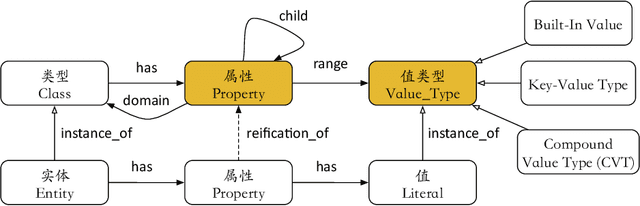
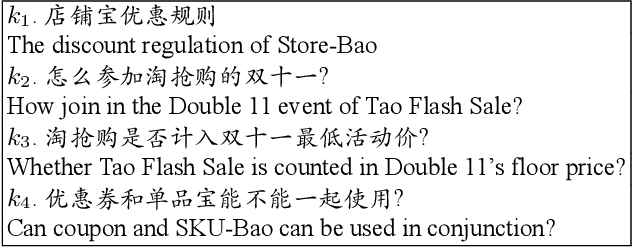
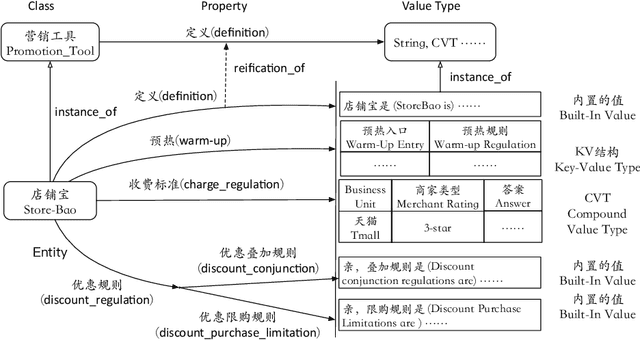
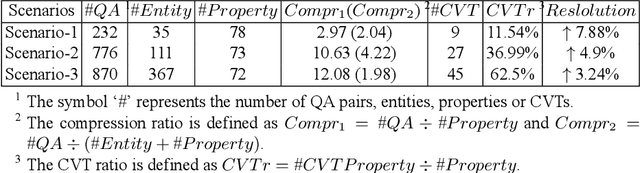
With the rise of knowledge graph (KG), question answering over knowledge base (KBQA) has attracted increasing attention in recent years. Despite much research has been conducted on this topic, it is still challenging to apply KBQA technology in industry because business knowledge and real-world questions can be rather complicated. In this paper, we present AliMe-KBQA, a bold attempt to apply KBQA in the E-commerce customer service field. To handle real knowledge and questions, we extend the classic "subject-predicate-object (SPO)" structure with property hierarchy, key-value structure and compound value type (CVT), and enhance traditional KBQA with constraints recognition and reasoning ability. We launch AliMe-KBQA in the Marketing Promotion scenario for merchants during the "Double 11" period in 2018 and other such promotional events afterwards. Online results suggest that AliMe-KBQA is not only able to gain better resolution and improve customer satisfaction, but also becomes the preferred knowledge management method by business knowledge staffs since it offers a more convenient and efficient management experience.