 Add to Chrome
 Add to Firefox
 Add to Edge
CSI RefineNet: A Soft Data-Aided Iterative Receiver for High-Mobility OFDM Systems
Jul 26, 2026
In high-mobility orthogonal frequency division multiplexing (OFDM) systems, rapid channel variation can make the channel state information (CSI) estimated from pilots inaccurate for data subcarriers, leading to a mismatch with their effective channel. To address this issue, this paper proposes a CSI RefineNet receiver, where the CSI is iteratively refined using soft symbol decisions in a data-aided manner. Specifically, a pilot-driven initialization module is first employed to obtain a coarse CSI estimation and the corresponding symbol posterior probabilities. Based on these posteriors, soft data-aided channel observations are constructed over all subcarriers and fused with the initial CSI to refine the channel estimation. The refined CSI is subsequently fed back to the equalization and detection modules, thereby forming an iterative receiver structure. To improve training stability and fully exploit the refinement capability, a two-stage training strategy is also developed. Simulation results demonstrate that the proposed CSI RefineNet receiver achieves superior BER performance and strong robustness under different velocities, modulation orders, and pilot spacing configurations in high-mobility OFDM systems.

Coupling Graph Neural Networks with Fractional Order Continuous Dynamics: A Robustness Study
Jan 09, 2024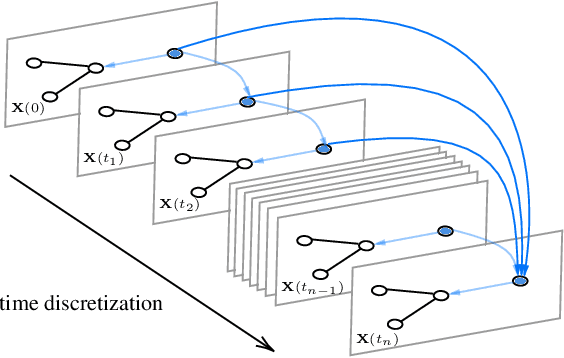
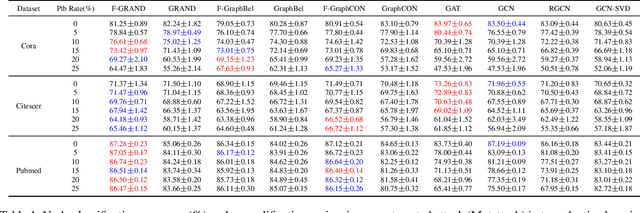
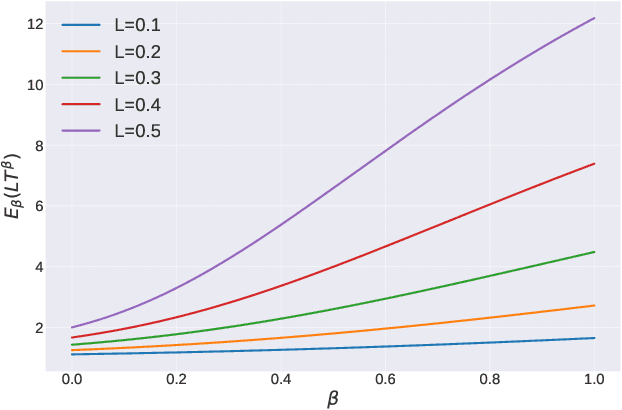
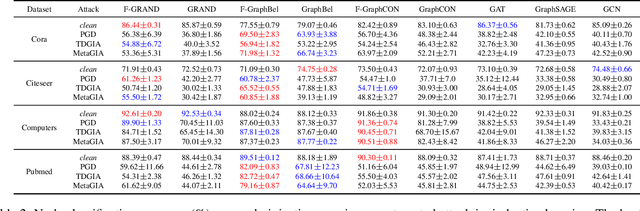
In this work, we rigorously investigate the robustness of graph neural fractional-order differential equation (FDE) models. This framework extends beyond traditional graph neural (integer-order) ordinary differential equation (ODE) models by implementing the time-fractional Caputo derivative. Utilizing fractional calculus allows our model to consider long-term memory during the feature updating process, diverging from the memoryless Markovian updates seen in traditional graph neural ODE models. The superiority of graph neural FDE models over graph neural ODE models has been established in environments free from attacks or perturbations. While traditional graph neural ODE models have been verified to possess a degree of stability and resilience in the presence of adversarial attacks in existing literature, the robustness of graph neural FDE models, especially under adversarial conditions, remains largely unexplored. This paper undertakes a detailed assessment of the robustness of graph neural FDE models. We establish a theoretical foundation outlining the robustness characteristics of graph neural FDE models, highlighting that they maintain more stringent output perturbation bounds in the face of input and graph topology disturbances, compared to their integer-order counterparts. Our empirical evaluations further confirm the enhanced robustness of graph neural FDE models, highlighting their potential in adversarially robust applications.