 Add to Chrome
 Add to Firefox
 Add to Edge
ActionFlow: A Pipelined Action Acceleration for Vision Language Models on Edge
Dec 23, 2025
Vision-Language-Action (VLA) models have emerged as a unified paradigm for robotic perception and control, enabling emergent generalization and long-horizon task execution. However, their deployment in dynamic, real-world environments is severely hin dered by high inference latency. While smooth robotic interaction requires control frequencies of 20 to 30 Hz, current VLA models typi cally operate at only 3-5 Hz on edge devices due to the memory bound nature of autoregressive decoding. Existing optimizations often require extensive retraining or compromise model accuracy. To bridge this gap, we introduce ActionFlow, a system-level inference framework tailored for resource-constrained edge plat forms. At the core of ActionFlow is a Cross-Request Pipelin ing strategy, a novel scheduler that redefines VLA inference as a macro-pipeline of micro-requests. The strategy intelligently batches memory-bound Decode phases with compute-bound Prefill phases across continuous time steps to maximize hardware utilization. Furthermore, to support this scheduling, we propose a Cross Request State Packed Forward operator and a Unified KV Ring Buffer, which fuse fragmented memory operations into efficient dense computations. Experimental results demonstrate that ActionFlow achieves a 2.55x improvement in FPS on the OpenVLA-7B model without retraining, enabling real-time dy namic manipulation on edge hardware. Our work is available at https://anonymous.4open.science/r/ActionFlow-1D47.

Full Scaling Automation for Sustainable Development of Green Data Centers
May 01, 2023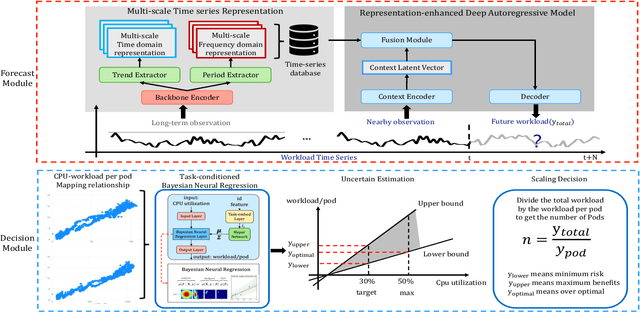
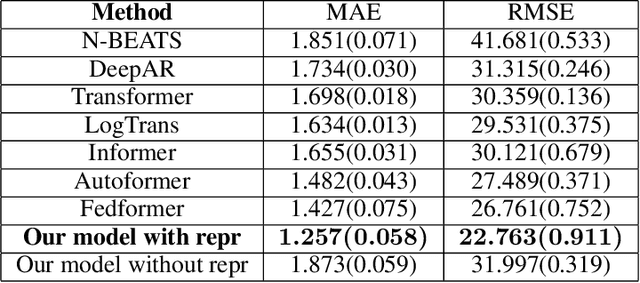
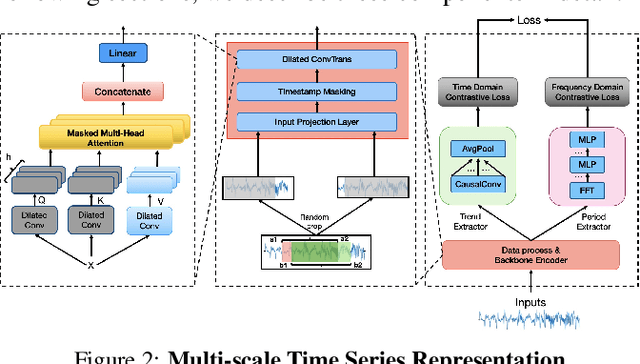
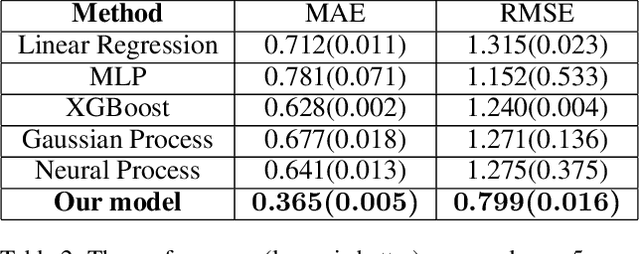
The rapid rise in cloud computing has resulted in an alarming increase in data centers' carbon emissions, which now accounts for >3% of global greenhouse gas emissions, necessitating immediate steps to combat their mounting strain on the global climate. An important focus of this effort is to improve resource utilization in order to save electricity usage. Our proposed Full Scaling Automation (FSA) mechanism is an effective method of dynamically adapting resources to accommodate changing workloads in large-scale cloud computing clusters, enabling the clusters in data centers to maintain their desired CPU utilization target and thus improve energy efficiency. FSA harnesses the power of deep representation learning to accurately predict the future workload of each service and automatically stabilize the corresponding target CPU usage level, unlike the previous autoscaling methods, such as Autopilot or FIRM, that need to adjust computing resources with statistical models and expert knowledge. Our approach achieves significant performance improvement compared to the existing work in real-world datasets. We also deployed FSA on large-scale cloud computing clusters in industrial data centers, and according to the certification of the China Environmental United Certification Center (CEC), a reduction of 947 tons of carbon dioxide, equivalent to a saving of 1538,000 kWh of electricity, was achieved during the Double 11 shopping festival of 2022, marking a critical step for our company's strategic goal towards carbon neutrality by 2030.