 Add to Chrome
 Add to Firefox
 Add to Edge
When New Generators Arrive: Lifelong Machine-Generated Text Attribution via Ridge Feature Transfer
Jun 04, 2026
Machine-generated text (MGT) attribution aims to identify the specific generator responsible for a given text, thereby providing fine-grained evidence for model accountability and misuse investigation. As new large language models continue to emerge, attribution models must continuously incorporate new generators while preserving their ability to recognize previously seen ones. Prior works have shown that this lifelong MGT attribution setting is challenging, and existing methods often struggle to achieve a stable balance between adapting to new classes and retaining old ones. To address this issue, we propose RidgeFT, a lightweight analytic update framework that does not rely on exemplar replay. RidgeFT trains a task-aware encoder on the initial generator set, stores compact class-wise sufficient statistics when each generator class is first observed, and then freezes the encoder for replay-free closed-form updates. It then suppresses generator-irrelevant variation through covariance calibration, improves representation capacity with fixed random features, and updates new classes through closed-form ridge regression based on class-level sufficient statistics. Across multi-topic evaluations with varying initial generator setups, RidgeFT consistently outperforms baselines. It achieves the best macro-F1 across domains, backbones, and incremental protocols, while also improving both old-class retention and new-class adaptation. These results suggest that feature-stable analytic updates provide a simple yet effective approach to lifelong MGT attribution.

Beyond Waveform Robustness: Robust Feature-Vocoder Adversarial Attacks on Automatic Speech Recognition
Jun 04, 2026Automatic speech recognition (ASR) systems have become widely used for multilingual speech-to-text transcription. Their robustness to adversarial attacks has become an important topic for the community. Existing adversarial attacks directly add adversarial noise to the speech audio. However, prior work has shown that existing adversarial attacks face two limitations: they often transfer poorly to black-box ASR systems and are increasingly mitigated by defenses tailored to input-space perturbations. In this work, we propose a Clean-Referenced Feature-Vocoder Attack, a surrogate-based black-box attack that moves the adversarial search space from raw waveforms to self-supervised learning (SSL) representations. To address the transferability limitation, we perturb more generalizable acoustic-phonetic representations rather than low-level waveform samples, reducing dependence on surrogate-specific waveform gradients and encouraging adversarial perturbations that generalize across ASR systems. To bypass different defenses, we shift the adversarial signal from explicit additive waveform noise to SSL feature-space perturbations and reconstruct them through a vocoder into speech-like waveform adversarial signals, making the resulting samples less aligned with waveform-bounded defenses. Extensive experiments show that, when optimized only on raw Whisper-small as a public surrogate model, our attack transfers effectively to black-box ASR models with a +26.6 WER improvement over the SOTA baseline, while also remaining effective against multiple training defenses with a +36.2 WER improvement. These results reveal a blind spot in current ASR robustness evaluation.
On the Generation and Mitigation of Harmful Geometry in Image-to-3D Models
May 10, 2026Recent advances in image-to-3D models have significantly improved the fidelity and accessibility of 3D content creation. Such a powerful reconstruction capability that enables creative design can also be misused by the adversary to generate harmful geometries, which can be further fabricated via 3D printers and pose real-world risks. However, such risks are largely underexplored: it remains unclear how well current image-to-3D models can produce these harmful geometries, and whether existing safeguards can reliably prevent such generation. To fill this gap, we conduct a systematic measurement study of harmful geometry generation and mitigation. We first describe this risk through three kinds of unsafe categories: direct-use physical hazards, risky templates or components, and deceptive replicas. Each category is instantiated with representative objects. We evaluate both open-source and commercial image-to-3D models under original, degraded, viewpoint-shifted, and semantically camouflaged inputs. We consider different evaluation metrics, including geometric validity, multi-view VLM-based semantic scoring, targeted human validation, and controlled physical fabrication. The results reveal a concerning reality that current image-to-3D models can effectively reconstruct the harmful geometries, while fewer than 0.3% of such geometries trigger commercial moderation flags. As a first step toward mitigation, we evaluate three representative safeguard families, including input moderation, model-level benign alignment, and output-level filtering. We find that existing safeguards have distinct weaknesses. We further develop a stacked defense that can reduce harmful retention to <1%, but still at 11% overall false-positive cost. Taken together, our findings demonstrate that the risk in current system and encourage better geometry-aware safeguards for moderation.
Stego Battlefield: Evaluating Image Steganography Attacks and Steganalysis Defenses
May 07, 2026Image steganography is widely used to protect user privacy and enable covert communication. However, it can also be abused by the adversary as a covert channel to bypass content moderation, disseminate harmful semantics, and even hide malicious instructions in images to elicit dangerous outputs from large models, posing a practical security risk that continues to evolve. To address the lack of a unified and systematic evaluation framework, we propose SADBench, a systematic benchmark that assesses the adversary's ability to inject harmful secrets via steganography and the defender's ability to detect such threats through steganalysis. Crucially, SADBench comprises $4$ core tasks, namely steganography attack capability evaluation, steganalysis defense capability evaluation, efficiency evaluation, and transferability evaluation. It evaluates both image-payload and text-payload steganography across diverse cover distributions, utilizing harmful visual semantics and toxic instructions to simulate malicious attacks. Across a broad set of attacks and detectors, SADBench reveals that (i) INN and autoencoder-based methods demonstrate superior stability compared to other architectures, (ii) in-domain detection is near-perfect and cheaper than generation, (iii) a critical asymmetry exists in transferability where attacks robustly generalize to new distributions while detectors fail to adapt, and (iv) real-world threats persist on social media, where payloads either survive minimal compression or effectively adapt to aggressive compression via simulated training. Overall, SADBench establishes a systematic, reproducible, and extensible framework to quantify risks, paving the way for measurable and security-driven advancements in steganography defense.
DashengTokenizer: One layer is enough for unified audio understanding and generation
Feb 27, 2026This paper introduces DashengTokenizer, a continuous audio tokenizer engineered for joint use in both understanding and generation tasks. Unlike conventional approaches, which train acoustic tokenizers and subsequently integrate frozen semantic knowledge, our method inverts this paradigm: we leverage frozen semantic features and inject acoustic information. In linear evaluation across 22 diverse tasks, our method outperforms previous audio codec and audio encoder baselines by a significant margin while maintaining competitive audio reconstruction quality. Notably, we demonstrate that this acoustic injection improves performance for tasks such as speech emotion recognition, music understanding, and acoustic scene classification. We further evaluate the tokenizer's generative performance on text-to-audio (TTA), text-to-music (TTM), and speech enhancement (SE). Our approach surpasses standard variational autoencoder (VAE)-based methods on TTA and TTM tasks, while its effectiveness on SE underscores its capabilities as a general-purpose audio encoder. Finally, our results challenge the prevailing assumption that VAE-based architectures are a prerequisite for audio synthesis. Checkpoints are available at https://huggingface.co/mispeech/dashengtokenizer.
Backdoor Attacks on Prompt-Driven Video Segmentation Foundation Models
Dec 26, 2025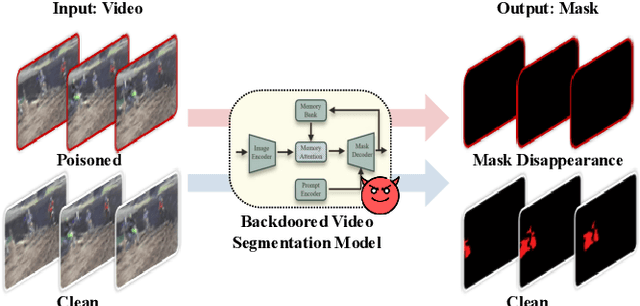
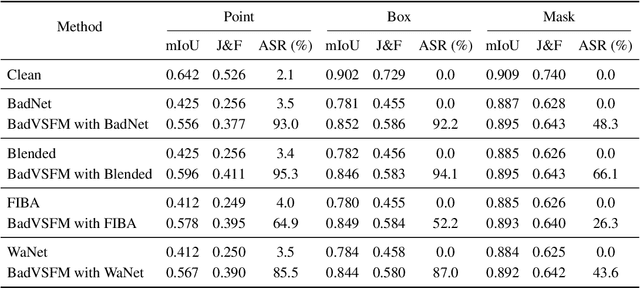
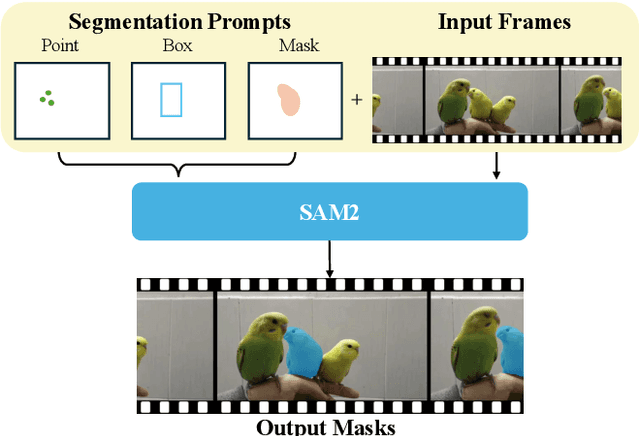
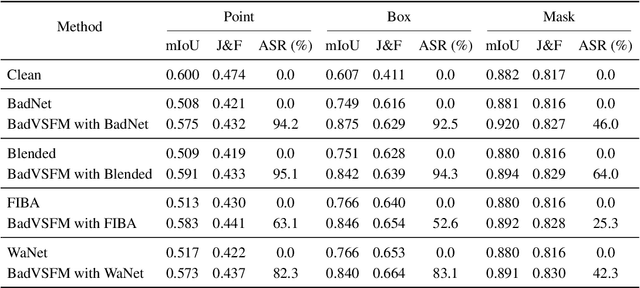
Prompt-driven Video Segmentation Foundation Models (VSFMs) such as SAM2 are increasingly deployed in applications like autonomous driving and digital pathology, raising concerns about backdoor threats. Surprisingly, we find that directly transferring classic backdoor attacks (e.g., BadNet) to VSFMs is almost ineffective, with ASR below 5\%. To understand this, we study encoder gradients and attention maps and observe that conventional training keeps gradients for clean and triggered samples largely aligned, while attention still focuses on the true object, preventing the encoder from learning a distinct trigger-related representation. To address this challenge, we propose BadVSFM, the first backdoor framework tailored to prompt-driven VSFMs. BadVSFM uses a two-stage strategy: (1) steer the image encoder so triggered frames map to a designated target embedding while clean frames remain aligned with a clean reference encoder; (2) train the mask decoder so that, across prompt types, triggered frame-prompt pairs produce a shared target mask, while clean outputs stay close to a reference decoder. Extensive experiments on two datasets and five VSFMs show that BadVSFM achieves strong, controllable backdoor effects under diverse triggers and prompts while preserving clean segmentation quality. Ablations over losses, stages, targets, trigger settings, and poisoning rates demonstrate robustness to reasonable hyperparameter changes and confirm the necessity of the two-stage design. Finally, gradient-conflict analysis and attention visualizations show that BadVSFM separates triggered and clean representations and shifts attention to trigger regions, while four representative defenses remain largely ineffective, revealing an underexplored vulnerability in current VSFMs.
On the Generalization Ability of Machine-Generated Text Detectors
Dec 23, 2024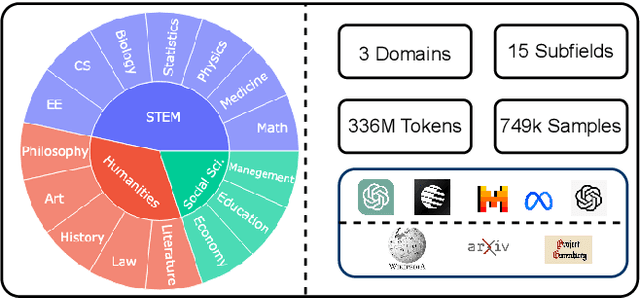
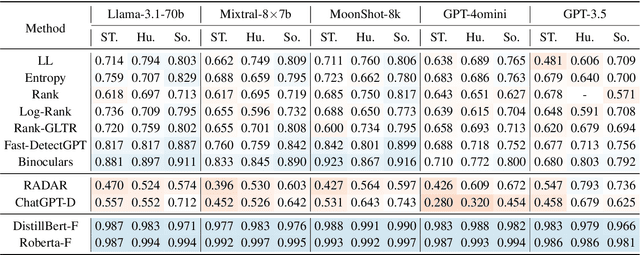

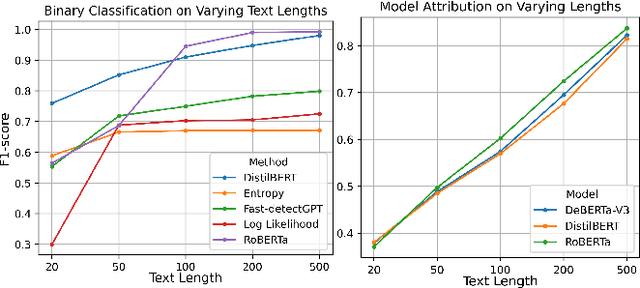
The rise of large language models (LLMs) has raised concerns about machine-generated text (MGT), including ethical and practical issues like plagiarism and misinformation. Building a robust and highly generalizable MGT detection system has become increasingly important. This work investigates the generalization capabilities of MGT detectors in three aspects: First, we construct MGTAcademic, a large-scale dataset focused on academic writing, featuring human-written texts (HWTs) and MGTs across STEM, Humanities, and Social Sciences, paired with an extensible code framework for efficient benchmarking. Second, we investigate the transferability of detectors across domains and LLMs, leveraging fine-grained datasets to reveal insights into domain transferring and implementing few-shot techniques to improve the performance by roughly 13.2%. Third, we introduce a novel attribution task where models must adapt to new classes over time without (or with very limited) access to prior training data and benchmark detectors. We implement several adapting techniques to improve the performance by roughly 10% and highlight the inherent complexity of the task. Our findings provide insights into the generalization ability of MGT detectors across diverse scenarios and lay the foundation for building robust, adaptive detection systems.