 Add to Chrome
 Add to Firefox
 Add to Edge
Fed-GraB: Federated Long-tailed Learning with Self-Adjusting Gradient Balancer
Oct 23, 2023
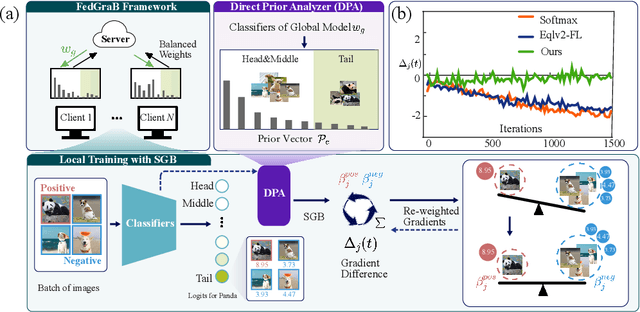
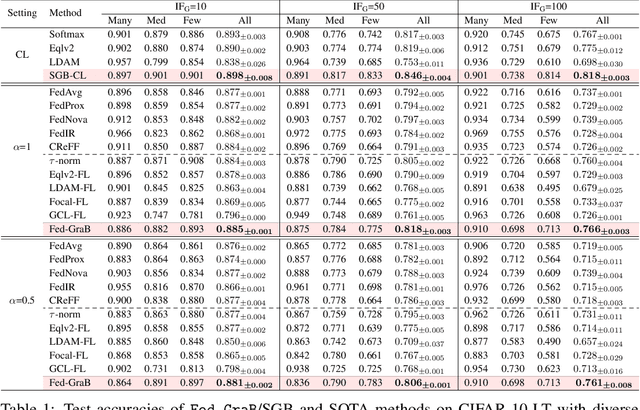
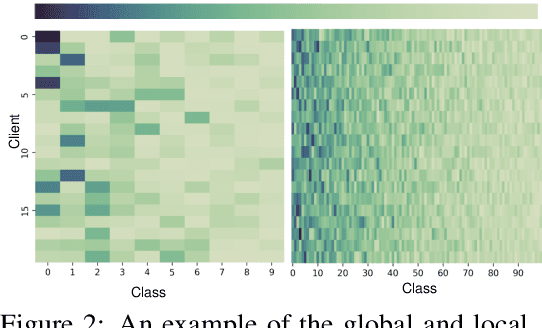
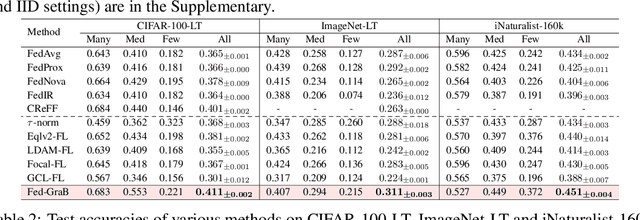
Data privacy and long-tailed distribution are the norms rather than the exception in many real-world tasks. This paper investigates a federated long-tailed learning (Fed-LT) task in which each client holds a locally heterogeneous dataset; if the datasets can be globally aggregated, they jointly exhibit a long-tailed distribution. Under such a setting, existing federated optimization and/or centralized long-tailed learning methods hardly apply due to challenges in (a) characterizing the global long-tailed distribution under privacy constraints and (b) adjusting the local learning strategy to cope with the head-tail imbalance. In response, we propose a method termed $\texttt{Fed-GraB}$, comprised of a Self-adjusting Gradient Balancer (SGB) module that re-weights clients' gradients in a closed-loop manner, based on the feedback of global long-tailed distribution evaluated by a Direct Prior Analyzer (DPA) module. Using $\texttt{Fed-GraB}$, clients can effectively alleviate the distribution drift caused by data heterogeneity during the model training process and obtain a global model with better performance on the minority classes while maintaining the performance of the majority classes. Extensive experiments demonstrate that $\texttt{Fed-GraB}$ achieves state-of-the-art performance on representative datasets such as CIFAR-10-LT, CIFAR-100-LT, ImageNet-LT, and iNaturalist.

Non-autoregressive Streaming Transformer for Simultaneous Translation
Oct 23, 2023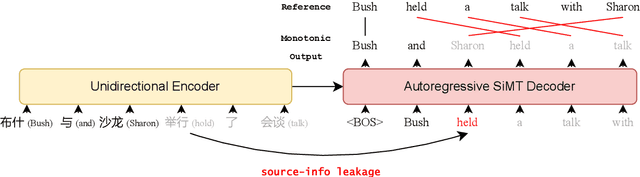

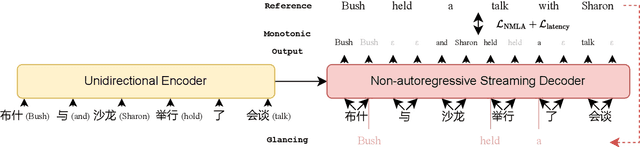
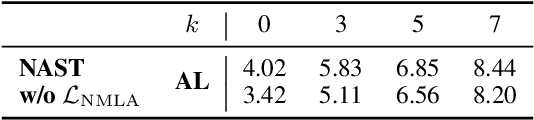
Simultaneous machine translation (SiMT) models are trained to strike a balance between latency and translation quality. However, training these models to achieve high quality while maintaining low latency often leads to a tendency for aggressive anticipation. We argue that such issue stems from the autoregressive architecture upon which most existing SiMT models are built. To address those issues, we propose non-autoregressive streaming Transformer (NAST) which comprises a unidirectional encoder and a non-autoregressive decoder with intra-chunk parallelism. We enable NAST to generate the blank token or repetitive tokens to adjust its READ/WRITE strategy flexibly, and train it to maximize the non-monotonic latent alignment with an alignment-based latency loss. Experiments on various SiMT benchmarks demonstrate that NAST outperforms previous strong autoregressive SiMT baselines.
Unsupervised Federated Learning: A Federated Gradient EM Algorithm for Heterogeneous Mixture Models with Robustness against Adversarial Attacks
Oct 23, 2023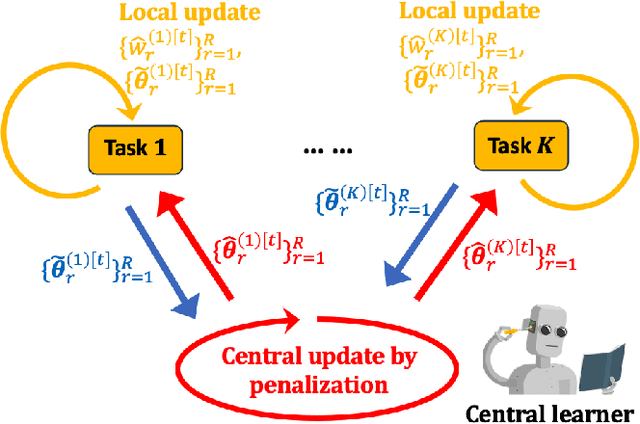
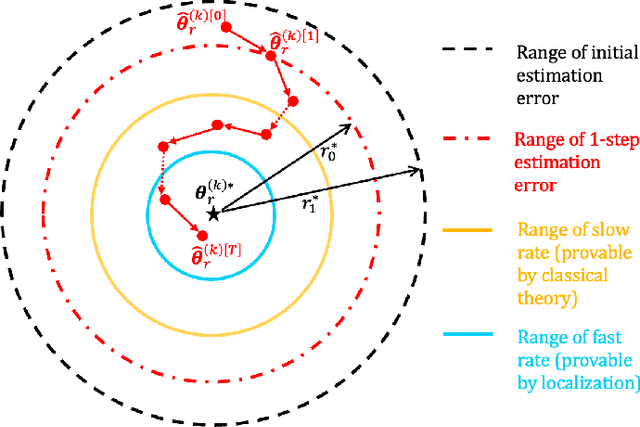
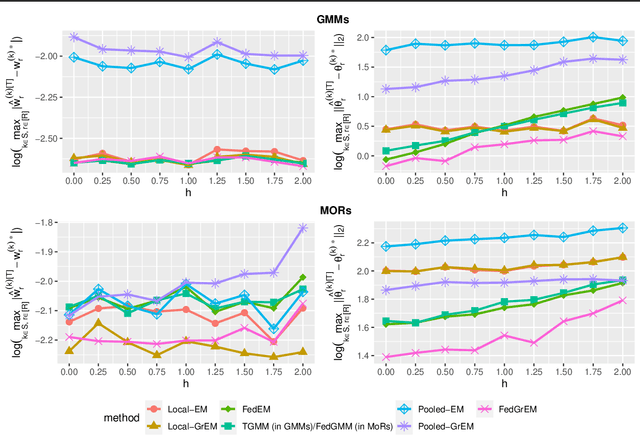
While supervised federated learning approaches have enjoyed significant success, the domain of unsupervised federated learning remains relatively underexplored. In this paper, we introduce a novel federated gradient EM algorithm designed for the unsupervised learning of mixture models with heterogeneous mixture proportions across tasks. We begin with a comprehensive finite-sample theory that holds for general mixture models, then apply this general theory on Gaussian Mixture Models (GMMs) and Mixture of Regressions (MoRs) to characterize the explicit estimation error of model parameters and mixture proportions. Our proposed federated gradient EM algorithm demonstrates several key advantages: adaptability to unknown task similarity, resilience against adversarial attacks on a small fraction of data sources, protection of local data privacy, and computational and communication efficiency.
Bridging the Gap between Synthetic and Authentic Images for Multimodal Machine Translation
Oct 20, 2023
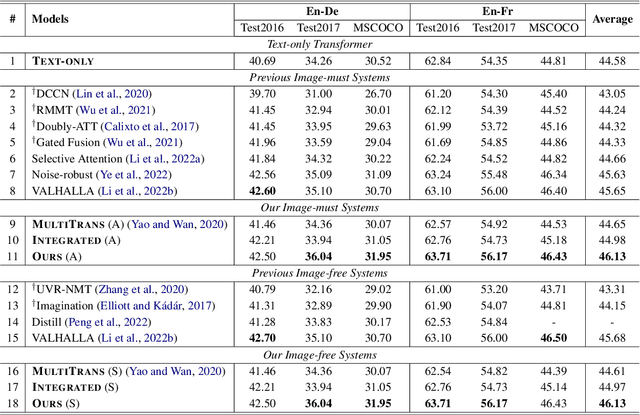
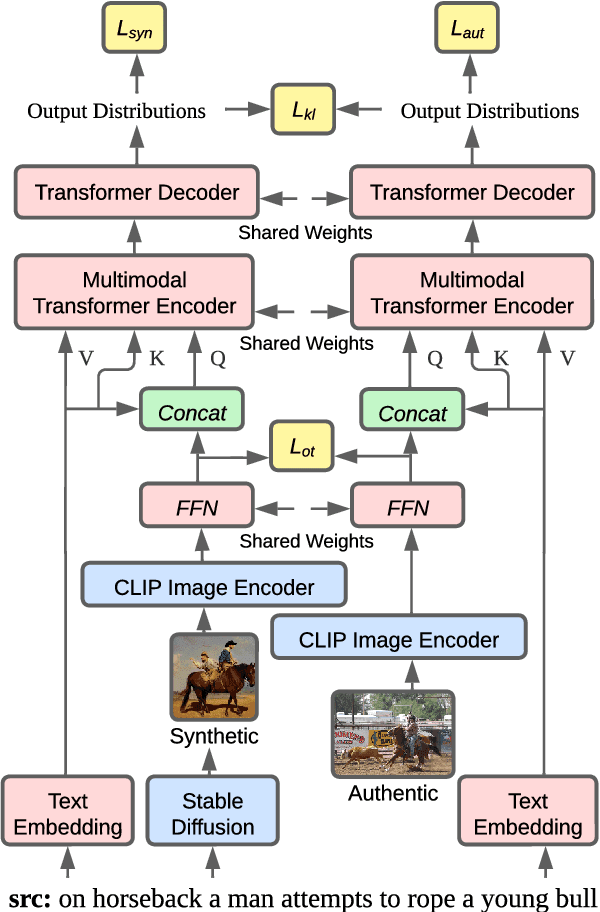
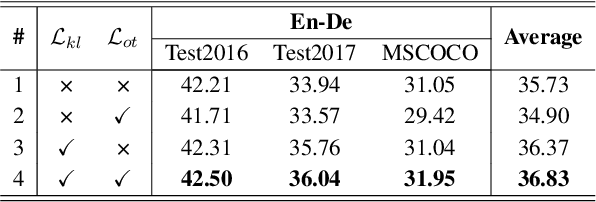
Multimodal machine translation (MMT) simultaneously takes the source sentence and a relevant image as input for translation. Since there is no paired image available for the input sentence in most cases, recent studies suggest utilizing powerful text-to-image generation models to provide image inputs. Nevertheless, synthetic images generated by these models often follow different distributions compared to authentic images. Consequently, using authentic images for training and synthetic images for inference can introduce a distribution shift, resulting in performance degradation during inference. To tackle this challenge, in this paper, we feed synthetic and authentic images to the MMT model, respectively. Then we minimize the gap between the synthetic and authentic images by drawing close the input image representations of the Transformer Encoder and the output distributions of the Transformer Decoder. Therefore, we mitigate the distribution disparity introduced by the synthetic images during inference, thereby freeing the authentic images from the inference process.Experimental results show that our approach achieves state-of-the-art performance on the Multi30K En-De and En-Fr datasets, while remaining independent of authentic images during inference.
Enhancing Neural Machine Translation with Semantic Units
Oct 17, 2023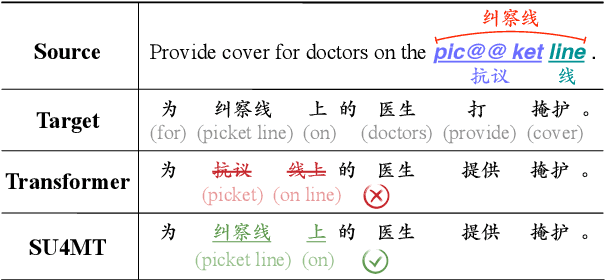
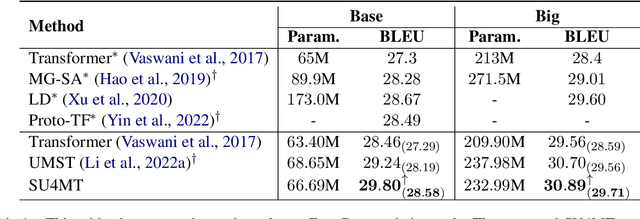
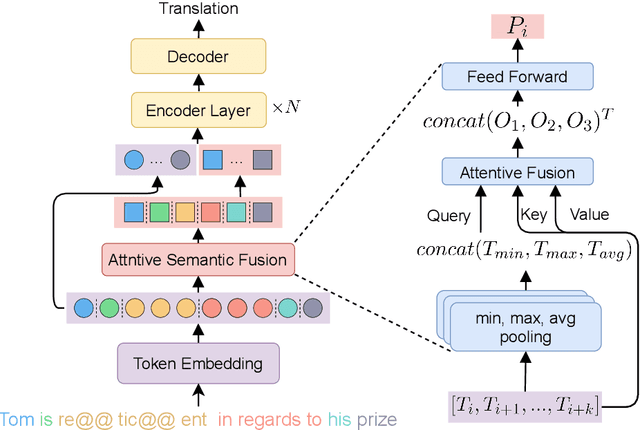
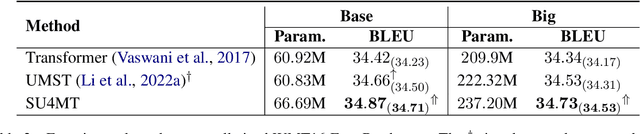
Conventional neural machine translation (NMT) models typically use subwords and words as the basic units for model input and comprehension. However, complete words and phrases composed of several tokens are often the fundamental units for expressing semantics, referred to as semantic units. To address this issue, we propose a method Semantic Units for Machine Translation (SU4MT) which models the integral meanings of semantic units within a sentence, and then leverages them to provide a new perspective for understanding the sentence. Specifically, we first propose Word Pair Encoding (WPE), a phrase extraction method to help identify the boundaries of semantic units. Next, we design an Attentive Semantic Fusion (ASF) layer to integrate the semantics of multiple subwords into a single vector: the semantic unit representation. Lastly, the semantic-unit-level sentence representation is concatenated to the token-level one, and they are combined as the input of encoder. Experimental results demonstrate that our method effectively models and leverages semantic-unit-level information and outperforms the strong baselines. The code is available at https://github.com/ictnlp/SU4MT.
Towards Distribution-Agnostic Generalized Category Discovery
Oct 15, 2023Data imbalance and open-ended distribution are two intrinsic characteristics of the real visual world. Though encouraging progress has been made in tackling each challenge separately, few works dedicated to combining them towards real-world scenarios. While several previous works have focused on classifying close-set samples and detecting open-set samples during testing, it's still essential to be able to classify unknown subjects as human beings. In this paper, we formally define a more realistic task as distribution-agnostic generalized category discovery (DA-GCD): generating fine-grained predictions for both close- and open-set classes in a long-tailed open-world setting. To tackle the challenging problem, we propose a Self-Balanced Co-Advice contrastive framework (BaCon), which consists of a contrastive-learning branch and a pseudo-labeling branch, working collaboratively to provide interactive supervision to resolve the DA-GCD task. In particular, the contrastive-learning branch provides reliable distribution estimation to regularize the predictions of the pseudo-labeling branch, which in turn guides contrastive learning through self-balanced knowledge transfer and a proposed novel contrastive loss. We compare BaCon with state-of-the-art methods from two closely related fields: imbalanced semi-supervised learning and generalized category discovery. The effectiveness of BaCon is demonstrated with superior performance over all baselines and comprehensive analysis across various datasets. Our code is publicly available.
DASpeech: Directed Acyclic Transformer for Fast and High-quality Speech-to-Speech Translation
Oct 11, 2023Direct speech-to-speech translation (S2ST) translates speech from one language into another using a single model. However, due to the presence of linguistic and acoustic diversity, the target speech follows a complex multimodal distribution, posing challenges to achieving both high-quality translations and fast decoding speeds for S2ST models. In this paper, we propose DASpeech, a non-autoregressive direct S2ST model which realizes both fast and high-quality S2ST. To better capture the complex distribution of the target speech, DASpeech adopts the two-pass architecture to decompose the generation process into two steps, where a linguistic decoder first generates the target text, and an acoustic decoder then generates the target speech based on the hidden states of the linguistic decoder. Specifically, we use the decoder of DA-Transformer as the linguistic decoder, and use FastSpeech 2 as the acoustic decoder. DA-Transformer models translations with a directed acyclic graph (DAG). To consider all potential paths in the DAG during training, we calculate the expected hidden states for each target token via dynamic programming, and feed them into the acoustic decoder to predict the target mel-spectrogram. During inference, we select the most probable path and take hidden states on that path as input to the acoustic decoder. Experiments on the CVSS Fr-En benchmark demonstrate that DASpeech can achieve comparable or even better performance than the state-of-the-art S2ST model Translatotron 2, while preserving up to 18.53x speedup compared to the autoregressive baseline. Compared with the previous non-autoregressive S2ST model, DASpeech does not rely on knowledge distillation and iterative decoding, achieving significant improvements in both translation quality and decoding speed. Furthermore, DASpeech shows the ability to preserve the speaker's voice of the source speech during translation.
3D-U-SAM Network For Few-shot Tooth Segmentation in CBCT Images
Sep 20, 2023Accurate representation of tooth position is extremely important in treatment. 3D dental image segmentation is a widely used method, however labelled 3D dental datasets are a scarce resource, leading to the problem of small samples that this task faces in many cases. To this end, we address this problem with a pretrained SAM and propose a novel 3D-U-SAM network for 3D dental image segmentation. Specifically, in order to solve the problem of using 2D pre-trained weights on 3D datasets, we adopted a convolution approximation method; in order to retain more details, we designed skip connections to fuse features at all levels with reference to U-Net. The effectiveness of the proposed method is demonstrated in ablation experiments, comparison experiments, and sample size experiments.
Glancing Future for Simultaneous Machine Translation
Sep 12, 2023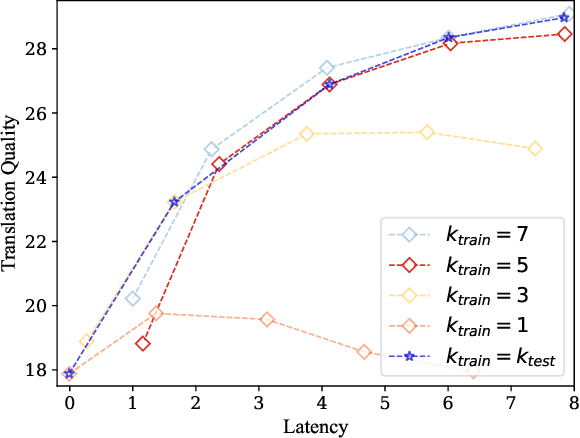
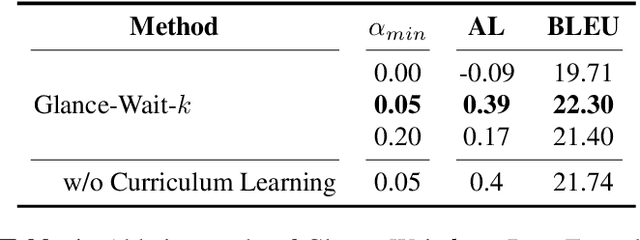
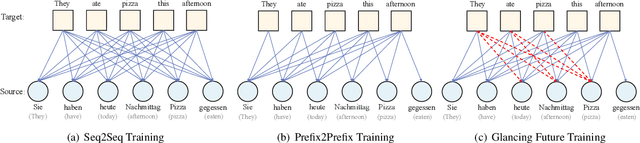
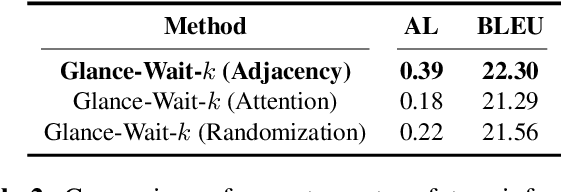
Simultaneous machine translation (SiMT) outputs translation while reading the source sentence. Unlike conventional sequence-to-sequence (seq2seq) training, existing SiMT methods adopt the prefix-to-prefix (prefix2prefix) training, where the model predicts target tokens based on partial source tokens. However, the prefix2prefix training diminishes the ability of the model to capture global information and introduces forced predictions due to the absence of essential source information. Consequently, it is crucial to bridge the gap between the prefix2prefix training and seq2seq training to enhance the translation capability of the SiMT model. In this paper, we propose a novel method that glances future in curriculum learning to achieve the transition from the seq2seq training to prefix2prefix training. Specifically, we gradually reduce the available source information from the whole sentence to the prefix corresponding to that latency. Our method is applicable to a wide range of SiMT methods and experiments demonstrate that our method outperforms strong baselines.
ToothSegNet: Image Degradation meets Tooth Segmentation in CBCT Images
Jul 05, 2023In computer-assisted orthodontics, three-dimensional tooth models are required for many medical treatments. Tooth segmentation from cone-beam computed tomography (CBCT) images is a crucial step in constructing the models. However, CBCT image quality problems such as metal artifacts and blurring caused by shooting equipment and patients' dental conditions make the segmentation difficult. In this paper, we propose ToothSegNet, a new framework which acquaints the segmentation model with generated degraded images during training. ToothSegNet merges the information of high and low quality images from the designed degradation simulation module using channel-wise cross fusion to reduce the semantic gap between encoder and decoder, and also refines the shape of tooth prediction through a structural constraint loss. Experimental results suggest that ToothSegNet produces more precise segmentation and outperforms the state-of-the-art medical image segmentation methods.