 Add to Chrome
 Add to Firefox
 Add to Edge
Agentic Hybrid RAG for Evidence-Grounded Muon Collider Analysis
Jun 09, 2026
Muon collider research spans accelerator physics, detector instrumentation, and high-energy phenomenology, with relevant evidence scattered across a rapidly expanding and heterogeneous body of scientific literature. As high-energy physics (HEP) increasingly explores agent-assisted analysis workflows, efficiently locating, integrating, and verifying scientific evidence becomes an essential capability. While retrieval-augmented generation (RAG) offers a promising framework for scientific question answering, integrating agentic reasoning without compromising retrieval precision remains a key challenge. In this work, we present agentic hybrid RAG, an evidence-grounded RAG framework for muon collider research. The framework combines a hybrid retriever, integrating sparse lexical and dense semantic retrieval, with an agentic reasoning module for query decomposition, evidence expansion, and grounded answer generation. To enable systematic evaluation, we construct the first benchmark for retrieval-augmented scientific question answering in the muon collider domain, comprising a curated literature corpus together with dedicated retrieval and answer-generation benchmarks covering major detector and physics research topics. Extensive evaluation shows that hybrid retrieval provides the strongest retrieval backbone, while agentic reasoning is most effective for controlled evidence expansion and answer synthesis. Built on this principle, agentic hybrid RAG consistently outperforms representative retrieval and RAG baselines in retrieval effectiveness, answer quality, evidence coverage, and factual grounding. Together, the benchmark and framework provide a foundation for evidence-grounded scientific question answering and future HEP analysis agents operating over large-scale scientific literature.

Vision Calorimeter for Anti-neutron Reconstruction: A Baseline
Aug 20, 2024
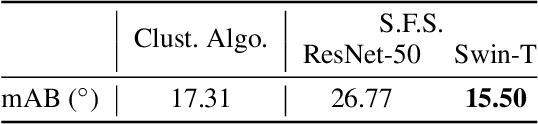
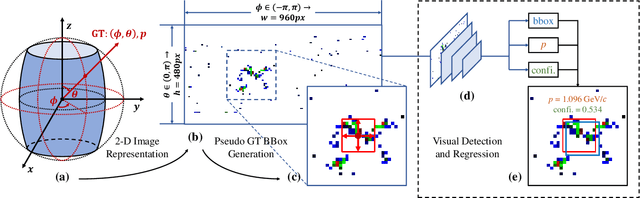
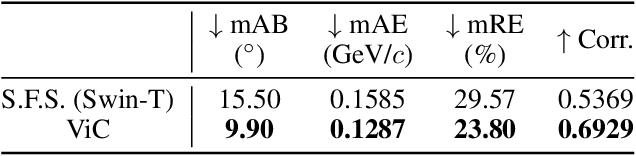
In high-energy physics, anti-neutrons ($\bar{n}$) are fundamental particles that frequently appear as final-state particles, and the reconstruction of their kinematic properties provides an important probe for understanding the governing principles. However, this confronts significant challenges instrumentally with the electromagnetic calorimeter (EMC), a typical experimental sensor but recovering the information of incident $\bar{n}$ insufficiently. In this study, we introduce Vision Calorimeter (ViC), a baseline method for anti-neutron reconstruction that leverages deep learning detectors to analyze the implicit relationships between EMC responses and incident $\bar{n}$ characteristics. Our motivation lies in that energy distributions of $\bar{n}$ samples deposited in the EMC cell arrays embody rich contextual information. Converted to 2-D images, such contextual energy distributions can be used to predict the status of $\bar{n}$ ($i.e.$, incident position and momentum) through a deep learning detector along with pseudo bounding boxes and a specified training objective. Experimental results demonstrate that ViC substantially outperforms the conventional reconstruction approach, reducing the prediction error of incident position by 42.81% (from 17.31$^{\circ}$ to 9.90$^{\circ}$). More importantly, this study for the first time realizes the measurement of incident $\bar{n}$ momentum, underscoring the potential of deep learning detectors for particle reconstruction. Code is available at https://github.com/yuhongtian17/ViC.