 Add to Chrome
 Add to Firefox
 Add to Edge
You Only Pass Once: Answering and Abstaining Together in a Single Forward Pass of a Frozen Language Model
Aug 14, 2026
A frozen language model on reasoning tasks has two coupled weaknesses: it under-uses evidence its own residual stream already encodes, and it fails to detect when the input is insufficient to answer, so it confabulates. This paper consolidates two research lines that address these on the same residual stream: a conditional steering probe writes the stream at mid-stack layers and recovers reasoning accuracy from a frozen backbone, and a zero-shot sufficiency direction reads the stream and abstains when information is insufficient. Deployed in one forward pass they interfere: the steering write shifts the state the direction reads, costing up to 8 AUROC points of cross-domain transfer on small models; a separate clean pass doubles inference cost. We keep the direction fixed and train a small network to reconstruct the pre-steering residual from the steered one -- mean-squared error on (steered, clean) pairs, no sufficiency labels -- and read the direction on the reconstruction. The resulting system, YOPO (You Only Pass Once), answers, steers, and abstains in one forward pass of a frozen Qwen2.5 backbone (1.5B/3B/7B). End to end, three-way accuracy more than doubles the frozen baseline (0.375->0.798 on 1.5B alphaNLI) and one pass beats the two-pass reference at every scale (0.798/0.830/0.893 vs 0.753/0.790/0.863) and on ten backbones across six model families. We chart the capacity-transfer frontier quantifying the principle that abstention should not be trained in; a source-side audit catches our own alphaNLI construction leaking a surface artifact, so architectural claims are anchored on native-label replications (SQuAD2, RepLiQA, MuSiQue); and on the standard four-domain suite we contribute, to our knowledge, the first answer-or-abstain benchmark, where our gate tops every in-domain dataset and the label-free direction is the only gate family to survive domain transfer.

SETransformer: A Hybrid Attention-Based Architecture for Robust Human Activity Recognition
May 25, 2025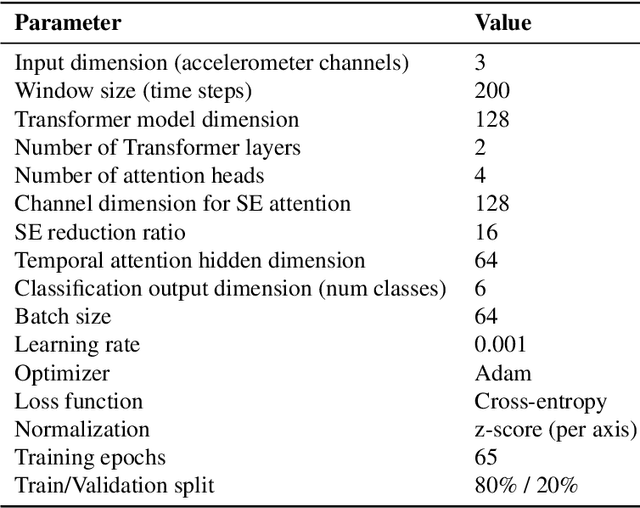
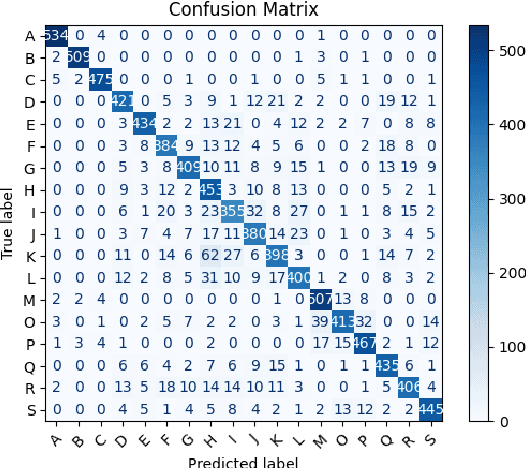

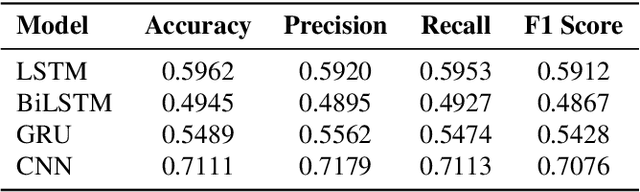
Human Activity Recognition (HAR) using wearable sensor data has become a central task in mobile computing, healthcare, and human-computer interaction. Despite the success of traditional deep learning models such as CNNs and RNNs, they often struggle to capture long-range temporal dependencies and contextual relevance across multiple sensor channels. To address these limitations, we propose SETransformer, a hybrid deep neural architecture that combines Transformer-based temporal modeling with channel-wise squeeze-and-excitation (SE) attention and a learnable temporal attention pooling mechanism. The model takes raw triaxial accelerometer data as input and leverages global self-attention to capture activity-specific motion dynamics over extended time windows, while adaptively emphasizing informative sensor channels and critical time steps. We evaluate SETransformer on the WISDM dataset and demonstrate that it significantly outperforms conventional models including LSTM, GRU, BiLSTM, and CNN baselines. The proposed model achieves a validation accuracy of 84.68\% and a macro F1-score of 84.64\%, surpassing all baseline architectures by a notable margin. Our results show that SETransformer is a competitive and interpretable solution for real-world HAR tasks, with strong potential for deployment in mobile and ubiquitous sensing applications.