 Add to Chrome
 Add to Firefox
 Add to Edge
Enhancing Pretrained Model-based Continual Representation Learning via Guided Random Projection
Mar 19, 2026
Recent paradigms in Random Projection Layer (RPL)-based continual representation learning have demonstrated superior performance when building upon a pre-trained model (PTM). These methods insert a randomly initialized RPL after a PTM to enhance feature representation in the initial stage. Subsequently, a linear classification head is used for analytic updates in the continual learning stage. However, under severe domain gaps between pre-trained representations and target domains, a randomly initialized RPL exhibits limited expressivity under large domain shifts. While largely scaling up the RPL dimension can improve expressivity, it also induces an ill-conditioned feature matrix, thereby destabilizing the recursive analytic updates of the linear head. To this end, we propose the Stochastic Continual Learner with MemoryGuard Supervisory Mechanism (SCL-MGSM). Unlike random initialization, MGSM constructs the projection layer via a principled, data-guided mechanism that progressively selects target-aligned random bases to adapt the PTM representation to downstream tasks. This facilitates the construction of a compact yet expressive RPL while improving the numerical stability of analytic updates. Extensive experiments on multiple exemplar-free Class Incremental Learning (CIL) benchmarks demonstrate that SCL-MGSM achieves superior performance compared to state-of-the-art methods.

Deeper Insights into Learning Performance of Stochastic Configuration Networks
Nov 13, 2024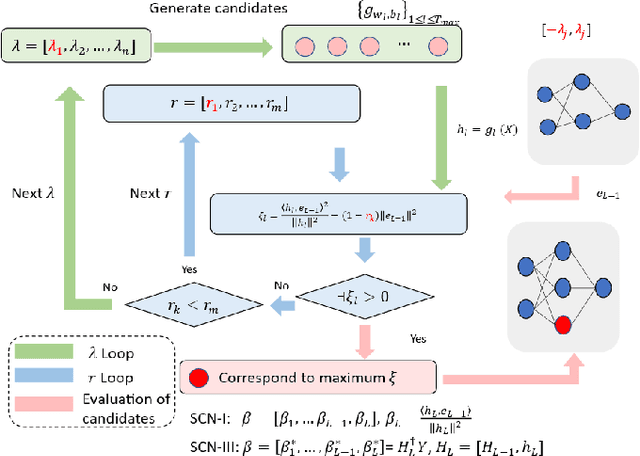
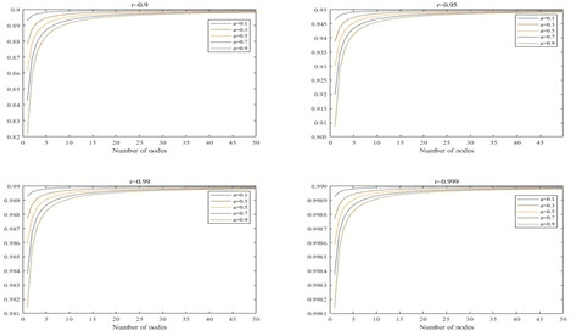
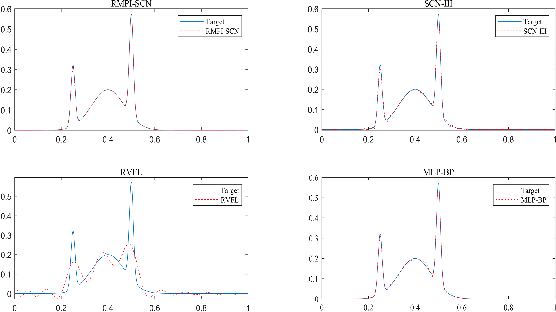
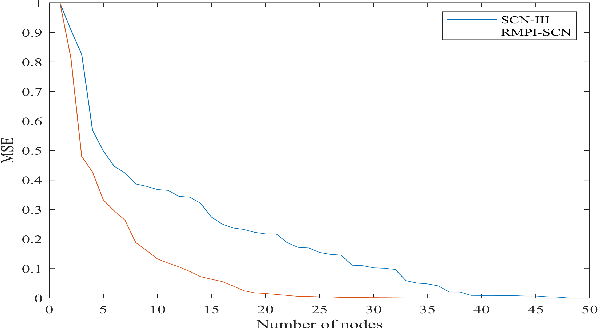
Stochastic Configuration Networks (SCNs) are a class of randomized neural networks that integrate randomized algorithms within an incremental learning framework. A defining feature of SCNs is the supervisory mechanism, which adaptively adjusts the distribution to generate effective random basis functions, thereby enabling error-free learning. In this paper, we present a comprehensive analysis of the impact of the supervisory mechanism on the learning performance of SCNs. Our findings reveal that the current SCN framework evaluates the effectiveness of each random basis function in reducing residual errors using a lower bound on its error reduction potential, which constrains SCNs' overall learning efficiency. Specifically, SCNs may fail to consistently select the most effective random candidate as the new basis function during each training iteration. To overcome this problem, we propose a novel method for evaluating the hidden layer's output matrix, supported by a new supervisory mechanism that accurately assesses the error reduction potential of random basis functions without requiring the computation of the Moore-Penrose inverse of the output matrix. This approach enhances the selection of basis functions, reducing computational complexity and improving the overall scalability and learning capabilities of SCNs. We introduce a Recursive Moore-Penrose Inverse-SCN (RMPI-SCN) training scheme based on the new supervisory mechanism and demonstrate its effectiveness through simulations over some benchmark datasets. Experiments show that RMPI-SCN outperforms the conventional SCN in terms of learning capability, underscoring its potential to advance the SCN framework for large-scale data modeling applications.