 Add to Chrome
 Add to Firefox
 Add to Edge
SCOPE: Subspace Clustering with Online Per-Head Top-K Estimation for Sparse Video Attention
Aug 13, 2026
Diffusion Transformers (DiTs) incur quadratic self-attention cost over spatiotemporal tokens. Existing training-free sparse attention methods often construct sparse masks from block-level or cluster-level proxy scores, which can obscure fine-grained differences among keys and miss high contribution keys under aggressive sparsity. Moreover, such proxy scores may yield overly concentrated softmax distributions, causing Top-$p$ to retain too few keys for some query clusters. Although a fixed Top-$k$ minimum alleviates this failure mode, a shared value cannot adapt to variations across heads and inputs. To address both limitations, we propose SCOPE, a training-free sparse attention framework that combines 3D-RoPE-aligned key subspace clustering with online per-head Top-$k$ estimation for efficient video-DiT inference. SCOPE partitions post-RoPE keys into temporal, height, and width subspaces, clusters them independently, and aggregates the corresponding centroid scores through lookup tables to obtain per key proxy scores for each query cluster. Building on existing hybrid Top-$p$/fixed Top-$k$ selection, SCOPE derives a head-specific Top-$k$ value online by averaging the initial retained key counts within each head, weighted by query cluster size, and selects additional keys only for query clusters whose initial retained key counts fall below this value. Sparse attention is then computed over the selected original keys and values. Across six model--task configurations, SCOPE consistently outperforms existing training-free baselines in both fidelity and latency, achieving up to a $1.99\times$ end-to-end speedup on 720p HunyuanVideo with $28.46$ dB PSNR relative to dense attention.

SDS-Net: Shallow-Deep Synergism-detection Network for infrared small target detection
Jun 06, 2025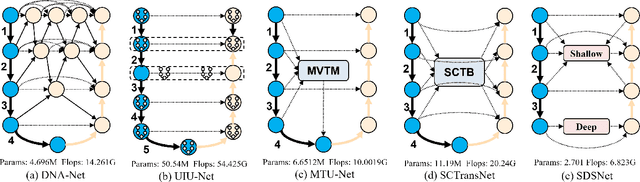
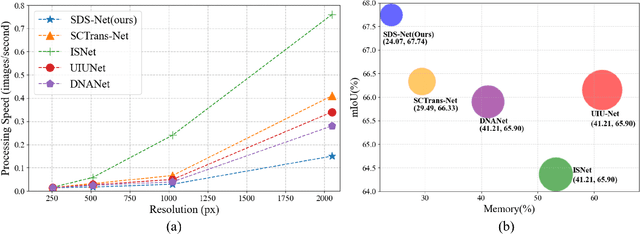
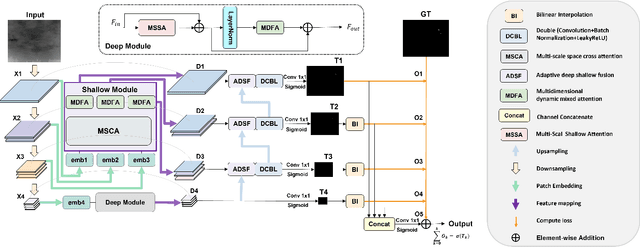
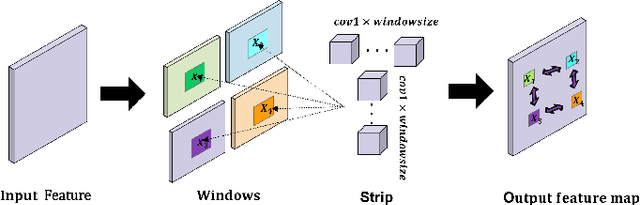
Current CNN-based infrared small target detection(IRSTD) methods generally overlook the heterogeneity between shallow and deep features, leading to inefficient collaboration between shallow fine grained structural information and deep high-level semantic representations. Additionally, the dependency relationships and fusion mechanisms across different feature hierarchies lack systematic modeling, which fails to fully exploit the complementarity of multilevel features. These limitations hinder IRSTD performance while incurring substantial computational costs. To address these challenges, this paper proposes a shallow-deep synergistic detection network (SDS-Net) that efficiently models multilevel feature representations to increase both the detection accuracy and computational efficiency in IRSTD tasks. SDS-Net introduces a dual-branch architecture that separately models the structural characteristics and semantic properties of features, effectively preserving shallow spatial details while capturing deep semantic representations, thereby achieving high-precision detection with significantly improved inference speed. Furthermore, the network incorporates an adaptive feature fusion module to dynamically model cross-layer feature correlations, enhancing overall feature collaboration and representation capability. Comprehensive experiments on three public datasets (NUAA-SIRST, NUDT-SIRST, and IRSTD-1K) demonstrate that SDS-Net outperforms state-of-the-art IRSTD methods while maintaining low computational complexity and high inference efficiency, showing superior detection performance and broad application prospects. Our code will be made public at https://github.com/PhysiLearn/SDS-Net.
MSCA-Net:Multi-Scale Context Aggregation Network for Infrared Small Target Detection
Mar 21, 2025Detecting infrared small targets in complex backgrounds remains a challenging task because of the low contrast and high noise levels inherent in infrared images. These factors often lead to the loss of crucial details during feature extraction. Moreover, existing detection methods have limitations in adequately integrating global and local information, which constrains the efficiency and accuracy of infrared small target detection. To address these challenges, this paper proposes a novel network architecture named MSCA-Net, which integrates three key components: Multi-Scale Enhanced Detection Attention mechanism(MSEDA), Positional Convolutional Block Attention Module (PCBAM), and Channel Aggregation Block (CAB). Specifically, MSEDA employs a multi-scale feature fusion attention mechanism to adaptively aggregate information across different scales, enriching feature representation. PCBAM captures the correlation between global and local features through a correlation matrix-based strategy, enabling deep feature interaction. Moreover, CAB redistributes input feature channels, facilitating the efficient transmission of beneficial features and further enhancing the model detection capability in complex backgrounds. The experimental results demonstrate that MSCA-Net achieves outstanding small target detection performance in complex backgrounds. Specifically, it attains mIoU scores of 78.43\%, 94.56\%, and 67.08\% on the NUAA-SIRST, NUDT-SIRST, and IRTSD-1K datasets, respectively, underscoring its effectiveness and strong potential for real-world applications.
YOLO-MST: Multiscale deep learning method for infrared small target detection based on super-resolution and YOLO
Dec 27, 2024
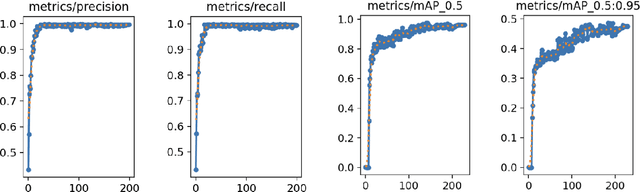
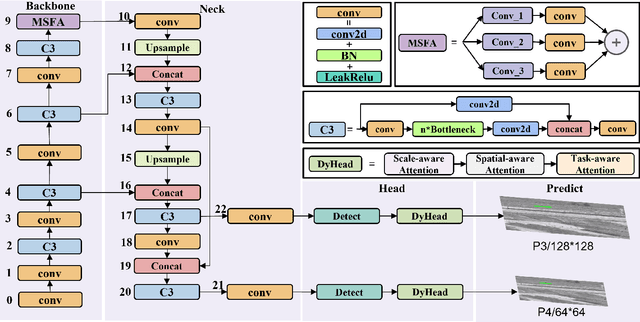
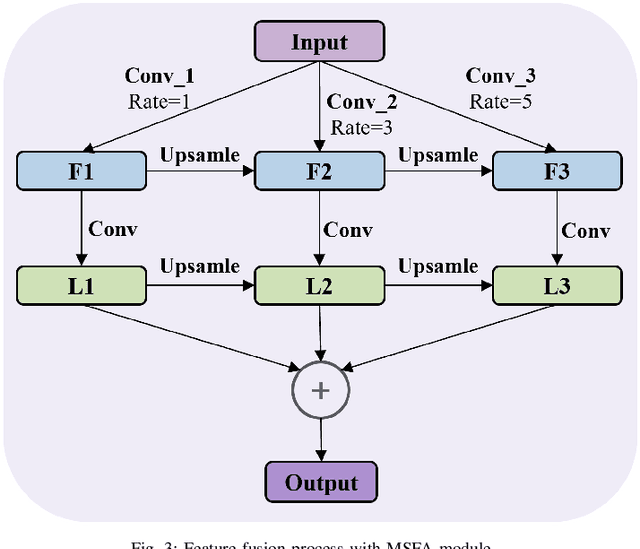
With the advancement of aerospace technology and the increasing demands of military applications, the development of low false-alarm and high-precision infrared small target detection algorithms has emerged as a key focus of research globally. However, the traditional model-driven method is not robust enough when dealing with features such as noise, target size, and contrast. The existing deep-learning methods have limited ability to extract and fuse key features, and it is difficult to achieve high-precision detection in complex backgrounds and when target features are not obvious. To solve these problems, this paper proposes a deep-learning infrared small target detection method that combines image super-resolution technology with multi-scale observation. First, the input infrared images are preprocessed with super-resolution and multiple data enhancements are performed. Secondly, based on the YOLOv5 model, we proposed a new deep-learning network named YOLO-MST. This network includes replacing the SPPF module with the self-designed MSFA module in the backbone, optimizing the neck, and finally adding a multi-scale dynamic detection head to the prediction head. By dynamically fusing features from different scales, the detection head can better adapt to complex scenes. The mAP@0.5 detection rates of this method on two public datasets, SIRST and IRIS, reached 96.4% and 99.5% respectively, more effectively solving the problems of missed detection, false alarms, and low precision.