 Add to Chrome
 Add to Firefox
 Add to Edge
Generative Optimization for Incentivized Advertising with Global Level Constraints
Aug 05, 2026
Incentivized advertising allocates monetary or virtual rewards to drive user engagement, where a key challenge is optimizing continuous incentive magnitudes under strict global constraints. This problem is complicated by high-frequency interactions, delayed feedback, and non-Markovian user dynamics such as fatigue, which limit the effectiveness of existing uplift modeling and constrained reinforcement learning approaches. To address these challenges, we propose GOAL, a constraint-aware generative framework that formulates incentive allocation as a conditional sequence generation problem. GOAL directly generates incentive magnitudes conditioned on user histories and system-level global pressure, and integrates a hierarchical causal state encoder to capture both local behavioral dynamics and long-range dependencies. To enable flexible constraint control, we introduce \textbf{S}afe \textbf{C}onstrained \textbf{P}olicy \textbf{O}ptimization (SCPO), which learns a single generative policy that generalizes across a spectrum of ROI constraints without retraining. Experiments on large-scale real-world data and a synthetic fatigue-aware environment show that GOAL improves long-term revenue and user retention while substantially reducing ROI violation rates compared to strong baselines.

Shedding the Facades, Connecting the Domains: Detecting Shifting Multimodal Hate Video with Test-Time Adaptation
Jan 28, 2026Hate Video Detection (HVD) is crucial for online ecosystems. Existing methods assume identical distributions between training (source) and inference (target) data. However, hateful content often evolves into irregular and ambiguous forms to evade censorship, resulting in substantial semantic drift and rendering previously trained models ineffective. Test-Time Adaptation (TTA) offers a solution by adapting models during inference to narrow the cross-domain gap, while conventional TTA methods target mild distribution shifts and struggle with the severe semantic drift in HVD. To tackle these challenges, we propose SCANNER, the first TTA framework tailored for HVD. Motivated by the insight that, despite the evolving nature of hateful manifestations, their underlying cores remain largely invariant (i.e., targeting is still based on characteristics like gender, race, etc), we leverage these stable cores as a bridge to connect the source and target domains. Specifically, SCANNER initially reveals the stable cores from the ambiguous layout in evolving hateful content via a principled centroid-guided alignment mechanism. To alleviate the impact of outlier-like samples that are weakly correlated with centroids during the alignment process, SCANNER enhances the prior by incorporating a sample-level adaptive centroid alignment strategy, promoting more stable adaptation. Furthermore, to mitigate semantic collapse from overly uniform outputs within clusters, SCANNER introduces an intra-cluster diversity regularization that encourages the cluster-wise semantic richness. Experiments show that SCANNER outperforms all baselines, with an average gain of 4.69% in Macro-F1 over the best.
Expert-Guided Diffusion Planner for Auto-bidding
Aug 12, 2025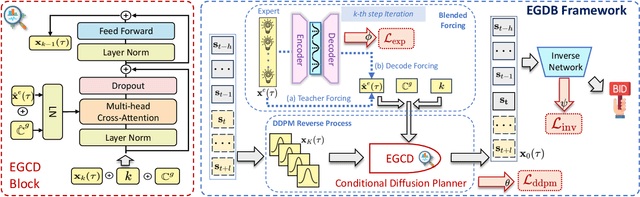
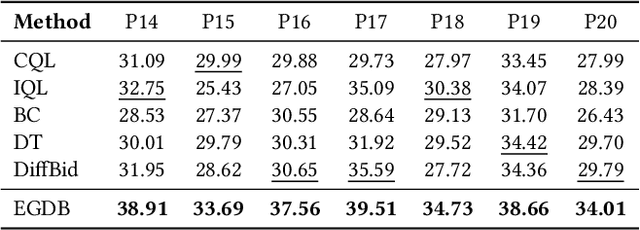
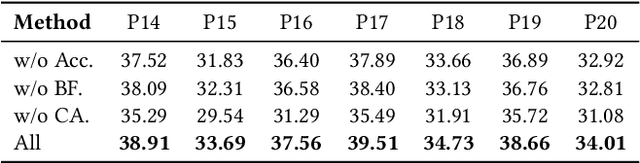
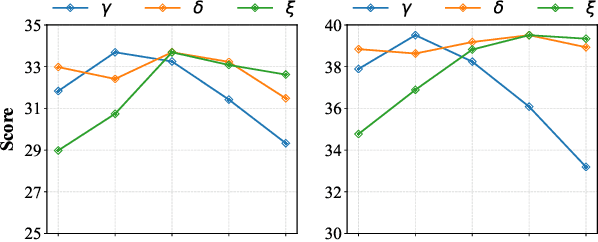
Auto-bidding is extensively applied in advertising systems, serving a multitude of advertisers. Generative bidding is gradually gaining traction due to its robust planning capabilities and generalizability. In contrast to traditional reinforcement learning-based bidding, generative bidding does not rely on the Markov Decision Process (MDP) exhibiting superior planning capabilities in long-horizon scenarios. Conditional diffusion modeling approaches have demonstrated significant potential in the realm of auto-bidding. However, relying solely on return as the optimality condition is weak to guarantee the generation of genuinely optimal decision sequences, lacking personalized structural information. Moreover, diffusion models' t-step autoregressive generation mechanism inherently carries timeliness risks. To address these issues, we propose a novel conditional diffusion modeling method based on expert trajectory guidance combined with a skip-step sampling strategy to enhance generation efficiency. We have validated the effectiveness of this approach through extensive offline experiments and achieved statistically significant results in online A/B testing, achieving an increase of 11.29% in conversion and a 12.35% in revenue compared with the baseline.