 Add to Chrome
 Add to Firefox
 Add to Edge
Are Reasoning Vision-Language Models Robust to Semantic Visual Distractions?
Jun 08, 2026
Reasoning Vision-Language Models (VLMs) achieve strong performance on complex multimodal tasks, but reliable real-world application requires handling visual inputs that are messier than clean, curated benchmarks. Existing works mainly evaluate such reliability of VLMs through input corruptions, such as noise, blur and weather effects, which make visual evidence harder to perceive. This leaves a critical reliability failure mode underexplored: a model may perceive the evidence correctly, yet reason from plausible but irrelevant and distracting evidence and propagate this mistake to its final answer. To address this gap, we introduce \textbf{Distract-Bench}, a benchmark for evaluating VLM robustness to \textbf{semantic visual distractions}, defined as meaningful but task-irrelevant visual cues added to inputs while preserving the ground-truth answer. We comprehensively evaluate eight leading open-source and two closed-source VLMs across conventional vision corruptions and Distract-Bench. Our results show that Distract-Bench exposes a robustness failure distinct from vision corruptions: reasoning VLMs largely track their non-reasoning base models under perceptual degradation, but show consistently lower robustness to semantic distractions. Further analysis shows that these distractions often enter the reasoning process of VLMs, are treated as evidence, and lead to incorrect answers. Together, these findings reframe robustness evaluation for reasoning VLMs, shifting the focus from degraded perception to distractions for reliable real-world visual reasoning. Our data and code are available at https://github.com/Yizheng-Sun/Distract-Bench.

Establishing Stochastic Object Models from Noisy Data via Ambient Measurement-Integrated Diffusion
Dec 16, 2025Task-based measures of image quality (IQ) are critical for evaluating medical imaging systems, which must account for randomness including anatomical variability. Stochastic object models (SOMs) provide a statistical description of such variability, but conventional mathematical SOMs fail to capture realistic anatomy, while data-driven approaches typically require clean data rarely available in clinical tasks. To address this challenge, we propose AMID, an unsupervised Ambient Measurement-Integrated Diffusion with noise decoupling, which establishes clean SOMs directly from noisy measurements. AMID introduces a measurement-integrated strategy aligning measurement noise with the diffusion trajectory, and explicitly models coupling between measurement and diffusion noise across steps, an ambient loss is thus designed base on it to learn clean SOMs. Experiments on real CT and mammography datasets show that AMID outperforms existing methods in generation fidelity and yields more reliable task-based IQ evaluation, demonstrating its potential for unsupervised medical imaging analysis.
IRS-assisted Multi-cell Multi-band Systems: Practical Reflection Model and Joint Beamforming Design
Apr 13, 2022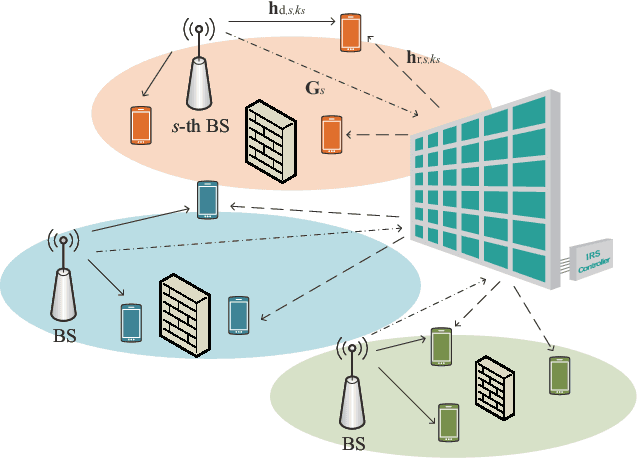
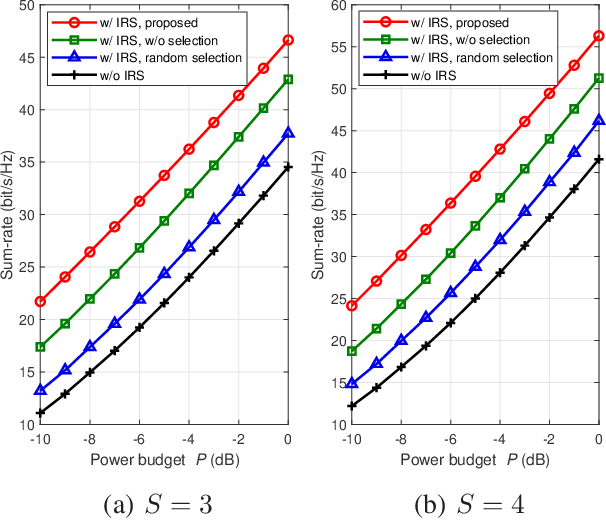
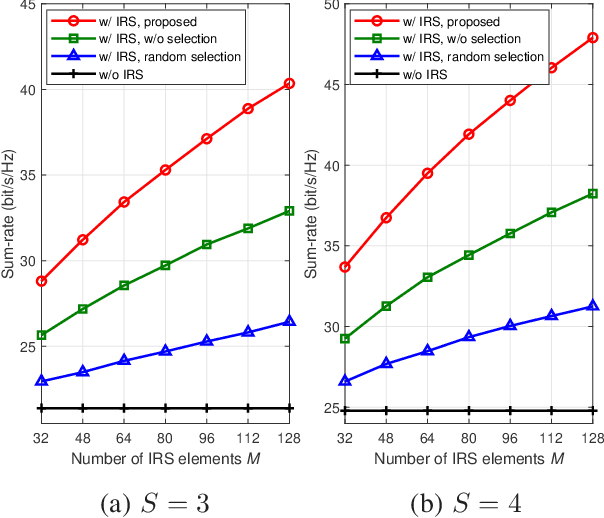
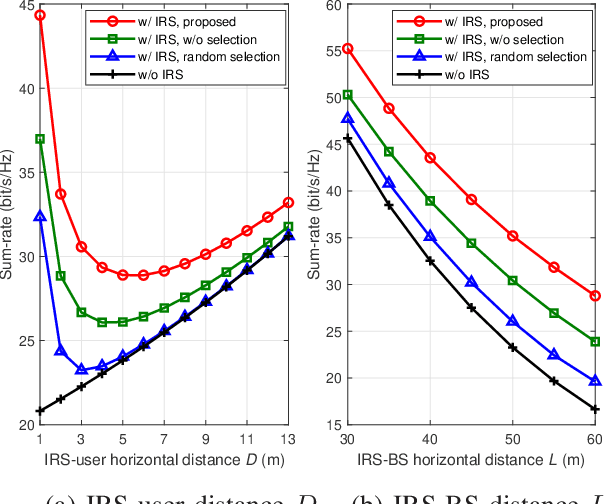
Intelligent reflecting surface (IRS) has been regarded as a promising and revolutionary technology for future wireless communication systems owing to its capability of tailoring signal propagation environment in an energy/spectrum/hardware-efficient manner. However, most existing studies on IRS optimizations are based on a simple and ideal reflection model that is impractical in hardware implementation, which thus leads to severe performance loss in realistic wideband/multi-band systems. To deal with this problem, in this paper we first propose a more practical and more tractable IRS reflection model that describes the difference of reflection responses for signals at different frequencies. Then, we investigate the joint transmit beamforming and IRS reflection beamforming design for an IRS-assisted multi-cell multi-band system. Both power minimization and sum-rate maximization problems are solved by exploiting popular second-order cone programming (SOCP), Riemannian manifold, minimization-majorization (MM), weighted minimum mean square error (WMMSE), and block coordinate descent (BCD) methods. Simulation results illustrate the significant performance improvement of our proposed joint transmit beamforming and reflection design algorithms based on the practical reflection model in terms of power saving and rate enhancement.
Intelligent reflecting surface assisted multi-cell multi-band wireless networks
Jan 05, 2021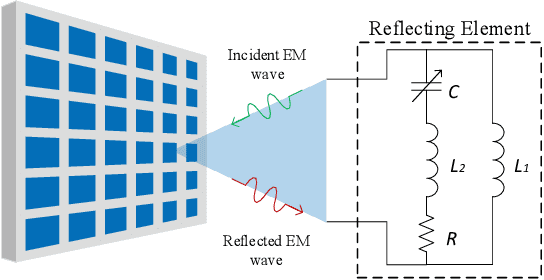
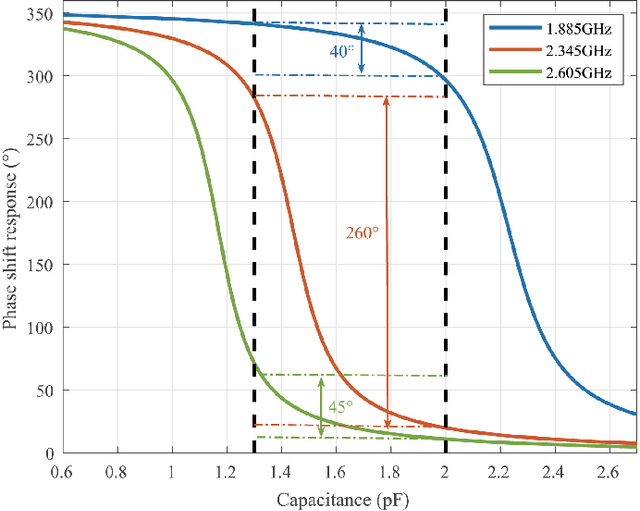
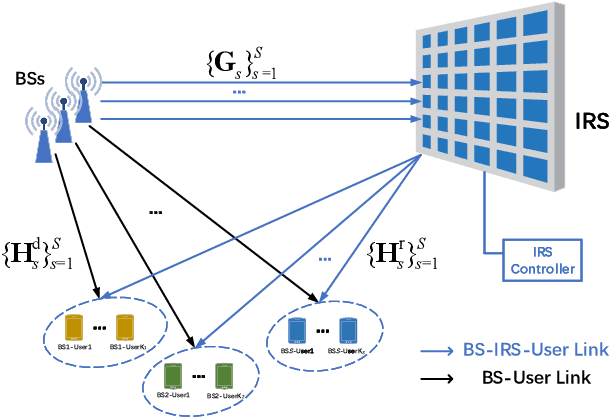
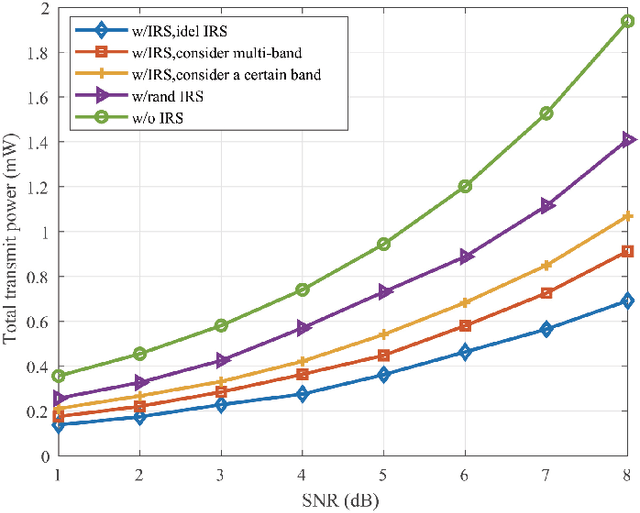
Intelligent reflecting surface (IRS) is deemed as a promising and revolutionizing technology for future wireless communication systems owing to its capability to intelligently change the propagation environment and introduce a new dimension into wireless communication optimization. Most existing studies on IRS are based on an ideal reflection model. However, it is difficult to implement an IRS which can simultaneously realize any adjustable phase shift for the signals with different frequencies. Therefore, the practical phase shift model, which can describe the difference of IRS phase shift responses for the signals with different frequencies, should be utilized in the IRS optimization for wideband and multi-band systems. In this paper, we consider an IRS-assisted multi-cell multi-band system, in which different base stations (BSs) operate at different frequency bands. We aim to jointly design the transmit beamforming of BSs and the reflection beamforming of the IRS to minimize the total transmit power subject to signal to interference-plus-noise ratio (SINR) constraints of individual user and the practical IRS reflection model. With the aid of the practical phase shift model, the influence between the signals with different frequencies is taken into account during the design of IRS. Simulation results illustrate the importance of considering the practical communication scenario on the IRS designs and validate the effectiveness of our proposed algorithm.