 Add to Chrome
 Add to Firefox
 Add to Edge
Experiment-as-Code Labs: A Declarative Stack for AI-Driven Scientific Discovery
May 06, 2026
To unleash the full potential of AI for Science, we must untether the agents from a purely digital environment. The agent's ability to control and explore in real-world labs is essential because the physical lab remains foundational to scientific discovery. While some tasks can be performed on a computer (e.g., data analysis, running simulated experiments), Eureka moments could occur at any time while operating lab instruments (e.g., when a scientist notices unexpected clues, intuition may prompt a real-time course change). Although autonomous labs are on the rise, which expose programmable APIs to control scientific instruments via software, bridging the gap between increasingly powerful AI agents and automated lab equipment requires innovation that draws insights from computer systems. We propose a new paradigm called ``Experiment-as-Code (EaC) Labs,'' where a core concept is to encode experiments as declarative configurations that can be compiled down to device-level APIs. AI agents come up with hypotheses and experiments, written as an ensemble of declarative configurations. The systems layer performs program analysis, safety checks, resource assignment, and job orchestration. Finally, programmatic experimentation occurs via actuating the device APIs. This is a general stack that is science-, lab-, and instrument-independent, representing a novel synthesis across the physical, systems, and intelligence layers to unleash the next breakthrough in AI for Science.

Open-Source Fermionic Neural Networks with Ionic Charge Initialization
Jan 16, 2024Finding accurate solutions to the electronic Schr\"odinger equation plays an important role in discovering important molecular and material energies and characteristics. Consequently, solving systems with large numbers of electrons has become increasingly important. Variational Monte Carlo (VMC) methods, especially those approximated through deep neural networks, are promising in this regard. In this paper, we aim to integrate one such model called the FermiNet, a post-Hartree-Fock (HF) Deep Neural Network (DNN) model, into a standard and widely used open source library, DeepChem. We also propose novel initialization techniques to overcome the difficulties associated with the assignment of excess or lack of electrons for ions.
Open Source Infrastructure for Differentiable Density Functional Theory
Sep 27, 2023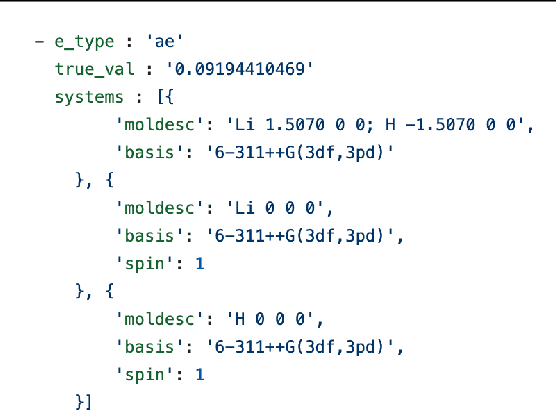
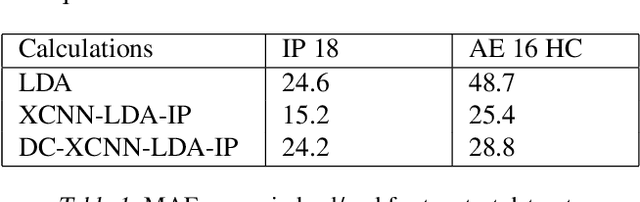
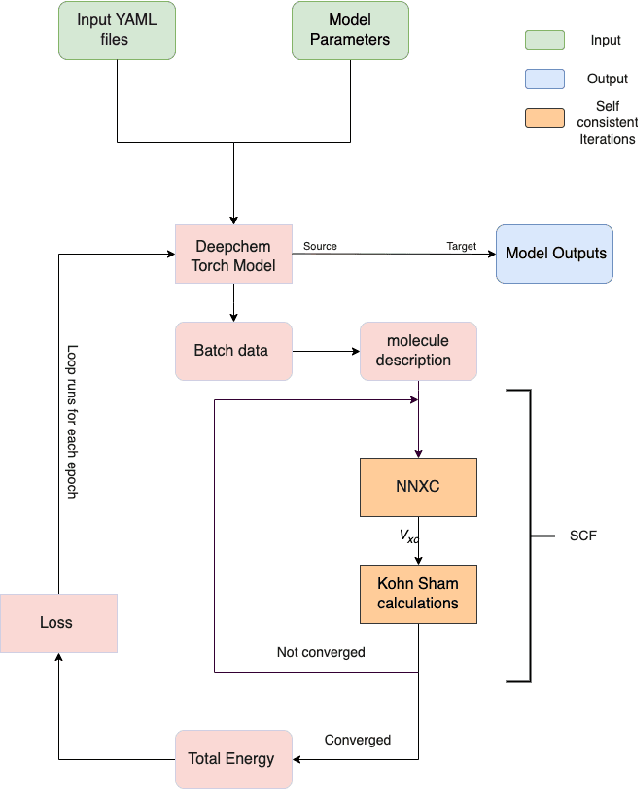
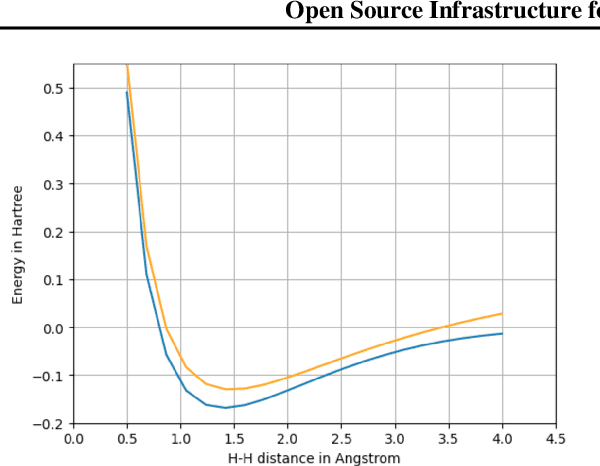
Learning exchange correlation functionals, used in quantum chemistry calculations, from data has become increasingly important in recent years, but training such a functional requires sophisticated software infrastructure. For this reason, we build open source infrastructure to train neural exchange correlation functionals. We aim to standardize the processing pipeline by adapting state-of-the-art techniques from work done by multiple groups. We have open sourced the model in the DeepChem library to provide a platform for additional research on differentiable quantum chemistry methods.
Rotationally Equivariant Neural Operators for Learning Transformations on Tensor Fields (eg 3D Images and Vector Fields)
Aug 21, 2021We introduce equivariant neural operators for learning resolution invariant as well as translation and rotation equivariant transformations between sets of tensor fields. Input and output may contain arbitrary mixes of scalar fields, vector fields, second order tensor fields and higher order fields. Our tensor field convolution layers emulate any linear operator by learning its impulse response or Green's function as the convolution kernel. Our tensor field attention layers emulate pairwise field coupling via local tensor products. Convolutions and associated adjoints can be in real or Fourier space allowing for linear scaling. By unifying concepts from E3NN, TBNN and FNO, we achieve good predictive performance on a wide range of PDEs and dynamical systems in engineering and quantum chemistry. Code is in Julia and available upon request from authors.