 Add to Chrome
 Add to Firefox
 Add to Edge
Learning Structurally Consistent Representations for Multi-View Radar Semantic Segmentation
Jun 30, 2026
Radar sensors provide reliable perception under adverse weather and lighting conditions, but their sparse, noisy, and weakly semantic measurements make dense semantic segmentation challenging. Most existing radar segmentation methods rely on grid-based encodings and pairwise interactions, which struggle to capture the higher-order relational structure formed by multiple radar returns from the same physical object. We introduce a unified higher-order structural alignment framework for multi-view radar segmentation. The proposed method refines radar feature representations using learnable hypergraphs to capture higher-order dependencies among spatially related responses. To ensure consistency across heterogeneous radar projections, we further align view-specific features using Unbalanced Optimal Transport (UOT), enabling correspondence-free alignment under varying measurement densities and partial observations. An adaptive attention mechanism then fuses complementary radar views while emphasising structurally informative responses under sparsity and noise. The resulting architecture learns structurally consistent representations across Range Angle (RA), Range Doppler (RD), and Angle Doppler (AD) views and is trained using supervised segmentation together with cross-view consistency regularisation. Experiments on the CARRADA and RADIal benchmarks demonstrate consistent improvements over strong radar-specific baselines, achieving 63.8% mIoU on CARRADA and 83.4% mIoU on RADIal, improving the previous best methods by +1.7 and +2.3 mIoU, respectively. These results highlight the importance of higher-order relational modelling for robust radar perception.

Learning Topology-Aware Representations via Test-Time Adaptation for Anomaly Segmentation
Jun 26, 2026Test-time adaptation (TTA) has emerged as a promising paradigm for mitigating distribution shifts in deep models. However, existing TTA approaches for anomaly segmentation remain limited by their reliance on pixel-level heuristics, such as confidence thresholding or entropy minimisation, which fail to preserve structural consistency under noise and texture variation. Moreover, they typically treat anomaly maps as flat intensity fields, ignoring the higher-order spatial relationships that characterise complex defect geometries. We introduce TopoTTA (Topological Test-Time Adaptation), a novel framework that integrates persistent homology, a tool from topological data analysis, into the TTA pipeline to enforce geometric and structural coherence during adaptation. By applying multi-level cubical complex filtration to anomaly score maps, TopoTTA derives robust topological pseudo-labels that guide a lightweight test-time classifier, enhancing segmentation quality without retraining the backbone model. The approach avoids reliance on method-specific raw-score thresholding for mask binarisation, preserves connectivity, and generalises across both 2D and 3D modalities. Extensive experiments across six standard benchmarks (MVTec AD, VisA, Real-IAD, MVTec 3D-AD, AnomalyShapeNet, and MVTec LOCO) demonstrate an average 15% F1 improvement over state-of-the-art unsupervised anomaly detection and segmentation methods, with the largest gains on anomalies exhibiting complex geometric or structural variations. These findings suggest that integrating topological reasoning into test-time adaptation provides a principled route to structure-aware generalisation, bridging the gap between geometric learning and robust adaptation.
A Relaxed Quadratic-Program-based Framework for Trajectory Tracking of Unicycle Robots with Singularity Avoidance
Jun 22, 2026Dynamic feedback linearization (DFL) is a classical technique for trajectory tracking of unicycle-type mobile robots, but the resulting DFL-based controller becomes singular when the linear velocity vanishes, rendering standard DFL-based controllers unsuitable for stop-and-reverse maneuvers. This paper proposes a quadratic-program (QP)-based optimal control framework that avoids this singularity, while establishing local Lipschitz continuity of the resulting feedback law. Our approach reformulates the DFL constraints as an equality-constrained QP with a slack variable, ensuring feasibility for all states and reference signals, including at points where the robot's velocity vanishes. By introducing slack variables and tunable parameters, we demonstrate that the singular configuration can be avoided for a large class of reference trajectories. The effectiveness of the proposed approach for trajectory tracking is demonstrated through ROS 2-Gazebo simulations on a TurtleBot3 Waffle robot. The code is available at https://gradslab.github.io/DFL_QP_Unicycle/
Geometry-Aware Semantic Reasoning for Training Free Video Anomaly Detection
Mar 10, 2026Training-free video anomaly detection (VAD) has recently emerged as a scalable alternative to supervised approaches, yet existing methods largely rely on static prompting and geometry-agnostic feature fusion. As a result, anomaly inference is often reduced to shallow similarity matching over Euclidean embeddings, leading to unstable predictions and limited interpretability, especially in complex or hierarchically structured scenes. We introduce MM-VAD, a geometry-aware semantic reasoning framework for training free VAD that reframes anomaly detection as adaptive test-time inference rather than fixed feature comparison. Our approach projects caption-derived scene representations into hyperbolic space to better preserve hierarchical structure and performs anomaly assessment through an adaptive question answering process over a frozen large language model. A lightweight, learnable prompt is optimised at test time using an unsupervised confidence-sparsity objective, enabling context-specific calibration without updating any backbone parameters. To further ground semantic predictions in visual evidence, we incorporate a covariance-aware Mahalanobis refinement that stabilises cross-modal alignment. Across four benchmarks, MM-VAD consistently improves over prior training-free methods, achieving 90.03% AUC on XD-Violence and 83.24%, 96.95%, and 98.81% on UCF-Crime, ShanghaiTech, and UCSD Ped2, respectively. Our results demonstrate that geometry-aware representation and adaptive semantic calibration provide a principled and effective alternative to static Euclidean matching in training-free VAD.
Component-Aware Sketch-to-Image Generation Using Self-Attention Encoding and Coordinate-Preserving Fusion
Mar 10, 2026Translating freehand sketches into photorealistic images remains a fundamental challenge in image synthesis, particularly due to the abstract, sparse, and stylistically diverse nature of sketches. Existing approaches, including GAN-based and diffusion-based models, often struggle to reconstruct fine-grained details, maintain spatial alignment, or adapt across different sketch domains. In this paper, we propose a component-aware, self-refining framework for sketch-to-image generation that addresses these challenges through a novel two-stage architecture. A Self-Attention-based Autoencoder Network (SA2N) first captures localised semantic and structural features from component-wise sketch regions, while a Coordinate-Preserving Gated Fusion (CGF) module integrates these into a coherent spatial layout. Finally, a Spatially Adaptive Refinement Revisor (SARR), built on a modified StyleGAN2 backbone, enhances realism and consistency through iterative refinement guided by spatial context. Extensive experiments across both facial (CelebAMask-HQ, CUFSF) and non-facial (Sketchy, ChairsV2, ShoesV2) datasets demonstrate the robustness and generalizability of our method. The proposed framework consistently outperforms state-of-the-art GAN and diffusion models, achieving significant gains in image fidelity, semantic accuracy, and perceptual quality. On CelebAMask-HQ, our model improves over prior methods by 21% (FID), 58% (IS), 41% (KID), and 20% (SSIM). These results, along with higher efficiency and visual coherence across diverse domains, position our approach as a strong candidate for applications in forensics, digital art restoration, and general sketch-based image synthesis.
Test-Time Adaptation for Anomaly Segmentation via Topology-Aware Optimal Transport Chaining
Jan 28, 2026Deep topological data analysis (TDA) offers a principled framework for capturing structural invariants such as connectivity and cycles that persist across scales, making it a natural fit for anomaly segmentation (AS). Unlike thresholdbased binarisation, which produces brittle masks under distribution shift, TDA allows anomalies to be characterised as disruptions to global structure rather than local fluctuations. We introduce TopoOT, a topology-aware optimal transport (OT) framework that integrates multi-filtration persistence diagrams (PDs) with test-time adaptation (TTA). Our key innovation is Optimal Transport Chaining, which sequentially aligns PDs across thresholds and filtrations, yielding geodesic stability scores that identify features consistently preserved across scales. These stabilityaware pseudo-labels supervise a lightweight head trained online with OT-consistency and contrastive objectives, ensuring robust adaptation under domain shift. Across standard 2D and 3D anomaly detection benchmarks, TopoOT achieves state-of-the-art performance, outperforming the most competitive methods by up to +24.1% mean F1 on 2D datasets and +10.2% on 3D AS benchmarks.
Hybrid Firefly Algorithm and Sperm Swarm Optimization Algorithm using Newton-Raphson Method (HFASSON) and its application in CR-VANET
Feb 03, 2025This paper proposes a new hybrid algorithm, combining FA, SSO, and the N-R method to accelerate convergence towards global optima, named the Hybrid Firefly Algorithm and Sperm Swarm Optimization with Newton-Raphson (HFASSON). The performance of HFASSON is evaluated using 23 benchmark functions from the CEC 2017 suite, tested in 30, 50, and 100 dimensions. A statistical comparison is performed to assess the effectiveness of HFASSON against FA, SSO, HFASSO, and five hybrid algorithms: Water Cycle Moth Flame Optimization (WCMFO), Hybrid Particle Swarm Optimization and Genetic Algorithm (HPSOGA), Hybrid Sperm Swarm Optimization and Gravitational Search Algorithm (HSSOGSA), Grey Wolf and Cuckoo Search Algorithm (GWOCS), and Hybrid Firefly Genetic Algorithm (FAGA). Results from the Friedman rank test show the superior performance of HFASSON. Additionally, HFASSON is applied to Cognitive Radio Vehicular Ad-hoc Networks (CR-VANET), outperforming basic CR-VANET in spectrum utilization. These findings demonstrate HFASSON's efficiency in wireless network applications.
A Multimodal Lightweight Approach to Fault Diagnosis of Induction Motors in High-Dimensional Dataset
Jan 07, 2025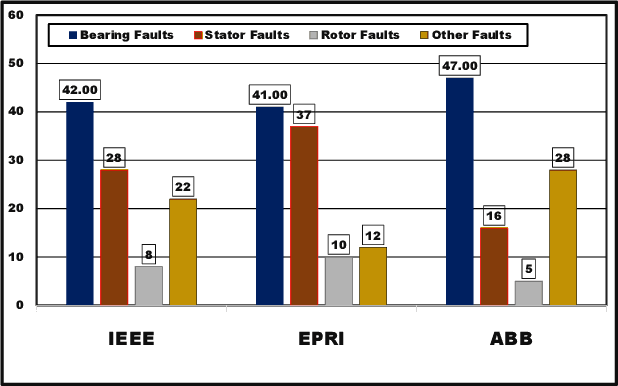
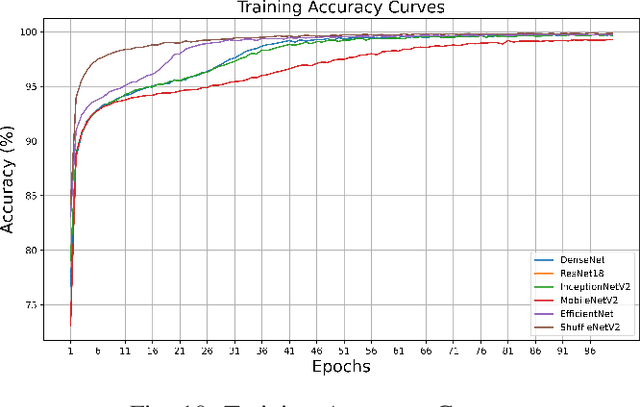
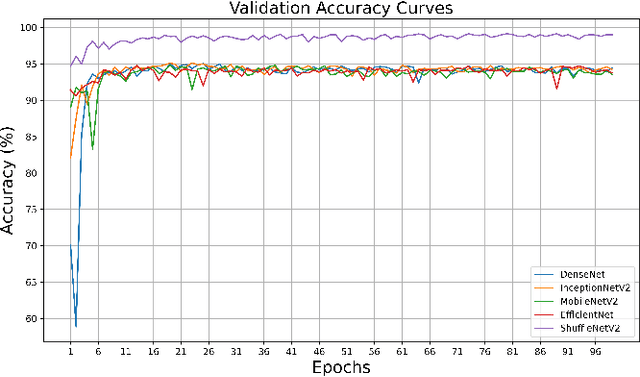
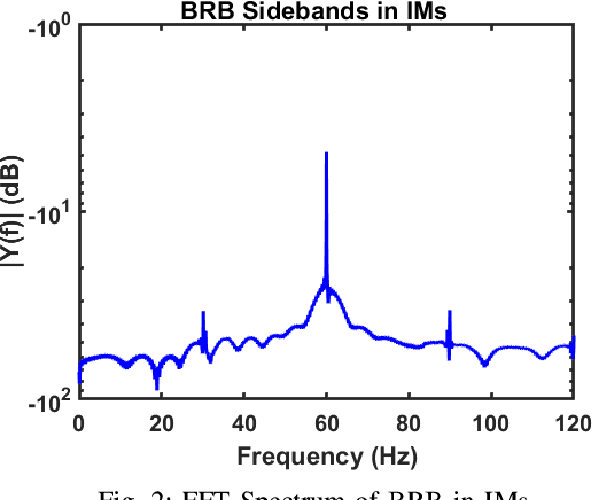
An accurate AI-based diagnostic system for induction motors (IMs) holds the potential to enhance proactive maintenance, mitigating unplanned downtime and curbing overall maintenance costs within an industrial environment. Notably, among the prevalent faults in IMs, a Broken Rotor Bar (BRB) fault is frequently encountered. Researchers have proposed various fault diagnosis approaches using signal processing (SP), machine learning (ML), deep learning (DL), and hybrid architectures for BRB faults. One limitation in the existing literature is the training of these architectures on relatively small datasets, risking overfitting when implementing such systems in industrial environments. This paper addresses this limitation by implementing large-scale data of BRB faults by using a transfer-learning-based lightweight DL model named ShuffleNetV2 for diagnosing one, two, three, and four BRB faults using current and vibration signal data. Spectral images for training and testing are generated using a Short-Time Fourier Transform (STFT). The dataset comprises 57,500 images, with 47,500 used for training and 10,000 for testing. Remarkably, the ShuffleNetV2 model exhibited superior performance, in less computational cost as well as accurately classifying 98.856% of spectral images. To further enhance the visualization of harmonic sidebands resulting from broken bars, Fast Fourier Transform (FFT) is applied to current and vibration data. The paper also provides insights into the training and testing times for each model, contributing to a comprehensive understanding of the proposed fault diagnosis methodology. The findings of our research provide valuable insights into the performance and efficiency of different ML and DL models, offering a foundation for the development of robust fault diagnosis systems for induction motors in industrial settings.
Leveraging Deep Learning with Multi-Head Attention for Accurate Extraction of Medicine from Handwritten Prescriptions
Dec 24, 2024Extracting medication names from handwritten doctor prescriptions is challenging due to the wide variability in handwriting styles and prescription formats. This paper presents a robust method for extracting medicine names using a combination of Mask R-CNN and Transformer-based Optical Character Recognition (TrOCR) with Multi-Head Attention and Positional Embeddings. A novel dataset, featuring diverse handwritten prescriptions from various regions of Pakistan, was utilized to fine-tune the model on different handwriting styles. The Mask R-CNN model segments the prescription images to focus on the medicinal sections, while the TrOCR model, enhanced by Multi-Head Attention and Positional Embeddings, transcribes the isolated text. The transcribed text is then matched against a pre-existing database for accurate identification. The proposed approach achieved a character error rate (CER) of 1.4% on standard benchmarks, highlighting its potential as a reliable and efficient tool for automating medicine name extraction.
Towards Fault Diagnosis in Induction Motor using Fractional Fourier Transform
Dec 24, 2024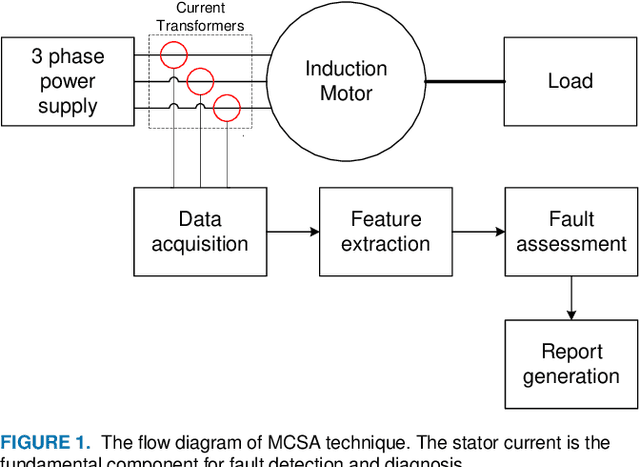
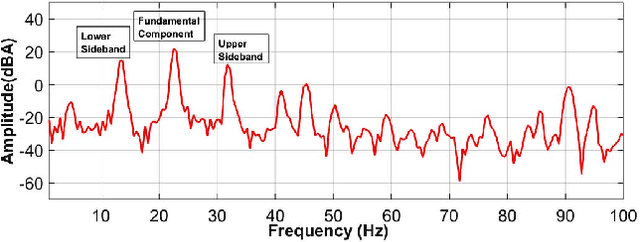
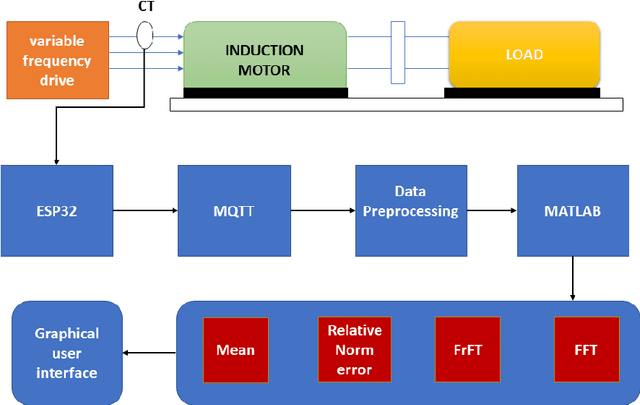
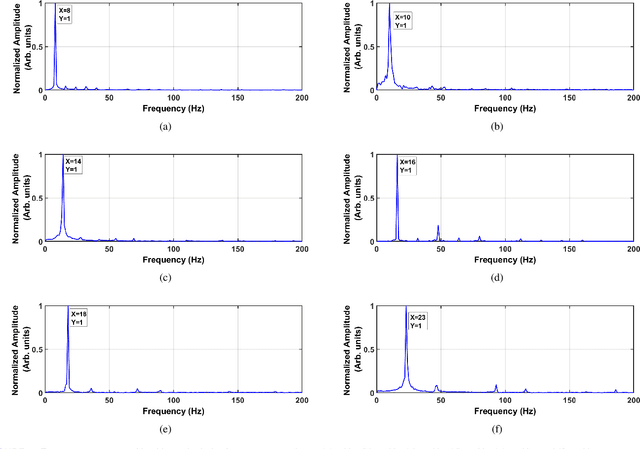
A method for determining the current signature faults using Fractional Fourier Transform (FrFT) has been developed. The method has been applied to the real-time steady-state current of the inverter-fed high power induction motor for fault determination. The method incorporates calculating the relative norm error to find the threshold value between healthy and unhealthy induction motor at different operating frequencies. The experimental results demonstrate that the total harmonics distortion of unhealthy motor is much larger than the healthy motor, and the threshold relative norm error value of different healthy induction motors is less than 0.3, and the threshold relative norm error value of unhealthy induction motor is greater than 0.5. The developed method can function as a simple operator-assisted tool for determining induction motor faults in real-time.