 Add to Chrome
 Add to Firefox
 Add to Edge
Learning Topology-Aware Representations via Test-Time Adaptation for Anomaly Segmentation
Jun 26, 2026
Test-time adaptation (TTA) has emerged as a promising paradigm for mitigating distribution shifts in deep models. However, existing TTA approaches for anomaly segmentation remain limited by their reliance on pixel-level heuristics, such as confidence thresholding or entropy minimisation, which fail to preserve structural consistency under noise and texture variation. Moreover, they typically treat anomaly maps as flat intensity fields, ignoring the higher-order spatial relationships that characterise complex defect geometries. We introduce TopoTTA (Topological Test-Time Adaptation), a novel framework that integrates persistent homology, a tool from topological data analysis, into the TTA pipeline to enforce geometric and structural coherence during adaptation. By applying multi-level cubical complex filtration to anomaly score maps, TopoTTA derives robust topological pseudo-labels that guide a lightweight test-time classifier, enhancing segmentation quality without retraining the backbone model. The approach avoids reliance on method-specific raw-score thresholding for mask binarisation, preserves connectivity, and generalises across both 2D and 3D modalities. Extensive experiments across six standard benchmarks (MVTec AD, VisA, Real-IAD, MVTec 3D-AD, AnomalyShapeNet, and MVTec LOCO) demonstrate an average 15% F1 improvement over state-of-the-art unsupervised anomaly detection and segmentation methods, with the largest gains on anomalies exhibiting complex geometric or structural variations. These findings suggest that integrating topological reasoning into test-time adaptation provides a principled route to structure-aware generalisation, bridging the gap between geometric learning and robust adaptation.

Component-Aware Sketch-to-Image Generation Using Self-Attention Encoding and Coordinate-Preserving Fusion
Mar 10, 2026Translating freehand sketches into photorealistic images remains a fundamental challenge in image synthesis, particularly due to the abstract, sparse, and stylistically diverse nature of sketches. Existing approaches, including GAN-based and diffusion-based models, often struggle to reconstruct fine-grained details, maintain spatial alignment, or adapt across different sketch domains. In this paper, we propose a component-aware, self-refining framework for sketch-to-image generation that addresses these challenges through a novel two-stage architecture. A Self-Attention-based Autoencoder Network (SA2N) first captures localised semantic and structural features from component-wise sketch regions, while a Coordinate-Preserving Gated Fusion (CGF) module integrates these into a coherent spatial layout. Finally, a Spatially Adaptive Refinement Revisor (SARR), built on a modified StyleGAN2 backbone, enhances realism and consistency through iterative refinement guided by spatial context. Extensive experiments across both facial (CelebAMask-HQ, CUFSF) and non-facial (Sketchy, ChairsV2, ShoesV2) datasets demonstrate the robustness and generalizability of our method. The proposed framework consistently outperforms state-of-the-art GAN and diffusion models, achieving significant gains in image fidelity, semantic accuracy, and perceptual quality. On CelebAMask-HQ, our model improves over prior methods by 21% (FID), 58% (IS), 41% (KID), and 20% (SSIM). These results, along with higher efficiency and visual coherence across diverse domains, position our approach as a strong candidate for applications in forensics, digital art restoration, and general sketch-based image synthesis.
Enhancing Vehicle Entrance and Parking Management: Deep Learning Solutions for Efficiency and Security
Dec 05, 2023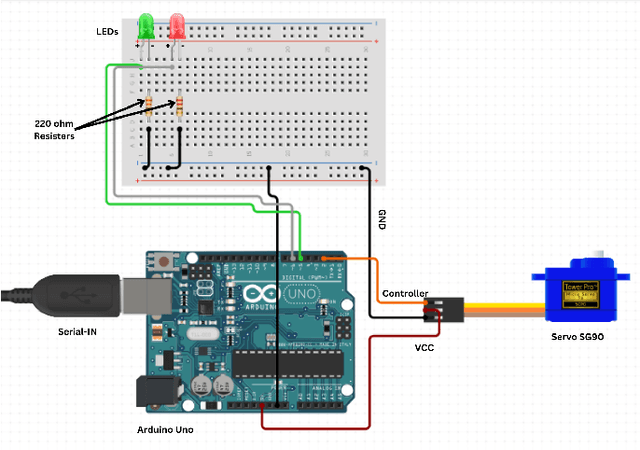
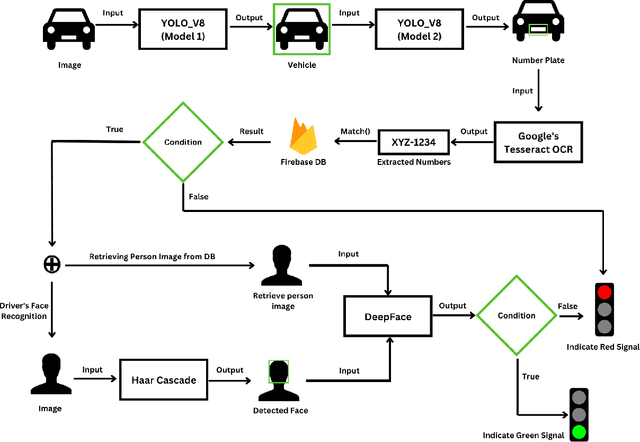
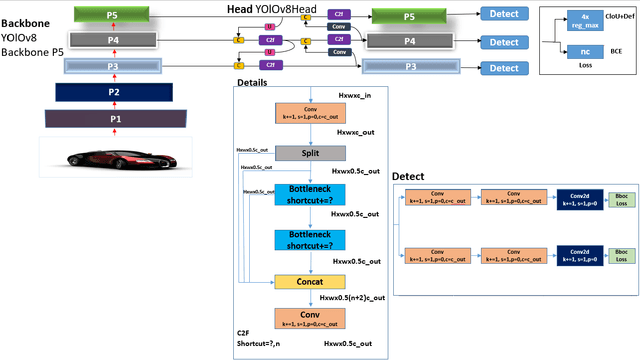
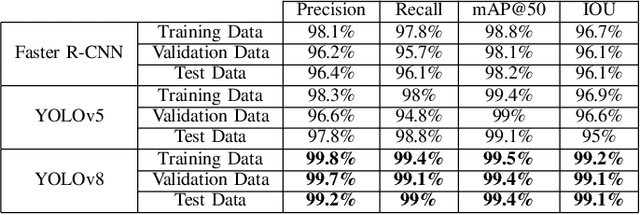
The auto-management of vehicle entrance and parking in any organization is a complex challenge encompassing record-keeping, efficiency, and security concerns. Manual methods for tracking vehicles and finding parking spaces are slow and a waste of time. To solve the problem of auto management of vehicle entrance and parking, we have utilized state-of-the-art deep learning models and automated the process of vehicle entrance and parking into any organization. To ensure security, our system integrated vehicle detection, license number plate verification, and face detection and recognition models to ensure that the person and vehicle are registered with the organization. We have trained multiple deep-learning models for vehicle detection, license number plate detection, face detection, and recognition, however, the YOLOv8n model outperformed all the other models. Furthermore, License plate recognition is facilitated by Google's Tesseract-OCR Engine. By integrating these technologies, the system offers efficient vehicle detection, precise identification, streamlined record keeping, and optimized parking slot allocation in buildings, thereby enhancing convenience, accuracy, and security. Future research opportunities lie in fine-tuning system performance for a wide range of real-world applications.