 Add to Chrome
 Add to Firefox
 Add to Edge
MarineEVT: Advancing Event-Centric Marine Video Understanding via Visual Tool Reasoning
Jul 27, 2026
Recent Vision-Language Models (VLMs) have achieved remarkable success in visual understanding, driven by the growing availability of high-quality image-text pairs. However, the performance of VLMs often degrades in the video domain due to the essential need for temporal understanding and the scarcity of large-scale annotated video data. In this work, we focus on marine video understanding, which brings further challenges: first, it requires substantial domain expertise; and video VLMs usually struggle with localizing and interpreting critical information from marine videos, as the informative events are typically sparse, unpredictable, and unevenly distributed. To address these challenges, we carefully curate the first event-centric marine video understanding dataset called MarineEVT, which features 20K multi-task, video-level visual question-answering pairs spanning multiple dimensions of marine understanding and analysis. Meanwhile, based on MarineEVT, we decompose marine video understanding as an Event-centric Visual Tool-integrated Reasoning process EVT-R1 for short, where we leverage powerful visual tools to drive the model to localize and interpret critical information aligned with visual questions and human intent. To demonstrate its effectiveness, we compare EVT-R1 against 11 SOTA VLMs in different settings. EVT-R1 outperforms the top open-source and top commercial models by 5.22 and 11.09, respectively. MarineEVT and EVT-R1 lay the foundation for ecological discovery and marine education, fostering the development of VLMs capable of interpreting marine dynamics, reasoning about ecological interactions, and supporting sustainable ocean video understanding and analysis.

MarineEval: Assessing the Marine Intelligence of Vision-Language Models
Dec 24, 2025We have witnessed promising progress led by large language models (LLMs) and further vision language models (VLMs) in handling various queries as a general-purpose assistant. VLMs, as a bridge to connect the visual world and language corpus, receive both visual content and various text-only user instructions to generate corresponding responses. Though great success has been achieved by VLMs in various fields, in this work, we ask whether the existing VLMs can act as domain experts, accurately answering marine questions, which require significant domain expertise and address special domain challenges/requirements. To comprehensively evaluate the effectiveness and explore the boundary of existing VLMs, we construct the first large-scale marine VLM dataset and benchmark called MarineEval, with 2,000 image-based question-answering pairs. During our dataset construction, we ensure the diversity and coverage of the constructed data: 7 task dimensions and 20 capacity dimensions. The domain requirements are specially integrated into the data construction and further verified by the corresponding marine domain experts. We comprehensively benchmark 17 existing VLMs on our MarineEval and also investigate the limitations of existing models in answering marine research questions. The experimental results reveal that existing VLMs cannot effectively answer the domain-specific questions, and there is still a large room for further performance improvements. We hope our new benchmark and observations will facilitate future research. Project Page: http://marineeval.hkustvgd.com/
TextANIMAR: Text-based 3D Animal Fine-Grained Retrieval
Apr 12, 2023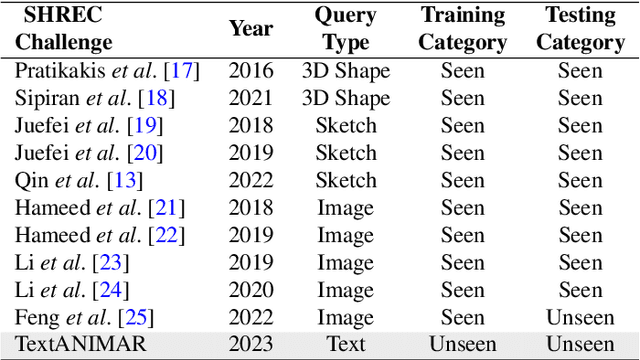
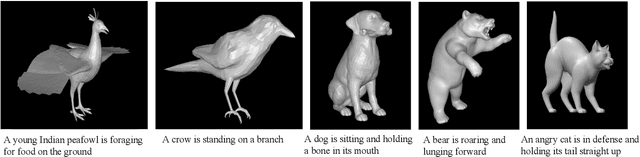
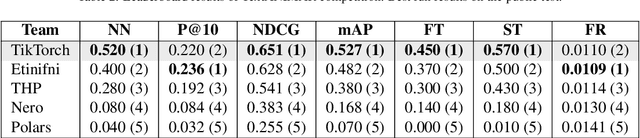
3D object retrieval is an important yet challenging task, which has drawn more and more attention in recent years. While existing approaches have made strides in addressing this issue, they are often limited to restricted settings such as image and sketch queries, which are often unfriendly interactions for common users. In order to overcome these limitations, this paper presents a novel SHREC challenge track focusing on text-based fine-grained retrieval of 3D animal models. Unlike previous SHREC challenge tracks, the proposed task is considerably more challenging, requiring participants to develop innovative approaches to tackle the problem of text-based retrieval. Despite the increased difficulty, we believe that this task has the potential to drive useful applications in practice and facilitate more intuitive interactions with 3D objects. Five groups participated in our competition, submitting a total of 114 runs. While the results obtained in our competition are satisfactory, we note that the challenges presented by this task are far from being fully solved. As such, we provide insights into potential areas for future research and improvements. We believe that we can help push the boundaries of 3D object retrieval and facilitate more user-friendly interactions via vision-language technologies.