 Add to Chrome
 Add to Firefox
 Add to Edge
HiEdit: Lifelong Model Editing with Hierarchical Reinforcement Learning
Apr 13, 2026
Lifelong model editing (LME) aims to sequentially rectify outdated or inaccurate knowledge in deployed LLMs while minimizing side effects on unrelated inputs. However, existing approaches typically apply parameter perturbations to a static and dense set of LLM layers for all editing instances. This practice is counter-intuitive, as we hypothesize that different pieces of knowledge are stored in distinct layers of the model. Neglecting this layer-wise specificity can impede adaptability in integrating new knowledge and result in catastrophic forgetting for both general and previously edited knowledge. To address this, we propose HiEdit, a hierarchical reinforcement learning framework that adaptively identifies the most knowledge-relevant layers for each editing instance. By enabling dynamic, instance-aware layer selection and incorporating an intrinsic reward for sparsity, HiEdit achieves precise, localized updates. Experiments on various LLMs show that HiEdit boosts the performance of the competitive RLEdit by an average of 8.48% with perturbing only half of the layers per edit. Our code is available at: https://github.com/yangfanww/hiedit.

Hunting imaging biomarkers in pulmonary fibrosis: Benchmarks of the AIIB23 challenge
Dec 21, 2023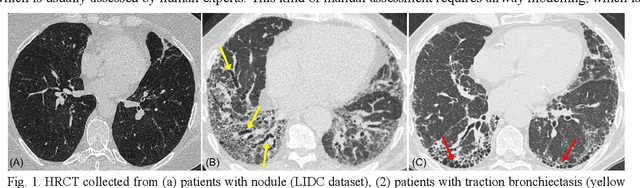
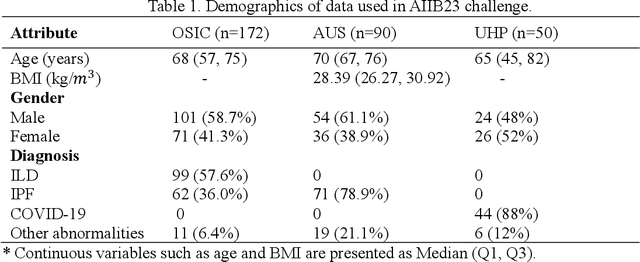

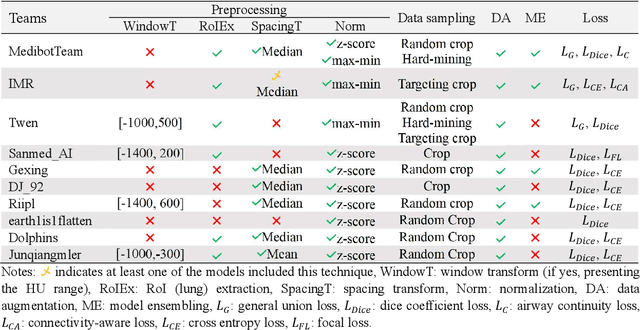
Airway-related quantitative imaging biomarkers are crucial for examination, diagnosis, and prognosis in pulmonary diseases. However, the manual delineation of airway trees remains prohibitively time-consuming. While significant efforts have been made towards enhancing airway modelling, current public-available datasets concentrate on lung diseases with moderate morphological variations. The intricate honeycombing patterns present in the lung tissues of fibrotic lung disease patients exacerbate the challenges, often leading to various prediction errors. To address this issue, the 'Airway-Informed Quantitative CT Imaging Biomarker for Fibrotic Lung Disease 2023' (AIIB23) competition was organized in conjunction with the official 2023 International Conference on Medical Image Computing and Computer Assisted Intervention (MICCAI). The airway structures were meticulously annotated by three experienced radiologists. Competitors were encouraged to develop automatic airway segmentation models with high robustness and generalization abilities, followed by exploring the most correlated QIB of mortality prediction. A training set of 120 high-resolution computerised tomography (HRCT) scans were publicly released with expert annotations and mortality status. The online validation set incorporated 52 HRCT scans from patients with fibrotic lung disease and the offline test set included 140 cases from fibrosis and COVID-19 patients. The results have shown that the capacity of extracting airway trees from patients with fibrotic lung disease could be enhanced by introducing voxel-wise weighted general union loss and continuity loss. In addition to the competitive image biomarkers for prognosis, a strong airway-derived biomarker (Hazard ratio>1.5, p<0.0001) was revealed for survival prognostication compared with existing clinical measurements, clinician assessment and AI-based biomarkers.