 Add to Chrome
 Add to Firefox
 Add to Edge
SegWithU: Uncertainty as Perturbation Energy for Single-Forward-Pass Risk-Aware Medical Image Segmentation
Apr 16, 2026
Reliable uncertainty estimation is critical for medical image segmentation, where automated contours feed downstream quantification and clinical decision support. Many strong uncertainty methods require repeated inference, while efficient single-forward-pass alternatives often provide weaker failure ranking or rely on restrictive feature-space assumptions. We present $\textbf{SegWithU}$, a post-hoc framework that augments a frozen pretrained segmentation backbone with a lightweight uncertainty head. SegWithU taps intermediate backbone features and models uncertainty as perturbation energy in a compact probe space using rank-1 posterior probes. It produces two voxel-wise uncertainty maps: a calibration-oriented map for probability tempering and a ranking-oriented map for error detection and selective prediction. Across ACDC, BraTS2024, and LiTS, SegWithU is the strongest and most consistent single-forward-pass baseline, achieving AUROC/AURC of $0.9838/2.4885$, $0.9946/0.2660$, and $0.9925/0.8193$, respectively, while preserving segmentation quality. These results suggest that perturbation-based uncertainty modeling is an effective and practical route to reliability-aware medical segmentation. Source code is available at https://github.com/ProjectNeura/SegWithU.

SortScrews: A Dataset and Baseline for Real-time Screw Classification
Mar 13, 2026Automatic identification of screw types is important for industrial automation, robotics, and inventory management. However, publicly available datasets for screw classification are scarce, particularly for controlled single-object scenarios commonly encountered in automated sorting systems. In this work, we introduce $\textbf{SortScrews}$, a dataset for casewise visual classification of screws. The dataset contains 560 RGB images at $512\times512$ resolution covering six screw types and a background class. Images are captured using a standardized acquisition setup and include mild variations in lighting and camera perspective across four capture settings. To facilitate reproducible research and dataset expansion, we also provide a reusable data collection script that allows users to easily construct similar datasets for custom hardware components using inexpensive camera setups. We establish baseline results using transfer learning with EfficientNet-B0 and ResNet-18 classifiers pretrained on ImageNet. In addition, we conduct a well-explored failure analysis. Despite the limited dataset size, these lightweight models achieve strong classification accuracy, demonstrating that controlled acquisition conditions enable effective learning even with relatively small datasets. The dataset, collection pipeline, and baseline training code are publicly available at https://github.com/ATATC/SortScrews.
MIP Candy: A Modular PyTorch Framework for Medical Image Processing
Feb 24, 2026Medical image processing demands specialized software that handles high-dimensional volumetric data, heterogeneous file formats, and domain-specific training procedures. Existing frameworks either provide low-level components that require substantial integration effort or impose rigid, monolithic pipelines that resist modification. We present MIP Candy (MIPCandy), a freely available, PyTorch-based framework designed specifically for medical image processing. MIPCandy provides a complete, modular pipeline spanning data loading, training, inference, and evaluation, allowing researchers to obtain a fully functional process workflow by implementing a single method, $\texttt{build_network}$, while retaining fine-grained control over every component. Central to the design is $\texttt{LayerT}$, a deferred configuration mechanism that enables runtime substitution of convolution, normalization, and activation modules without subclassing. The framework further offers built-in $k$-fold cross-validation, dataset inspection with automatic region-of-interest detection, deep supervision, exponential moving average, multi-frontend experiment tracking (Weights & Biases, Notion, MLflow), training state recovery, and validation score prediction via quotient regression. An extensible bundle ecosystem provides pre-built model implementations that follow a consistent trainer--predictor pattern and integrate with the core framework without modification. MIPCandy is open-source under the Apache-2.0 license and requires Python~3.12 or later. Source code and documentation are available at https://github.com/ProjectNeura/MIPCandy.
Two Heads are Better than One: Distilling Large Language Model Features Into Small Models with Feature Decomposition and Mixture
Nov 11, 2025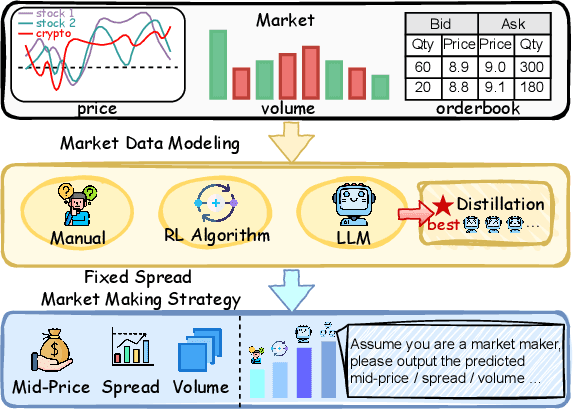

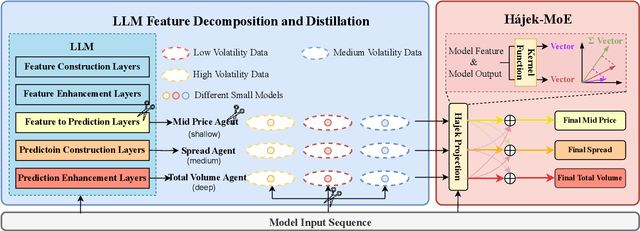
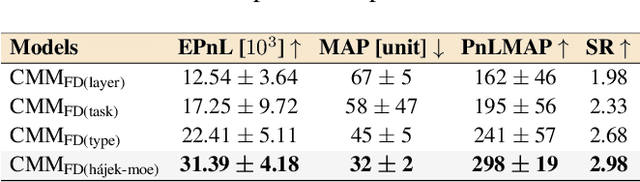
Market making (MM) through Reinforcement Learning (RL) has attracted significant attention in financial trading. With the development of Large Language Models (LLMs), more and more attempts are being made to apply LLMs to financial areas. A simple, direct application of LLM as an agent shows significant performance. Such methods are hindered by their slow inference speed, while most of the current research has not studied LLM distillation for this specific task. To address this, we first propose the normalized fluorescent probe to study the mechanism of the LLM's feature. Based on the observation found by our investigation, we propose Cooperative Market Making (CMM), a novel framework that decouples LLM features across three orthogonal dimensions: layer, task, and data. Various student models collaboratively learn simple LLM features along with different dimensions, with each model responsible for a distinct feature to achieve knowledge distillation. Furthermore, CMM introduces an Hájek-MoE to integrate the output of the student models by investigating the contribution of different models in a kernel function-generated common feature space. Extensive experimental results on four real-world market datasets demonstrate the superiority of CMM over the current distillation method and RL-based market-making strategies.
LEADS: Lightweight Embedded Assisted Driving System
Oct 23, 2024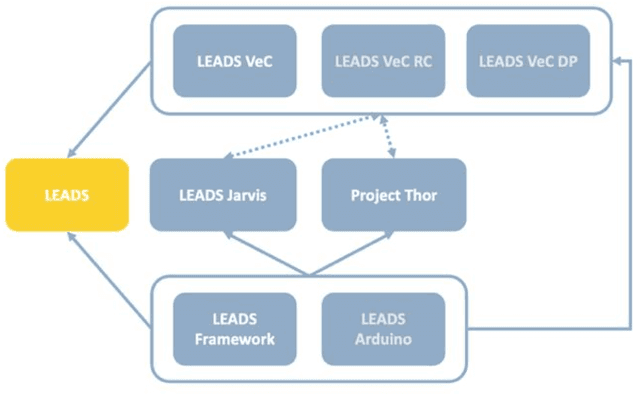
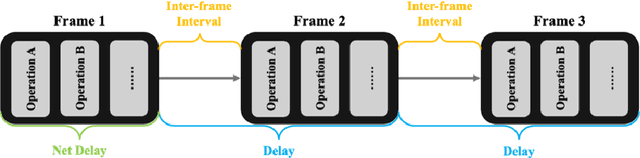
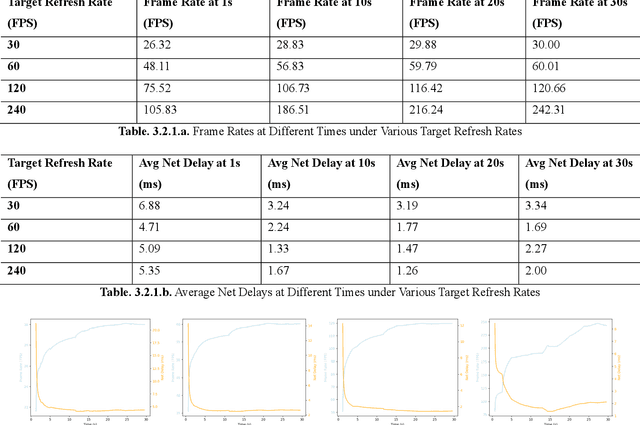
With the rapid development of electric vehicles, formula races that face high school and university students have become more popular than ever as the threshold for design and manufacturing has been lowered. In many cases, we see teams inspired by or directly using toolkits and technologies inherited from standardized commercial vehicles. These architectures are usually overly complicated for amateur applications like the races. In order to improve the efficiency and simplify the development of instrumentation, control, and analysis systems, we propose LEADS (Lightweight Embedded Assisted Driving System), a dedicated solution for such scenarios.